How to Design Storage for Real-Life Habits, Not Trends (Guide)

I once spent an entire Saturday afternoon organizing my pantry using a set of matching glass jars. By Tuesday, the system had collapsed because my kids couldn’t reach the lids and I was too tired after work to decant a bag of flour. As a professional who manages global supply chains, I found this failure deeply humbling. I can move thousands of tons of freight across oceans, yet I couldn’t keep a three-shelf pantry tidy for more than seventy-two hours. This mismatch between how we think we should live and how we actually move through our homes is the primary reason most household systems fail.
The Logistics of Daily Living and Spatial Flow
Spatial logistics refers to the study of how people and objects move through a defined area to complete tasks. In a home, this involves analyzing the “path of least resistance” that family members take when arriving home, preparing meals, or getting ready for bed. By understanding these natural movement patterns, we can place storage where it is actually needed rather than where it looks best.
When we ignore the logistics of our daily routines, we create what I call “organizational debt.” This is the mental and physical energy required to bypass a poorly placed bin or a heavy closet door just to put away a pair of shoes. Research in environmental psychology suggests that visual clutter can increase cortisol levels, particularly in women. When our storage systems require more than two or three steps to use, we simply stop using them. In my household, I realized that my children weren’t “messy”; they were just reacting to high-friction storage. If a bin has a tight lid and is stored on a high shelf, the “sorting speed” drops to zero, and the item ends up on the floor.
Why Traditional Organizing Fails the Modern Family
Traditional organizing often prioritizes visual uniformity over the speed of retrieval and storage. This approach creates high-friction environments where the effort to maintain the system exceeds the benefit of the organization itself. Functional systems, conversely, focus on reducing the number of physical steps required to interact with an object.
The primary culprit in system failure is “retrieval friction.” This is the cumulative effort of opening a door, moving a box, unlatching a lid, and then reversing the process. In a study on organizational behavior, it was found that humans are hardwired to choose the most efficient path. If your “home organization systems” require a ten-step process to put away mail, the mail will inevitably pile up on the kitchen island. I learned this the hard way with our family shoe rack. It looked great, but it required everyone to carefully slide shoes into narrow slots. We eventually replaced it with large, open floor bins. The visual “neatness” decreased slightly, but the floor stayed clear because the friction of “throwing” a shoe into a bin is nearly zero.
The Hidden Cost of Lids and Latches
Lids and latches represent physical barriers that increase the time and cognitive load required to tidy a space. While they provide a clean look, they often serve as a deterrent for children and tired adults who are looking for the fastest way to clear a surface.
- Lidded Bins: Require two hands and multiple movements (remove, set down, fill, replace).
- Open Bins: Require one hand and a single movement (toss).
- Latched Totes: Best for long-term storage (attic/basement) but a failure point for daily-use items like toys or frequently used tools.
| Container Type | Friction Score (1-10) | Best Use Case | Recovery Speed |
|---|---|---|---|
| Open Basket | 1 | Daily toys, shoes, mail | Very Fast |
| Clear Bin (No Lid) | 2 | Pantry staples, cleaning supplies | Fast |
| Lidded Decorative Box | 5 | Stationery, occasional hobby gear | Moderate |
| Latched Opaque Tote | 9 | Holiday decor, out-of-season clothes | Slow |
Mapping Your Home for High-Efficiency Movement
Zoning is the practice of dividing a home into functional areas based on the frequency of use and the specific activities performed in those spots. This logistical approach ensures that the most frequently used items occupy “prime real estate” while rarely used items are moved to the periphery.
To fix our cluttered entryway, I conducted a “spatial audit.” I watched where my family dropped their bags for three days. They didn’t use the coat closet because the door swung out and blocked the narrow hallway. We were fighting the architecture of the house. By removing the closet door and installing heavy-duty hooks at various heights, we aligned the storage with our actual behavior. This is a “functional home storage” win because it acknowledges that a five-year-old is more likely to hang a jacket on a hook than on a hanger inside a dark closet.
The Arm’s Reach Principle
The “Arm’s Reach” principle dictates that any item used daily should be accessible without moving another object or using a step stool. This reduces the “sorting time” and prevents the mental fatigue associated with digging through layers of clutter.
- Zone 1 (Daily): Between waist and eye level. Requires no reaching or bending.
- Zone 2 (Weekly): Below the waist or just above eye level. Requires minimal effort.
- Zone 3 (Monthly/Seasonal): High shelves or deep cabinets. Requires a stool or significant reaching.
Sorting Frameworks That Actually Work
A sorting framework is a logical process for categorizing items based on their “flow rate”—how quickly they enter and leave the home. Instead of sorting by color or size, we sort by how the item supports our daily “workflow sequences.”
In my professional life, we use “inflow/outflow control” to manage warehouse inventory. I applied this to our kitchen. We had a “bottleneck” where the coffee maker, toaster, and bread bin all sat in one corner. By measuring the “item density,” I realized we had too many daily-use items in one square foot. We moved the bread to a drawer and the toaster to a pull-out shelf. This simple logistical shift reduced the morning “sorting friction” and made the counters easier to wipe down.
The Five-Minute Sorting Log
Tracking how long it takes to find or put away items can reveal where your systems are breaking down. If it takes more than thirty seconds to find a specific tool, the storage for that category is failing.
- Kitchen Utensils: Should be sorted by frequency (spatulas vs. turkey basters).
- Paperwork: Needs a “landing zone” for immediate action and a “deep archive” for long-term storage.
- Laundry: Sorting should happen at the point of “outflow” (the bedroom) rather than the point of “processing” (the laundry room).
Selecting Low-Maintenance Storage Gear
Low-maintenance storage refers to containers and furniture that are durable, easy to clean, and do not require complex labeling or delicate handling. The goal is to choose “sustainable decluttering” tools that can survive the rigors of a busy household without needing constant adjustment.
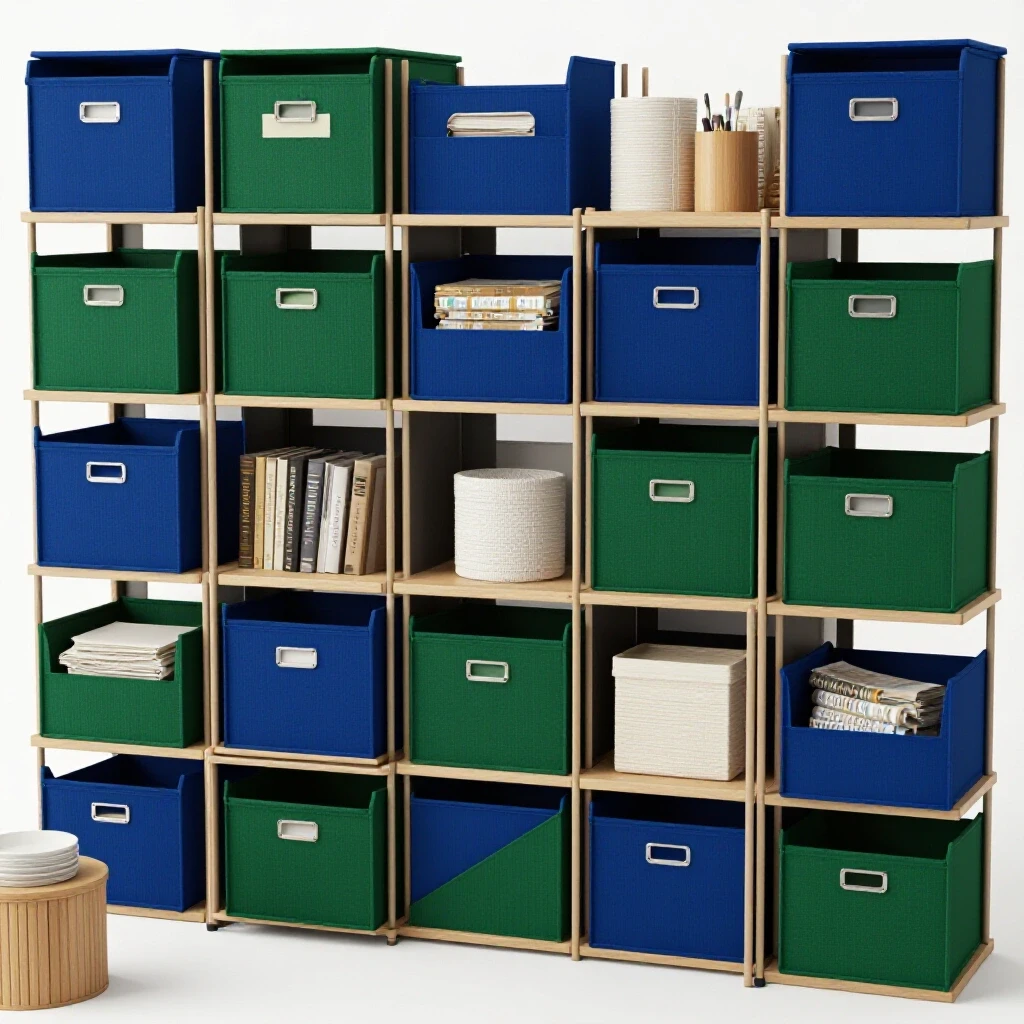
Avoid buying bins until you have measured your “spatial capacity limits.” I recommend using clear, stackable units for items that need to be seen, and breathable baskets for items like linens or toys. In our house, we moved away from small, specialized containers. They look great on a shelf but are too “granular.” If a child has to decide if a toy goes in the “Small Blue Cars” bin or the “Medium Red Trucks” bin, they will likely just leave it on the floor. A single “Vehicles” bin is much more sustainable.
Heavy-Duty Storage Configurations
- Industrial Wire Shelving: High “space utilization percentage” and easy to clean.
- Clear Polycarbonate Bins: Allow for “visual processing” without opening the lid.
- Oversized Wall Hooks: Can hold everything from backpacks to vacuum hoses.
- Digital Inventory Apps: Useful for “Zone 3” storage (basement/attic) so you don’t buy duplicates.
Building Sustainable Household Habit Loops
A habit loop is a neurological pattern that governs any habit, consisting of a cue, a routine, and a reward. In home organization, we design the “cue” (a clear surface) and the “routine” (a 10-minute reset) to make maintenance feel automatic rather than burdensome.
Maintenance isn’t about “perfectly organized” rooms; it’s about “functional resets.” In our home, we have a “10-minute sweep” every evening before the kids go to bed. Because our bins are low-friction (open tops, clear zones), the family can clear the living room floor in under five minutes. We aren’t striving for a museum look; we are clearing the “spatial capacity” for the next day’s activities. This reduces “decision fatigue” because everyone knows exactly where the “outflow” items go.
Daily Maintenance Timelines by Family Size
The time required to maintain a home increases with the number of residents, but the “per-person” effort should remain low if the systems are functional.
| Family Size | Daily Reset Time | Weekly Deep Sort | System Complexity |
|---|---|---|---|
| 1-2 People | 5 Minutes | 20 Minutes | Low |
| 3-4 People | 10 Minutes | 45 Minutes | Medium |
| 5+ People | 15 Minutes | 60 Minutes | High (Requires Zoning) |
Reducing Household Clutter Through Inflow Control
Inflow control is the practice of managing how many new items enter the home to prevent “spatial overload.” This is a fundamental principle of logistics: you cannot manage an infinite amount of inventory in a finite space.
We implemented a “One-In, One-Out” rule for specific categories like shoes and toys. If my son gets a new Lego set, an old one (or a different toy) is moved to the “outflow” box for donation. This keeps our “item density” at a manageable level. We also use “digital inventory methods” for things like manuals and receipts. By scanning these items, we reduce physical clutter while keeping the information accessible. This shift from physical to digital storage is a key part of our “decluttering journey.”
Actionable Steps for a Functional Home
- Perform a Friction Audit: Identify the three areas in your home that get messy the fastest. Count the steps required to put an item away in those areas.
- Lower the Barrier: Remove lids from toy bins, add more hooks to the entryway, and move daily-use dishes to the lowest shelves.
- Standardize Your Bins: Stick to 2-3 types of containers to make them interchangeable and easy to stack.
- Label by Function, Not Item: Instead of “Markers,” try “Art Supplies.” This allows the system to grow as your needs change.
- Set a “Capacity Limit”: Decide that a shelf can only hold ten books. When it hits eleven, one must go.
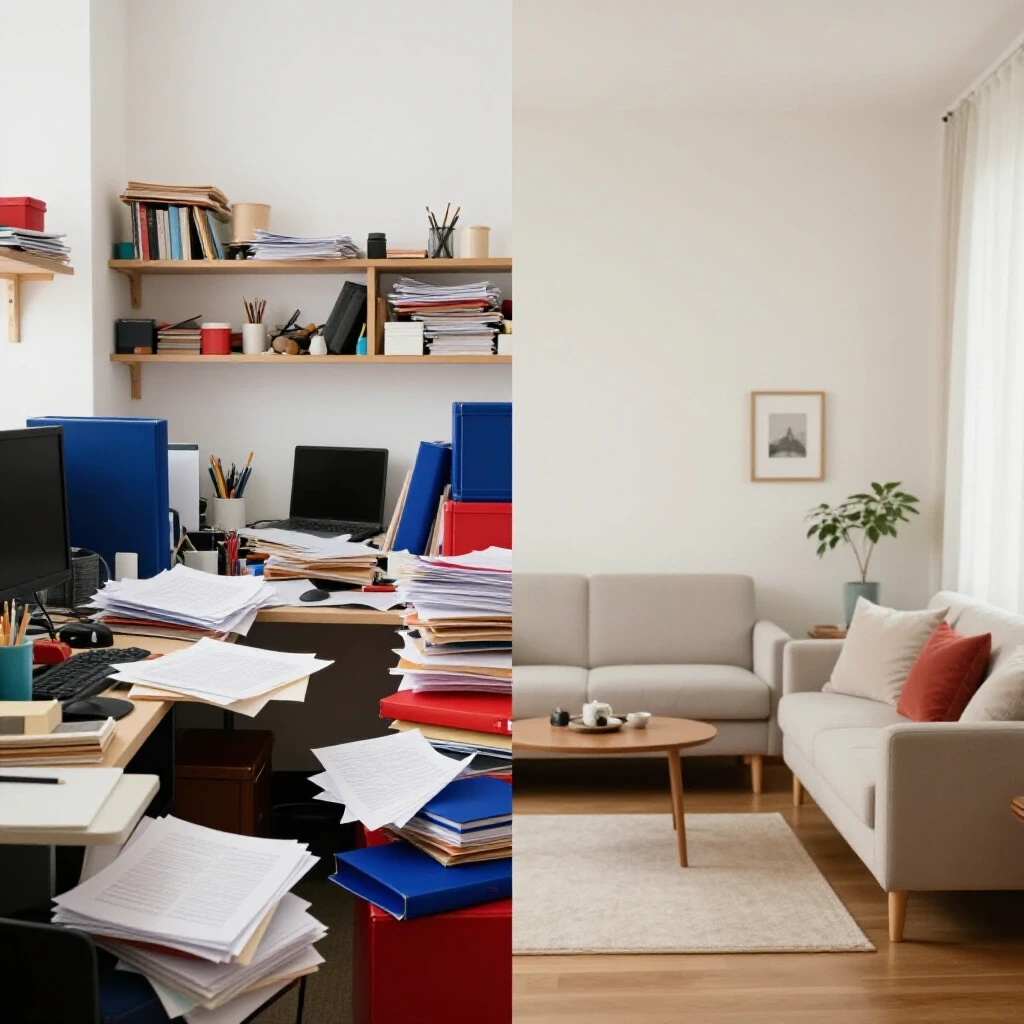
By focusing on the logistics of how we live, we can create “storage solutions for families” that actually last. It’s not about making a space look like a magazine cover; it’s about making sure you can find your keys in the morning without a panic attack. When we design for our actual habits, the “mental fatigue” of a cluttered home begins to lift, replaced by a system that works with us instead of against us.
Frequently Asked Questions
Why does my house get messy again so quickly after I organize it? Most systems fail because they are “high-friction.” If it takes more than two motions to put something away, the human brain will naturally choose to leave it on a flat surface. Your house isn’t reverting to a mess because of a lack of willpower; it’s reverting because the storage system is harder to use than the alternative of leaving things out.
How do I get my kids to follow an organization system? Design systems for the “lowest common denominator.” Kids struggle with hangers, lids, and complex categories. Switch to open bins and hooks placed at their eye level. When the effort to be “tidy” is the same as the effort to be “messy,” they are more likely to participate.
What is the “One-In, One-Out” rule, and does it really work? It is a logistical strategy where every new item brought into the home must replace an existing item. This prevents “spatial capacity” from being exceeded. It works best for categories that tend to accumulate, like clothing, toys, and kitchen gadgets.
Should I buy all new bins before I start decluttering? No. Buying containers is the final step. You must first declutter to understand your “item density” and then observe your “spatial flow” to see where containers are actually needed. Buying bins first often leads to “container clutter,” where you have empty boxes taking up valuable space.
How do I manage paper clutter without it taking over my kitchen? Establish a “landing zone” near the entrance. Use a simple two-tier system: “Action” (bills to pay, forms to sign) and “Recycle.” Once a week, move the “Action” items to a digital folder or a deep archive. The goal is to keep paper from ever touching your primary living surfaces.
What are the best types of containers for a busy family? Clear, open-top bins are generally the best. They allow for “visual processing” (you can see what’s inside) and “low-friction” storage (you can toss things in). Avoid opaque bins with complex latches for any item used more than once a week.
How can I reduce the mental fatigue of cleaning? Switch from “deep cleaning” marathons to “functional resets.” A 10-minute nightly sweep of high-traffic zones reduces the cognitive load of waking up to a mess. When the system is designed around your habits, the “reset” becomes a low-effort routine rather than a chore.
What is “visual processing overload” in home organization? This occurs when there are too many different colors, textures, and items visible at once. It can lead to stress and an inability to focus. Using consistent, simple storage units helps “quiet” the room visually, even if the bins aren’t perfectly aligned inside.
How do I organize a small space with no closets? Focus on “vertical utilization.” Use wall-mounted shelving and “heavy-duty storage configurations” like industrial racks. In small spaces, every item must have a “Zone 1” or “Zone 2” designation, and anything that is “Zone 3” (rarely used) should be stored off-site or in deep storage.
What is the most common mistake people make when organizing? The most common mistake is prioritizing aesthetics over “retrieval speed.” People often buy beautiful, opaque baskets that hide clutter but make it impossible to find anything. This leads to “hidden clutter,” where the mess is just moved inside a box, and the system eventually collapses.
(This article was written by one of our staff writers, Christopher Bennett. Visit our Meet the Team page to learn more about the author and their expertise.)