How Fast Does Door Frame Rot Spread? (Prevention & Solutions)

I once watched a homeowner attempt to hide a softening door jamb by applying a thick layer of exterior-grade caulk and several coats of oil-based paint. They believed that sealing the surface would stop the wood from weakening further, but they unknowingly created a moisture trap. By the following spring, the entire lower six inches of the casing had transitioned from slightly soft to a fibrous, crumbly texture that could be scraped away with a fingernail.
In my 17 years as a facilities technician maintaining older properties, I have seen how quickly water can compromise a building envelope when the basics of moisture management are ignored. My work involved tracking water pathways through aging brickwork and testing the integrity of timber frames in high-humidity environments. I learned that wood does not simply fail on its own; it requires a specific set of environmental conditions to begin the process of fiber breakdown.
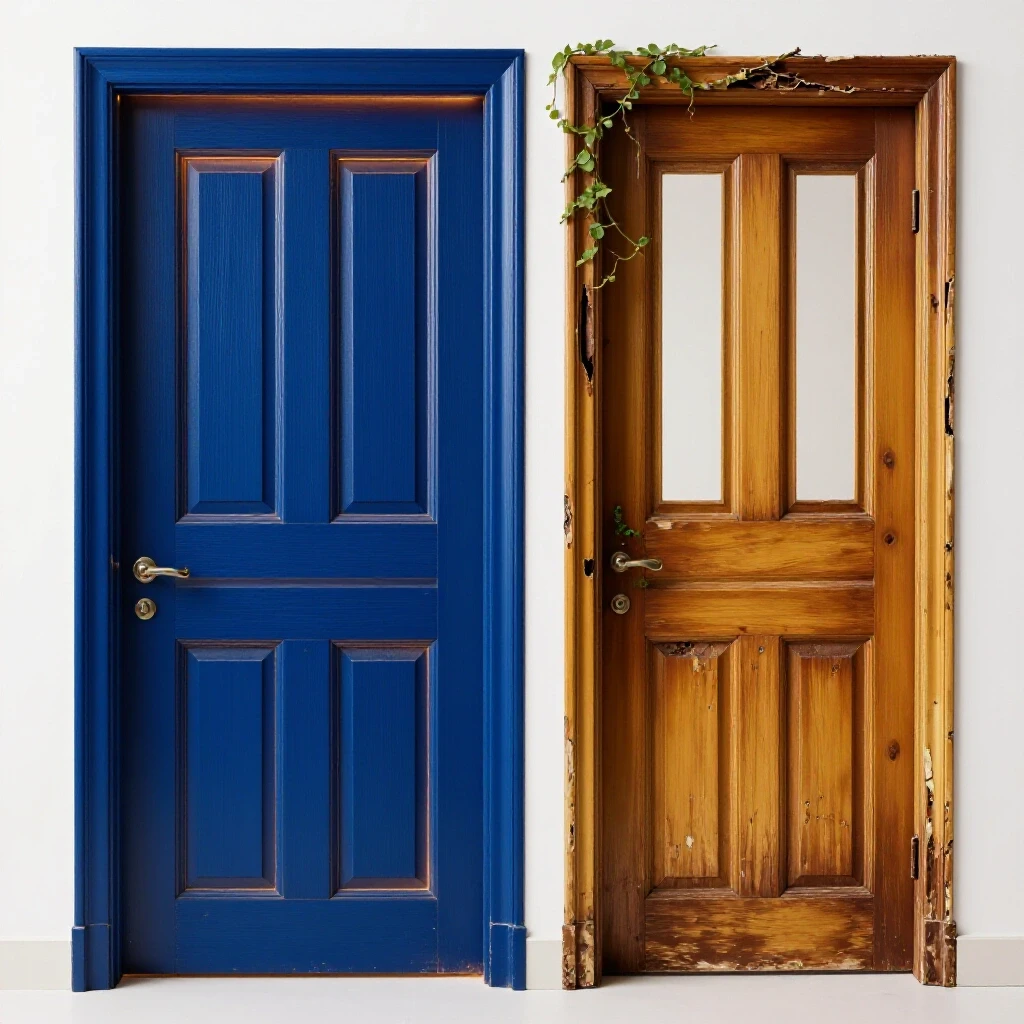
Understanding how moisture moves through cellular structures is the first step toward protecting your home. When you can identify the early signs of saturation, you can intervene before the damage requires a full replacement of the door assembly. This guide focuses on the systematic diagnostics and preventive habits I used to keep legacy properties in peak condition.
Understanding the Mechanics of Entryway Wood Decay
Entryway wood decay occurs when moisture levels in the timber remain consistently above 20 percent, allowing the cellular structure of the wood to break down. This process is driven by the presence of water, oxygen, and favorable temperatures. When these factors align, the natural polymers that give wood its strength begin to dissolve and separate.
Building science is the study of how heat, air, and moisture move through a structure. In the context of an exterior door, we focus on the building envelope, which is the physical separator between the conditioned interior and the unconditioned exterior. A failure in this envelope allows liquid water or high-vapor-pressure air to enter the wood fibers.
Capillary action is a primary driver of this issue. It is the ability of a liquid to flow through narrow spaces without the help of gravity. In a door frame, the end grain of the wood—the part facing the ground—acts like a bundle of microscopic straws. If the frame sits in a puddle or touches damp concrete, it sucks water upward into the wood.
| Symptom | Probable Root Cause | Immediate Action |
|---|---|---|
| Paint bubbling at the base | High moisture content (MC) trapped under the finish | Test with moisture meter; remove loose paint |
| Dark staining on the side casing | Surface water runoff or splashing | Check gutter alignment and grading |
| Softness when pressed with a tool | Internal fiber breakdown | Determine depth of decay; check for leaks |
| Visible gaps between sill and jamb | Sealant failure or wood shrinkage | Clean gap and apply high-quality sealant |
Diagnostic Tools for Measuring Moisture Intrusion
Effective residential diagnostics require objective data rather than visual guesses. Professionals use specialized tools to measure the physical state of the wood and the environment surrounding it. These tools help identify hidden saturation before the wood becomes soft to the touch or shows visible signs of distress on the surface.
To accurately assess the health of your door frames, I recommend using the following equipment:
- Pin-type moisture meter: This device measures electrical resistance between two pins pushed into the wood. Since water conducts electricity, a higher reading indicates a higher moisture content (MC).
- Stainless steel probe or awl: A simple tool used to test the mechanical resistance of the wood. If the tip sinks easily into the grain, the fibers have already begun to lose their structural integrity.
- Infrared thermometer: This tool measures surface temperatures. Because wet wood evaporates water, it is often cooler than the surrounding dry wood, which can highlight areas of hidden saturation.
- Flashlight (high lumen): Essential for spotting “checking” or small cracks in the finish where water might enter through capillary action.
When using a moisture meter, remember that a reading below 15% is generally considered safe. If you see readings between 16% and 19%, the wood is at risk. Anything consistently above 20% provides the necessary environment for the breakdown of wood fibers to accelerate.
How Quickly Does Casing Deterioration Advance?
The speed at which wood fibers lose their integrity depends on the wood species, the amount of water present, and the local climate. In ideal conditions for decay—high heat and constant dampness—visible softening can occur in as little as four to eight weeks. In cooler or drier environments, the process may take several months or even years to become noticeable.
In my facility logs, I tracked a specific oak door frame that was exposed to a leaking gutter. During a particularly rainy autumn, the moisture content stayed at 28% for six weeks. By the end of that period, the bottom three inches of the jamb had lost 40% of its density. This demonstrates that the rate of change is not linear; once the wood becomes saturated, the breakdown often speeds up.
| Stage of Decay | Timeframe (Typical) | Physical Characteristics |
|---|---|---|
| Early Saturation | 1 to 4 weeks | Wood feels “cold”; paint may lose its sheen |
| Fiber Softening | 1 to 3 months | Wood yields slightly to pressure; paint may crack |
| Visible Breakdown | 3 to 6 months | Fibers become stringy or crumbly; dark discoloration |
| Structural Loss | 6+ months | Wood can be removed by hand; fasteners lose grip |
Factors like the “stack effect” can also play a role. The stack effect is the movement of air into and out of buildings, driven by buoyancy. If your home has a negative pressure, it can pull moist outdoor air through gaps in the door frame, keeping the wood damp from the inside out even if it isn’t raining.
Prevention Strategies for Older Door Assemblies
Preventative home care involves managing the pathways that water takes to reach your door frame. By controlling the grading, drainage, and surface protection, you can keep the moisture content of the wood within a safe range. These steps are designed to deflect water away from the building envelope and ensure that any incidental moisture can dry quickly.
Managing Grading and Drainage
The ground around your entryway should slope away from the house at a rate of at least 1/4 inch per foot for the first six feet. This prevents water from pooling at the base of the door. If your door opens onto a concrete porch, ensure the concrete has a slight pitch away from the threshold to prevent “back-splashing” against the casing.
Maintaining the Building Envelope
The building envelope is your home’s first line of defense against the elements. For a door frame, this includes the flashing, the caulking, and the paint. I recommend inspecting these components twice a year.
- Check the “drip cap” flashing at the top of the door to ensure it directs water over the outer edge of the trim.
- Inspect the sealant joints where the side casings meet the threshold. These joints often fail due to the different expansion rates of wood and metal.
- Look for “checking” in the wood, which are small cracks that run parallel to the grain. These should be sanded and resealed to prevent water from entering the core of the timber.
Step-by-Step Inspection and Minor Repair Sequence
A systematic approach to inspection helps you catch issues before they require major intervention. By following a set sequence, you ensure that no part of the door assembly is overlooked. This process moves from the exterior surfaces to the internal components and finally to the mechanical operation of the door itself.
The Inspection Sequence
- Visual Audit: Start by looking at the bottom of the jambs. Look for paint that is peeling, bubbling, or turning a dark gray or black color.
- The “Pick Test”: Use an awl or a small screwdriver to gently poke the wood at the base of the frame. If the wood feels spongy or the tool sinks in more than 1/8 of an inch with light pressure, the fibers are compromised.
- Moisture Mapping: Use your moisture meter to take readings at the top, middle, and bottom of the frame. Record these numbers in a maintenance log to track changes over time.
- Threshold Check: Ensure the door sweep is making a tight seal. If water can blow under the door, it will eventually saturate the subfloor and the base of the jambs.
DIY vs. Professional Scope Limits
Knowing when to handle a repair yourself and when to call a professional is critical for structural protection. Minor surface repairs can often be handled with basic tools, but deeper issues may require more extensive work.
| Task | DIY Scope | Professional Scope |
|---|---|---|
| Surface Sealing | Recaulking and repainting | N/A |
| Minor Patching | Using wood epoxy for holes < 1 inch | N/A |
| Jamb Replacement | Not recommended for beginners | Replacing the entire side jamb |
| Sill Repair | Replacing a door sweep | Rebuilding the subfloor or sill plate |
| Structural Integrity | N/A | Any repair involving load-bearing headers |
Building a Multi-Year Prevention Program
A multi-year prevention program shifts your mindset from “fixing what is broken” to “maintaining what is whole.” By scheduling routine checks, you can identify the exact moment when a sealant fails or a gutter clogs. This proactive approach is the most effective way to avoid large, unexpected repair bills.
Seasonal Maintenance Checklist
- Spring: Clean gutters and downspouts to ensure water is moving away from the entryway. Check for any winter damage to the paint or caulk.
- Summer: Re-stain or repaint any wood that shows signs of UV damage. High heat can cause wood to shrink, opening up new gaps for water.
- Autumn: Inspect weatherstripping. Ensure that the door closes tightly against the frame to prevent wind-driven rain from entering.
- Winter: Monitor for ice dams or snow buildup against the door. Clear snow away from the threshold immediately after a storm.
Tracking Your Results
Keep a simple notebook or digital file with photos and moisture readings. When you have a baseline of what is “normal” for your home, you will notice immediately when something changes. For example, if your jamb usually reads 12% MC in July but suddenly reads 18%, you know to look for a new leak in the flashing or a failure in the overhead gutter.
Frequently Asked Questions
How can I tell if the wood is just wet or if it has actually started to break down?
You can tell the difference by performing a “pick test” with a sharp tool. If the wood is simply wet, it will feel hard but damp, and the tool will not easily penetrate the surface. If the fibers have started to break down, the wood will feel soft, spongy, or “punky,” and the tool will sink in with very little resistance.
Does the type of wood used in the door frame affect how fast it deteriorates?
Yes, wood species have different levels of natural resistance to moisture. Softwoods like pine or fir, which are commonly used in modern construction, tend to break down faster than hardwoods like white oak or cedar. Older homes often have “old-growth” timber, which is denser and more resistant, but it still requires proper maintenance to prevent saturation.
Why does the paint on my door frame keep peeling at the very bottom?
Peeling paint at the base is often a sign of “back-wetting.” This happens when moisture is absorbed through the unpainted bottom edge of the wood (the end grain) via capillary action. As the moisture tries to evaporate through the face of the wood, it pushes the paint film away from the surface, causing it to bubble and peel.
Is it possible to stop the breakdown process without replacing the whole frame?
If the decay is caught early and is limited to a small area, you can sometimes stop the process by removing the source of moisture and allowing the wood to dry completely (below 15% MC). Once dry, you can treat the area with a wood consolidant or epoxy. However, if the breakdown has affected the structural integrity or a large section of the jamb, replacement is usually necessary.
How does humidity inside the house affect the exterior door frame?
High indoor humidity can lead to condensation on the interior side of the door frame during cold weather. If this moisture is not managed, it can seep into the wood joints. Over time, this internal dampness contributes to the overall moisture load of the frame, potentially leading to fiber breakdown from the inside out.
What is the best type of caulk to use for preventing moisture entry?
For exterior door frames, a high-quality polyurethane or silicone-modified polymer (SMP) sealant is usually best. These materials offer high flexibility and excellent adhesion to both wood and masonry. They are better able to withstand the expansion and contraction of the door frame compared to standard latex or acrylic caulks.
Can I just paint over soft wood to seal it?
No, painting over soft wood is a common mistake that actually accelerates the problem. The paint traps existing moisture inside the wood fibers, creating a “greenhouse effect” that speeds up the breakdown process. You must always remove the soft material, dry the remaining wood, and treat it before applying a new finish.
How much does the slope of my porch matter for my door’s health?
The slope is critical. Even a perfectly sealed door frame will eventually fail if it sits in standing water. A porch should have a minimum slope of 1/8 to 1/4 inch per foot away from the house. If water pools near your door after a rain, you may need to install a drainage channel or regrade the area.
Should I use a pressure washer to clean my door frame?
I do not recommend using a pressure washer on wood door frames. The high-pressure stream can force water deep into the wood grain and behind the casing, where it cannot easily dry. This can lead to rapid saturation and internal decay. A soft brush and a garden hose with a low-pressure spray are much safer.
What should I do if my moisture meter shows a reading of 25%?
A reading of 25% indicates that the wood is actively at risk of fiber breakdown. You should immediately investigate the source of the water. Check the gutters, the roof flashing above the door, and the caulking around the frame. Use a fan or dehumidifier to help dry the area once the leak is stopped.
(This article was written by one of our staff writers, Daniel Whitaker. Visit our Meet the Team page to learn more about the author and their expertise.)