How to Label Drawers for Kids to Reduce Clutter (Easy Guide)

Discussing innovation in the home often brings to mind high-tech gadgets or expensive renovations. However, in my eleven years of managing logistics and operations, I have found that the most impactful innovations are often the simplest. In a busy family environment, true innovation means creating a system that reduces the number of decisions a person has to make. For parents, this translates to designing storage that a four-year-old can navigate just as easily as an adult.
When we look at household management through the lens of industrial logistics, we see that clutter is usually a symptom of a “bottleneck” in the sorting process. My own family struggled with this for years. We would spend entire Saturdays organizing clothes and toys, only to find the floor covered again by Tuesday. The problem was not a lack of effort; it was a high level of “system friction.” The storage we used required too much mental energy to maintain. By applying spatial management principles and visual cues, we transformed our children’s rooms into functional zones that actually stay tidy.
The Logistics of Daily Clutter Reversion
This concept examines why household organization often fails within days of a major cleanup. It focuses on the balance between inflow and outflow, identifying the specific points where items accumulate because the storage system requires too much mental or physical effort to maintain during a busy schedule.
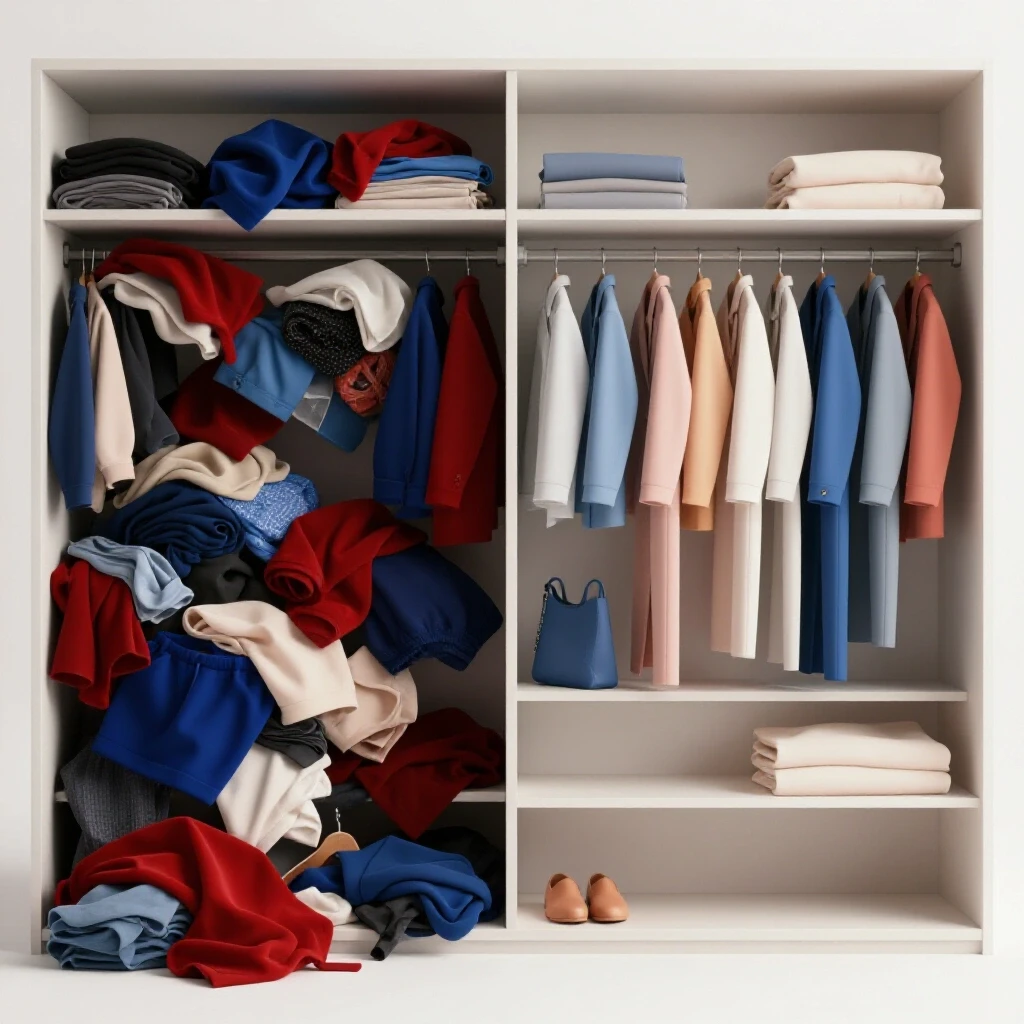
In the world of operations, we talk about “throughput.” This is the rate at which items move through a system. In a home, items enter (inflow), are used, and then must be returned to their designated spot (outflow). When the outflow process is slower than the usage rate, clutter builds up. For a child, the “outflow” of putting away a clean shirt is often blocked by a lack of clarity. If they do not know exactly where the shirt goes without thinking, they will likely drop it on the floor or shove it into the nearest open space.
Environmental psychology research suggests that visual clutter increases cortisol levels, the body’s primary stress hormone. This is particularly true for parents who are already dealing with “decision fatigue” from their professional lives. When you come home to a room where every drawer looks identical, your brain has to work harder to process the environment. By creating distinct visual markers on the exterior of storage units, we reduce the cognitive load required to maintain order.
- Inflow Control: Limiting the number of new items entering the room.
- Outflow Efficiency: Making it easier to put items away than to leave them out.
- Spatial Capacity: Ensuring every drawer has at least 20% empty space to allow for easy movement.
- Visual Processing: Using markers to help the brain identify “zones” instantly.
Analyzing System Friction in Daily Routines
System friction refers to the physical or mental resistance encountered when performing a task. In a home setting, this includes the number of steps required to put an item away, the weight of a drawer, or the difficulty of identifying where a specific category of clothing belongs.
When I audited our home’s storage, I used a “Step Count” metric. To put away a pair of socks, my son had to: 1. Walk to the dresser. 2. Guess which drawer held socks. 3. Open a heavy drawer. 4. Sort through a jumble of underwear and leggings. 5. Place the socks inside. This five-step process had too much friction. By applying clear identification markers to the front of the drawers, we reduced the process to three steps: 1. Walk to the dresser. 2. Identify the “sock” icon. 3. Place the socks inside.
Interestingly, studies in organizational behavior show that when a system is “low-friction,” compliance increases significantly. This is why professional warehouses use clear signage and color-coding. We can apply these same industrial standards to a child’s dresser to encourage independence and reduce the daily “sorting burden” on parents.
Storage Friction Index by Bin and Drawer Type
| Storage Method | Physical Steps | Mental Decisions | Maintenance Difficulty |
|---|---|---|---|
| Unlabeled Deep Bins | 2 | High | Moderate |
| Stacked Containers | 4 | Moderate | High |
| Labeled Shallow Drawers | 1 | Low | Low |
| Open Shelving | 1 | High | High |
Designing Visual Cues for Independent Sorting
Visual cues are environmental signals that guide behavior without the need for verbal instructions. For children, these cues often involve a combination of simple text and recognizable icons. This “dual-coding” approach ensures that kids of all reading levels can understand the organizational system.
In our home redesign, we moved away from generic bins and toward a system of visual identification. We found that text alone was not enough for our youngest, while icons alone were sometimes too ambiguous for the older children. By combining a simple word like “Pants” with a clear silhouette of trousers, we created a universal language for the room. This reduced the “retrieval friction” during the morning rush.
Research from spatial ergonomics journals indicates that the height of these cues is also critical. Labels should be placed at the child’s eye level, not the adult’s. If a child has to look up to see a label, their brain processes the information more slowly. We placed our markers on the top-left corner of each drawer face, following the natural left-to-right reading pattern that children learn in school.
- Icon Selection: Use high-contrast, black-and-white silhouettes for maximum clarity.
- Font Choice: Use a clean, sans-serif font like Arial or Helvetica for easy reading.
- Color Coding: Assign a specific color to each child or category to speed up sorting.
- Placement Consistency: Keep markers in the same relative position on every piece of furniture.
Durable Labeling Solutions for High-Usage Zones
Durable labeling involves selecting materials and attachment methods that can withstand the daily wear and tear of a family home. These solutions must be resistant to peeling, fading, and curious fingers while remaining easy to update as a child’s needs and clothing sizes change.
One of the biggest mistakes I made early on was using paper stickers. They peeled within weeks, leaving a sticky residue that attracted more dirt. For a system to be sustainable, it must be “heavy-duty.” We eventually settled on three primary methods that have survived years of use.
- Vinyl Decals: These are thin, durable, and can be wiped clean. They adhere well to wood and plastic but can be removed without damaging the surface.
- Cardstock in Plastic Sleeves: Using small, adhesive-backed plastic pockets allows you to swap out labels as the contents of the drawer change. This is ideal for seasonal clothing rotations.
- Chalkboard Paint Patches: Applying a small square of chalkboard paint to a drawer face allows for instant updates, though it requires more frequent maintenance than vinyl.
Visual vs. Functional Organization Systems
| Feature | Visual-First (Aesthetic) | Functional-First (Practical) |
|---|---|---|
| Primary Goal | Looks “perfect” in photos | Reduces daily sorting time |
| Label Type | Decorative/Hard to read | Clear icons and bold text |
| Maintenance | High (frequent tidying) | Low (self-sustaining) |
| Child Independence | Low | High |
Implementation Steps for Family Storage Systems
Establishing a sustainable system requires a logical progression from auditing current habits to installing physical markers. This process ensures that the new system addresses the specific bottlenecks of your household rather than following a one-size-fits-all approach that is likely to fail.
- Step 1: The Spatial Audit. Observe your child getting dressed for three days. Note where they hesitate or where they leave piles of clothes.
- Step 2: Category Consolidation. Group items logically. Instead of having “blue shirts” and “red shirts,” just have “Short Sleeve” and “Long Sleeve.”
- Step 3: Icon and Text Creation. Design or purchase markers that include both a clear image and the name of the item.
- Step 4: Physical Installation. Clean the drawer surfaces thoroughly before applying any adhesive to ensure longevity.
- Step 5: The “Walkthrough.” Show the child the new system and have them practice putting one item in each drawer.
In our experience, the “Walkthrough” is the most important step. It turns the organization project into a shared family tool rather than a rule imposed by parents. We found that once our children understood the “why” behind the icons, they felt a sense of pride in maintaining their own space.
Measuring the ROI of Simplified Storage Systems
Measuring the return on investment (ROI) for home organization involves tracking the time and mental energy saved daily. By comparing the duration of morning routines and evening cleanups before and after implementing a system, parents can see the tangible benefits of their efforts.
Before we simplified our identification system, “clean up time” in the kids’ room took an average of 25 minutes and required constant parental supervision. After installing the visual markers, the time dropped to 10 minutes, and the children could complete 80% of the task independently. This is a 60% reduction in daily maintenance time.
Daily Maintenance Timelines by Family Size
| Family Size | Pre-System Sorting Time | Post-System Sorting Time | Weekly Time Saved |
|---|---|---|---|
| 1 Child | 15 Minutes | 5 Minutes | 70 Minutes |
| 2 Children | 30 Minutes | 12 Minutes | 126 Minutes |
| 3+ Children | 45+ Minutes | 20 Minutes | 175+ Minutes |
Maintaining Order Over the Long Term
Sustainable organization is not a one-time event but a series of small, repeatable habits. To keep a system functioning over months and years, parents must establish “feedback loops” that identify when a system is breaking down and needs adjustment.
We perform a “System Check” every six months. As kids grow, their clothes get larger, and their interests change. A drawer that once held “Toddler Toys” might now need to hold “Building Blocks.” Because we used a modular labeling approach (the plastic sleeves mentioned earlier), we can update the icons in less than five minutes.
Another key to long-term success is the “One-In, One-Out” rule. For every new item that enters the drawer, an old one must be donated or moved to long-term storage. This prevents the “spatial capacity” from being exceeded, which is the number one cause of system failure. If a drawer is too full, the visual markers lose their effectiveness because the child cannot easily see or access the contents.
- Quarterly Purge: Remove items that no longer fit or are no longer used.
- Label Integrity Check: Replace any markers that are peeling or faded.
- Habit Reinforcement: Praise the process of putting things away, not just the finished result.
- Volume Control: Ensure drawers are never more than 80% full.
Overcoming Common Sorting Obstacles
Even the best systems encounter hurdles, such as changing seasons or a sudden influx of new toys. Understanding how to navigate these challenges without abandoning the entire organizational structure is essential for maintaining a functional and stress-free living environment.
One common mistake is over-categorization. If you have a separate drawer for “socks,” “tights,” “ankle socks,” and “dress socks,” the system becomes too complex. We found that “Socks and Underwear” as a single category works best for children. It reduces the number of decisions they have to make.
Another obstacle is the “transition pile.” This is the stack of clothes that are too clean for the laundry but too “worn” to go back in the drawer. We solved this by adding a specific “Wear Again” hook on the side of the dresser. This prevents the “transition pile” from ending up on the floor and bypassing the labeled system entirely.
- Avoid Micro-Sorting: Keep categories broad to reduce decision fatigue.
- Address Transitions: Create a designated spot for “in-between” items.
- Standardize Gear: Use identical drawers or bins to create visual symmetry, which reduces mental noise.
- Focus on Flow: If items keep piling up in one spot, move the storage to that spot rather than fighting the natural flow.
The Role of Consistency in Spatial Management
Consistency is the glue that holds a logistical system together. When the same visual language is used throughout a child’s environment, it reinforces their understanding of boundaries and expectations, making it easier for them to transition between different tasks and areas.
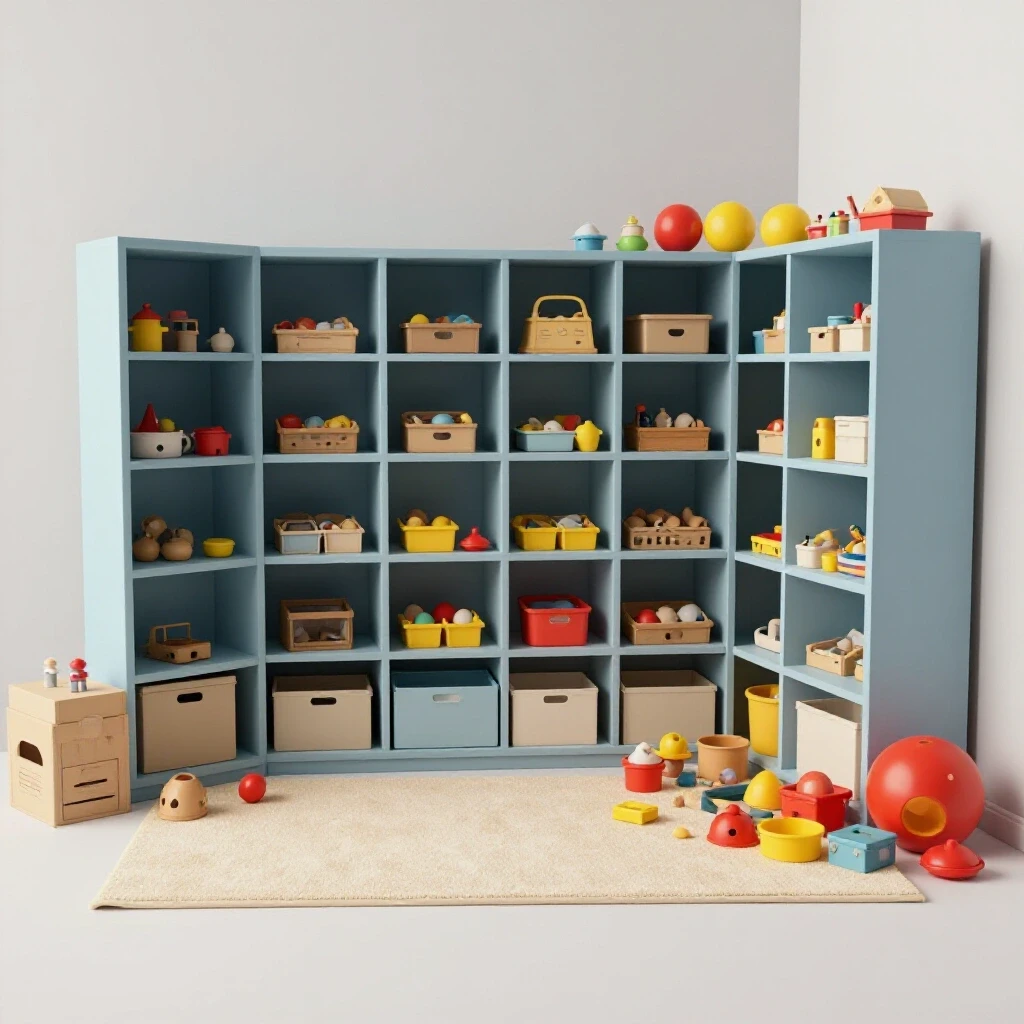
In our home, we applied the same icon style to the toy bins that we used for the clothing drawers. This created a “universal language of order.” When our daughter sees a silhouette of a block, she knows exactly what that symbol means, whether it is in the playroom or her bedroom. This consistency reduces the “cognitive switching cost” as she moves through her day.
Logistical professionals know that a system is only as good as its weakest link. If the dresser is labeled but the toy shelf is a chaotic mess, the child will struggle to maintain the dresser. By standardizing the identification process across all high-traffic zones, you create an environment where “a place for everything” isn’t just a saying, but a visible reality.
Decluttering Sorting Log (Sample)
| Date | Zone | Items Removed | Time Taken | Success Level |
|---|---|---|---|---|
| Oct 1 | Dresser | 12 (too small) | 15 min | High |
| Oct 5 | Toy Bin | 5 (broken) | 10 min | Moderate |
| Oct 15 | Closet | 8 (seasonal) | 20 min | High |
Conclusion: Taking the First Logical Steps
Building a low-maintenance home isn’t about achieving a magazine-perfect look; it is about reclaiming your time and mental energy. By focusing on reducing system friction and using clear visual markers, you empower your children to take ownership of their space. This, in turn, reduces the daily stress on you as a parent.
Start small. Choose one dresser or one set of toy bins. Apply simple, durable icons and text. Observe how the flow of the room changes over the next week. You will likely find that when the “where does this go?” question is answered visually, the “why is this on the floor?” question starts to disappear.
Frequently Asked Questions
Why do my organization systems always fail after a few days?
Most systems fail because they have too much “friction.” If it takes more than two or three steps to put an item away, or if the storage location isn’t immediately obvious, items will accumulate on flat surfaces. Visual markers solve this by removing the “guessing” phase of cleaning.
At what age can children start using visual markers for their drawers?
Children can begin recognizing simple icons as early as 18 to 24 months. By age three, most children can successfully match an item in their hand to an icon on a drawer. Adding text alongside the icon helps reinforce literacy as they grow.
What are the best materials for labeling drawers in a high-traffic home?
Vinyl decals are generally the best balance of durability and ease of use. They are waterproof and don’t peel as easily as paper. For a more flexible system, use adhesive plastic sleeves that allow you to slide in new cardstock labels as needed.
Should I label the inside or the outside of the drawer?
Always label the outside. The goal of a visual cue is to provide information before a physical action is taken. If a child has to open three drawers to find the right one, the system friction is too high, and they are more likely to give up.
How many categories should I have for a child’s clothing?
Keep it to 5–7 broad categories. Common ones include Tops, Bottoms, Socks/Underwear, Pajamas, and Sweaters. Over-categorizing leads to decision fatigue and makes the system harder for a child to maintain independently.
How do I handle seasonal clothing changes with a labeled system?
This is where modular labels, like cardstock in plastic sleeves, are very helpful. When winter arrives, you can simply swap the “Shorts” card for a “Sweaters” card without having to remove and replace an adhesive sticker.
Do visual markers really help with morning stress?
Yes. By reducing the time spent searching for specific items, you shorten the “getting ready” window. When a child can see exactly where their socks are, they are less likely to become frustrated or require your direct assistance.
What if my child can’t read yet?
That is the primary benefit of using icons. A silhouette of a shirt is a universal symbol. By placing the word underneath the icon, you are also providing a “print-rich environment” that helps them associate the written word with the object.
How do I prevent the drawers from becoming a jumbled mess inside?
Use internal drawer dividers to keep the items separated, but don’t make them too restrictive. The labels tell the child which drawer to use; the dividers help them see what is inside once the drawer is open.
Is it worth labeling toy bins as well?
Absolutely. The same principles of retrieval friction and cognitive load apply to toys. If a child knows that all the “cars” go in the bin with the car icon, they are much more likely to help with the evening cleanup.
(This article was written by one of our staff writers, Christopher Bennett. Visit our Meet the Team page to learn more about the author and their expertise.)