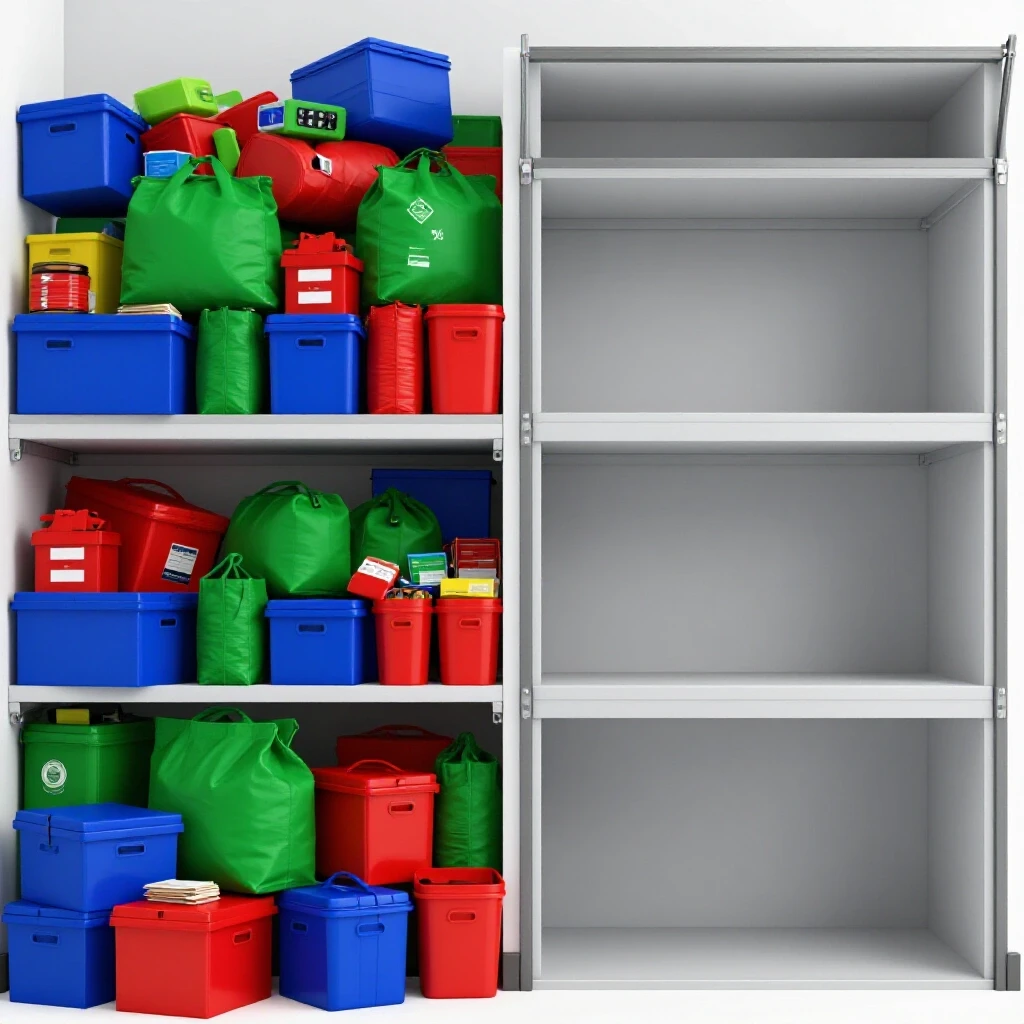
How to Curate Everyday Items for a Tidy Home (Step-by-Step Guide)

“Have nothing in your houses that you do not know to be useful, or believe to be beautiful.” This famous advice from William Morris serves as the foundation for any functional living space. As an operations professional, I have spent over a decade applying industrial efficiency to the chaos of a busy family home. I have learned that a home reverts to clutter not because of a lack of effort, but because the systems in place ignore the laws of logistics and spatial capacity.
Early in my career, I treated my home like a warehouse, using complex labeling and deep bins. My family hated it. Items would stay organized for three days before the “system” collapsed under the weight of daily life. I realized that sustainable decluttering isn’t about buying more containers; it is about the selective refinement of what we allow to occupy our limited square footage. By focusing on flow rates and retrieval friction, we can create a home that supports our lives rather than demanding our constant labor.

Why Household Systems Often Collapse Within Days
Spatial logistics is the study of how items move through a defined area and the efficiency of their placement. In a home, systems fail when the “energy cost” of putting an item away is higher than the “energy cost” of leaving it on the counter. We often design for how we want to live, rather than how we actually move through our rooms.
The Hidden Cost of Visual Processing Overload
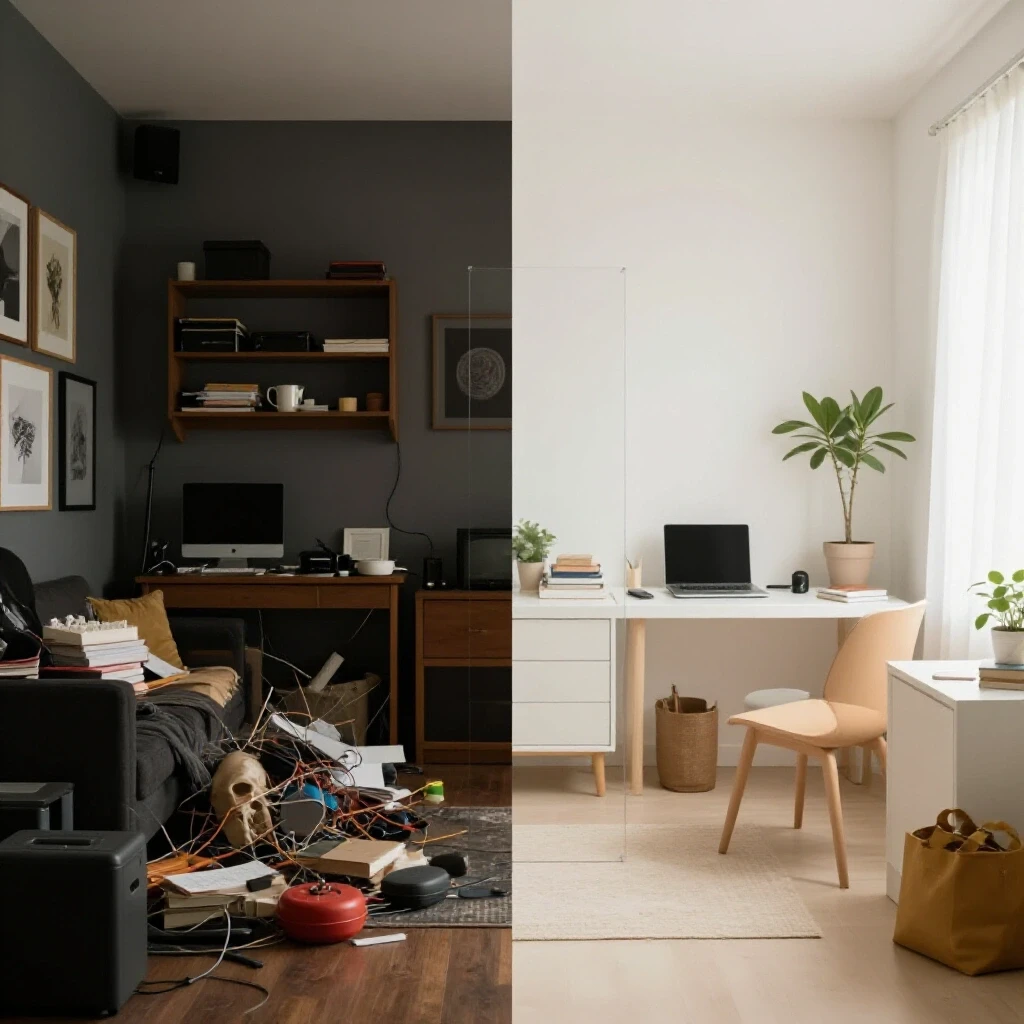
Visual processing overload occurs when the brain is forced to scan too many distinct objects at once, leading to cognitive fatigue. Research in environmental psychology journals suggests that high-density visual environments increase cortisol levels, particularly in parents. When every surface is covered with “useful” items, the brain cannot find a place to rest.
Understanding Retrieval Friction and Spatial Capacity
Retrieval friction is the number of physical steps or movements required to access or put away an object. Spatial capacity is the hard limit of how much a shelf or drawer can hold before it becomes non-functional. If a drawer is at 100% capacity, removing one item requires moving three others, which creates a high-friction environment that discourages maintenance.
| System Type | Retrieval Steps | Maintenance Level | Long-term Success Rate |
|---|---|---|---|
| Lidded Bins (Stacked) | 4-6 Steps | High Effort | 15% |
| Open Bins/Baskets | 1-2 Steps | Low Effort | 85% |
| Precision Labeling | 3-5 Steps | Moderate Effort | 40% |
| Zoned Open Shelving | 1 Step | Very Low Effort | 90% |
The Logistics of Selective Refinement
Selective refinement is the process of evaluating household inventory based on frequency of use and the physical constraints of the home. Instead of simply “cleaning,” we treat the home as a curated collection where every item must justify the space it occupies. This reduces the total volume of goods to a manageable level.
Establishing Inflow and Outflow Controls
Inflow and outflow control is a logistical principle that ensures the number of items entering a space does not exceed the number of items leaving it. To maintain a functional home storage environment, we must create “valves” for our possessions. If a new toy enters the house, an old one must exit to keep the spatial density stable.
The 80/20 Rule of Household Inventory
Organizational behavior studies often highlight that we use 20% of our belongings 80% of the time. The goal of simplifying your home inventory is to ensure that this 20% is the most accessible. By identifying the high-frequency items and placing them in “prime real estate” zones, we reduce the daily time spent searching for essentials.
- Active Inventory: Items used daily or weekly (placed between hip and eye level).
- Passive Inventory: Items used monthly (placed in high or low cabinets).
- Archival Inventory: Items used once a year (placed in garage or attic).
Designing High-Efficiency Zoning Maps
Zoning is the practice of grouping related activities and their required tools into specific, dedicated areas of the home. A well-zoned home minimizes the distance traveled to complete a task. When we map our homes logistically, we ensure that the items needed for a “morning routine” are not stored across three different rooms.
Mapping Daily Movement Patterns
To create a functional home, I tracked my family’s movement for one week to identify “bottleneck zones.” We found that the entryway was a high-friction area because there was no dedicated spot for mail or keys. By placing a small tray exactly where we naturally dropped our belongings, we eliminated a major source of daily clutter.
Industrial Sorting Metrics for Residential Use
In logistics, we measure “pick time,” which is how long it takes to find and grab an item. You can apply this to your home organization systems by aiming for a pick time of under five seconds for any daily essential. If it takes longer than that, your storage solution is too complex or your inventory is too dense.
- Identify a specific category (e.g., school supplies).
- Clear the zone completely to see the actual spatial capacity.
- Sort items into “Keep,” “Relocate,” and “Remove.”
- Measure the volume of the “Keep” pile against the available shelf space.
- Aim for a 70% fill rate to allow for easy retrieval.
Reducing Friction in Home Organization Systems
System friction is the physical or mental resistance encountered when trying to follow a specific organizational rule. If a child has to unlatch a heavy lid to put away a toy, they likely won’t do it. Reducing friction means choosing storage solutions for families that align with natural human laziness.
Choosing Low-Maintenance Storage Gear
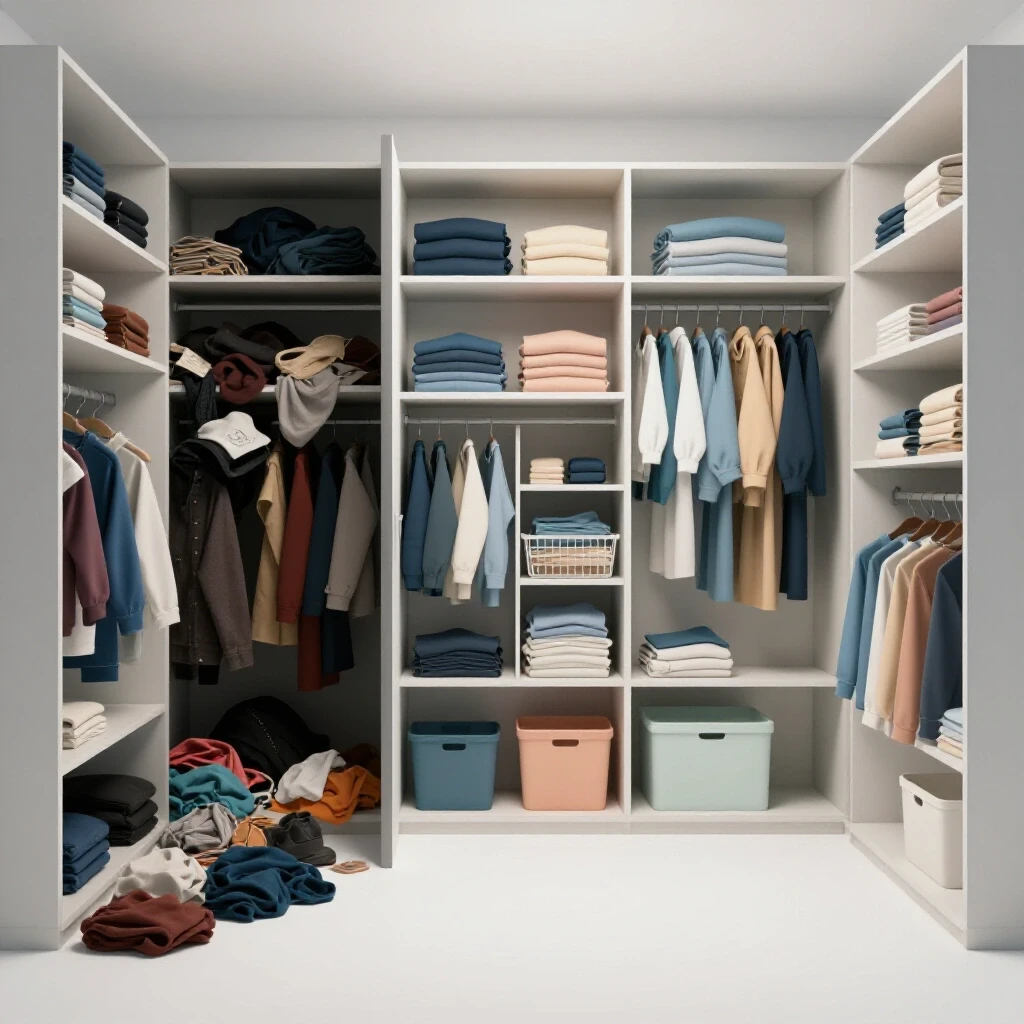
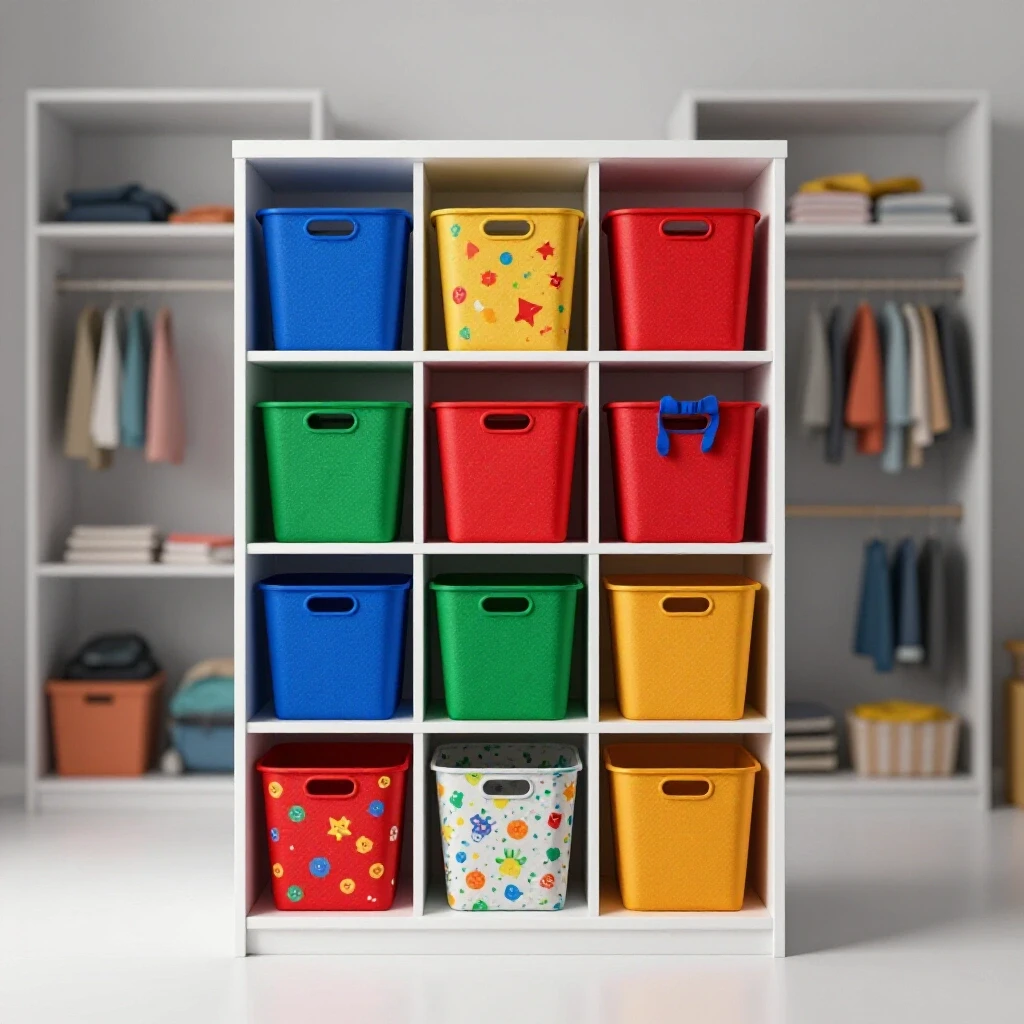
The best storage solutions are those that require the fewest motions. Open-top baskets are superior to lidded boxes for high-frequency items because they remove the “open lid” step. In my own home, we replaced our lidded laundry hampers with open-top versions, and the amount of clothing on the floor dropped by nearly 60% within a month.
The Power of Transparent and Visual Cues
Our brains process images faster than text. Using clear bins or open shelving allows the family to see where things belong without reading labels. This is especially helpful for children or busy professionals suffering from decision fatigue. When the “home” for an item is visually obvious, the mental load of tidying is significantly reduced.
- Visual Access: Can I see the item without moving anything else?
- Physical Access: Can I grab the item with one hand?
- Return Ease: Can I put the item back in under three seconds?
Aligning Household Systems with Family Behavior
Behavioral alignment is the strategy of designing systems around how people actually act, rather than how we wish they would act. If your family always leaves shoes by the front door, putting a shoe rack in the bedroom will fail. A sustainable decluttering journey acknowledges these habits and places storage exactly where the behavior occurs.
Building Systematic Habit Loops
A habit loop consists of a cue, a routine, and a reward. In a tidy home, the “cue” is finishing an activity, and the “routine” is the low-friction act of returning items to their zones. We maintain order by making the routine so simple that it becomes an automatic response. This is the key to preventing the “reversion to clutter” that many families experience.
The “One-Touch” Rule for Daily Maintenance
The “one-touch” rule suggests that you should only handle an item once before it reaches its final destination. Instead of putting mail on the counter to sort later, you sort it immediately over the recycling bin. This logistical approach prevents the accumulation of “temporary” piles that eventually turn into permanent clutter.
| Family Member | Typical Friction Point | Simple System Adjustment |
|---|---|---|
| Toddler/Child | Heavy toy box lids | Open floor bins for easy tossing |
| Busy Professional | Mail and paper piles | Wall-mounted “Action” and “File” slots |
| Teenager | School bag “dumping” | Dedicated heavy-duty hooks at entrance |
| All Members | Remote control loss | Magnetic strips or dedicated tray |
Maintaining Order Over the Long Term
Sustainable home management is not a one-time event; it is a series of small, low-energy adjustments. By treating our homes as living environments that require regular “edits,” we prevent the need for massive, exhausting overhauls. This shift in mindset from “cleaning” to “curating” is what leads to long-term success.
Monthly Volume Audits
Every thirty days, I perform a quick visual audit of our high-traffic zones. If a shelf looks crowded, it is a sign that the “inflow” has outpaced the “outflow.” We then spend fifteen minutes removing items that are no longer serving a daily purpose. This prevents the slow creep of household clutter from overwhelming the space.
Using Technology for Inventory Tracking
For items stored in “passive” or “archival” zones, like holiday decor or seasonal clothing, smart-label tracking systems can be invaluable. These allow you to scan a QR code on a bin to see exactly what is inside via your phone. This prevents “ghost inventory”—items you own but cannot find, which often leads to duplicate purchases and more clutter.
- Standardize your bins: Use the same size and shape for stacking efficiency.
- Digital logs: Keep a simple list of what is in the garage or attic.
- Color coding: Use specific colors for different seasons (e.g., red for holiday).
- Weight limits: Never pack a bin heavier than 20 pounds for easy movement.
- Placement: Store the heaviest items at the bottom to prevent tipping.
Conclusion: Starting Your Curated Living Journey
The path to a functional, low-stress home begins with a single zone. Do not try to reorganize the entire house in one weekend; that is a recipe for burnout and system failure. Instead, choose one high-friction area—perhaps the kitchen junk drawer or the entryway—and apply the principles of selective refinement.
Focus on reducing the number of steps required to put things away. Aim for a 70% to 80% capacity in your storage units to allow the space to “breathe.” Most importantly, remember that a home is a tool for living, not a museum. By curating your daily items and simplifying your systems, you reclaim the time and mental energy that clutter used to steal. Start today by removing three items from your most cluttered surface that you haven’t used in a month. That small act of refinement is the first step toward a more sustainable and peaceful home.
Frequently Asked Questions
Why does my house get messy again just days after I organize it?
Clutter reversion usually happens because the storage system has too much friction. If it takes more than two or three steps to put an item away, people will naturally leave it on a flat surface. To fix this, simplify your containers—use open baskets instead of lidded bins—and ensure every item has a dedicated “home” that is easy to reach.
How do I know which items to keep and which to remove?
Focus on frequency of use and spatial capacity. If you haven’t used an item in the last year and it doesn’t serve a specific, vital function, it is likely “dead inventory.” Your home has a finite amount of space; every item you keep should earn its place by being used regularly or being essential for a specific task.
What is the most efficient way to organize a small kitchen?
Use the 80/20 rule. Keep the 20% of tools you use every day (like your coffee maker or favorite skillet) on the counter or in the top drawers. Move specialty appliances, like bread makers or large stockpots, to higher shelves or a pantry. Reducing the density of your primary work zones makes cooking and cleaning much faster.
How can I get my children to follow an organization system?
Design for their height and physical ability. Use floor-level, open-top bins for toys and low hooks for backpacks. Children are more likely to participate in tidying when the “return ease” is high. Avoid complex categories; instead, use broad groups like “blocks,” “dolls,” or “cars.”
Are expensive clear containers necessary for a tidy home?
No. While clear containers help with visual access, the most important factor is the system’s logic and the volume of items. You can use any sturdy basket or box. The goal is to reduce the number of items to fit the space comfortably, not to have matching aesthetic bins.
What is “prime real estate” in home organization?
Prime real estate refers to the area between your knees and your shoulders. This is the easiest space to reach without bending down or reaching up. High-frequency, daily-use items should always be stored in this zone to minimize physical strain and retrieval time.
How do I handle “paper clutter” like mail and school forms?
Create a “one-touch” station near your entrance. Have a recycling bin for junk mail and two slots: one for “Action” (bills to pay, forms to sign) and one for “File” (records to keep). Process the mail as soon as you walk in so it never hits the kitchen table.
What is the 70% rule for storage?
The 70% rule suggests that you should never fill a shelf or drawer more than 70% to 80% full. Leaving 20% to 30% of empty space allows you to move items in and out without knocking others over. It reduces friction and makes the space feel more calm and manageable.
How often should I “edit” my household items?
A quick monthly audit of high-traffic zones is usually enough to maintain balance. For deeper storage areas like closets or the garage, a seasonal review (every three to four months) helps ensure that “outflow” is keeping up with “inflow” as your family’s needs change.
Can digital tools really help with physical clutter?
Yes, especially for items you don’t use often. Using a simple app to track what is in your storage bins prevents you from buying duplicates because you “forgot” you already had one. It also reduces the mental fatigue of trying to remember where everything is hidden.
What is the best way to start when I feel overwhelmed?
Start with a “surface sweep.” Clear off one flat surface—like the kitchen island or the dining table—completely. Seeing that clear space provides an immediate psychological win and reduces visual processing overload. From there, move to one small drawer or shelf. Small, consistent wins build the momentum needed for larger projects.
(This article was written by one of our staff writers, Christopher Bennett. Visit our Meet the Team page to learn more about the author and their expertise.)