How to Declutter Emergency Supplies for Better Home Organization (Guide)

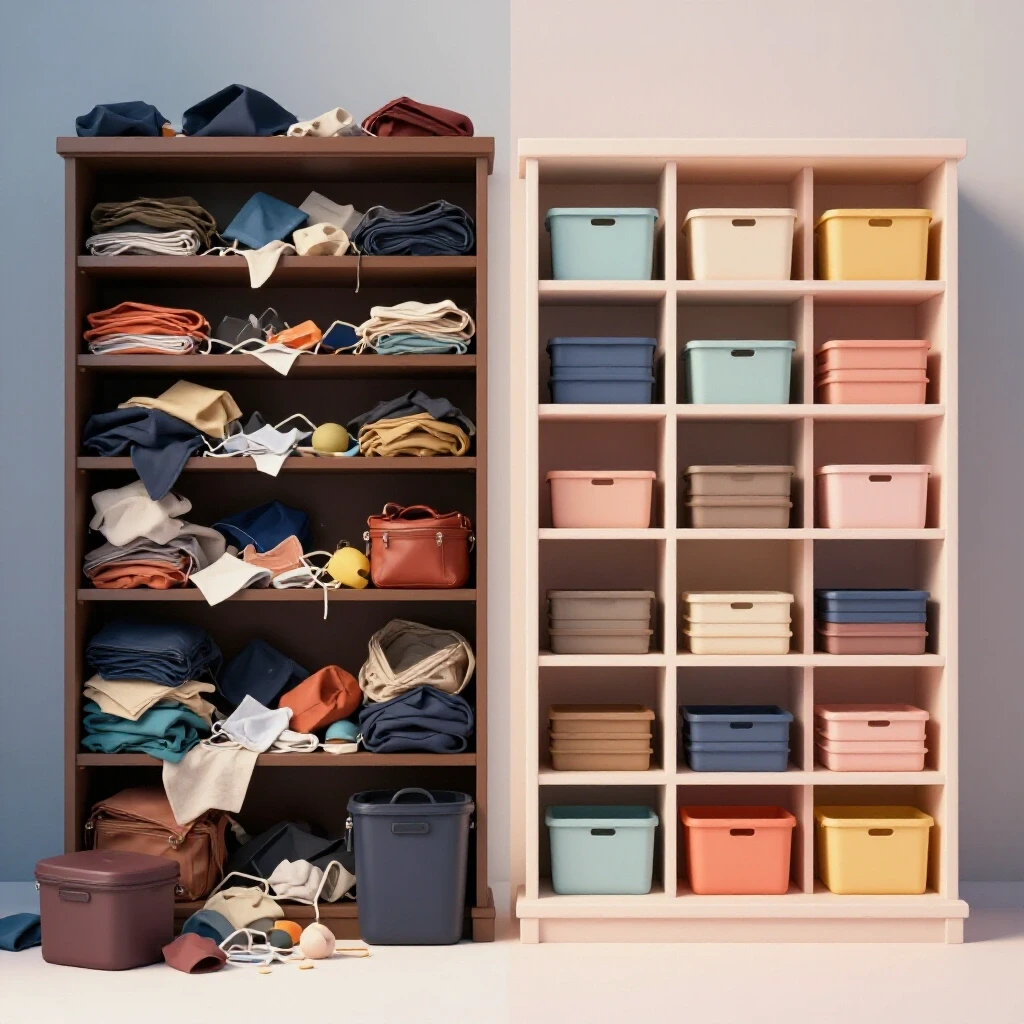
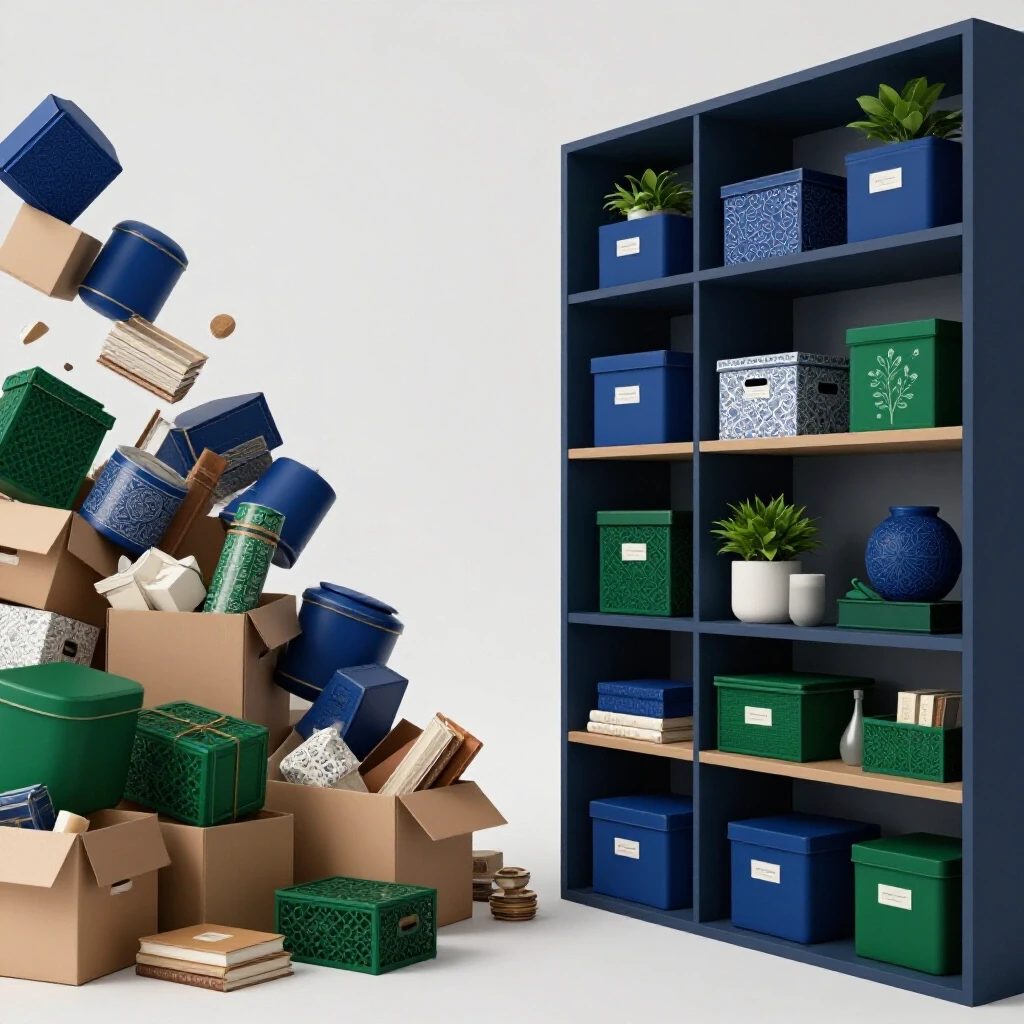
In recent years, the trend of home stockpiling has shifted from a niche hobby to a common household practice. While having supplies on hand offers peace of mind, the unintended consequence for many families is a home that feels heavy and congested. Many people find themselves trapped in a cycle of organizing and reorganizing the same bins, only to have the clutter return within a week. This “rebound effect” usually happens because the volume of stored goods exceeds the home’s spatial capacity. By focusing on thinning out redundant items and streamlining what remains, we can create a more breathable, functional environment.
Why Excess Stored Goods Create Hidden Household Friction
Spatial capacity is the limit of how much a specific area can hold before it stops being functional. When we exceed this limit, we increase retrieval friction, which is the amount of effort required to get an item out and put it back. High friction leads directly to household clutter.
I have spent over a decade in operations and logistics, and I have found that the biggest threat to a tidy home is “inventory bloat.” This happens when we store items based on fear or “just in case” scenarios without considering the physical cost of that storage. Every bin you keep in your garage or basement requires mental energy to track and physical energy to move. When these bins are overstuffed with duplicates or expired goods, they become “dead zones” that serve no purpose other than to collect dust and cause stress.
In my own home, I noticed that our utility closet had become a source of frustration. Even though I had labeled every bin, my wife and children couldn’t find what they needed without moving three other heavy boxes. This is a classic logistics failure. We weren’t lacking organization; we were lacking space. By auditing our long-term supplies and removing the items that were no longer useful, we reduced our total storage volume by 30%. This small change lowered our daily cleanup time and made the remaining systems much easier to maintain.
The Psychological Cost of Visual and Hidden Clutter
Environmental psychology suggests that our brains are constantly processing the objects in our peripheral vision. Even if clutter is hidden behind a cabinet door, the mental weight of knowing those spaces are disorganized contributes to decision fatigue. This exhaustion makes it harder to stick to daily cleaning routines.
Research into spatial ergonomics shows that a “crowded” home environment can increase cortisol levels, particularly in parents. When we store too many supplies, we create a visual “to-do list” that never ends. Every time you open a closet and see a pile of unorganized gear, your brain registers it as an unfinished task. This is why many people feel tired just by being at home. By thinning out our inventory, we aren’t just cleaning a room; we are reclaiming mental bandwidth.
| Feature | Visual Organization | Functional Logistics |
|---|---|---|
| Primary Goal | Aesthetic appeal | Ease of use and speed |
| Maintenance | High (requires constant tidying) | Low (designed for flow) |
| Storage Style | Uniform bins, hidden items | Open access, clear zones |
| Success Metric | “How does it look?” | “How fast can I find it?” |
A Logistics-Based Framework for Purging Redundant Inventory
Inflow and outflow control is the process of managing how items enter and exit your home. Most families are great at inflow—buying and storing—but struggle with outflow. To maintain a functional home storage system, the rate of removal must eventually match or exceed the rate of acquisition.
To fix our home, I applied a “lean” approach to our storage zones. We started by identifying redundant items. For example, we had three different sets of basic tools scattered across various kits. By consolidating them and removing the low-quality duplicates, we freed up an entire shelf. We also looked at “volume-to-utility” ratios. If an item was bulky but rarely used, we questioned its place in our high-value real estate areas.
Identifying and Removing High-Volume Waste
High-volume waste refers to items that take up significant physical space but offer very little practical value. This includes expired goods, packaging that is larger than the item itself, and “single-use” items that could be replaced by something more versatile. Removing these is the fastest way to see progress.
During our family’s sorting sprint, we focused on three specific categories of waste:
- Redundant Multiples: We found that we were storing four manual can openers across different kits. We kept the best one and donated the rest.
- Expired Consumables: We removed medications, batteries, and food items that had passed their shelf life. These were taking up 15% of our storage space while providing zero utility.
- Bulky Packaging: Many items come in thick cardboard boxes. By removing the packaging and using slim, clear containers, we increased our storage density without adding more bins.
| Storage Friction Index | Description | Effort Score (1-10) |
|---|---|---|
| Open Shelving | Items visible and reachable with one hand. | 1 |
| Clear Lidded Bins | Visual confirmation, requires one action to open. | 3 |
| Opaque Latched Totes | No visual confirmation, requires two hands to open. | 6 |
| Stacked Totes | Requires moving other items to access. | 9 |
Designing Low-Friction Systems for Family Maintenance
Zoning principles involve grouping items based on their frequency of use and the location where they are most likely to be needed. A well-zoned home reduces the distance you have to travel to put something away, which is the key to preventing clutter from rebuilding.
When I redesigned our storage, I prioritized “retrieval speed” over “perfect looks.” I realized that if a system is too hard for a seven-year-old to use, it will fail within 48 hours. We moved our most-used household supplies to “Zone 1” (waist-to-eye level) and relegated long-term, rarely-touched items to “Zone 3” (high shelves or the back of the garage). This simple shift in spatial management meant that the items we used daily were never blocked by the items we were merely storing for the future.
Why Complex Storage Solutions Often Fail
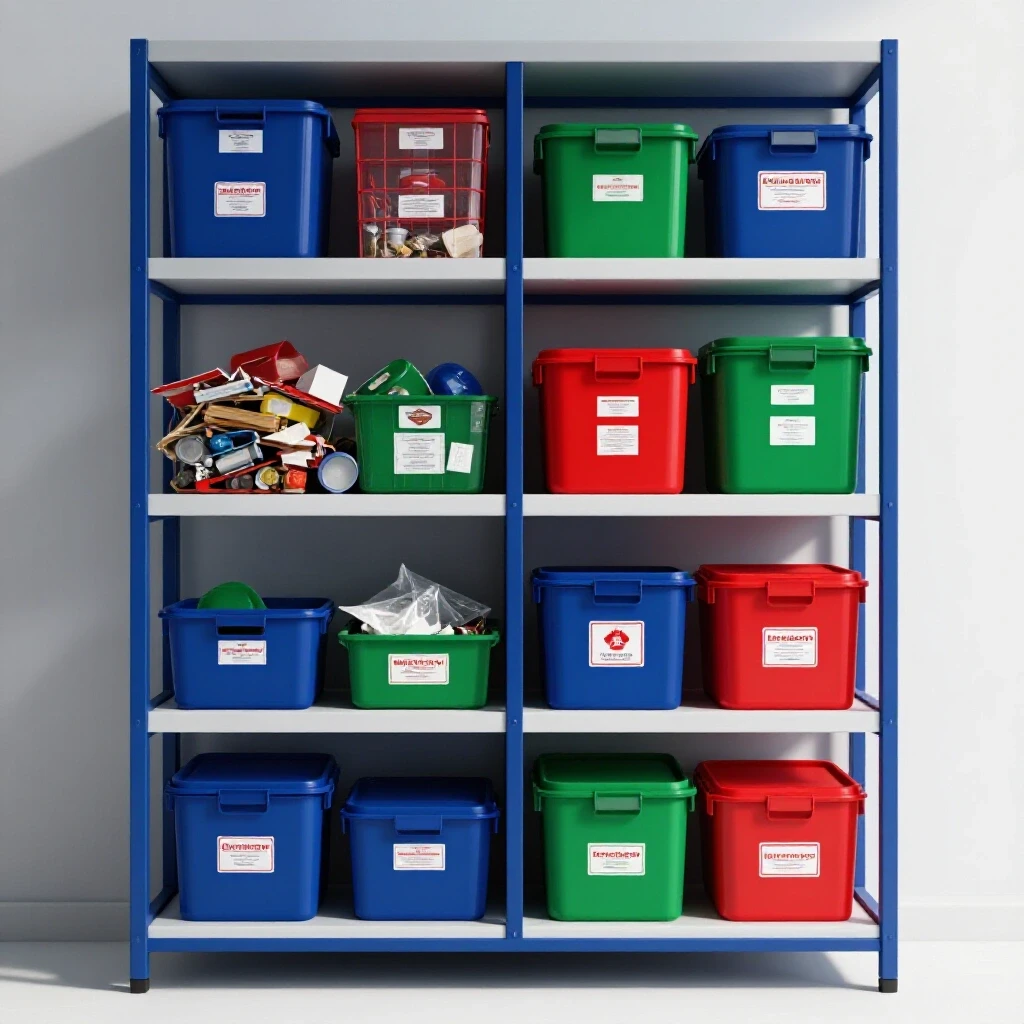
Many storage solutions for families are too complex because they require too many steps to maintain. If you have to unclip four latches and move two other boxes to put a screwdriver away, you will likely just leave the screwdriver on the counter. This is known as system friction.
In my professional experience, the most durable systems are the simplest. We moved away from nested bins and started using open-topped containers for items we use weekly. We also stopped using “micro-categorization.” Instead of having separate bins for “AA batteries,” “AAA batteries,” and “D batteries,” we put them all in one “Battery Zone.” This reduced the decision fatigue of sorting and made it much faster for the family to help with the cleanup.
- Standard Item-Density Guideline: Aim for 70% capacity in any bin or shelf. This allows for “hand-room” to grab items without knocking others over.
- Sorting Time-Box: Set a timer for 15 minutes. Focus only on one shelf or one bin to avoid feeling overwhelmed.
- Daily Habit Tracking: Spend 5 minutes every evening “resetting” Zone 1 areas to their baseline state.
Lessons from My Family’s Storage Redesign
A system feedback loop is a method of checking if your organization is still working. If you find that a certain area is constantly messy, the system is failing the users, not the other way around. You must adjust the layout to match actual human behavior.
One of our biggest failures was our “miscellaneous” bin. It became a graveyard for things we didn’t want to deal with. To fix this, we implemented a “one-in, one-out” rule for our long-term storage. If we bought a new piece of camping gear or a new bulk pack of supplies, something of equal volume had to leave the house. This forced us to constantly evaluate what we actually valued. It turned decluttering from a once-a-year “event” into a sustainable, low-effort habit.
Metrics for a Sustainable Living Space
To track our progress, I used a simple set of metrics. I didn’t care about how “pretty” the pantry looked; I cared about how much time we spent looking for things. We tracked our “Search Time” and our “Reset Time.” If it took more than 60 seconds to find a specific item, the system was too cluttered.
- Retrieval Step Count: The number of actions (moving, opening, reaching) required to get an item. Our goal was 3 steps or fewer.
- Space Utilization Percentage: We aimed to keep our storage areas at 80% utilization. Any higher, and the friction became too great.
- Sorting Speed: We measured how many items we could correctly put away in two minutes. High speed indicates a clear, intuitive system.
Practical Steps for Streamlining Your Home Inventory
- Conduct a Spatial Audit: Walk through your home and identify “clutter magnets.” These are usually areas where the retrieval friction is too high.
- Purge by Category, Not Room: Instead of cleaning the whole garage, just find every flashlight or every roll of tape in the house. You will be shocked at how many duplicates you find.
- Remove the “Just in Case” Weight: If you haven’t touched an item in two years and it costs less than $20 to replace, consider removing it to save the “rent” it’s paying in your home.
- Use Digital Inventory for Large Items: For things stored in the attic or deep garage, use a simple spreadsheet or a smart-label app. This prevents you from buying duplicates because you “forgot you had one.”
- Label for Everyone: Use clear, bold labels. If your kids can’t read yet, use picture labels. This empowers the whole family to participate in maintenance.
By focusing on these logistical principles, you can move away from the frustration of constant cleaning. The goal isn’t to have a showroom-perfect house; it’s to have a home that supports your life rather than draining your energy. When you remove the excess and simplify your systems, you create a space where your family can actually thrive.
Frequently Asked Questions
What is the first thing I should remove when thinning out my stored goods? Start with anything that has a clear expiration date. This includes medications, food, and certain chemical cleaners. These items are the easiest to let go of because they no longer serve their intended purpose. Removing them creates immediate physical space without the emotional “what if I need this?” struggle.
How do I handle the guilt of getting rid of perfectly good items? Think of it as “spatial rent.” Every item in your home takes up square footage that you pay for. If an item isn’t being used, it is effectively costing you money and peace of mind. Donate these items to someone who can use them now, rather than letting them sit and degrade in a box.
What is “retrieval friction” and why does it matter? Retrieval friction is the physical and mental effort required to get an item out of storage. If you have to move three boxes to get to a tool, that is high friction. High-friction systems fail because people will eventually stop putting things away correctly to avoid the effort, leading to a cluttered home.
How can I involve my children in maintaining these systems? Keep it simple. Use open bins without lids for their most-used items. Label bins with pictures if they are young. The goal is to make “putting away” as easy as “taking out.” If a child can do it in one step, they are much more likely to help maintain the space.
Is it better to have many small bins or a few large ones? For family homes, medium-sized bins are usually best. Large bins become “black holes” where items at the bottom are forgotten. Small bins can become fussy and hard to manage. Aim for bins that can be easily carried by one person and are clear so you can see the contents.
How often should I audit my storage zones? A quick “high-level” audit should happen twice a year, perhaps during seasonal changes. This is when you check for things like clothing that no longer fits or supplies that have expired. By doing this regularly, you prevent the massive, overwhelming clutter build-up that requires a week-long purge.
Why do my rooms get messy again so quickly after I organize them? This usually happens because the system is too complex or the volume of items is too high for the space. If every shelf is 100% full, there is no “wiggle room” for daily life. Try reducing the total number of items until your shelves are only 70-80% full.
What are “Zone 1” and “Zone 3” in home organization? Zone 1 is the “prime real estate” between your knees and your eyes. This is where your most-used items should live. Zone 3 includes very high or very low spaces, like the top of a closet or the back of a deep cabinet. Use Zone 3 only for items you use once or twice a year.
Should I buy new storage containers before I start decluttering? No. This is a common mistake. You should only buy containers after you have thinned out your inventory and know exactly what needs to be stored. Buying bins first often leads to “organized clutter,” where you just have neater piles of things you don’t actually need.
How do I decide what is a “redundant” item? Look for items that perform the same function. If you have three different types of multi-surface cleaners, or five different screwdrivers in one kit, those are redundant. Pick the best, most versatile version and remove the others to simplify your inventory.
(This article was written by one of our staff writers, Christopher Bennett. Visit our Meet the Team page to learn more about the author and their expertise.)