Room-by-Room Spring Decluttering Guide for an Organized Home (Steps)

Do you remember the first time you walked into your home and felt a genuine sense of calm, rather than a mental checklist of things to put away? For many parents, that feeling is a distant memory, buried under a mountain of daily mail, outgrown shoes, and kitchen gadgets that haven’t seen the light of day since last year. My journey into managing a household began with a similar frustration. Despite my background in operations and logistics, my own home often felt like a warehouse with no inventory system. Every time we cleaned, the mess returned within seventy-two hours.
Over the last eleven years, I have applied industrial spatial management principles to our family’s seasonal refresh. I stopped looking at our house as a series of rooms to be cleaned and started seeing it as a logistical network where “flow” is more important than “neatness.” This year, our family focused on reducing the friction that leads to clutter. We looked at why certain bins remained empty while the floor stayed covered, and we redesigned our systems to match how we actually live.
The Science of Spatial Logistics and Retrieval Friction
Spatial logistics is the study of how items move through a space and how that movement affects the efficiency of the people living there. In a home setting, this involves understanding how much effort it takes to put an item back where it belongs.
Retrieval friction refers to the number of physical and mental steps required to access or store an item. If a child has to open a closet, pull out a heavy bin, remove a lid, and then place a toy inside, the friction is too high. High-friction systems are the primary reason homes revert to a cluttered state. Research in environmental psychology suggests that “visual processing overload” occurs when our brains are forced to track too many disparate objects at once. By reducing the steps required to store items, we lower the cognitive load on every family member.
Why Visual Systems Often Fail Busy Families
Visual organization systems focus on how a room looks in a photograph, often prioritizing matching containers and hidden storage. While these look appealing, they frequently fail because they do not account for the speed of daily life.
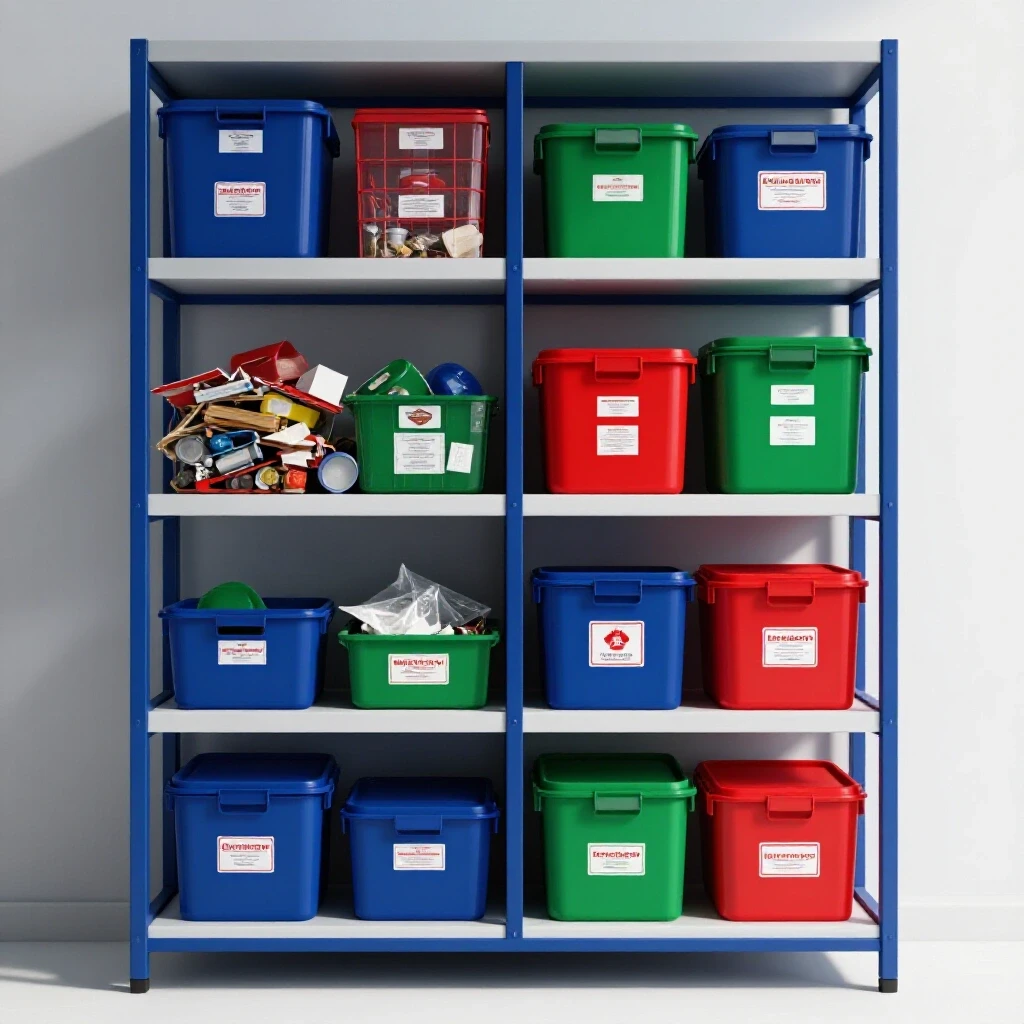
A functional system, however, prioritizes the “outflow” of items. In my household, we found that opaque bins with tight lids were our biggest enemy. We couldn’t see what was inside, so we bought duplicates. When it came time to clean up, the extra step of removing a lid was enough to discourage my kids from finishing the task. We transitioned to open-topped, clear, or mesh containers in high-traffic zones, which immediately reduced our daily sorting time.
| System Type | Primary Goal | Maintenance Level | Success Rate (Family) |
|---|---|---|---|
| Visual-Focused | Aesthetic Uniformity | High (requires constant labels/lids) | 30% |
| Functional-Focused | Ease of Access | Low (open bins, clear zones) | 85% |
| Hidden Storage | Removing Visual Noise | Moderate (out of sight, out of mind) | 50% |
A High-Speed Sorting Framework for Seasonal Renewal
A sorting framework is a set of rules used to categorize items quickly during a decluttering sprint. It removes the need for deep decision-making, which is the main cause of “decision fatigue.”
When we began our spring refresh this year, we used a “Logistical Flow” model. Instead of asking if an item “sparked joy,” we asked about its “utility frequency.” We categorized everything into three streams: Active Inventory (used weekly), Seasonal Inventory (used once a year), and Dead Stock (not used in twelve months). This allowed us to move through rooms at a pace of roughly 100 items per hour.
Implementing the 80% Spatial Capacity Rule
Spatial capacity is the maximum amount of “stuff” a shelf or drawer can hold before it becomes difficult to use. In logistics, a warehouse is considered “full” at 85% capacity because any more makes it impossible to move items around.
We applied this to our home by ensuring no shelf or closet was more than 80% full. This “buffer space” allows for easy retrieval without knocking other items over. It also provides a visual cue: if the shelf is 100% full, something must be removed before something new can be added. This simple metric has been the most effective tool in preventing the “reversion effect” where rooms get messy again within days.
The Spring Sorting Log: Tracking Progress
| Zone | Items Processed | Items Removed (Dead Stock) | Time Elapsed | Efficiency (Items/Min) |
|---|---|---|---|---|
| Entryway | 45 | 12 | 15 min | 3.0 |
| Kitchen Pantry | 120 | 35 | 45 min | 2.6 |
| Kids’ Bedroom | 210 | 80 | 90 min | 2.3 |
| Living Room | 60 | 15 | 20 min | 3.0 |
Entryway and Mudroom: Managing the Inflow
The entryway is the “loading dock” of the home, where all external items enter the internal system. It is the most critical zone for preventing household clutter from spreading to other rooms.
In our home, the entryway used to be a bottleneck. We had a beautiful closed cabinet for shoes, but the kids never opened it. They just dropped their shoes in front of it. We replaced the cabinet with heavy-duty, open cubbies. By reducing the “retrieval step count” from four steps (open door, find spot, place shoe, close door) to one step (drop in cubby), the floor stayed clear. We also installed a dedicated “outbound tray” for library books and items that need to leave the house, ensuring they don’t migrate back into the living room.
Key Metrics for Entryway Efficiency
- Step Count: The number of physical movements required to store a coat and shoes. Aim for 2 or fewer.
- Transit Time: How long an item stays in the entryway before moving to its permanent home. Aim for less than 12 hours.
- Surface Clearance: Percentage of flat surfaces kept clear. Aim for 90%.
The Kitchen Efficiency Audit: Zoning for Workflow
A kitchen audit involves evaluating how items are grouped based on the tasks performed in specific areas. This reduces the time spent walking back and forth across the room during meal prep.
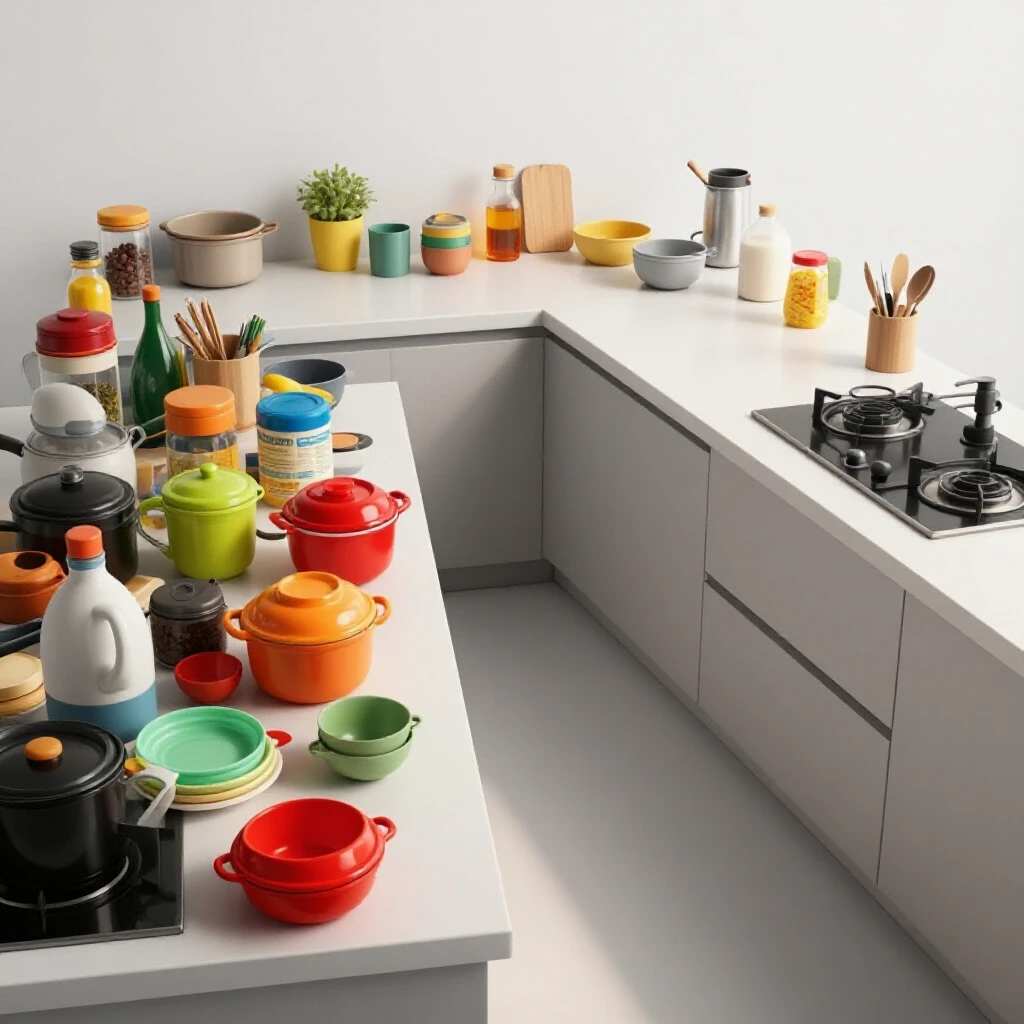
We divided our kitchen into five distinct zones: Consumables (pantry/fridge), Non-consumables (dishes/cutlery), Preparation (knives/cutting boards), Cooking (pots/pans), and Cleaning (sink/dishwasher). During our spring refresh, we moved everything to its respective zone. Interestingly, we found that moving the coffee mugs to a shelf directly above the coffee maker saved us roughly 40 steps every morning. Over a year, that is over 14,000 steps saved just by moving mugs eighteen inches.
Reducing Cabinet Friction
- Pull-out Drawers: We replaced deep lower cabinets with pull-out drawers. This prevents “buried inventory” at the back of the cabinet.
- Tiered Organizers: For spices and cans, tiered shelving allows for 100% visibility.
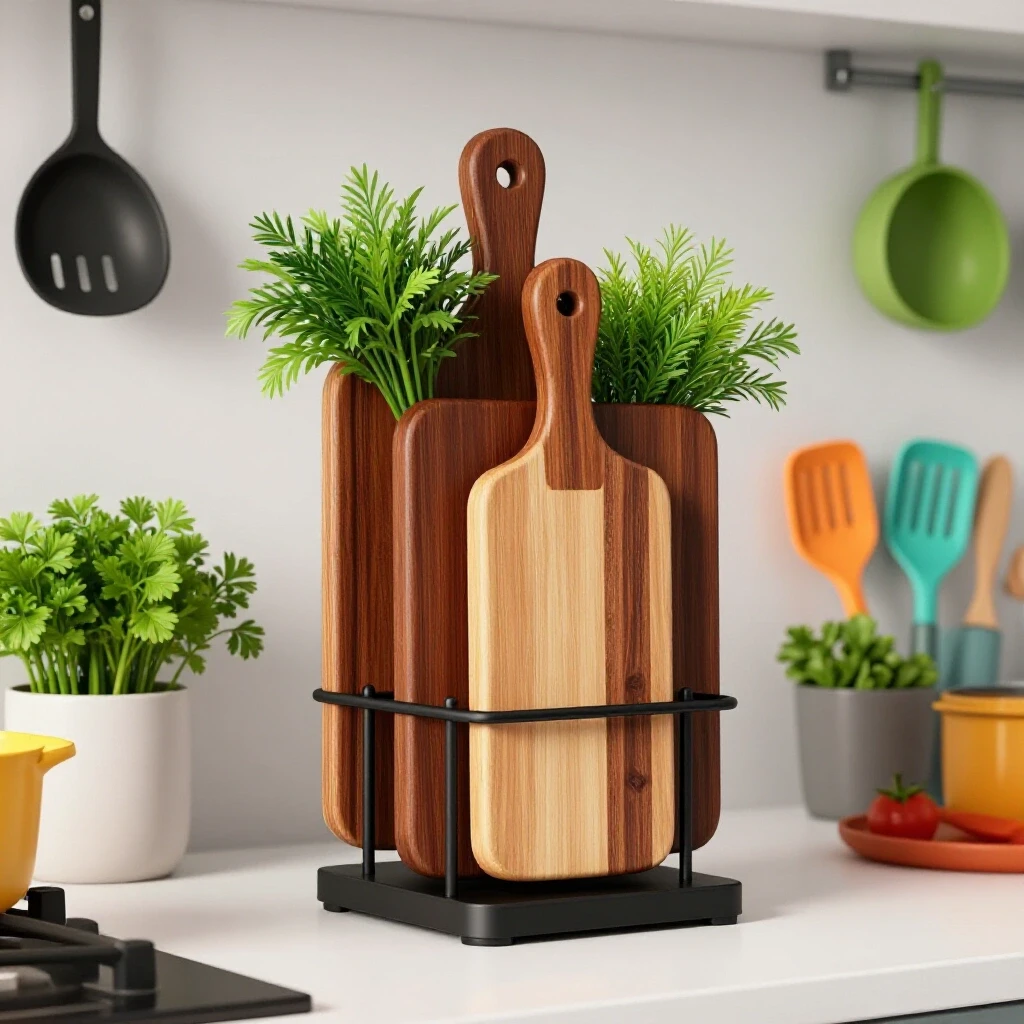
- Vertical Dividers: Storing baking sheets and cutting boards vertically like files reduces the “clatter factor” of stacking.
Living Areas and the Cognitive Load of Visual Noise
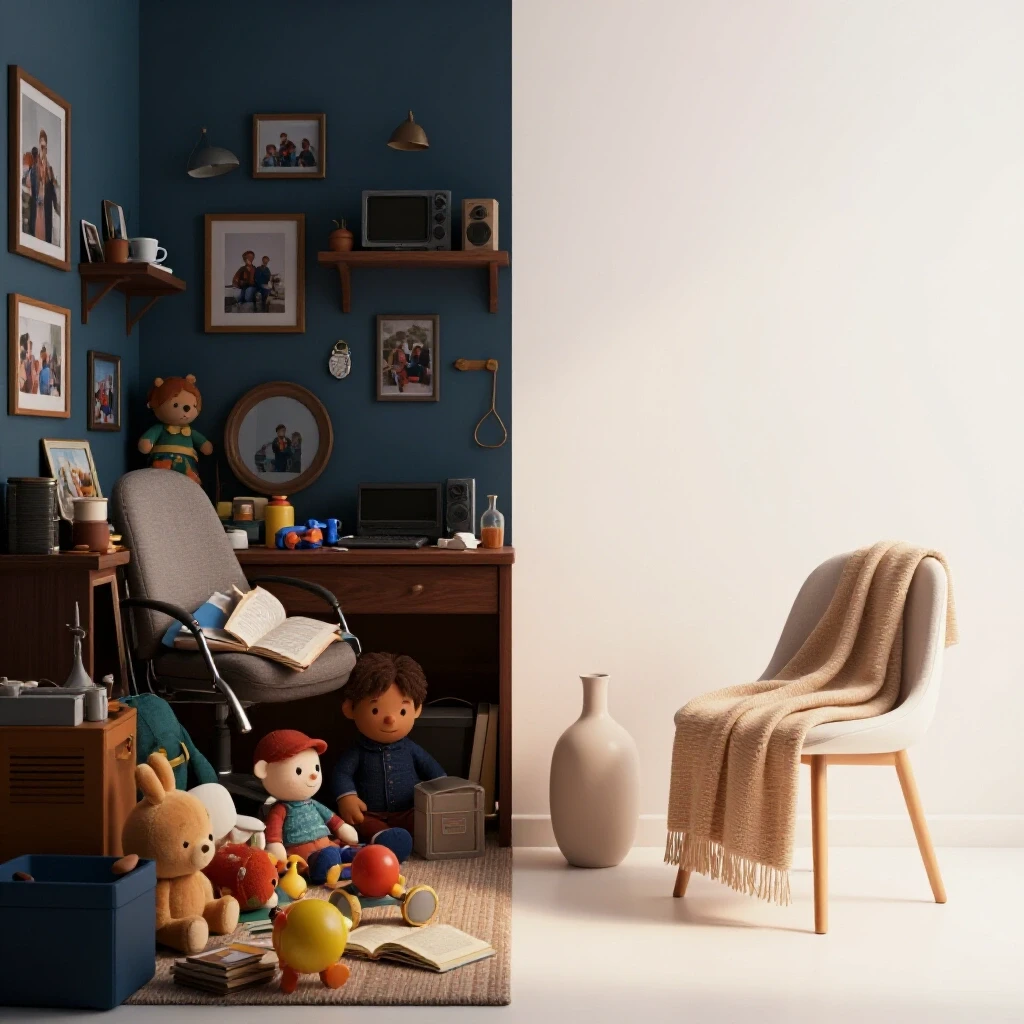
The living room is often a multi-use space that suffers from “visual noise,” which is the mental distraction caused by seeing too many unrelated objects at once.
To manage this, we used “Zoning Maps.” We designated specific areas for specific activities. The “Reading Zone” only holds books currently being read. The “Play Zone” uses large, rolling bins that can be tucked away in seconds. We also implemented a “Flat Surface Policy.” In operations, flat surfaces are for work, not storage. By keeping coffee tables and side tables clear of permanent objects, the room feels significantly larger and less stressful.
Storage Friction Index by Container Type
| Container Type | Access Steps | Visibility | Family Compliance |
|---|---|---|---|
| Open Basket | 1 | High | Very High |
| Clear Bin (No Lid) | 1 | High | High |
| Opaque Bin (With Lid) | 3 | Low | Low |
| Decorative Trunk | 4 | Zero | Very Low |
Bedroom Systems: Low-Maintenance Closet Strategies
Bedroom organization should focus on the “morning launch,” ensuring that getting dressed and starting the day requires the least amount of mental effort possible.
This year, we transitioned our closets to a “Uniform Hanger” system. Using the same type of slim, non-slip hangers reduces visual chaos and saves about 20% of horizontal rod space. We also moved off-season clothing to high-shelf bins. A key logistical move was the “Reverse Hanger Trick.” At the start of our spring refresh, we turned all hangers backward. As we used an item, we turned the hanger the right way. After thirty days, any hanger still backward was a candidate for removal. This provided us with objective data on what we actually wear versus what we think we wear.
Implementing Digital Inventory for Long-Term Storage
- Categorize: Group items by season (e.g., “Winter Gear”).
- Box and Label: Use clear, heavy-duty bins.
- Smart-Labeling: We used QR code stickers on the outside of bins. When scanned with a phone, the code shows a photo of everything inside.
- Log Location: Note exactly where the bin is stored (e.g., Attic, Shelf B).
Building Sustainable Habit Loops for Maintenance
A habit loop is a three-part process consisting of a cue, a routine, and a reward. In a home, these loops ensure that the decluttering work you do in the spring lasts through the summer.
Our most successful habit is the “15-Minute Reset.” Every evening at 7:00 PM (the cue), the whole family spends fifteen minutes (the routine) returning items to their designated zones. The reward is a tidy house for the evening and a stress-free morning. Because we designed low-friction systems during our spring project, fifteen minutes is actually enough time to reset the entire main floor. We treat this like a “closing shift” in a restaurant, preparing the space for the next day’s “service.”
Daily Maintenance Timelines by Family Size
- 2-Person Household: 10 minutes daily / 1 hour weekly deep dive.
- 4-Person Household: 20 minutes daily / 2 hour weekly deep dive.
- 6-Person Household: 35 minutes daily / 3 hour weekly deep dive.
Common Pitfalls in Seasonal Home Refreshes
Many families fail because they try to organize before they declutter. In logistics, you never organize “trash.” If an item doesn’t have a clear use, putting it in a pretty bin just hides the problem.
Another mistake is buying storage containers before measuring the space. We now follow a “Measure Twice, Buy Once” rule. We measure the height, width, and depth of every shelf before heading to the store. We also avoid “specialty organizers” like specific holders for single gadgets. These are inflexible and often lead to wasted space. Modular, rectangular bins are almost always more efficient than round or shaped containers.
Actionable Metrics for Your Home
- Inflow/Outflow Ratio: For every new item brought into the house, one old item must leave.
- Sorting Time-Box: Never sort for more than 90 minutes at a time to avoid decision fatigue.
- Item Density: Aim for no more than 5 items per square foot on visible surfaces.
Conclusion: The Path to a Functional Home
The goal of a seasonal refresh isn’t to create a museum-quality space that no one can touch. It is to create a home that supports your life rather than draining your energy. By focusing on spatial logistics, reducing retrieval friction, and respecting spatial capacity limits, you can build a system that works for your family.
This year, our approach saved us hours of daily frustration. We stopped fighting against our family’s natural behaviors and started building systems that accommodate them. Start small—perhaps with a single drawer or the entryway—and use the 80% rule. You will find that as the physical clutter disappears, the mental fatigue goes with it.
Frequently Asked Questions
Why does my house get messy again so quickly after I clean it?
This usually happens because the “retrieval friction” is too high. If it takes more than two steps to put an item away, people will likely leave it on the nearest flat surface. To fix this, switch to open bins or more accessible locations for frequently used items.
What is the 80% rule in home organization?
The 80% rule states that you should never fill a storage space more than 80% of its capacity. This extra 20% of “wiggle room” makes it easy to take things out and put them back without creating a mess of the surrounding items.
How do I get my kids to follow these new systems?
Focus on “one-step storage.” Use open baskets at their height. If a child can throw a toy into a basket without moving a lid or opening a heavy door, they are much more likely to do it. Labeling baskets with pictures instead of words also helps younger children.
Should I buy all my bins and baskets before I start decluttering?
No. You should always declutter first to see what you actually need to store. Once you have your “Active Inventory,” measure your shelves and then buy containers that maximize that specific space.
What is the best way to handle paper clutter during a spring refresh?
Create a “One-Touch” system. When mail enters the house, immediately sort it into “Recycle,” “Action,” or “File.” Never put a piece of paper down on a counter to “deal with later,” as this creates a pile that is harder to sort later.
How often should I perform a spatial audit of my home?
A major refresh is great for the spring, but a quick “spatial audit” should happen every three to four months. Check to see if any bins are overflowing or if certain zones have become “clutter magnets” and adjust the system accordingly.
What are “smart-label” tracking systems?
These are digital systems, often using QR codes or apps, that allow you to list the contents of a box without opening it. You stick a code on the bin, scan it with your phone, and it shows you a list or photo of the items inside.
How do I deal with “decision fatigue” while sorting through old items?
Use a “time-box” method. Set a timer for 20 or 30 minutes and focus only on one small area. Once the timer goes off, take a break. This prevents your brain from getting overwhelmed by the hundreds of small decisions required during decluttering.
Is it better to have open or closed storage?
For items used daily, open storage (baskets, hooks, open shelves) is best because it has the lowest friction. For items used rarely, closed storage (closets, lidded bins) is better to reduce visual noise and protect items from dust.
What is “visual noise” and how does it affect my stress levels?
Visual noise is the overstimulation caused by seeing too many objects in your field of vision. Research shows that high levels of visual clutter can increase cortisol (the stress hormone) and make it harder to focus or relax.
(This article was written by one of our staff writers, Christopher Bennett. Visit our Meet the Team page to learn more about the author and their expertise.)