How Front Door Replacement Improves Home Comfort and Curb Appeal (Guide)

You stand on your porch, grocery bags cutting into your fingers, fumbling with a key that refuses to turn. The wood around the lock is chipped, and a cold draft whistles through the gap between the frame and the floor. This was not the “welcome home” moment you imagined when you signed the closing papers three months ago. For many first-time buyers, the primary entrance is an afterthought until it becomes a daily source of friction.
My journey through three different homes over 14 years taught me that the main entrance is more than just a security point. In my first house, a 1940s cottage, the entrance was a heavy, dark slab that made the hallway feel like a cave. I spent my first winter stuffing towels under the door to stop the chill. It wasn’t until I focused on the functional and visual health of that entry point that the house finally felt like a home. Understanding the actual impact of an entryway update is a core part of navigating homeownership realities.
Transitioning to Ownership: The Entryway as a Foundation
Managing the shift from a rental to a permanent home requires a change in how you view your physical surroundings.
In a rental, a drafty entrance or a sticking latch is a landlord’s problem or a minor annoyance you tolerate. As a homeowner, these small issues contribute to “homeowner fatigue,” a state of being overwhelmed by the constant needs of a property. My personal home logs show that small, tactile improvements often provide the biggest boost in daily morale. When you update the primary gateway to your home, you are not just changing a piece of wood or steel; you are resetting the tone for your entire living space.
Establishing a household budgeting diary is essential during this transition. While you might be focused on large systems like the roof or the furnace, the entry point is a high-touch area that affects your daily comfort. According to U.S. Census Bureau housing surveys, older homes often suffer from “envelope leakage,” where air escapes through poorly fitted openings. Addressing these gaps is a fundamental step in creating sustainable home systems that keep your interior climate stable.
Enhancing Visual Harmony and Architectural Presence
Visual harmony is the balance between your home’s structural style and the decorative elements that define its personality.
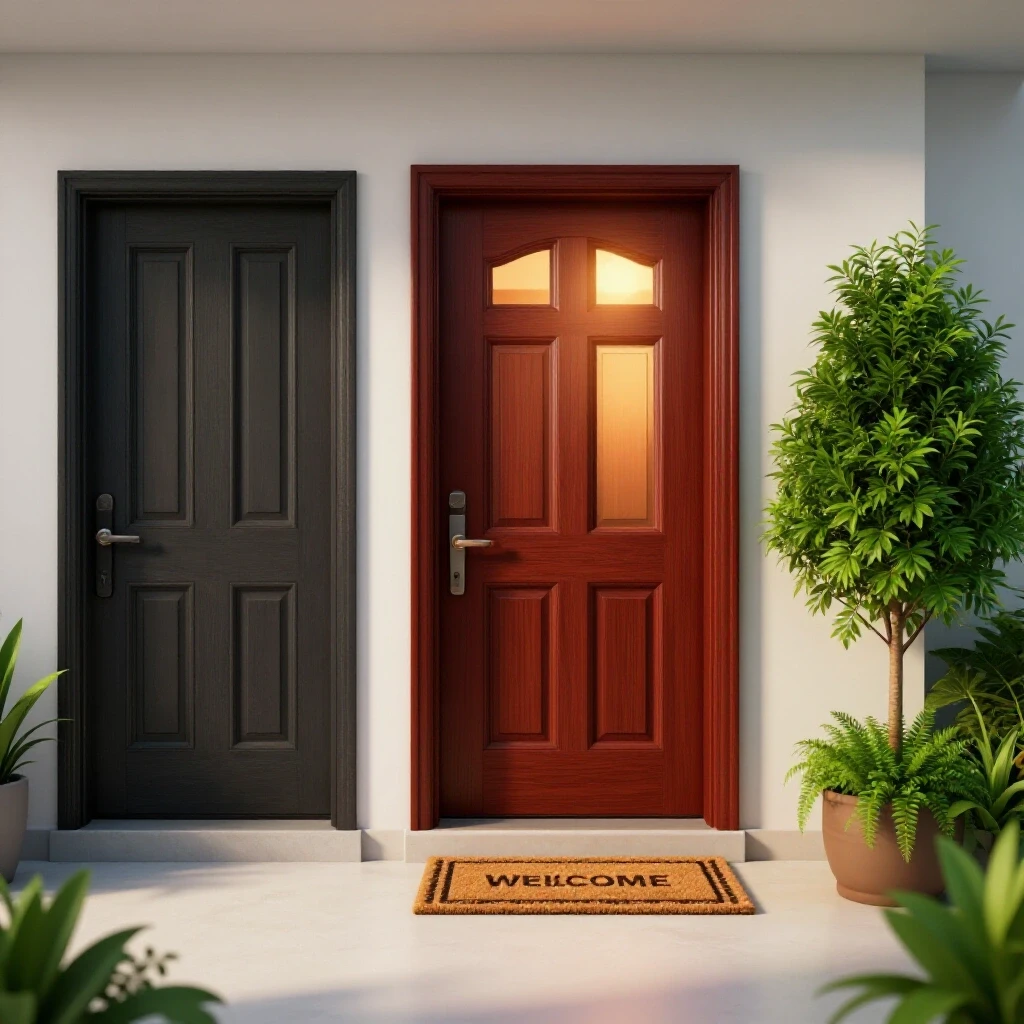
When you look at your home from the street, the entrance is the focal point. In my second home, a 1990s suburban build, the original entrance was a generic white door that vanished against the beige siding. It lacked what I call “architectural intent.” By choosing a design that complemented the roofline and window shapes, the entire house looked more intentional and cared for. This is a key part of long-term property preservation.
You should aim for a look that respects the era of your home. A sleek, modern entrance might look out of place on a traditional colonial, while a heavy rustic door could clash with a minimalist ranch. My logs show that homeowners who match their entryway to the existing architecture report higher satisfaction with their “curb presence” over time. This visual alignment creates a sense of order that reduces the mental clutter of home maintenance.
| Feature | Impact on Visual Harmony | Lifestyle Benefit |
|---|---|---|
| Color Contrast | Highlights the entrance against the siding | Easier for guests to find the way |
| Glass Geometry | Matches window patterns | Creates a cohesive exterior look |
| Hardware Finish | Coordinates with exterior lighting | Provides a polished, finished feel |
| Proportional Width | Balances the scale of the porch | Makes the entrance feel grander |
Managing Thermal Comfort and Interior Climate Consistency
Thermal comfort refers to the ability of your home to maintain a steady temperature without noticeable hot or cold spots.
The area around your main entrance is often the most difficult to keep comfortable. In my current home, I used a basic handheld thermometer to track the temperature near the door during a January cold snap. The air near the old entrance was 8 degrees colder than the rest of the room. This “micro-climate” forced the heater to run longer, a common issue noted in HUD reports regarding energy efficiency in older housing stocks.
Upgrading to a well-insulated entry system changes the “feel” of the air in your foyer. You no longer get that sharp bite of cold when you walk past the door in your socks. This is a vital part of a home maintenance guide: looking beyond the mechanical systems to the “thermal envelope” of the house. A tighter seal means your living room stays cozy, and your HVAC system doesn’t have to work as hard to compensate for a leaky threshold.
- Check for light visible around the edges of the door frame.
- Feel for air movement near the floor on windy days.
- Observe if the area near the entrance feels significantly damper than other rooms.
- Monitor how quickly the temperature drops in the hallway after the heat turns off.
The Role of Natural Light in Daily Homeowner Wellness
Natural light is a powerful tool for changing the mood and perceived size of an interior space.
Many first-time buyers move into homes with solid, windowless entrances that leave the foyer in perpetual shadow. In my first home, the hallway was so dark I had to keep a lamp on even at noon. When I transitioned to an entry design with glass inserts, the transformation was immediate. The “lux levels”—a measurement of light intensity—tripled in that small space.
This shift in light has a direct impact on your daily routine. It makes the morning rush feel less frantic and provides a natural way to wake up as you head out for the day. If you are balancing a demanding career, coming home to a bright, sunlit entryway can lower your stress levels. Using glass with different privacy levels, such as frosted or seeded textures, allows you to pull in that light without feeling exposed to the street.
Establishing Daily Routines Through Functional Entryway Updates
Daily routines are the small, repetitive actions that make up your life at home, from locking up at night to greeting guests.
The physical “feel” of your door matters more than you might think. A door that closes with a solid, muffled thud provides a sense of security that a rattling, thin door cannot match. In my 14 years of tracking home logs, I’ve found that the “tactile feedback” of hardware is a major factor in how “high-quality” a home feels to its occupants. If the handle is sturdy and the deadbolt slides smoothly, the house feels well-maintained and safe.
For young families, the entrance is a high-traffic zone. You are likely managing strollers, grocery bags, and pets. A door that opens wide and stays in place makes these transitions easier. Consider how the swing of the door affects your furniture placement and your “flow” through the house. These are the practical homeownership realities that don’t show up on a listing photos but define your life in the space.
- Test the swing: Does the door stay open at a 45-degree angle, or does it drift shut?
- Listen to the sound: A hollow sound often indicates poor insulation and low sound dampening.
- Check the threshold: Is it low enough to avoid tripping but high enough to keep out debris?
- Evaluate the lock: Does it require a “trick” to turn, or is it effortless?
Tracking Long-Term Satisfaction in Your Personal Home Log
A home log is a record of the changes you make and how they affect your living experience over time.
I recommend all new homeowners keep a digital or physical notebook of their home’s “performance.” After updating your entrance, record the changes you notice over the first six months. Note if the hallway feels quieter during rainstorms or if you’ve stopped noticing drafts. This data-driven approach helps you move past the initial anxiety of homeownership by proving that your efforts are making a measurable difference.
According to my own logs, the satisfaction from an entryway update peaks twice: once immediately after the change due to the visual boost, and again during the first extreme weather season when the thermal benefits become clear. By tracking these milestones, you build confidence in your ability to manage and improve your property. This is the heart of smart DIY planning and long-term asset protection.
- Month 1: Record your initial impressions of the new look and light levels.
- Month 3: Note any changes in the sound levels from street traffic.
- Month 6: Evaluate the thermal comfort during a seasonal temperature peak.
- Year 1: Review your household budgeting diary to see if utility patterns have stabilized.
Avoiding Homeowner Burnout Through Strategic Prioritization
Homeowner burnout happens when the “to-do” list feels longer than the “enjoyment” list.
One of the best first-time homeowner tips is to focus on projects that have a high “contact frequency.” You might only look at your attic insulation once a year, but you touch your front door every single day. Prioritizing the entrance helps combat burnout because the results are constantly visible and felt. It’s a “win” that you experience every time you leave for work or return home.
When you feel overwhelmed by the responsibilities of a new home, look for these high-impact zones. A home that looks good from the curb and feels solid at the entrance provides a psychological safety net. It gives you the breathing room to tackle more complex, hidden maintenance tasks later. Remember, maintaining a home is a marathon, not a sprint. Small, meaningful updates to your daily environment are what make the journey sustainable.
Common Entryway Pitfalls for New Homeowners
Avoiding mistakes is just as important as making the right choices. Many early-stage homeowners fall into traps that lead to frustration later.
- Ignoring the “Handing”: Ensure you know if you need a left-handed or right-handed swing. Getting this wrong can ruin the flow of your foyer.
- Overlooking the Sidelights: If your door has windows on the side, ensure they match the style and privacy level of the main door.
- Neglecting the Weatherstripping: Even a beautiful door will fail to provide thermal comfort if the seals are low-quality or installed incorrectly.
- Choosing Style Over Substance: A door might look great in a magazine but could be too heavy or difficult to maintain for your specific climate.
Conclusion: Taking the First Step Toward a Better Entryway
Improving your home’s main entrance is a journey from frustration to functional beauty. By focusing on visual harmony, thermal comfort, and natural light, you transform a simple transition point into a source of daily satisfaction. Start by observing your current entrance for one week. Note the drafts, the light patterns, and the way the hardware feels in your hand. This simple act of awareness is the first step toward moving beyond homeownership anxiety and into a routine of confident, data-backed home care.
Frequently Asked Questions
How does changing a front door affect the temperature inside my house? A new entryway significantly improves thermal comfort by eliminating gaps where air leaks occur. Modern doors often feature better core insulation and improved weatherstripping compared to older wood models. This creates a more consistent interior climate, especially in the foyer or hallway, by preventing outside air from bypassing your home’s thermal envelope.
Will a door with glass inserts make my home feel less private? Not necessarily. You can choose from various glass textures, such as frosted, rain, or decorative caming, which allow natural light to enter while obscuring the view from the street. This allows you to enjoy the benefits of increased lux levels without sacrificing the feeling of security and seclusion inside your home.
How can I tell if my current door is causing “envelope leakage”? The easiest way is the “light test” or the “dollar bill test.” At night, have someone shine a flashlight around the door frame while you stand inside; if you see light, air is escaping. Alternatively, close the door on a dollar bill; if you can pull it out easily without resistance, your seals are not tight enough to maintain thermal consistency.
Does the weight of a door really matter for daily use? Yes, the weight and “thud” of a door contribute to your psychological sense of security and quality. A heavier door typically offers better sound dampening, reducing the noise from street traffic or neighbors. However, it must be balanced with high-quality hinges so it remains easy to operate for all family members.
What is the best way to match a new door to my home’s architectural style? Look at the existing lines of your home, such as the pitch of the roof and the shape of the windows. A home with many square angles benefits from a door with rectangular glass or panels. A more traditional home might require curved elements or classic wood-grain textures to maintain visual harmony.
How often should I update the hardware on my main entrance? Hardware should be inspected annually as part of your home maintenance guide. If the handle jiggles, the finish is pitting, or the lock requires force to turn, it is time for an update. High-quality hardware not only improves security but also enhances the tactile experience of entering your home.
Can natural light from an entryway update actually reduce my need for artificial lighting? In many cases, yes. By adding glass inserts or sidelights, you can often illuminate a dark foyer or hallway enough to avoid using overhead lights during the day. This shift in natural light patterns can make a small entryway feel significantly larger and more welcoming.
What are the signs of homeowner fatigue related to home maintenance? Homeowner fatigue often manifests as a feeling of being overwhelmed by small, nagging issues like a sticking door or a drafty window. When you stop noticing these problems because they feel “normal,” you are experiencing burnout. Addressing high-touch areas like the front door can provide a quick “win” that restores your motivation to care for the property.
Is it worth keeping a log of my entryway’s performance? Absolutely. Tracking things like drafts, noise levels, and how the door handles seasonal humidity helps you understand your home’s unique needs. This data is invaluable when you decide to make further improvements, as it allows you to see exactly what worked and what didn’t in your specific environment.
How does an entryway update impact the “curb presence” of a home? Curb presence is the immediate visual impression your home makes from the street. A new entrance acts as a focal point that can tie together disparate design elements. By choosing a color or style that pops against your siding, you create a sense of order and pride of ownership that is visible to everyone who passes by.
(This article was written by one of our staff writers, Michael Morrison. Visit our Meet the Team page to learn more about the author and their expertise.)