How to Replace Door Hinges at Home (Beginner DIY Guide)

When I bought my first house in 2010, I spent weeks obsessing over the big things like the roof and the furnace. However, my first real “failure” as an owner happened at a much smaller scale. A kitchen cabinet door started to sag, and every time I opened it, the metal groaned. My mistake was simple: I thought I could fix it by just tightening the screws as hard as I could. I ended up stripping the wood and bending the metal plates. I didn’t realize that mechanical parts have a lifespan, and sometimes, you just have to start fresh with new hardware.
Transitioning from Renter to Active Home Maintainer
Moving from a rental to your own home requires a shift in how you view small mechanical issues. Instead of calling a landlord when a door won’t latch, you become the primary investigator of your home’s moving parts. This transition involves learning how small components, like the pivots on your doors and cabinets, affect the overall function and value of your property.
In my 14 years of tracking home logs, I have found that small, proactive fixes prevent larger, more expensive structural issues. According to the U.S. Census Bureau’s American Housing Survey, many new homeowners underestimate the frequency of minor repairs. They often wait until a door falls off its frame before looking at the hardware. By learning to swap out old, worn-out metal connectors early, you protect the integrity of your door frames and cabinet boxes. This is a foundational skill in any home maintenance guide for beginners.
Creating a Realistic Budget for Hardware and Small Repairs
A household budgeting diary is essential for tracking where your money goes after the down payment is finished. Most experts suggest the 1% to 3% rule, where you set aside that percentage of your home’s value annually for upkeep. For a $300,000 home, that is $3,000 to $9,000 a year for everything from lawn care to updating aged hardware.
Small updates to your home’s internal hardware are low-cost but high-impact. When I analyzed my logs from my second home, I noticed that replacing ten sets of old, squeaky cabinet connectors cost less than a single grocery trip but improved the “feel” of the kitchen significantly. These are sustainable home systems in their simplest form.
| Item Category | Estimated Cost (Per Unit) | Expected Lifespan | DIY Time Investment |
|---|---|---|---|
| Standard Cabinet Pivot | $3 – $8 | 10-15 Years | 15 Minutes |
| Interior Door Hardware | $15 – $25 | 20-30 Years | 30 Minutes |
| Screws and Shims | $5 – $10 (Box) | Indefinite | 5 Minutes |
| Wood Filler/Toothpicks | $5 | N/A | 10 Minutes |
Building Your First Essential Manual Toolkit
You do not need a garage full of expensive machinery to handle basic hardware updates. A few high-quality hand tools are often more effective for delicate tasks than heavy-duty equipment. For first-time homeowner tips, I always suggest starting with tools that give you a good “feel” for the resistance of the wood and screws.
- Multi-bit Screwdriver: A manual driver allows you to feel when a screw is tight without stripping the hole.
- Manual Hand Drill or Awl: Useful for starting a small hole for a new screw without splitting the wood.
- Small Level: This ensures your doors hang straight and don’t swing open on their own.
- Measuring Tape: Essential for matching the “offset” or “overlay” of your existing hardware.
- Cardboard or Plastic Shims: These help you align the door perfectly within the frame before you tighten the screws.
Understanding the Mechanics of Door and Cabinet Hardware
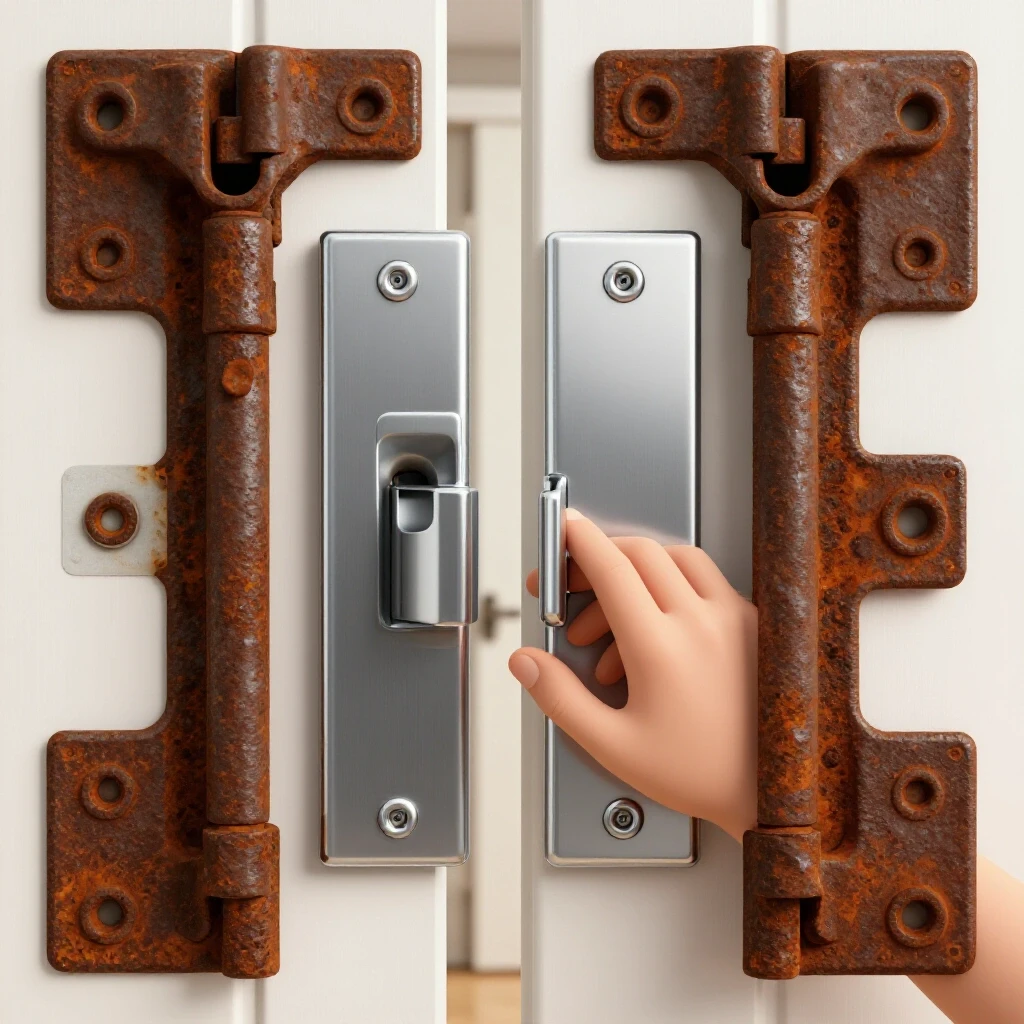
Before you start unscrewing things, you must understand what you are looking at. Residential hardware usually consists of two plates joined by a pin. One plate attaches to the door, and the other to the frame. The way these plates sit determines how the door closes and stays shut.
In my experience, the most common reason for a hardware swap is “metal fatigue” or “screw creep.” Over time, the weight of the door pulls on the screws, causing the holes to enlarge. If the metal itself is bent or the pin is worn down, no amount of tightening will fix the sag. You must replace the unit. This is a core part of DIY home care that preserves the life of your expensive cabinetry.
Step-by-Step Guide to Swapping Your First Set of Hardware
When I first tried to update the hardware on my laundry room door, I made the mistake of taking all the old parts off at once. The door fell over, and I couldn’t get it back up alone. The key is to work systematically. This process is a great way to learn homeownership realities without a huge financial risk.
- Support the Weight: Place a book or a shim under the door to take the pressure off the hardware.
- Remove the Middle First: If there are three points of connection, start with the middle one. This keeps the door stable.
- Check the Hole Depth: Before putting in the new screw, stick a toothpick in the hole to see how deep it is. If the hole is stripped, a small piece of wood and some glue can provide a fresh grip for the new screw.
- Align and Secure: Hold the new hardware against the frame. Ensure it sits flush. Tighten the screws by hand until they are snug, but do not over-rotate them.
- Test the Swing: Open and close the door slowly. If it rubs against the frame, you may need to adjust the tension on one of the plates.
Managing Homeowner Fatigue and Decision Paralysis
It is easy to feel overwhelmed when you realize every door in your house needs attention. This is what I call “homeowner burnout.” In my third home, I realized that trying to fix everything in the first month leads to exhaustion and mistakes. Instead, prioritize the doors you use most, like the pantry or the front entry.
Setting a schedule helps. Maybe you decide to update the hardware on two cabinets every Saturday morning. This pace makes the task feel like a minor chore rather than a massive renovation project. Tracking these small wins in your home log provides a sense of accomplishment that offsets the anxiety of larger repairs.
Strategic DIY Prioritization for Long-Term Value
Not all hardware updates are created equal. When evaluating a home’s value, I look for “consistent maintenance.” If a house has mismatched or loose door connectors, it suggests the owner might have ignored bigger issues too. Keeping your hardware functional and uniform is a simple way to maintain your home’s marketability.
HUD reports often emphasize that preventative mechanical care is the most cost-effective way to manage a property. By spending $50 on new door pivots today, you avoid a $500 repair to a cracked door frame three years from now. This is the essence of smart homeownership.
Advanced Alignment and Troubleshooting Techniques
Sometimes, even with new hardware, the door doesn’t sit right. This is usually due to the house “settling,” a common reality in residential real estate. If the frame is slightly out of square, you can use thin shims behind the metal plate to tilt the door back into alignment.
Interestingly, temperature and humidity play a role here too. Wood expands in the summer and shrinks in the winter. If you install hardware during a very humid month, you might find the door gaps change when the air dries out. Using a manual screwdriver allows you to make these tiny seasonal adjustments without damaging the wood.
Essential Digital Tools and Resources for Tracking Maintenance
To stay organized, I recommend using a few digital tools to keep your records straight. This helps you remember which hardware sizes you bought and when you last checked them.
- Home Maintenance Apps: Apps like Centriq or HomeZada allow you to upload photos of your hardware and store the model numbers.
- Digital Spreadsheets: Keep a simple log of “Date,” “Task,” and “Cost” to see your annual spending trends.
- Notes App: I keep a running list on my phone of screw sizes and hardware types so I always have the info at the hardware store.
Actionable Benchmarks for Your First Year
During your first 12 months, your goal is to stabilize the home. Focus on these benchmarks to stay on track:
- Month 1-3: Audit all doors and cabinets. Tighten loose screws and identify which hardware is failing.
- Month 4-6: Purchase a basic manual toolkit. Replace the hardware on the “problem” doors first.
- Month 7-12: Establish a seasonal “squeak check.” Lubricate moving parts with a dry silicone spray to extend their life.
- Savings Target: Aim to save at least $200 specifically for “small hardware emergencies.”
Conclusion: Building Confidence Through Small Wins
Taking care of your own home doesn’t always mean massive renovations. Often, it means paying attention to the small things that make daily life smoother. Swapping out a worn-out door pivot or a sagging cabinet plate is a manageable way to build your DIY skills. It teaches you about the materials in your home and gives you the confidence to handle bigger tasks later. Start small, use your hands, and keep a good log of your progress. Your future self—and your home’s resale value—will thank you.
Frequently Asked Questions
What tools do I absolutely need to change a door pivot?
You really only need a high-quality multi-bit manual screwdriver and a way to support the door, such as a few sturdy books or a wedge. A small level is also helpful to make sure everything is straight. Avoid using power drills for your first try, as they can easily strip the wood holes or damage the new hardware.
Why does my door still sag after I tightened the screws?
This usually happens because the screw holes in the wood have become too large, or the metal of the hardware itself has bent under the weight of the door. If the hole is the problem, you can fill it with a wood sliver and glue before re-inserting the screw. If the metal is bent, the only real fix is to replace the hardware entirely.
How do I know what size hardware to buy?
The easiest way is to remove one of the existing pieces and take it with you to the store. You need to match the “leaf” size (the flat parts), the hole pattern, and the “radius” of the corners. If you buy the wrong size, you will have to carve new recesses in your door, which is a much more difficult task.
Should I replace all the hardware in the house at once?
No, that is a recipe for burnout. Focus on one room or even just one door at a time. This allows you to learn the process without leaving your house in a state of disrepair. Start with the most frequently used doors to get the most immediate benefit from your work.
Is it better to use brass or steel hardware?
For interior doors, both work well, but they have different strengths. Brass is often chosen for its look and corrosion resistance, while steel is very strong and affordable. In high-humidity areas like bathrooms, look for stainless steel or treated brass to prevent rusting over time.
How do I stop a new door pivot from squeaking?
Even new hardware can squeak if there is friction. Use a dry silicone spray or a tiny bit of white lithium grease on the pin. Avoid using heavy oils like WD-40 for long-term lubrication, as they can attract dust and eventually make the squeak worse.
What is the “1% rule” for home maintenance?
This is a budgeting guideline suggesting you should save 1% of your home’s total purchase price each year for repairs and maintenance. If your home cost $400,000, you should aim to have $4,000 set aside. This covers everything from small hardware swaps to major appliance failures.
Can I change hardware on a door by myself?
Yes, but you must support the door from underneath. If you don’t have a second person to hold the door, use shims or books to take the weight off the frame. This prevents the door from falling and hurting you or damaging your floors when you remove the screws.
How long does it typically take to swap hardware on one door?
For a beginner, expect it to take about 30 to 45 minutes for your first door. This includes time for measuring, removing the old parts, and adjusting the new ones. As you get more comfortable with your tools, you can likely finish a door in under 15 minutes.
What should I do if the new screws are shorter than the old ones?
It is usually better to use the longer screws if they are in good condition, as they bite deeper into the structural wood of the frame. If the new hardware came with short screws, check if they are at least an inch long. For the part that attaches to the wall frame, using one 2.5-inch screw can help pull the door tighter and prevent future sagging.
(This article was written by one of our staff writers, Michael Morrison. Visit our Meet the Team page to learn more about the author and their expertise.)