How to Maximize a Spare Bedroom for Multiple Uses (Step-by-Step)

Many people assume a quick fix for a cramped new home is buying more storage bins. In reality, the most effective solution is often looking at your secondary rooms with a fresh perspective. Over 19 years and four cross-country moves, I have learned that the key to a successful home transition planning process is not just fitting boxes into closets, but rethinking how every square foot serves your daily life.
Why a Spatial Audit is the Foundation of Your Move
A spatial audit is the systematic process of measuring your new room’s dimensions and comparing them against your current furniture to identify potential layout conflicts before you arrive. It involves mapping out windows, door swings, and electrical outlets to ensure your daily routines won’t be blocked by a poorly placed dresser.
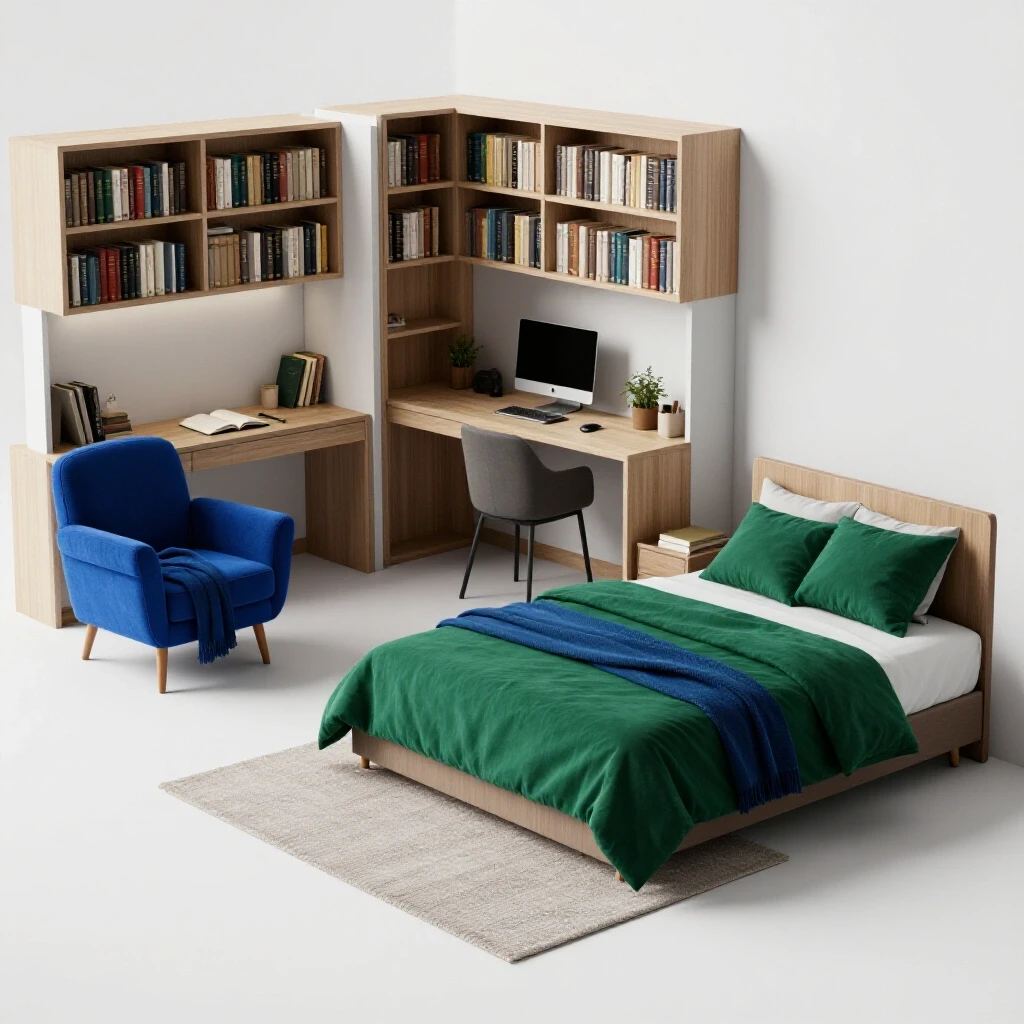
When we moved from a spacious home in the Midwest to a much smaller layout in the Pacific Northwest, I realized our “extra room” couldn’t just be a place for old boxes. I had to perform a detailed spatial layout adaptation. I used blue painter’s tape on the floor of the empty room to mark where my desk and the guest bed would go. This simple visual guide helped me see that our old queen-sized bed frame was too bulky for the 10×11 space.
Understanding Structural Scale and Traffic Flow
Structural scale refers to the physical size of a room in relation to the items placed within it, while traffic flow is the clear path people take to move through that space. Maintaining a balance between these two ensures a room feels open rather than cluttered.
In my experience, the biggest mistake is ignoring the “walking path.” For any secondary room to function well, you need to maintain a clearance of at least 30 to 36 inches for main walkways. If you are squeezed between a desk and a bed, the room will feel like a storage unit rather than a living space. During our third move, I used a home moving checklist to prioritize furniture that had a smaller footprint, which allowed us to keep the room’s circulation paths open.
Why Blind Furniture Placement Fails and How to Draft a Blueprint
Blind furniture placement occurs when movers or residents place items in a new room based on where they “look good” rather than where they function best. Drafting a spatial layout blueprint allows you to account for permanent fixtures like heaters or low windows that might prevent a tall bookshelf from fitting.
I remember staring at an awkward corner in our second apartment. I tried to force a standard rectangular desk into a space with a protruding wall. It didn’t work. By sketching a quick floor plan, I saw that a corner-style modular unit would reclaim three square feet of floor space. This is a core part of small room furniture layout: matching the shape of the furniture to the unique “bites” taken out of the room by the architecture.
Spatial Blueprint Compatibility Matrix
This matrix helps you evaluate if your current furniture is a realistic fit for your new secondary room based on standard clearance margins.
| Furniture Item | Standard Dimension | Required Clearance | Total Footprint Needed |
|---|---|---|---|
| Twin Bed | 38″ x 75″ | 30″ on one side | 68″ x 75″ |
| Standard Desk | 48″ x 24″ | 36″ for chair | 48″ x 60″ |
| Bookshelf | 32″ x 12″ | 24″ for access | 32″ x 36″ |
| Folding Guest Bed | 30″ x 75″ | 24″ on one side | 54″ x 75″ |
Strategies for Creating a High-Utility Secondary Room
Creating a high-utility room involves assigning multiple “zones” to a single space, such as a workspace that doubles as a guest sleeping area. This requires using furniture that can be easily moved or tucked away when not in use.
In our current home, my spare room serves as my writing office, a guest room for my parents, and a place for my kids’ craft projects. I achieved this by using a “zoning” method. The “Work Zone” stays along the wall with the best light. The “Sleep Zone” uses a modular sofa that pulls out into a bed. By defining these areas, the room doesn’t feel like a chaotic catch-all.
The Role of Modular Furniture in Layout Adaptation
Modular furniture consists of independent pieces that can be rearranged or combined to fit different room shapes and needs. These pieces are essential for residents who move frequently because they can adapt to a 10×10 room just as easily as a 12×14 room.
- Use nesting tables to save floor space when guests aren’t visiting.
- Select a desk with a foldable top to clear the walking path during the weekend.
- Choose wall-mounted shelving to keep the floor footprint clear.
- Opt for a daybed with under-bed storage to maximize vertical and horizontal utility.
Managing the Logistics of Your Home Transition
Home transition planning is the logistical bridge between leaving your old house and feeling settled in the new one. It includes everything from the initial box inventory to the moment you hang the last picture frame in your new multi-functional space.
During my 19 years of moving, I found that the “first-night box” is a lifesaver. For a secondary room, this box should include the assembly tools for your desk or bed, a power strip, and basic lighting. Nothing spikes stress like having the furniture in the room but no way to put it together or see what you are doing after the sun goes down.
First-Month Spatial Adjustment Timeline
Adjusting to a new layout takes time. This timeline outlines the phases of a typical new home adjustment guide.
| Phase | Focus Area | Key Action |
|---|---|---|
| Week 1 | Essential Setup | Unpack the desk and bed; establish basic walking paths. |
| Week 2 | Storage Refinement | Install non-permanent shelving and organize closet zones. |
| Week 3 | Routine Testing | Observe if the furniture placement interferes with daily habits. |
| Week 4 | Final Integration | Add decor and adjust layout based on the past month’s usage. |
Optimizing Awkward Floor Plans and Small Spaces
Optimizing an awkward floor plan means using visual weight and smart placement to make a room with strange angles or low ceilings feel intentional. It often requires moving away from traditional furniture sets in favor of individual pieces that fit specific nooks.
I once lived in a house where the spare room had a sloped ceiling that cut the usable wall space in half. Instead of fighting it with a tall wardrobe, I used low, long cabinets that followed the line of the wall. This kept the center of the room open and made the space feel larger. This is a common tactic in small room furniture layout: keep the “sightline” clear to prevent a claustrophobic feeling.
Furniture Clearance Guidelines by Room Footprint
When you are arranging furniture, these measurements are the gold standard for maintaining comfort.
- Major Walkways: 30 to 36 inches.
- Between a Desk and a Wall: 32 to 36 inches for chair movement.
- Side of a Bed to a Wall: 24 to 30 inches for easy making of the bed.
- Door Swing Clearance: Ensure no furniture sits within the arc of the door (usually 32-36 inches).
Building Community and Establishing New Routines
Neighborhood community building is the process of connecting with your new surroundings to make your house feel like a home. This social transition is just as important as the physical one because a well-organized room means nothing if you feel isolated in your new city.
After our last move, I made it a point to use my new multi-functional room as a “home base” for my routine. I set up my coffee station nearby and committed to working there every morning. Once I felt settled inside, I took that energy outside. I walked the neighborhood at the same time every day, which led to natural “over the fence” conversations with neighbors. This helped reduce the “newcomer friction” that often follows a move.
Practical Steps for Neighborhood Integration
- Visit the local library or community center to find local maps and event calendars.
- Join a local digital neighborhood group to ask for recommendations on hardware stores or grocery shops.
- Spend time in your front yard or on your porch to signal that you are open to meeting people.
- Identify the “third places” in your area—cafes or parks where you can establish a routine outside the house.
Tools and Resources for Layout Planning
To make your secondary room work as hard as possible, leverage modern tools that take the guesswork out of measuring and moving.
- Magicplan: An app that uses your phone’s camera to create floor plans instantly.
- Floorplanner: A web-based tool for dragging and dropping furniture into a digital version of your room.
- Trello or Notion: Great for creating a digital home moving checklist and tracking box contents.
- Graph Paper and Scale Ruler: The classic way to map out a room (1 square = 1 foot).
- Moving Van Visualizers: Many moving companies offer tools to see how much space your furniture will take in a truck.
Key Takeaways for a Smooth Transition
Moving is rarely a linear process. It is a series of adjustments. By focusing on the utility of your secondary spaces, you can alleviate the pressure on the rest of your home. Remember that your layout isn’t permanent. If a desk doesn’t feel right after two weeks, move it.
The most successful transitions I’ve had were the ones where I remained flexible. I stopped trying to make my old life fit into a new floor plan and started building a new routine that respected the space I actually had. Use your spare room as a laboratory for your new life—test different zones, adjust the furniture scale, and give yourself grace as you settle in.
Frequently Asked Questions
How do I decide if my old furniture is too big for a new spare room?
You should measure the total square footage of the piece and add a 30-inch buffer on at least two sides. If the furniture and the buffer consume more than 60% of the room’s floor space, the piece is likely too large for the structural scale of the room. This can lead to a cramped environment that discourages use.
What is the best way to combine a home office and a guest room?
The most effective strategy is to use “vertical zoning.” Keep your office supplies in closed cabinets or on high shelves to hide work clutter when guests arrive. Use a daybed or a high-quality air mattress that can be tucked away. This ensures the room doesn’t feel like a bedroom during the workday or an office during the weekend.
How can I make an awkward, long, and narrow room feel functional?
In narrow rooms, avoid placing all furniture against one long wall, which creates a “bowling alley” effect. Instead, create two distinct zones. Place a desk at one end and a small seating area or guest bed at the other. Use a rug to visually separate these two zones, which helps break up the long lines of the room.
What are the most important measurements to know before moving in?
Beyond the length and width of the room, you must measure the width of all doorways and hallways (usually 32 to 36 inches). Also, measure the height of windowsills and the location of all electrical outlets. Knowing these details prevents you from moving a heavy desk only to find it blocks a heater or a plug.
How do I handle the stress of living among boxes during the first month?
Prioritize one “sanctuary room”—often the spare room or the bedroom. Unpack this room completely within the first 48 hours. Having one area that is organized and functional provides a mental break from the chaos of the rest of the house. Use a first-month spatial adjustment timeline to stay on track without feeling overwhelmed.
Can I create a multi-functional room without buying new furniture?
Yes, by using “repurposed zoning.” Use a sturdy dining table as a spacious desk or turn a trunk into a coffee table that stores extra guest linens. Look at the furniture you already have and ask if its scale fits the new room’s footprint better than its original purpose.
How do I integrate into a new neighborhood if I work from home in my spare room?
Establish a “commute” routine. Even if you work in your spare room, walk to a local coffee shop or around the block before starting your day. This puts you in the path of your neighbors and helps you learn the layout of your new community, which is essential for neighborhood community building.
What should I do if my furniture blocks a vent or a heater?
Never block a heat source completely, as it is a safety hazard and reduces efficiency. Maintain at least a 6-to-12-inch gap between furniture and heaters. If a layout requires placing a desk near a vent, use a plastic air deflector to redirect the airflow into the room rather than up into the furniture.
How do I choose the right rug size for a small, multi-use room?
A common mistake is buying a rug that is too small, which makes the room look disjointed. Aim for a rug that allows at least the front legs of all major furniture pieces (like the desk and the guest chair) to sit on it. This creates a visual “anchor” that ties the different zones of the room together.
Is it worth it to use a digital floor planner?
Digital planners are highly recommended for transitional residents. They allow you to test multiple “what-if” scenarios without physically moving heavy furniture. This saves time and physical strain during the high-stress period of a move and ensures your spatial layout adaptation is based on data rather than guesswork.
(This article was written by one of our staff writers, Kevin Thompson. Visit our Meet the Team page to learn more about the author and their expertise.)