How to Install a Cabinet Toe Kick for a Professional Finish (Guide)

The smallest details in a home renovation often carry the heaviest weight in determining whether a room feels professionally finished or merely functional. When I tackled my first major kitchen upgrade, I spent weeks obsessing over the cabinet layout and countertop slabs, only to realize that the raw, unfinished space at the bottom of the units made the entire room look incomplete. That dark, recessed gap between the cabinet floor and the kitchen tiles is a magnet for dust and a visual distraction that breaks the flow of your design.
In my twelve years as a facilities manager, I have learned that the “last 5 percent” of a project is where the value is truly created. For a busy professional, finding the time to address these finishing touches on a weekend requires a clear plan and an honest assessment of the effort involved. I once rushed a trim installation on a Sunday evening, skipped the dry-fit phase, and ended up with a piece of molding that was a quarter-inch too short. That mistake cost me a trip back to the lumber yard and another three hours of work the following weekend.
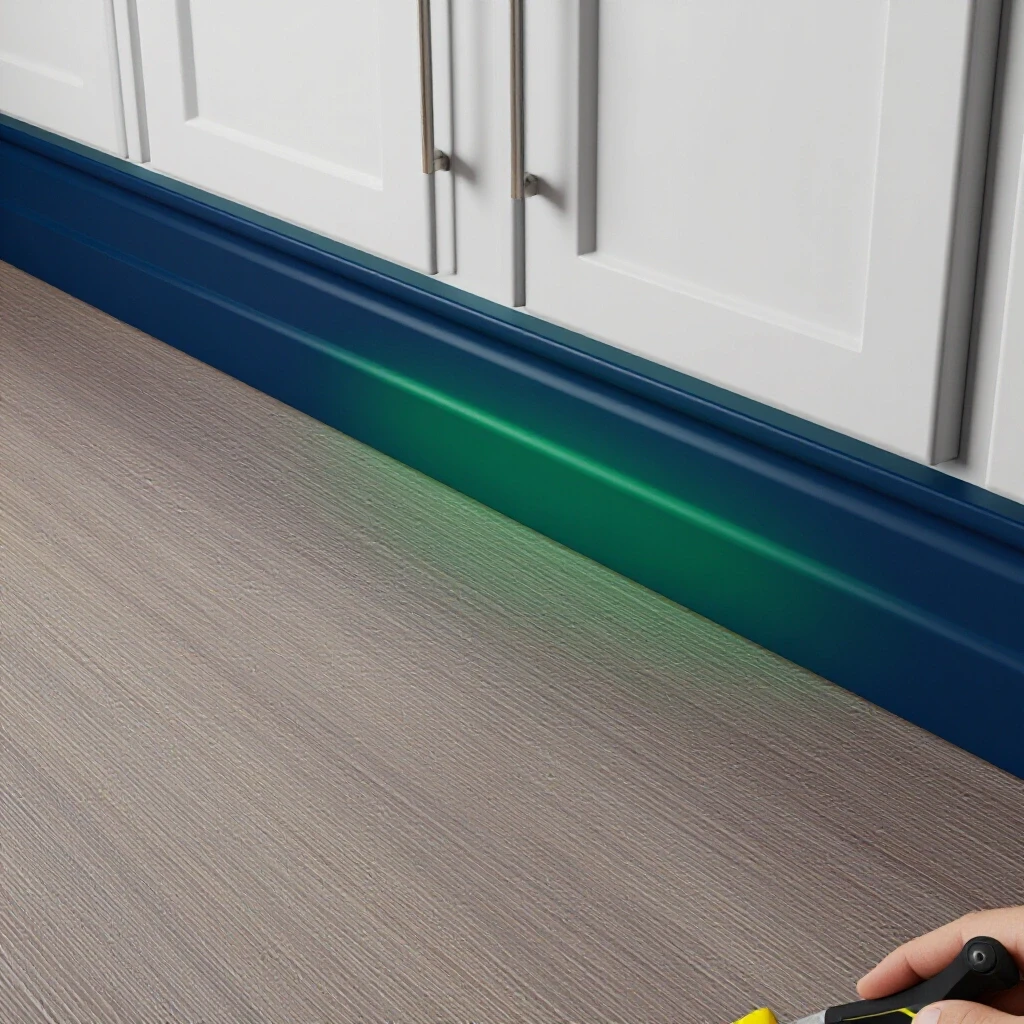
Building code and safety standards, such as those from the International Residential Code (IRC), emphasize the importance of using durable, non-porous materials in areas prone to moisture, like kitchens and baths. This guide focuses on the practical steps to measure, cut, and secure the trim panels that hide the structural legs or base boxes of your cabinetry. By following a structured approach, you can achieve a result that looks like it came straight from the manufacturer’s catalog while ensuring the installation stands up to years of foot traffic and floor cleaning.
Preparing for the Bottom Cabinet Trim Project
Getting ready for this task involves assessing the current state of your cabinet bases, measuring the linear footage needed, and identifying any floor irregularities that might affect how the new trim sits against the ground. Proper preparation ensures you do not run out of material mid-way through your Saturday afternoon.
Before you buy your boards, you must evaluate the substrate. In my experience, floors are rarely level, especially in older homes. I use a four-foot level to check the span under the cabinets. If the floor drops significantly from one end to the other, you will need to “scribe” your boards—a technique of marking the wood to match the floor’s curve. This prevents gaps where water or dirt could migrate under the cabinets.
Project Scope and Resource Analysis
Understanding the investment of time and money helps you manage your weekend schedule effectively. This project is high-reward but requires patience during the measuring and cutting phases.
| Metric | DIY Estimate | Notes |
|---|---|---|
| Active Working Time | 4–6 Hours | Depends on the number of corners and floor levelness. |
| Total Weekend Blocks | 1 Full Day | Includes prep, cutting, and first coat of finish. |
| Material Cost | $40–$120 | Varies by wood species or if using pre-finished MDF. |
| Skill Level | Intermediate | Requires basic power tool safety and measuring accuracy. |
| Tool ROI | High | Tools used here are staples for all future trim work. |
- Step-by-Step Home Upgrades Tip: Always buy 15% more material than your measurements suggest to account for miter cut waste and the occasional “oops” cut.
Essential Tool Inventory for Precise Fitting
A successful installation relies on a specific set of hand and power tools designed for accurate measuring, straight cutting, and secure fastening without damaging the existing cabinet structure or the finished flooring. Using the right tool for each specific task reduces the risk of splitting the wood or creating jagged edges.
I have seen many DIYers try to make these cuts with a hand saw, but for a clean, factory-look finish, power tools are your best friends. A miter saw allows for perfect 90-degree and 45-degree cuts, which are vital for the corners where two trim pieces meet. If your boards are too wide, a table saw or a circular saw with a straight-edge guide is necessary to “rip” the board down to the correct height.
- Tape Measure: Use a high-quality steel tape; accuracy within 1/16th of an inch is required for tight joints.
- Miter Saw: Essential for cross-cutting boards to length and creating angled corner joints.
- Table Saw or Circular Saw: Needed to trim the height of the boards if they are taller than the recessed space.
- Pneumatic or Cordless Brad Nailer: A 18-gauge nailer is ideal because the small nail heads are easy to hide with filler.
- Scribe Tool or Compass: This allows you to trace the floor’s profile onto your wood for a custom fit.
- Wood Glue: Provides a secondary bond at the miter joints to prevent them from opening over time.
-
Safety Gear: OSHA-compliant eye protection and hearing protection are non-negotiable when using power saws.
-
Safe Home Repairs Note: When using a brad nailer, keep your free hand at least six inches away from the discharge point to avoid injury from a “blowout” nail that might hit a hard knot and exit the side of the wood.
Material Selection and Sizing Standards
Choosing the right material involves balancing aesthetics with durability, as this part of the cabinet is frequently hit by vacuum cleaners, mops, and toes. Common choices include matching hardwood, furniture-grade plywood, or Medium Density Fiberboard (MDF).
In my own kitchen, I opted for pre-primed MDF because I planned to paint the trim to match my white cabinets. MDF is stable and does not warp, but it can swell if it sits in standing water. If you have stained wood cabinets, you should use a matching wood species like oak or maple. Manufacturer technical guides often recommend finishing all sides of the board—including the back—to prevent moisture from the subfloor from seeping into the grain.
Material Comparison Matrix
| Material Type | Pros | Cons | Best Use Case |
|---|---|---|---|
| Solid Hardwood | Extremely durable; can be stained to match perfectly. | Most expensive; can warp in high humidity. | High-end stained cabinetry. |
| Plywood (Veneer) | Stable; won’t shrink or expand much. | Edge grain is ugly and must be hidden or capped. | Long straight runs. |
| Primed MDF | Very smooth finish; cost-effective; easy to cut. | Vulnerable to water damage if not sealed well. | Painted kitchen cabinets. |
| PVC/Plastic | 100% waterproof; never rots. | Harder to paint; can look “cheap” if not handled well. | Bathrooms or laundry rooms. |
- Building Code Compliant DIY: Ensure your chosen material does not obstruct the required 3-inch by 4-inch (standard) toe space depth and height, which allows people to stand close to the counter comfortably.
Scribing and Cutting for a Custom Fit
Accuracy in this phase prevents wasted material and unsightly gaps by accounting for the fact that very few floors are perfectly level across a long run of cabinetry. Scribing is the process of transferring the “waves” of your floor onto the bottom edge of your trim board.
To scribe, I place the trim board against the cabinet base and use a small block of wood or a compass. While holding the board level, I run the compass along the floor, marking a line on the board. When I cut along this line with a jigsaw, the board will sit perfectly flush against the floor, even if the floor has a hump in the middle. This is a crucial step for a professional look.
How to Execute the Perfect Miter Joint
- Measure Twice: Measure the distance between the two walls or cabinet ends. Subtract 1/16th of an inch for a “floating” fit or keep it exact for a “press” fit.
- Set the Angle: For outside corners, set your miter saw to 45 degrees. I always test the angle with two scrap pieces of wood first to ensure the corner is a true 90 degrees.
- The “Dry Fit”: Before applying any glue or nails, hold the piece in place. If it doesn’t slide in with a slight push, do not force it. Trim a hair off the end and try again.
-
Cutting for Length: If a board is too long, it will bow out in the middle. If it is too short, you will have a gap that caulk cannot easily fix.
-
Weekend DIY Projects Tip: If you are working alone, use a few pieces of blue painter’s tape to hold one end of a long board in place while you check the fit on the other end.
Securing the Trim to the Cabinet Base
This stage involves permanently attaching the prepared boards to the recessed area of the cabinets using fasteners that provide enough hold without splitting the thin material. You are not just attaching the trim; you are ensuring it remains stable for the life of the kitchen.
I prefer using 1-1/4 inch brad nails. These are long enough to pass through the 1/2-inch or 3/4-inch trim and bite into the cabinet’s base frame. I set the air pressure on my compressor to about 80-90 PSI, which is usually enough to “sink” the nail head slightly below the surface of the wood. This “sub-flush” nail head is essential because it allows you to fill the hole later for a seamless look.
Fastening Best Practices
- Avoid the “Shiners”: A shiner is a nail that misses the wood behind it and sticks out in the back. Always map out where the solid wood of the cabinet base is before you start firing nails.
- Glue the Miters: Apply a small bead of wood glue to the angled faces of your corner joints. This prevents the joint from opening up when the house shifts or the humidity changes.
-
Nail Spacing: Place a nail every 12 to 16 inches. Do not over-nail, as this creates more holes to fill and increases the chance of splitting the wood.
-
Tool Investment ROI: A cordless brad nailer is a fantastic investment for this project. Not having to drag a heavy air hose around your kitchen floor prevents accidental scratches on your new trim.
Finishing Touches and Aesthetic Integration
This final stage involves hiding fasteners, sealing joints against moisture, and applying a finish that matches the cabinetry to ensure the new trim looks like an original part of the unit. A well-installed board can still look poor if the nail holes are visible or the corners are dark and gapped.
Once the boards are nailed in, I use a color-matched wood filler for stained cabinets or a high-quality spackle for painted ones. I push the filler into the nail holes with my finger, leaving it slightly mounded. Once it dries, I lightly sand it flush with 220-grit sandpaper. For the gap where the trim meets the cabinet or the floor, a thin bead of caulk can provide a clean transition and prevent water from getting behind the wood.
Sealant and Cure Time Benchmarks
| Task | Product Type | Dry Time | Full Cure |
|---|---|---|---|
| Filling Nail Holes | Wood Filler | 30 Minutes | 2 Hours |
| Sealing Joints | Paintable Silicone Caulk | 1 Hour | 24 Hours |
| Touch-up Painting | Latex/Acrylic | 2 Hours | 7 Days |
| Corner Gluing | PVA Wood Glue | 30 Minutes | 24 Hours |
- Safe Home Repairs Tip: If you are caulking the bottom edge where the trim meets the floor, use a “kitchen and bath” grade caulk that contains mildewcides. This is especially important in bathrooms where floor water is common.
Troubleshooting Common Installation Hurdles
Even with the best planning, you will likely encounter a situation where the wood doesn’t behave or the cabinets are misaligned. Knowing how to recover from these issues is what separates an experienced DIYer from a frustrated one.
One common problem is a “proud” cabinet corner, where one cabinet sits slightly forward of the next. If you try to nail a long piece of trim across this, the trim will crack or the joint will look crooked. In this case, you may need to install the trim in shorter sections or use a shim behind the trim on the recessed cabinet to create a straight line.
Solving the “Gapped Corner” Issue
If you cut your 45-degree miter and find a small gap at the tip, don’t panic. You can often “burnish” the wood. Take the smooth shank of a screwdriver and rub it firmly along the sharp edge of the miter. This slightly crushes the wood fibers inward, closing the microscopic gap. If the gap is larger than 1/16th of an inch, it is better to recut the piece or use a dedicated wood epoxy filler that won’t shrink as it dries.
- Checklist for Quality Control:
- Is the board flush against the floor?
- Are the miter joints tight with no visible light passing through?
- Are all nail heads sunk below the surface?
- Is the trim level across the entire run?
Maintenance and Long-Term Care
Once your project is complete, the trim requires very little maintenance, but it is the most abused part of your cabinetry. Being at floor level, it takes hits from vacuums and moisture from mopping.
I recommend checking the caulked seams once a year. If the caulk starts to peel or crack, remove the old material and apply a fresh bead. This prevents water from the mop bucket from reaching the raw wood or MDF, which could cause swelling. If you used solid wood, a quick wipe with a wood-safe cleaner during your regular kitchen cleaning is all that is needed to keep the finish looking sharp.
Knowing When the Task is Done
You have successfully completed the project when the transition from floor to cabinet is visually seamless. The goal is for a guest in your home to never notice the trim because it blends perfectly with the cabinetry. By taking the time to scribe the floor and hide the fasteners, you’ve added a layer of professional polish that increases the perceived value of your home.
- Next Steps: Now that the base of your cabinets is sealed and finished, you might consider adding similar trim details to the tops of the cabinets (crown molding) or the ends of the islands to create a fully custom look.
FAQ: Finishing the Base of Your Cabinets
What is the standard height for the recessed area under a cabinet? Most standard kitchen cabinets feature a toe space that is 4 inches high and 3 inches deep. However, custom cabinetry may vary. Always measure your specific units before purchasing material, as some modern “European style” cabinets may have much shorter recesses or use adjustable legs with clip-on plastic covers.
Can I install the trim directly over my old kickboards? Yes, as long as the old surface is structurally sound and clean. Installing a new layer over the old one is a common way to refresh the look without a full demolition. Just ensure the added thickness doesn’t make the trim stick out past the cabinet doors, which could become a tripping hazard.
Should I paint the boards before or after I install them? I recommend applying a primer and at least one finish coat before installation. This ensures the wood is protected on all sides. After you nail the boards in and fill the holes, you can do a final “finish coat” to hide the filled nail holes and any scuffs that happened during the install.
How do I handle corners that aren’t a perfect 90 degrees? Use an angle finder or a digital protractor to measure the actual angle of the corner. If the corner is 92 degrees, you will need to set your miter saw to 46 degrees for each side of the joint. This is a common situation in older homes where walls have settled.
Is it necessary to caulk the bottom of the trim where it meets the floor? While not strictly required by code, it is highly recommended in kitchens and bathrooms. A small bead of clear or color-matched silicone prevents spills and mop water from seeping under the cabinets, where it could cause mold growth or damage the subfloor.
What should I do if my floor is extremely unlevel? Scribing is the only way to handle major floor variances. If the gap is more than half an inch, you might need to use a wider board than standard and “cut it down” to fit the floor’s contour while keeping the top edge level against the cabinet.
Can I use a hammer and finish nails instead of a brad nailer? You can, but it is much more difficult. Driving a nail with a hammer near the floor is awkward, and you run a high risk of accidentally hitting the finished cabinet or the trim with the hammer head. A brad nailer is faster, safer, and leaves a much smaller hole to fill.
Does the trim need to be the same material as the cabinets? Not necessarily, but it should match the finish. For example, if you have oak cabinets, using oak trim is best for staining. If your cabinets are painted, you can use less expensive MDF or pine trim as long as the paint color and sheen (satin, semi-gloss, etc.) are an exact match.
How do I finish the ends of the trim if they are exposed? If the end of the trim run doesn’t butt against a wall, you should perform a “return.” This involves cutting a small 45-degree miter on the end of the board and gluing a tiny matching piece that turns back toward the cabinet. This hides the raw end grain of the wood.
Will this project affect my cabinet warranty? Generally, no. Adding decorative trim to the exterior of the cabinet base is considered a standard finishing procedure. However, avoid drilling large holes or removing structural supports of the cabinet box itself. Always consult your manufacturer’s installation guide if you are unsure.
(This article was written by one of our staff writers, Robert Callahan. Visit our Meet the Team page to learn more about the author and their expertise.)