How to Fix Water Swelling in Kitchen Cabinets (Step-by-Step Guide)

The morning light in an older kitchen often reveals more than just dust on the counters. I remember standing in a 1920s bungalow I once managed, holding a cup of coffee and noticing that the cabinet door beneath the sink wouldn’t sit flush. When I ran my hand along the bottom edge of the face frame, the texture had changed from smooth lacquer to a rough, pebbled surface. This was my first encounter with the physical reality of how composite materials react to localized moisture. Over my 17 years in facilities maintenance, I have learned that catching these minor dimensional changes early is the difference between a simple weekend salvage project and a complete failure of the storage unit’s integrity.
Understanding the Building Science of Material Expansion
Building science is the study of how heat, air, and moisture move through a structure and affect its physical components. In the context of kitchen storage, we focus on how porous materials like particle board, medium-density fiberboard (MDF), and solid wood interact with liquid water and humidity.
When water contacts a wood-based material, it moves through the fibers via capillary action. This is the same process that allows trees to pull water from their roots to their leaves. In a kitchen cabinet, the wood fibers or glue-bonded particles act like a series of tiny straws. As these fibers absorb water, they expand in volume. This is known as hygroscopic expansion. Composite materials like particle board are particularly vulnerable because they are made of compressed wood chips held together by resin. Once the water breaks those resin bonds, the material undergoes dimensional expansion that is often permanent if not addressed immediately.
Diagnostic Tools for Tracking Storage Unit Distortion
Residential diagnostics require a systematic approach and the right set of tools to identify the extent of moisture intrusion. You cannot rely on sight alone, as the internal core of a cabinet panel can remain saturated even when the surface feels dry to the touch.
To accurately assess the state of your cabinetry, I recommend a specific kit of diagnostic tools. These allow you to move from guesswork to data-driven maintenance.
- Pin-type Moisture Meter: This device measures electrical resistance between two pins pushed into the material. Because water conducts electricity, a higher reading indicates higher moisture content.
- Digital Calipers: These are essential for measuring the exact thickness of a panel. By comparing a dry section of the cabinet to a swollen section, you can quantify the expansion in millimeters.
- Straight Edge or Carpenter’s Square: Placing a metal straight edge across a cabinet floor or door panel helps you see “cupping” or “crowning” that isn’t visible to the naked eye.
- Inspection Mirror: This allows you to see the underside of the cabinet floor and the back of the face frames where water often pools undetected.
- High-Lumen Flashlight: Side-lighting a surface helps highlight the “orange peel” texture that indicates the early stages of fiber swelling.
Assessing the Severity of Fiber Separation
Identifying the root cause of moisture absorption is the first step in any residential home maintenance checklist. You must determine if the water is coming from a pressurized plumbing leak, a slow “seepage” from a sink rim, or simple environmental humidity.
The following table outlines how to translate physical symptoms into a diagnostic plan.
| Symptom | Physical Observation | Likely Root Cause |
|---|---|---|
| Surface Bubbling | Small, localized bumps under the laminate or veneer. | Minor splashes or high humidity localized to the area. |
| Edge Thickening | The panel edge is 15-30% thicker than the center. | Capillary action through unsealed factory edges. |
| Delamination | The decorative outer layer is peeling away from the core. | Prolonged saturation has dissolved the adhesive bond. |
| Structural Sag | The bottom shelf of the cabinet bows downward. | Excessive weight combined with high moisture content (MC). |
| Hardware Misalignment | Hinges or drawer slides are pulling out of the wood. | Material expansion has stripped the screw threads. |
The Mechanics of Material Distortion in Composites
The “what” and “why” of cabinet failure lie in the manufacturing process of the materials. Solid wood is anisotropic, meaning it expands and contracts differently depending on the grain direction. However, particle board and MDF are isotropic in their design but behave unpredictably when wet.
When I perform a salvage test on a piece of swollen particle board, I am looking at the “internal bond strength.” The resin used to hold the wood chips together is water-resistant, but not waterproof. Once the moisture content in the board exceeds 12% to 15%, the chips begin to push against each other. This creates internal pressure that can reach hundreds of pounds per square inch. This pressure is what causes the “explosion” of the material edges. If you catch the moisture content while it is still below 18%, the salvage success rate is much higher.
A Systematic Protocol for Salvaging Swollen Cabinetry
When you detect expansion, the goal is to stabilize the material and, if possible, compress it back to its original dimensions. This is a delicate process that requires patience and specific environmental controls.
Step 1: Controlled Dehydration
Do not use high-heat sources like blowtorches or industrial heat guns. Excessive heat can cause the wood fibers to become brittle and crack. Instead, use a localized dehumidifier or a low-wattage fan. Aim to reduce the moisture content of the wood by no more than 1% per day. Rapid drying causes uneven shrinkage, which leads to warping.
Step 2: Mechanical Compression
If the material has expanded but not yet crumbled, you can use heavy-duty C-clamps and “cauls” (flat pieces of scrap wood used to distribute pressure). – Place the cauls on either side of the swollen edge. – Gradually tighten the clamps to apply even pressure. – In my experience, applying approximately 50 PSI of pressure during the drying phase can sometimes recover up to 40% of the original thickness.
Step 3: Mechanical Leveling
Once the wood is dry (reaching a baseline of 6-8% moisture content), use a fine-grit sandpaper (120 to 220 grit) to level the raised fibers. Be careful not to sand through the veneer. If you are working with bare particle board, you are simply creating a flat surface for the next step.
Step 4: Chemical Stabilization
After sanding, the material is porous and vulnerable. I use a high-quality wood hardener or a clear resin sealer. These liquids penetrate the loose fibers and “re-glue” them from the inside out. This is a critical part of structural protection for the cabinet box.
Preventive Maintenance for Under-Sink Storage
Preventative home care is about creating barriers before a failure occurs. In my 17 years of maintaining properties, I have found that the most effective way to prevent expansion is to address the “vulnerable points” where water naturally travels.
- Seal the Penetrations: Every hole drilled for a pipe or a wire is an open door for water. Use a high-quality silicone sealant to close the gap between the pipe and the cabinet floor.
- Protect the Edges: Factory edges on the back and bottom of cabinets are often left raw. Use a water-resistant wood glue or a specialized edge-banding tape to seal these areas.
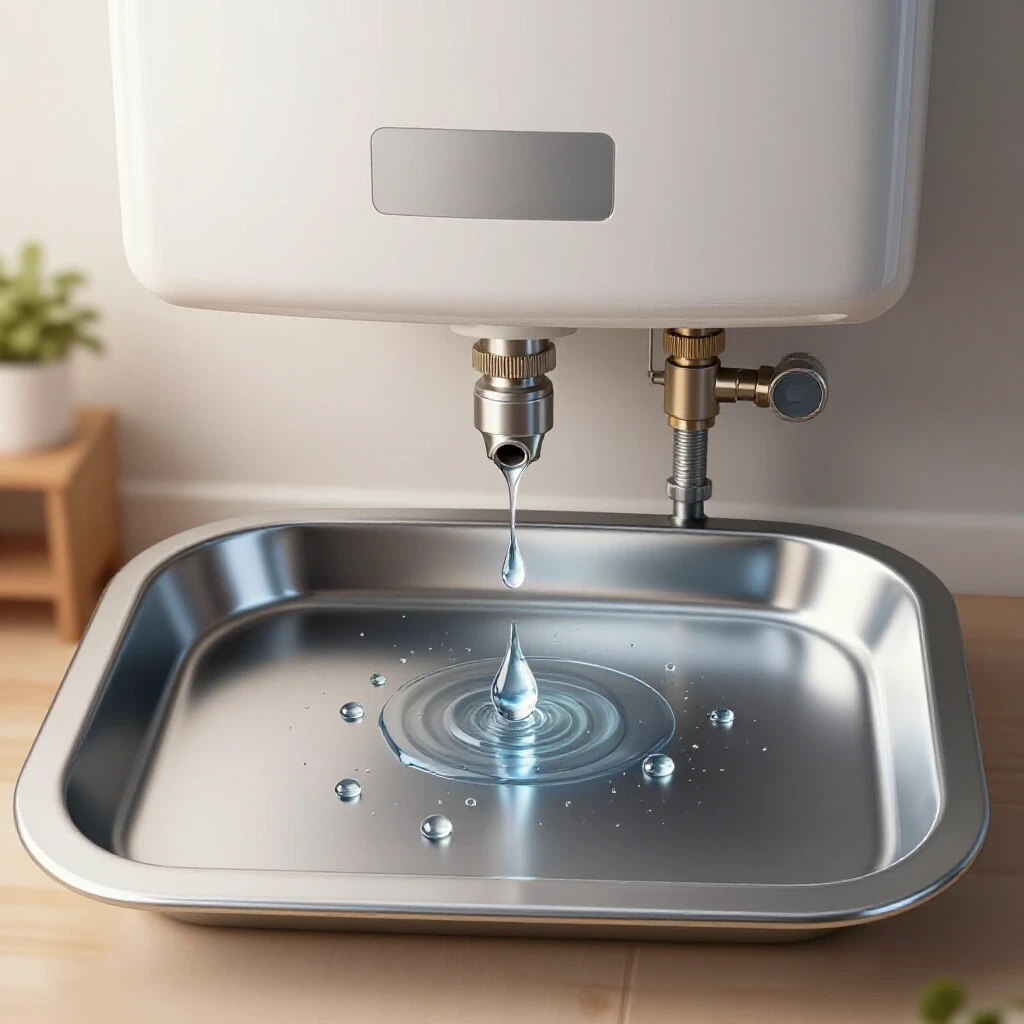
- Install a Catchment System: A simple plastic tray or a heavy-duty silicone mat with a raised lip can hold several quarts of water. This prevents a slow drip from ever touching the wood fibers.
- Monitor Humidity: Keep your kitchen humidity between 30% and 50%. Use a hygrometer to track this, as high humidity alone can cause dimensional changes over time.
Maintenance Schedule for Cabinet Longevity
Use this schedule to ensure you are catching issues before they require a salvage operation.
| Frequency | Task | Metric/Goal |
|---|---|---|
| Monthly | Visual inspection of P-traps and supply lines. | Zero visible moisture or “crusty” mineral deposits. |
| Quarterly | Tactile check of cabinet floor and edges. | Surface should feel smooth and hard. |
| Bi-Annually | Tighten hinge screws and check door alignment. | Doors should have a consistent 3mm gap all around. |
| Annually | Recalculate moisture levels with a meter. | Should match the rest of the home’s woodwork. |
Critical Diagnostic Mistakes to Avoid
In my early years, I made mistakes that I now help others avoid. One of the most common errors is ignoring a “slow” expansion. Homeowners often think a small bulge is just “old house character.” In reality, it is an active mechanical failure.
Another mistake is using standard wood filler to “fix” a swollen edge. Wood filler has no structural strength. If the underlying material is still soft or damp, the filler will simply pop out within weeks. You must dry and harden the core before any cosmetic repairs are attempted.
Finally, never ignore the “slope” of your cabinet floor. In many older homes, the floors have settled. If your cabinet floor slopes toward the back wall, a small leak will pool against the back panel—the most difficult part of the cabinet to repair. Always check the level and consider adding a shim or a waterproof barrier to direct water toward the front where it can be seen.
When to Stop the Salvage Process
There is a point where the material science tells us the piece is no longer salvageable. If the particle board has turned into a texture resembling “wet oatmeal” and you can easily push a screwdriver through the panel, the internal bond strength is gone. At this stage, the material can no longer hold a screw or support the weight of the countertop.
Safety is the priority here. A cabinet that supports a heavy stone countertop must have structural integrity. If the vertical gables (the side walls of the cabinet) are swollen at the base, the “load path” of the countertop weight is compromised. In these cases, the focus shifts from salvaging the material to reinforcing the structure with secondary supports.
Practical Next Steps for the Homeowner
If you have noticed a change in your cabinetry, start by clearing out the storage area completely. Use your flashlight to inspect the rear corners and the areas around the plumbing. If you find a swollen edge, use your digital calipers to record the thickness. Check back in 48 hours after placing a small fan in the area. If the thickness hasn’t decreased, the material may be saturated and require the clamping protocol mentioned earlier.
Mastering these small diagnostic steps allows you to maintain the value of your property without the fear of sudden, massive repair bills. It is about being a proactive steward of your home’s mechanical and structural systems.
FAQ: Common Questions on Material Expansion and Salvage
Can I use a standard hair dryer to speed up the drying of a swollen cabinet? I do not recommend this. A hair dryer creates intense, localized heat that can cause the surface veneer to peel or the wood fibers to shrink too quickly and crack. Use a low-speed fan or a dehumidifier to pull moisture out slowly and evenly.
How long does it typically take for a cabinet panel to dry out? Depending on the severity and the ambient humidity, it can take anywhere from three to ten days. You should monitor the progress with a moisture meter. Do not attempt to sand or seal the wood until the meter reads below 10%.
Is wood glue effective for fixing a cabinet that has already expanded? Standard wood glue is not a filler. However, if the material has delaminated (split into layers), you can inject wood glue into the gaps and then clamp the layers together. This helps restore some of the original structural strength.
What is the “safe” moisture level for kitchen cabinetry? In most climate-controlled homes, a moisture content (MC) between 6% and 9% is considered stable. If your meter shows anything above 12%, you have an active moisture issue that needs to be addressed.
Can I just sand down the “bulge” and paint over it? You can, but only after the material is completely dry and hardened. If you sand wet particle board, you will create a fuzzy, shredded surface that will not hold paint. Always use a wood hardener first to stabilize the fibers.
Are plastic liners enough to prevent water damage? Liners are a great first line of defense, but they can sometimes hide leaks. Water can get underneath the liner and sit against the wood for weeks without being noticed. I prefer a combination of sealed edges and a liner that I check monthly.
Does heat from a dishwasher contribute to cabinet swelling? Yes. The steam and heat from a dishwasher cycle can cause the edges of adjacent cabinets to expand over time. This is called “steam-induced hygroscopic expansion.” Installing a simple “steam shield” (a metal or plastic strip) on the underside of the counter can prevent this.
What tools should I buy first for home moisture diagnostics? If you own an older home, start with a pin-type moisture meter and a high-lumen flashlight. These two tools will help you find 90% of the issues before they become visible to the naked eye.
Can I use epoxy to reinforce a water-damaged cabinet floor? Yes, penetrating epoxy is an excellent tool for salvaging soft wood. It soaks into the fibers and hardens into a plastic-like state. This is often the only way to save a cabinet floor that has started to lose its structural density.
Why does particle board swell more than solid wood? Particle board is made of small wood fragments with a high surface-area-to-volume ratio. This means there are more pathways for water to enter. Additionally, the manufacturing process “compresses” the wood; water allows those compressed fibers to “spring back” to their uncompressed state, causing significant expansion.
(This article was written by one of our staff writers, Daniel Whitaker. Visit our Meet the Team page to learn more about the author and their expertise.)