How to Prevent Mold on Basement Storage Boxes (Step-by-Step Guide)

Every older home has a unique personality, often shaped by decades of settling, seasonal shifts, and the specific ways its previous owners cared for it. In my 17 years as a facilities technician, I have learned that these legacy structures do not follow the same rules as modern builds. I once spent three weeks tracking a phantom moisture bloom in a 1920s Tudor basement, only to find that a previous owner had sealed a coal chute with the wrong type of mortar, creating a bridge for ground moisture. These experiences taught me that protecting a home is not about reacting to disasters; it is about understanding the building science that keeps a structure stable and dry.
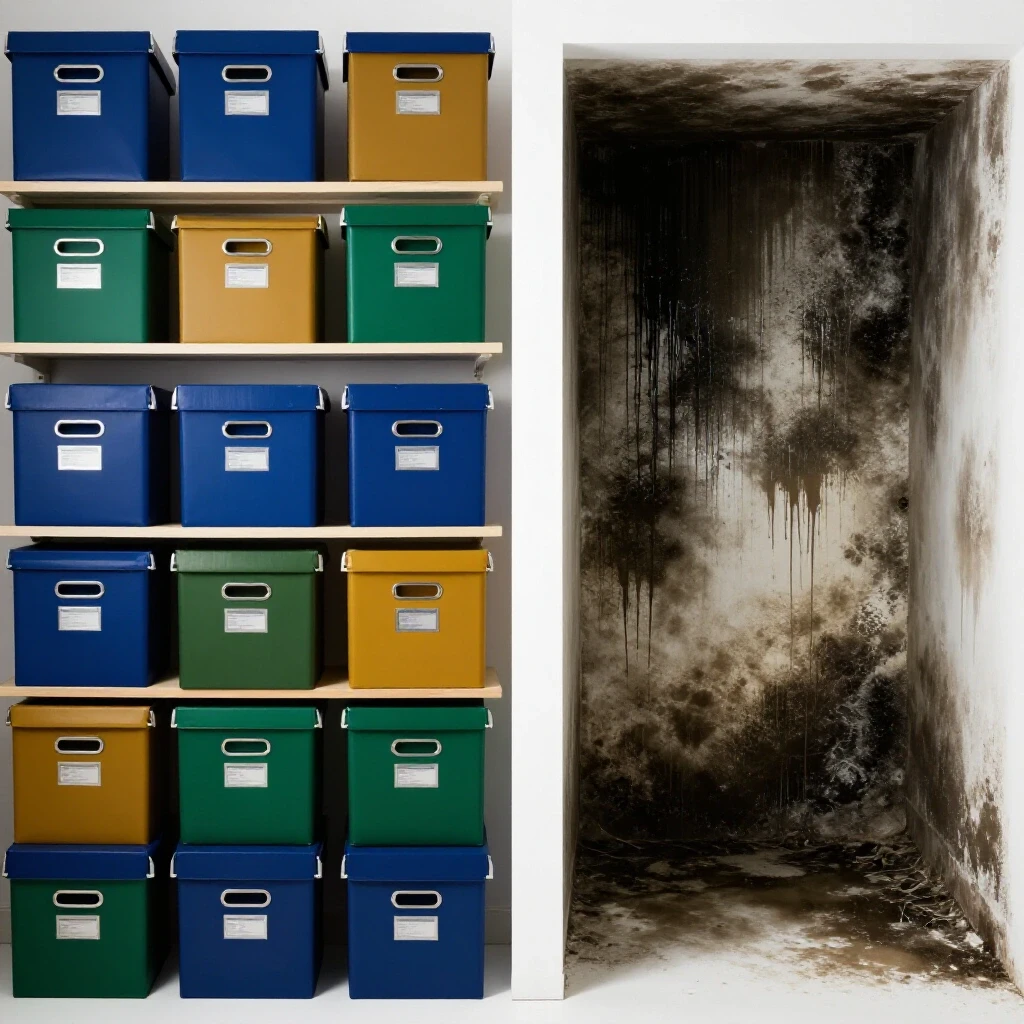
The Building Science of Sub-Grade Storage Environments
Building science is the study of how heat, air, and moisture move through a building’s envelope. In a basement, this involves understanding how hydrostatic pressure and vapor drive interact with porous materials like concrete and cellulose. When we store items in these spaces, we are placing them in a zone where the environment is constantly trying to reach equilibrium with the damp earth outside.
One of the most critical concepts I teach homeowners is capillary action. This is the ability of a liquid to flow in narrow spaces without the assistance of, or even in opposition to, external forces like gravity. Concrete is essentially a hard sponge; it is full of microscopic pores. If you place a cardboard container directly on a concrete floor, that container will pull moisture out of the slab through capillary action. Cardboard is made of cellulose, which is hygroscopic, meaning it actively attracts and holds water molecules from the surrounding air and surfaces.
Vapor drive is another silent factor. Moisture moves from areas of high concentration to low concentration. Because the soil outside your foundation is almost always more humid than your basement air, water vapor is constantly being pushed through your walls. If you stack items tightly against an exterior foundation wall, you create a “dead air” space. This prevents the wall from breathing and traps that migrating vapor against your belongings. Over time, the relative humidity in that tiny gap can reach 100%, leading to condensation and the eventual degradation of organic materials.
Essential Diagnostic Tools for Residential Moisture Detection
Diagnostic tools allow a homeowner to see what the naked eye misses by measuring variables like relative humidity, surface temperature, and moisture content. These devices provide a baseline for your home’s health, allowing you to identify a spike in moisture before it affects your stored goods. They turn guesswork into data-driven maintenance.
To properly monitor a basement, I recommend a specific kit of tools that every owner of a legacy property should own:
- Digital Hygrometer: This measures the relative humidity (RH) and temperature of the air. For a safe storage environment, you want to keep your RH below 50%.
- Pinless Moisture Meter: This tool uses electromagnetic signals to detect moisture in wood, drywall, or cardboard without poking holes. A reading above 12% in wood or a high relative scale reading on cardboard indicates a problem.
- Infrared (IR) Thermometer: This allows you to check the surface temperature of your foundation walls. If a wall is significantly colder than the air, it is a prime candidate for condensation.
- Borescope: A small camera on a flexible cable that helps you look behind shelving or into tight corners where airflow might be restricted.
- Thermal Imaging Camera: While more expensive, a thermal camera can show “cold spots” where water may be entering the foundation or where insulation is failing.
By using these tools monthly, you can create a log of your basement’s performance. If you notice the humidity rising to 65% every time it rains, you know your exterior drainage is failing to move water away from the house.
Identifying Root Causes of Moisture in Older Foundations
Moisture pathways are the specific routes water takes to enter your home’s envelope. In older properties, these pathways are often created by failing exterior systems, such as clogged gutters or poor soil grading. Understanding these pathways is the first step in preventing the saturation of items stored in your lower levels.
I often see homeowners focus on the inside of the basement when the real issue is outside. For example, if your soil is graded toward the house rather than away, you are essentially funneling rainwater into your foundation. A standard requirement is a slope of at least 1 inch per foot for the first 6 feet away from the wall. Without this, hydrostatic pressure builds up. This is the pressure exerted by a fluid at rest due to the force of gravity. When the soil is saturated, this pressure pushes liquid water through microscopic cracks in your concrete or masonry.
Another common failure is the “stack effect.” As warm air rises and exits through the upper levels of your home, it creates a vacuum that pulls cooler, damp air in through the basement. This air often carries high levels of humidity. If this air hits a cold surface—like a box of old photos sitting on a cold floor—it reaches its dew point and turns into liquid water.
| Symptom | Potential Root Cause | Diagnostic Step |
|---|---|---|
| Musty odor in specific corners | Poor airflow/Dead air space | Check RH with a hygrometer in that corner vs. the center of the room. |
| Dampness on the bottom of containers | Capillary action from the slab | Use a moisture meter on the container and the concrete. |
| Efflorescence (white powder) on walls | Hydrostatic pressure/Seepage | Check exterior grading and gutter extensions. |
| Condensation on cold water pipes | High humidity and thermal bridging | Measure pipe temp vs. dew point of the air. |
Strategic Storage Frameworks to Protect Household Goods
A storage framework is a systematic approach to organizing items to ensure airflow and physical separation from damp surfaces. It prioritizes the use of inorganic materials and elevation to prevent organic decay in high-risk zones. This approach acknowledges that no basement is perfectly dry and builds in a margin of safety.
The biggest mistake I see is using the floor as a shelf. Even a “dry” basement floor emits vapor. To protect your belongings, you must break the contact between the item and the house’s structure. I recommend the following standards:
- Elevation: All items should be at least 4 to 6 inches off the floor. Use heavy-duty plastic or metal shelving units. Avoid wooden pallets if possible, as wood is organic and can hold moisture.
- Airflow Gaps: Never push shelving or boxes flush against an exterior wall. Leave a minimum of 4 inches of space to allow air to circulate. This prevents the “dead air” zones where condensation thrives.
- Material Selection: Switch from cardboard to heavy-duty plastic bins with gasket seals. While cardboard is cheap, its cost-to-risk ratio is high in a sub-grade environment.
- Zoning: Store the most sensitive items (electronics, paper, textiles) in the center of the room, away from floor drains, sump pumps, and foundation walls.
When I managed a large facility with an older basement, we implemented a “no-cellulose” rule for long-term storage. By switching to wire racking and plastic totes, we eliminated the material that was fueling moisture-related issues.
DIY vs. Professional Scope Limits for Basement Care
Understanding when to handle a task yourself and when to call a specialist is vital for preventing structural damage. While a homeowner can manage humidity and storage arrangements, certain foundation and drainage issues require professional equipment and knowledge of local building codes.
DIY Scope: – Installing and maintaining a high-capacity dehumidifier. – Extending gutter downspouts 6 to 10 feet away from the foundation. – Applying interior masonry “sealer” (though this is often a temporary fix). – Monitoring humidity levels and logging data. – Re-grading small areas of soil near the foundation.
Professional Scope: – Installing an interior or exterior perimeter drain (French drain). – Repairing structural foundation cracks larger than 1/4 inch. – Sump pump installation or replacement involving pit excavation. – Large-scale excavation for exterior waterproofing membranes.
| Material Type | Moisture Resistance | Airflow Potential | Durability in 50%+ RH |
|---|---|---|---|
| Cardboard Boxes | Very Low | Low | Poor (Absorbs moisture) |
| Plastic Totes | High | Low (Internal) | Excellent |
| Metal Wire Racks | High | Excellent | Excellent (Resists rust if coated) |
| Wooden Shelving | Medium | Medium | Moderate (Can warp or hold dampness) |
Establishing a Preventative Maintenance Schedule
Preventative home care is the practice of performing routine checks to ensure systems are functioning as designed. For basement storage, this means verifying that your moisture-control systems are active and that the building envelope remains intact. A reactive approach often leads to expensive repairs that could have been avoided with five minutes of inspection.
I suggest following this seasonal checklist to ensure your storage area remains protected:
Monthly: – Check the dehumidifier filter and empty the bucket (if not plumbed to a drain). – Record the hygrometer readings in a logbook. – Inspect the sump pump by manually lifting the float switch to ensure it triggers.
Quarterly: – Use a moisture meter to check the bottom of any remaining cardboard boxes. – Look for new signs of efflorescence or staining on the foundation walls. – Inspect the perimeter of the basement for any signs of water entry after a heavy rain.
Annually: – Clean your gutters and ensure all downspouts are clear and pointing away from the house. – Inspect the exterior grading to see if the soil has settled near the foundation. – Check the discharge line of your sump pump to ensure it isn’t blocked by debris or ice.
Conclusion: Taking Control of Your Sub-Grade Environment
The key to successfully managing an older home is to stop treating the basement as a static “closet” and start seeing it as a dynamic environment. By applying building science principles—like breaking capillary action with shelving and reducing vapor drive through airflow—you can protect your legacy items from the natural dampness of the earth.
Start by moving your items away from the walls today. Buy a simple digital hygrometer and place it in the corner farthest from your dehumidifier. These small, low-cost steps create a defensive barrier that protects your home’s structure and your personal history. Remember, moisture is patient; your maintenance must be more persistent.
FAQ: Managing Moisture and Storage in Older Basements
How high should I keep the humidity in my basement for safe storage? You should aim to keep the relative humidity (RH) below 50%. Most organic materials start to attract significant moisture once the RH consistently stays above 60%. Using a dehumidifier with a built-in humidistat is the most effective way to maintain this level.
Why are my boxes damp even though there are no visible leaks? This is usually caused by two factors: capillary action and condensation. If the boxes are on the concrete floor, they are wicking moisture directly from the slab. If they are against a cold wall, warm air hits the cold surface of the box and reaches the dew point, creating liquid water.
Is it safe to store cardboard in a basement if I have a dehumidifier? While a dehumidifier helps, cardboard is still a risk because it is highly hygroscopic. If the power fails or the dehumidifier malfunctions, cardboard will immediately begin absorbing moisture. Switching to plastic containers is a much safer long-term strategy.
How far should I move my storage away from the foundation walls? A minimum of 4 inches is recommended. This allows for adequate airflow, which helps equalize the temperature and humidity across the wall surface, preventing the localized high-humidity zones that lead to dampness.
What is the white, powdery substance on my basement walls? That is efflorescence. It occurs when water moves through the masonry, dissolves internal salts, and leaves them behind on the surface as the water evaporates. It is a clear sign that moisture is migrating through your foundation.
Can I use wooden pallets to keep my items off the floor? While pallets provide elevation, they are organic and can harbor moisture themselves. If the basement has a history of high humidity, plastic or metal shelving is a superior choice. If you must use wood, ensure it is not in direct contact with a damp slab.
How do I know if my exterior grading is the problem? Wait for a heavy rain and watch where the water pools. If water sits against your foundation or flows toward the house, your grading is incorrect. Soil should slope away from the house at a rate of 1 inch per foot.
Should I seal my basement floor to prevent moisture? A floor sealer can reduce vapor drive, but it will not stop hydrostatic pressure. If you have liquid water coming up through cracks, a sealer will eventually peel or bubble. Address the exterior drainage first before applying interior sealants.
What is the best way to monitor hidden moisture behind storage? Use a pinless moisture meter to scan the walls and the backs of containers. You can also use an infrared thermometer to find cold spots on the wall, which indicates where condensation is most likely to occur.
Does a sump pump prevent humidity issues? A sump pump prevents flooding by managing the water table under your house, but it does not control air humidity. You still need a dehumidifier to manage the vapor that migrates through the walls and floor.
How often should I test my sump pump? I recommend testing it every three months. Pour enough water into the pit to trigger the float switch and ensure the water is being discharged far away from the foundation.
What should I do if I find a crack in my foundation near my storage? Measure the crack. If it is wider than 1/4 inch or is horizontal, consult a structural engineer. Small vertical hairline cracks are common in older homes but should be monitored for changes in width.
(This article was written by one of our staff writers, Daniel Whitaker. Visit our Meet the Team page to learn more about the author and their expertise.)