How to Choose Safe Nursery Furniture for Your Baby (Guide)

When we think about future-proofing a home, we often focus on kitchen counters that won’t stain or flooring that can handle heavy foot traffic. However, the most critical application of material science often happens in the smallest room of the house. Over my 13 years as a supply chain analyst, I have evaluated thousands of technical spec sheets for everything from industrial resins to high-end cabinetry. I have learned that the highest price tag does not always equal the highest level of security. When I began setting up rooms for my own family, I realized that the same rigorous trade-off analysis I use for commercial builds is essential for selecting secure infant furnishings.
Technical Standards for Secure Infant Furnishings
Technical standards are the baseline requirements set by engineering organizations to ensure a product can withstand specific stresses. For infant room pieces, these standards focus on structural integrity, slat strength, and the elimination of sharp edges or small parts that could become detached.
In the world of material evaluation, we look at organizations like ASTM International. They provide the “rules of the road” for how much weight a changing table must hold or how much force a crib slat should withstand before breaking. When I evaluate these pieces, I look for compliance with ASTM F1169 for full-size cribs. This isn’t just a label; it represents a series of stress tests where machines pull, push, and drop weights on the furniture to simulate years of use in a few days.
Interestingly, many homeowners assume that if a product is for sale, it must be the most durable option. In my experience, the “minimum standard” is just that—a floor, not a ceiling. When comparing high-end home materials, I look for products that exceed these requirements by at least 20%. This provides a buffer for the unexpected “dynamic loads” that occur when a toddler decides to use a dresser as a ladder.
Material Science of Substrates and Finishes
Material science in furniture design involves the study of the physical and chemical properties of the “substrate”—the core material—and the “finish,” which is the protective outer layer. Understanding these properties helps determine how a piece will react to humidity, cleaning chemicals, and physical impact.
When I analyze the supply chain for child-safe furniture, the first thing I look at is the substrate. You generally have three choices: solid wood, plywood, and medium-density fiberboard (MDF).
- Solid Wood: I prefer hardwoods like maple, oak, or beech. On the Janka Hardness Scale, which measures the force required to embed a steel ball into wood, maple scores around 1,450 lbf. This means it is highly resistant to the “teething” marks and dings that are common in a child’s room.
- Plywood: This is a series of wood veneers glued together. It is incredibly stable and resists warping better than solid wood in high-humidity environments. However, I always check the “emission grade.” I look for NAF (No Added Formaldehyde) certifications.
- MDF and Particle Board: These are engineered from wood fibers and resin. While cost-effective, they are often less durable over time. If a screw is ripped out of MDF, the hole is almost impossible to repair to its original strength.
Building on this, the finish is just as important as the wood. I look for “Greenguard Gold” certification, which means the product has been tested for over 10,000 chemicals and VOCs (Volatile Organic Compounds). VOCs are chemicals that turn into gas at room temperature, and in a small, poorly ventilated room, they can accumulate quickly.
Structural Integrity and Stability Metrics
Structural integrity refers to a piece of furniture’s ability to hold its shape and stay upright under pressure. Stability metrics specifically measure the “tip-over” risk, which is determined by the furniture’s center of gravity and the effectiveness of its anchoring system.
During my procurement logs from five years ago, I remember testing two different dressers. One was a heavy, solid walnut piece, and the other was a lightweight composite. Surprisingly, the heavier piece was more dangerous without anchors because its drawers were so heavy that pulling them all out at once shifted the center of gravity forward.
Table 1: Side-by-Side Material Performance Specifications
| Feature | Solid Hardwood (Maple/Oak) | High-Grade Plywood | MDF / Composite |
|---|---|---|---|
| Janka Hardness | 1,200 – 1,450 lbf | Variable | 600 – 900 lbf |
| Moisture Resistance | Moderate (can warp) | High (very stable) | Low (swells with water) |
| Screw Retention | Excellent | Good | Poor |
| VOC Off-gassing | Very Low (if unfinished) | Low (if NAF) | Moderate to High |
| Lifespan | 20+ years | 15+ years | 5 – 7 years |
As a result of these findings, I always insist on wall anchoring for any piece of furniture taller than 27 inches. The ASTM F2057 standard is the benchmark here. It requires furniture to stay upright when a 60-pound weight is hung from an open drawer. When you are doing your own home material comparison, check if the manufacturer includes a “tip-over kit” and if that kit uses metal components rather than plastic zip ties, which can become brittle and snap over time.
Why Higher Upfront Costs Don’t Always Guarantee Durability
In my 13 years of trade-off analysis, I have often found that price is more closely linked to brand name or aesthetic trends than to technical specifications. A high-end finish might look beautiful, but it may not be as scratch-resistant as a mid-tier conversion varnish.
When evaluating the real trade-offs, I look at the “wear layer.” In flooring, this is measured in “mils” (one-thousandth of an inch). In furniture, we look at the thickness of the veneer and the type of topcoat used. A water-based polyurethane is common in child-safe furniture because it is low-VOC, but it requires more coats to reach the same durability as an oil-based finish.
Table 2: Upfront Cost vs. 15-Year Maintenance Outlay
| Material Type | Upfront Cost | Maintenance Cycle | 15-Year Estimated Cost |
|---|---|---|---|
| Solid Hardwood | High ($$$$) | Occasional Polishing | Original Cost + $100 |
| Veneered Plywood | Mid ($$$) | Avoid Deep Scratches | Original Cost + $250 |
| Laminate / MDF | Low ($) | Replacement Likely | 2x Original Cost |
As you can see, the “cheap” option often ends up costing more because it lacks the “tensile strength”—the resistance of a material to breaking under tension—needed to survive a move or a growing child. I once bought a composite changing table that looked great but the “cam-lock” fasteners loosened within 18 months. I had to replace the entire unit, effectively doubling my initial investment.
Hardware and Mechanical Performance Specifications
Mechanical performance focuses on the moving parts of the furniture, such as drawer slides, hinges, and latches. These components are often the first points of failure and can pose risks if they allow fingers to be pinched or drawers to fall out.
When I analyze hardware, I look for “soft-close” mechanisms. These aren’t just a luxury; they serve a functional purpose by preventing drawers from being slammed, which protects the structural joints of the piece. I also look for “drawer stops.” This is a simple mechanical catch that prevents a drawer from being pulled completely out of the frame.
- Hinges: Look for “hidden” or “European” hinges. They are adjustable and keep the mechanical parts away from curious fingers.
- Slides: Ball-bearing slides are superior to plastic rollers. They have a higher weight rating (usually 50-100 lbs) and operate smoothly for decades.
- Fasteners: Avoid pieces held together entirely by staples or glue. Look for “mortise and tenon” joints or high-quality steel bolts with threaded inserts in the wood.
Long-Term Cleaning and Maintenance Profiles
Maintenance profiles describe the amount of effort and the type of chemicals required to keep a material in its original condition. For furnishings in a child’s environment, the material must be able to withstand frequent cleaning without the finish breaking down.
I have found that high-gloss finishes are a nightmare for maintenance. They show every fingerprint and are easily scratched by toys. A “satin” or “matte” finish is much more forgiving. Porosity refers to how many tiny holes are in a surface. A highly porous surface will absorb spills, leading to mold or permanent stains.
For routine cleaning, I recommend a simple solution of mild soap and water. Avoid “furniture polishes” that contain silicone. While they give a temporary shine, silicone can seep into the wood and make it impossible to refinish the piece later if you ever want to change the color or repair a deep scratch.
Actionable Buying Worksheet for Secure Furnishings
To make a confident purchasing decision, you need to move past the marketing photos and look at the “bones” of the furniture. Use this checklist when you are evaluating pieces in a showroom or reading technical spec sheets online.
- Check the Weight: Does the piece feel substantial? Solid wood should have a “heft” that composite materials lack.
- The “Shake” Test: Grasp the top of the item and give it a firm shake. There should be zero “racking” (side-to-side movement). If it wobbles, the joints are weak.
- Inspect the Underside: Manufacturers often hide cheap materials where you can’t see them. Check if the drawer bottoms are thick plywood or thin, flimsy hardboard.
- Hardware Material: Are the handles and pulls solid metal, or are they plastic with a metallic coating?
- Certification Labels: Look for the JPMA (Juvenile Products Manufacturers Association) seal, which indicates the product was tested in an independent lab.
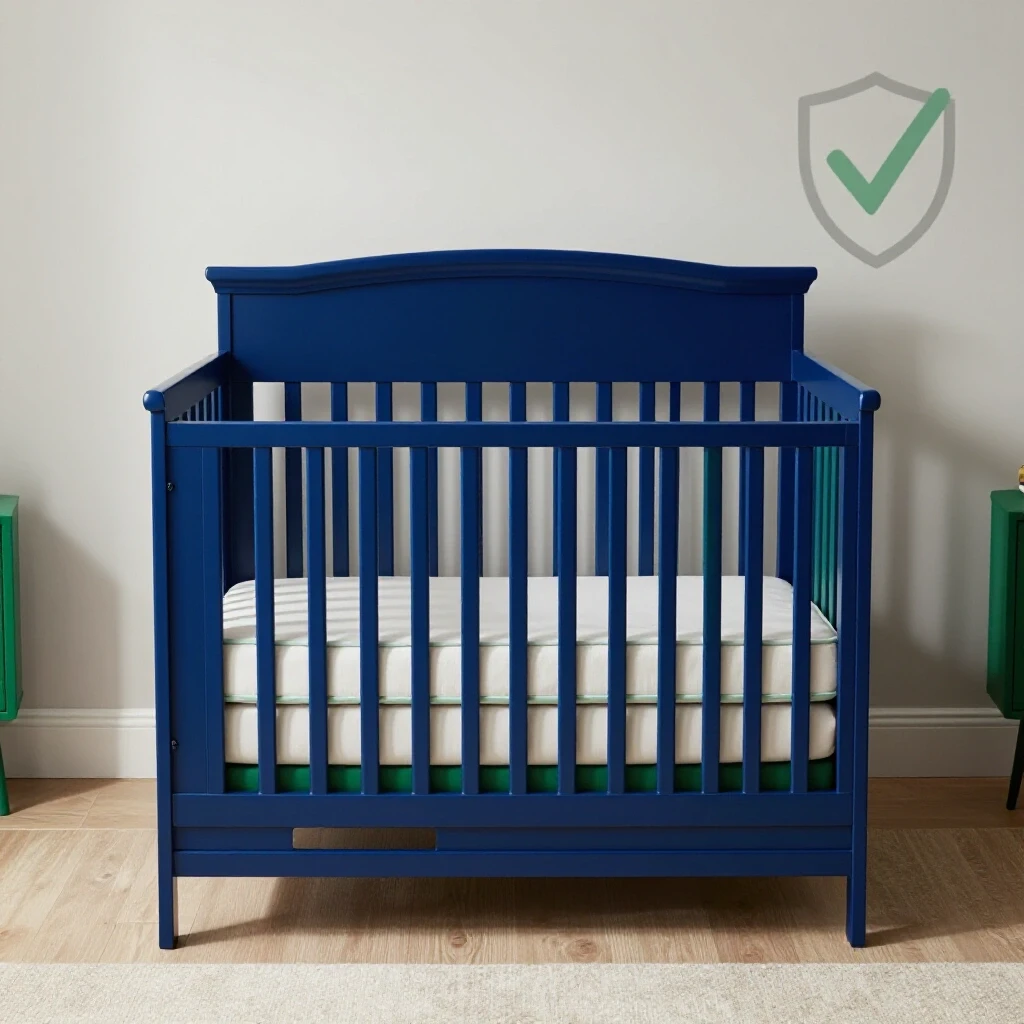
- Slat Gap Measurement: For cribs, ensure the distance between slats is no more than 2 and 3/8 inches (about the width of a soda can).
- Smell Test: If a piece has a strong chemical odor right out of the box, it is off-gassing. If possible, let the furniture sit in a garage or a well-ventilated room for two weeks before placing it in the nursery.
Final Supply Chain and Cost Recommendations
When we look at the global supply chain, where a piece is made can impact its quality. I have found that furniture manufactured in regions with strict timber management laws, like the US, Canada, or parts of Europe, often uses higher-grade adhesives and finishes. While you might pay 20% more upfront for domestic hardwood furniture, the life-cycle cost is significantly lower because the piece can transition from a nursery to a guest room or be sold for a high percentage of its original value.
In my own home, I chose a solid maple crib that converted into a toddler bed and eventually a full-size headboard. By spending more on a high-quality substrate and a Greenguard Gold finish 10 years ago, I avoided the need to buy three separate pieces of furniture. This is the ultimate goal of a successful trade-off analysis: spending money once on a product that performs its job without compromise.
Frequently Asked Questions
What is the difference between Greenguard and Greenguard Gold? Greenguard certification ensures a product meets strict chemical emissions limits. Greenguard Gold is a more rigorous standard that includes safety factors for sensitive individuals, such as children. It limits emissions for over 360 VOCs and requires lower total VOC levels, making it the preferred choice for infant environments.
Is solid wood always safer than engineered wood? Not necessarily. While solid wood is more durable and has fewer adhesives, some high-grade plywoods (like Baltic Birch) are incredibly strong and use low-emission glues. The “safety” depends more on the specific resins used and the type of finish applied to the surface.
How often should I check the hardware on a crib or dresser? I recommend a “tightness check” every six months. Changes in humidity can cause wood to expand and contract, which may loosen bolts and screws. A quick turn with a hex key or screwdriver ensures the structural integrity remains intact.
Are “non-toxic” paints and stains actually durable? Modern water-based finishes have come a long way. While they used to be prone to peeling, current “conversion varnishes” that are low-VOC offer excellent scratch resistance and can handle the moisture from frequent wipe-downs.
What is the most important factor in preventing furniture tip-overs? The most important factor is the use of a high-quality wall anchoring system. Even the heaviest furniture can tip if a child pulls on it. Always anchor furniture to a wall stud using a metal bracket and a screw that is at least 2 inches long.
Does a higher Janka hardness rating mean the furniture is better? A higher Janka rating means the wood is harder and more resistant to dents. For furniture that will see a lot of “wear and tear,” like a crib rail, a harder wood like Maple (1,450) is better than a softer wood like Pine (around 400-900).
Why should I avoid furniture made with “thin veneers”? Thin veneers are easily damaged and cannot be sanded down or repaired if they get a deep scratch. If the veneer is less than 1/32 of an inch thick, the underlying composite material is more likely to be exposed to moisture and damage.
What are “drawer stops” and why do they matter? Drawer stops are small plastic or metal tabs that prevent a drawer from sliding all the way out of the dresser. This prevents the drawer from falling on a child’s feet and helps maintain the stability of the unit.
Can I trust the weight limits listed on changing tables? Weight limits are usually based on “static loads” (weight sitting still). They do not always account for “dynamic loads” (a wiggling child). I always look for a changing table with a weight limit at least 50% higher than my child’s expected weight to ensure a safety margin.
What is the life-cycle cost of a piece of furniture? Life-cycle cost is the total cost of owning a product over its entire life. This includes the purchase price, the cost of maintenance, and the cost of replacement if it fails prematurely. High-quality materials usually have a lower life-cycle cost despite a higher initial price.
(This article was written by one of our staff writers, Andrew Morrison. Visit our Meet the Team page to learn more about the author and their expertise.)