How to Prevent Cabinets From Overflowing and Jamming (Easy Guide)

Managing a busy household often feels like overseeing a small-scale logistics center. After 11 years in operations and logistics, I have learned that the same principles used to keep warehouses running smoothly apply to our kitchen and bathroom cabinets. In my home, we moved away from trying to achieve a magazine-look and toward systems that emphasize ease of care. I remember the frustration of trying to close a kitchen drawer only for it to catch on a stray spatula, or opening a cupboard and having a stack of plastic lids rain down on me. These weren’t just messy moments; they were logistical bottlenecks that added unnecessary stress to our mornings. By focusing on flow rates and spatial capacity rather than just “cleaning up,” my family created a functional environment that stays manageable even during the busiest weeks.
The Science of Spatial Logistics in Busy Homes
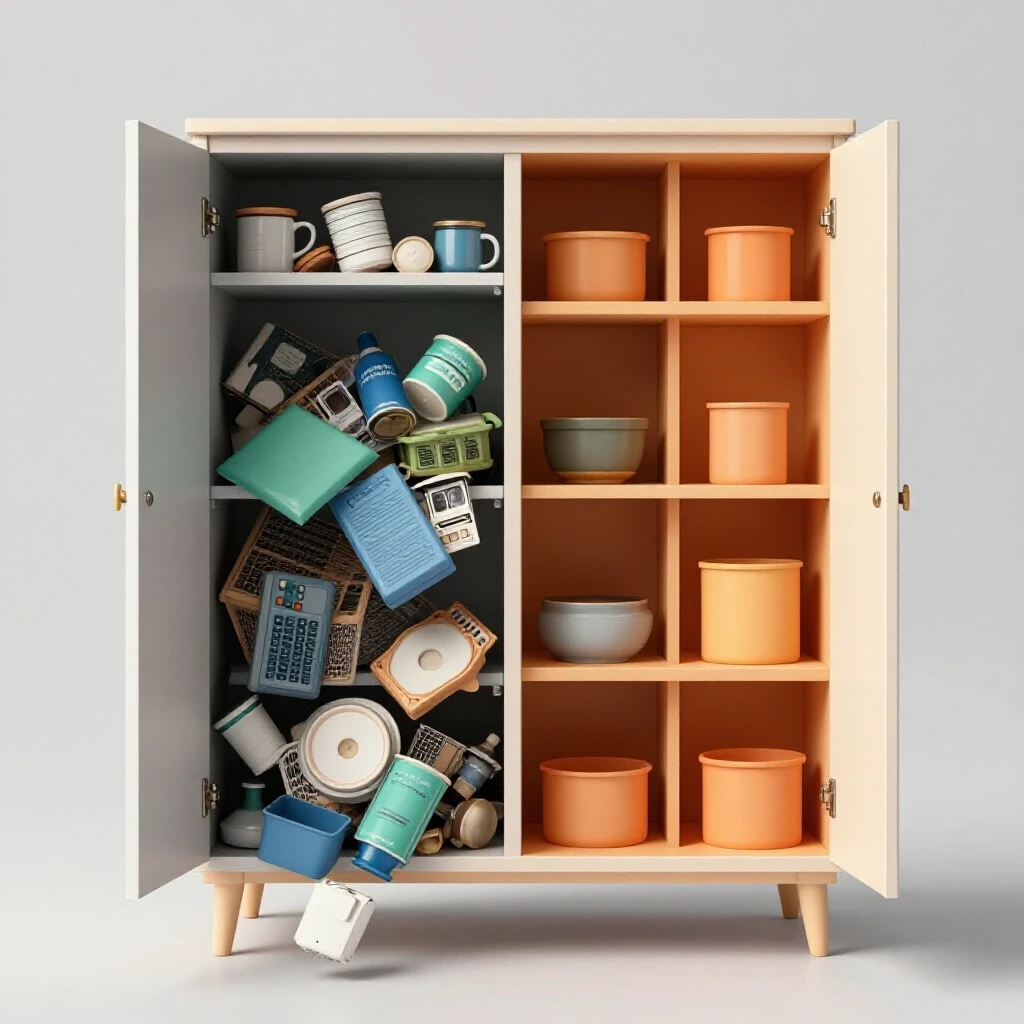
Spatial logistics involves managing the volume of items relative to the available cubic inches in your storage units to ensure smooth operation. It is the practice of balancing what you own with the physical limits of your home to prevent “spatial overflow.” This approach focuses on how items move in and out of your life.
In the world of logistics, we look at “utilization rates.” If a warehouse is 100% full, it is actually broken because there is no room to move items around. The same applies to your kitchen. When your cabinets are packed to the brim, you cannot see what you have, and putting things away becomes a chore. Research in environmental psychology suggests that visual clutter increases cortisol levels, the body’s stress hormone. This is why a jammed cabinet feels so exhausting; your brain is over-processing the visual “noise” of too many items.
To manage this, I follow the 80% Rule. I aim to keep our cabinets at no more than 80% capacity. This 20% “buffer” is what prevents doors from jamming and allows for easy retrieval. When we exceeded this in our own kitchen, my wife and I noticed that the time it took to put away groceries doubled. We weren’t just storing things; we were playing a high-stakes game of Tetris.
- Spatial Capacity Metric: Total volume of storage vs. volume of items.
- Buffer Zone: 20% empty space to allow for hand movement and item shifting.
- Visual Processing Load: The mental energy required to identify an item in a crowded space.
Reducing Retrieval Friction to Prevent Cabinet Jamming
Retrieval friction is the measure of physical and mental effort required to access or return an item to its designated spot. High-friction systems require moving multiple objects to reach one, while low-friction systems allow for “one-touch” access. Reducing friction is the key to preventing a home from reverting to a cluttered state.
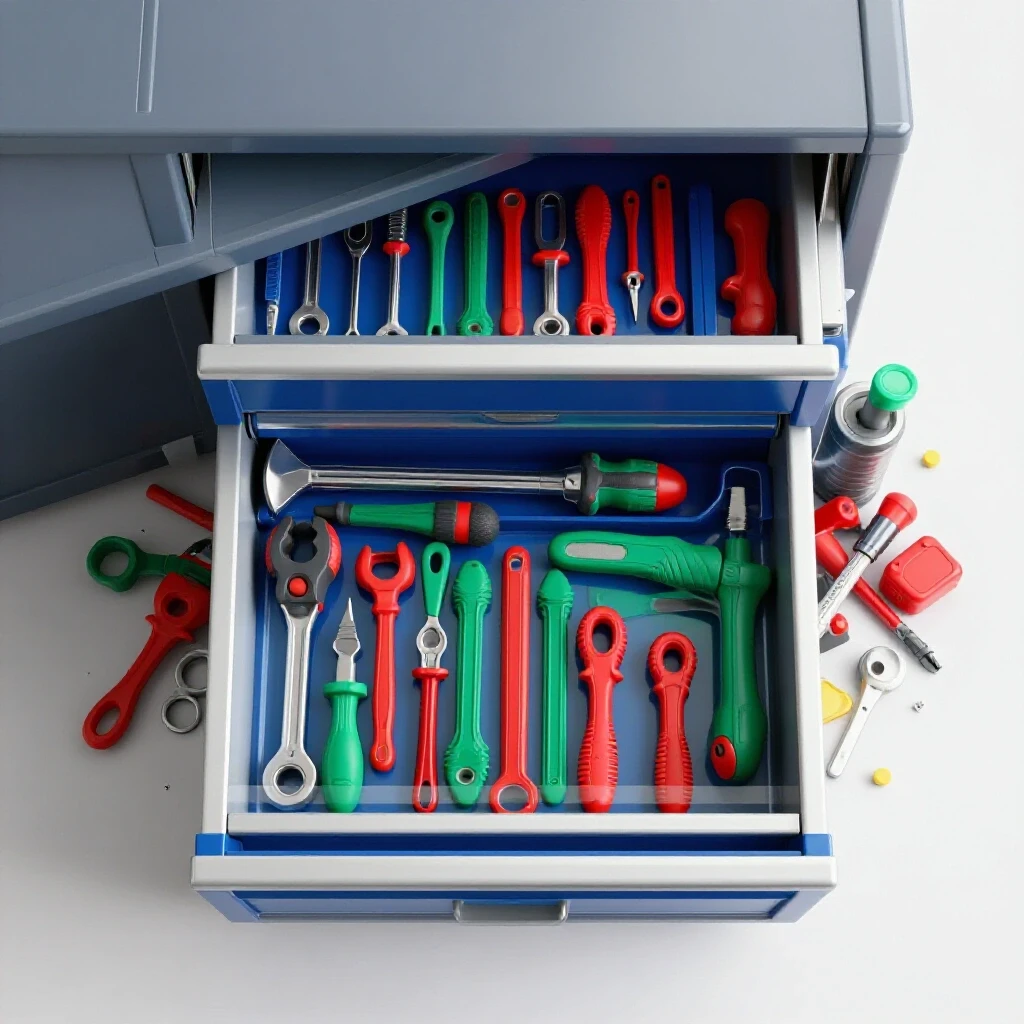
In my early years of organizing, I bought beautiful, deep bins for our pantry. They looked great, but they were a disaster for my kids. To get a snack, they had to pull out a heavy bin, take off a lid, find the item, and then reverse the process. This is “high friction.” Within days, the snacks were just piled on the floor because the system was too hard to maintain. We switched to open-front bins, which reduced the “retrieval step count” from four steps to one.
Interestingly, studies on organizational behavior show that the more steps a task requires, the less likely a person is to complete it. By measuring the number of physical movements needed to reach a pot or a pan, you can predict if that cabinet will stay organized. If you have to move three heavy pans to get to the one you need, that cabinet is destined to become a “jammed” mess.
| Storage Method | Retrieval Step Count | Friction Level | Maintenance Success Rate |
|---|---|---|---|
| Stacked items (no bins) | 3-5 steps | High | 20% |
| Deep bins with lids | 4-6 steps | Very High | 15% |
| Open-front bins | 1 step | Low | 85% |
| Pull-out shelving | 2 steps | Low | 80% |
| Tiered organizers | 1 step | Low | 90% |
Designing Functional Zones for High-Traffic Areas
Functional zoning is the practice of dividing storage into specific areas based on the frequency of use and the proximity to where the task occurs. This reduces the distance items travel within the home, which minimizes the chances of them being left in the “wrong” place. Zoning turns a cabinet from a generic box into a specialized tool.
When I audited our kitchen logistics, I realized our coffee mugs were on the opposite side of the room from the coffee maker. Every morning, we were crossing paths, creating a “traffic jam” in the kitchen. By creating a “Coffee Zone” where the machine, mugs, and spoons all lived in one vertical line of storage, we reduced our morning steps by 40%. This is what we call “ergonomic proximity” in logistics.
For families, zoning must be intuitive. We use a “Primary Zone” for items used daily (plates, glasses, lunch boxes) located between waist and eye level. “Secondary Zones” are for items used weekly, and “Deep Storage” is for seasonal items like holiday platters. This hierarchy ensures that the most-used cabinets are the easiest to manage, preventing the overflow that happens when you try to cram everything into the same reachable spot.
- Active Storage: Items used daily; placed in the most accessible “Goldilocks” zone.
- Passive Storage: Items used monthly or seasonally; placed in high or low cabinets.
- Zone Boundary: A clear physical or visual marker that defines where one category ends and another begins.
The Sorting Framework for High-Speed Organization
A sorting framework is a logical process used to categorize items quickly and decisively based on their utility and frequency of use. It moves beyond “keep or toss” and looks at “flow and function.” This method reduces decision fatigue by providing clear rules for where an item belongs.
In my professional work, we use a “Velocity Audit” to see how fast items move through a warehouse. I applied this to our cluttered “junk drawer.” Instead of just cleaning it, I timed how long it took to find a pair of scissors. It took 12 seconds because of the clutter. After applying a high-speed sorting method, it took 2 seconds. We use the “Four-Box Method” during our family organization sprints:
- Immediate Use: Items used in the last 7 days.
- Relocate: Items that belong in a different “Zone.”
- Archive: Items kept for sentimental or emergency reasons (not for daily cabinets).
- Exit: Items to be donated or recycled.
By time-boxing these sessions into 15-minute intervals, we avoid the mental fatigue that leads to “organizing paralysis.” If a sorting session goes longer than 20 minutes, the quality of decision-making drops significantly. We aim for high-intensity, short-duration bursts to keep the momentum going.
Selecting Sustainable Storage Solutions for Families
Sustainable storage involves choosing containers and hardware that prioritize accessibility and durability over aesthetic perfection. These tools should serve the user’s habits rather than forcing the user to change their behavior. The best gear is “low-friction” and “high-visibility.”
I once made the mistake of buying opaque, matching baskets for our bathroom. They looked stunning, but because we couldn’t see what was inside, we kept buying duplicate tubes of toothpaste. We were essentially hiding our clutter rather than managing it. This led to “inventory bloat,” which eventually caused the cabinet doors to stop closing properly. We replaced them with clear, modular bins.
When selecting gear, consider the “Maintenance Friction Index.” A bin that requires a specific folding technique to look good is high-maintenance. A bin that allows you to simply “drop and go” is low-maintenance. For a busy family, the “drop and go” model will always win in the long run.
- Transparency: Can you see the contents without moving the bin?
- Modularity: Do the units fit together to maximize the square footage of the shelf?
- Durability: Can the container withstand being pulled out by a toddler or a rushed adult?
- Labeling: Use simple, bold text or icons so every family member knows exactly where things go.
Establishing Maintenance Systems and Habit Loops
Maintenance systems are the repeated behaviors and scheduled checks that prevent a system from reverting to a state of disorder. Rather than a “big clean” once a month, these systems focus on “micro-adjustments” that happen daily or weekly. This is the “preventative maintenance” of home organization.
In logistics, we use “Cycle Counting” to keep track of inventory. At home, we do a “Two-Minute Reset” every evening. Each family member checks one cabinet or drawer in their assigned zone. If something is out of place, it gets moved. Because we only do one small area, it doesn’t feel like a chore. This prevents the “clutter creep” that happens when one misplaced item attracts five more.
We also use “One-In, One-Out” as a strict rule for high-volume categories like plastic containers or coffee mugs. If we buy a new travel mug, an old one must leave the house. This keeps our spatial capacity at that 80% sweet spot. Without this rule, the physical boundaries of our cabinets would eventually fail, leading back to jammed doors and frustration.
- Daily Reset: A 2-minute sweep of high-traffic zones.
- Weekly Audit: A 10-minute check of one major cabinet (e.g., the pantry).
- Monthly Velocity Check: Identifying items that haven’t been touched in 30 days and moving them to passive storage.
Overcoming the Psychological Barriers to Decluttering
The biggest hurdle to a functional home isn’t the lack of bins; it’s the mental weight of “what if” and “just in case.” Environmental psychology tells us that we attach identity to our belongings. Letting go of a kitchen gadget we never use can feel like letting go of the person we thought we would be (the one who makes fresh pasta every Sunday).
I struggled with this when organizing our “gadget cabinet.” I had a bread maker I hadn’t used in three years. It was taking up 15% of the cabinet’s volume, causing the other appliances to be jammed together. Once I realized that the “cost” of keeping it was the daily frustration of digging for my toaster, it became easier to let go. We have to weigh the “storage cost” against the “utility value.”
- Storage Cost: The physical space and mental energy an item consumes.
- Utility Value: How often and how effectively the item is actually used.
- Sunk Cost Fallacy: The idea that we must keep something because we spent money on it, even if it no longer serves us.
Actionable Steps for a Low-Maintenance Home
To start your journey toward a more functional living space, don’t try to fix the whole house at once. Logistics experts focus on “bottlenecks”—the one area that causes the most delay. For many families, this is the kitchen cabinet under the sink or the primary pantry shelf.
- Identify your biggest bottleneck: Which cabinet do you struggle to close every day?
- Perform a 15-minute purge: Remove everything and only put back what you have used in the last month.
- Measure your friction: Count the steps to get your most-used item. Can you get it down to one step?
- Apply the 80% rule: Leave a gap on the shelf. That gap is your “operational freedom.”
By applying these logistical principles, you stop fighting against your home and start working with it. The goal isn’t a perfect house; it’s a house that supports your life rather than draining your energy. When your cabinets breathe, you can too.
Frequently Asked Questions
Why do my cabinets get messy again just days after I organize them?
This usually happens because the “retrieval friction” is too high. If your system requires too many steps to put something away, your brain (and your family’s) will choose the path of least resistance, which is leaving the item on the counter or shoving it into the front of the cabinet. To fix this, simplify your containers and ensure every item has a “one-touch” home.
How do I know if I have too much stuff or just bad storage?
Use the 80% Rule. If your cabinets are filled to the top and you cannot easily see the back of the shelf, you likely have a volume issue. If you have plenty of empty vertical space but the bottom of the cabinet is a mess, you have a storage gear issue. Most homes suffer from a combination of both.
What is the best way to organize deep cabinets where things get lost?
Deep cabinets are logistical “black holes.” The best solution is to use “pull-out” systems. This can be as simple as long, narrow bins that act like drawers. When you need something from the back, you pull the whole bin out rather than reaching over other items. This maintains visibility and prevents “expired” items from hiding in the back.
How can I get my kids to follow these organization systems?
Kids need “low-friction” systems. Avoid lids on toy bins or snack containers. Use clear labels with both words and pictures. Most importantly, involve them in the “Zone” design. If they help decide where their school bags go, they are more likely to put them there.
What should I do with items I only use once a year?
These items belong in “Passive Storage.” This could be the very top shelf of your kitchen cabinets or a separate storage area. Never give “prime real estate” (the shelves between your waist and eyes) to items you don’t use at least once a week.
Is it worth buying expensive matching container sets?
Not necessarily. In logistics, we value function over form. While matching sets look nice, they often aren’t modular enough for different types of items. It is better to buy clear, stackable bins that fit your specific shelf dimensions. Focus on the “transparency” and “ease of access” rather than the brand name.
How do I handle “sentimental” clutter that I don’t use but can’t throw away?
Move sentimental items out of your functional zones. Your kitchen cabinets should be for cooking, not for storing your grandmother’s china that you never use. Relocate these items to a dedicated “Archive Zone” in a less-accessible part of the house to free up “Active Storage” for daily life.
How often should I “re-organize” my home?
If your systems are designed correctly, you should never need a “big re-organize.” Instead, you should perform “Cycle Counts” or “Daily Resets.” If you find a specific cabinet is constantly overflowing, it’s a sign that the system for that specific zone has failed and needs a logistical adjustment, not just a cleaning.
(This article was written by one of our staff writers, Christopher Bennett. Visit our Meet the Team page to learn more about the author and their expertise.)