How to Sort and Organize Family Keepsakes (Step-by-Step Guide)

When we inherit boxes of old photographs, vintage textiles, or handwritten letters, our first instinct is often to find a “perfect” eco-friendly way to store them or a quick method to clear the space. We look for sustainable ways to rehome items we cannot keep, such as donating period-accurate clothing to local theater groups or offering surplus family documents to regional historical societies. However, the sheer volume of these inherited items often leads to a logistical bottleneck in a busy family home. In my eleven years managing operations and logistics, I have learned that the most durable systems are not built in a weekend marathon. They are developed through a steady, intentional pace that respects both the physical limits of our homes and the mental energy of our families.
Understanding the Spatial Logistics of Sentimental Objects
Spatial logistics is the practice of managing how items move through and occupy a physical environment. In a family home, sentimental objects often become “dead stock”—items that take up valuable square footage without providing current utility or joy.
The failure of many home organization systems stems from a lack of understanding regarding spatial capacity. Every room has a “saturation point” where adding one more item disrupts the flow of daily life. When we rush through sorting through family history, we often move items from one high-friction area, like a cluttered kitchen counter, to another, like a crowded attic. This doesn’t solve the problem; it merely relocates the bottleneck. Research in environmental psychology suggests that “visual noise” from unresolved clutter increases cortisol levels, particularly in parents. By slowing down the sorting process, we allow ourselves the time to make logical decisions rather than emotional ones, ensuring that what remains in our home truly belongs there.
Why High-Friction Storage Leads to Clutter Reversion
Retrieval friction is the amount of physical and mental effort required to access or put away an item. High-friction systems, such as deep plastic bins stacked four high in a dark basement, almost always lead to a return of household clutter.
When items are difficult to reach, we tend to leave new acquisitions on flat surfaces like tables or chairs. This creates a “pile-up” effect. In my own home, I realized our system for saving my children’s artwork was failing because the storage box was kept under a heavy bed. It was too hard to reach, so the art stayed on the fridge for months. We transitioned to a low-friction model: a slim, acid-free portfolio kept in the living room bookshelf. This reduced the steps required to store a drawing from twelve to two.
| Storage Type | Retrieval Friction Score (1-10) | Maintenance Level | Best Use Case |
|---|---|---|---|
| Deep Stacked Tubs | 9 | High | Long-term archives |
| Labeled Modular Drawers | 4 | Medium | Frequently viewed photos |
| Integrated Wall Displays | 1 | Low | High-value heirlooms |
| Open-Top Baskets | 2 | Very Low | Daily active items |
A Measured Framework for Categorizing Inherited Items
A sorting framework is a set of logical rules used to determine the destination of an item. Instead of asking “Does this spark joy?”, a logistical approach asks “Does this item earn its square footage?”
In a busy household, decision fatigue is the primary enemy of organization. When we try to sort through decades of family history in one afternoon, our ability to make sound choices degrades. I recommend a “time-box” approach: spend exactly 20 minutes, twice a week, on a single box. This prevents the “sorting hangover” that leaves your living room floor covered in half-organized piles. We use a simple three-tier categorization system to manage the flow:
- Active Integration: Items to be repaired, framed, or used in daily life.
- Archive: Items to be preserved in specialized, low-volume storage.
- Relocate: Items to be digitized, gifted to other relatives, or responsibly recycled.
Reducing Decision Fatigue with Sorting Matrices
A sorting matrix is a visual tool that helps you categorize items based on two or more variables, such as emotional value and physical size. Using a matrix removes the guesswork from the process.
When my family sorted through my grandmother’s textile collection, we were overwhelmed by the volume. We applied a matrix that prioritized items based on their condition and our ability to use them. A lace tablecloth with heavy damage was moved to the “repurpose” pile to be turned into smaller framed sections, while a well-preserved quilt was moved to “active integration” for the guest bedroom. This logical progression kept us from feeling stuck.
Integrating Family History into Functional Home Decor
Functional home storage involves using your existing living space to house items in a way that serves a purpose. Rather than hiding family keepsakes in the “clutter zone,” we can integrate them into our interior styling.
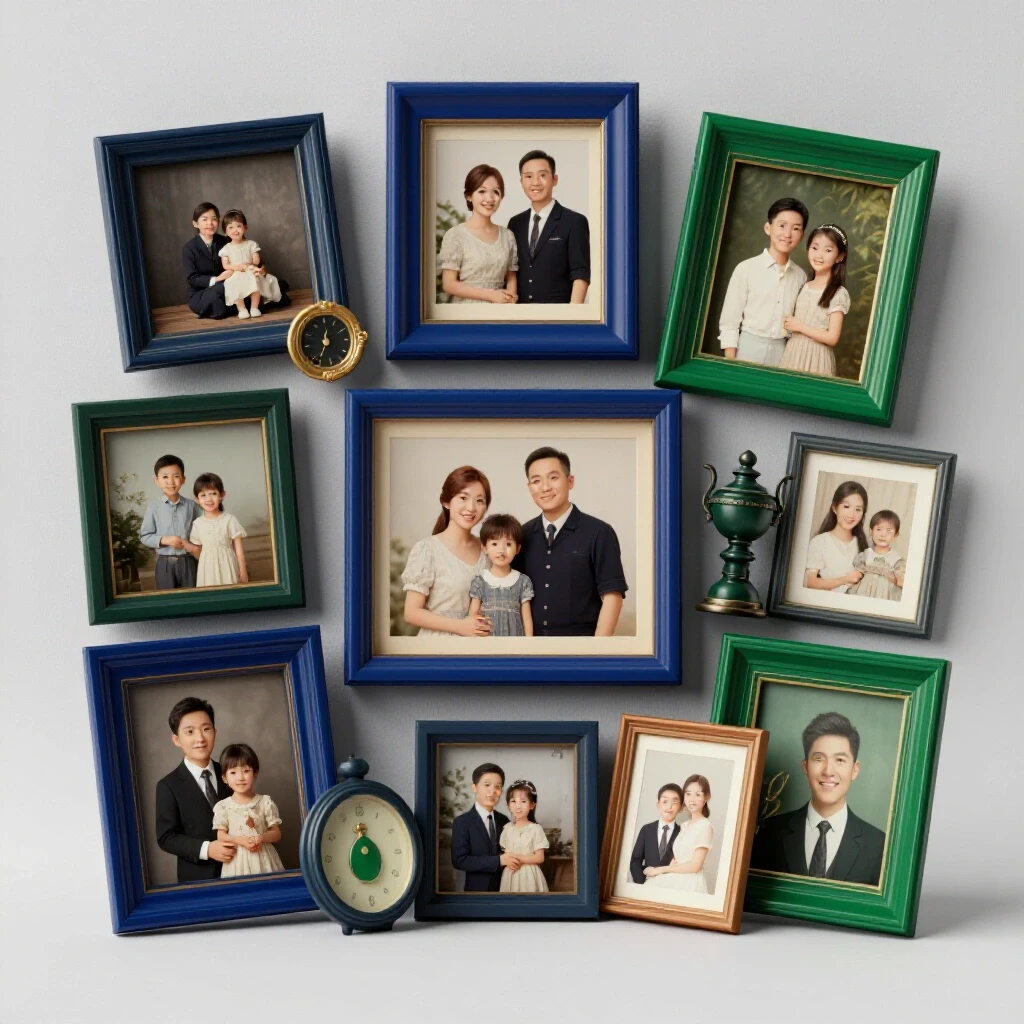
This approach treats heirlooms as part of the home’s “visual inventory.” For example, framing a set of vintage postcards or a hand-written recipe does more than just decorate a wall; it removes those items from a box in the closet and places them into a permanent, managed location. This reduces the total volume of “unprocessed” items in your home. From a logistics perspective, this is “zoning”—assigning a specific, visible home for every category of item to prevent them from drifting back into disorganized piles.
The Role of Preservation Crafts in Spatial Management
Preservation crafts are hands-on techniques, such as textile repair or archival mounting, used to stabilize and display old objects. These tasks should be seen as part of the organization process.
By taking the time to mend a family heirloom, you are making a conscious decision about its value. If an item isn’t worth the thirty minutes it takes to repair or properly frame, it likely isn’t worth the square footage it occupies. In our home, we found that “active preservation” actually reduced the number of items we kept. We chose to frame three significant medals from a relative’s service rather than keeping a box of twenty miscellaneous pins. The density of the collection decreased, but the impact increased.
Establishing Low-Maintenance Habit Loops
A habit loop is a three-part process consisting of a cue, a routine, and a reward. In home organization, this means creating a system that triggers the “putting away” of items automatically.
For a family system to be sustainable, it must account for the behavior of the least organized member. If a system is too complex—such as a multi-layered filing system for old letters—it will fail. We use “one-touch” rules for incoming sentimental items. If a relative sends a batch of old photos, they go directly into a “processing bin” rather than onto the dining table. Once a month, that bin is emptied during a scheduled family sorting session.
- The 5-Minute Sweep: Every evening, we check flat surfaces for “drifting” items.
- The In-Flow Cap: We use a “one-in, one-out” rule for large items like furniture or bulky keepsakes.
- Visual Labeling: We use clear, bold labels on the side of any opaque bins so that contents are identifiable at a glance, reducing the time spent searching.
Measuring Success Through Logistical Metrics
In the professional world, we use metrics to track efficiency. You can apply these same principles to your home to ensure your organization systems are actually working.
One of the most important metrics is “Space Utilization Percentage.” If 30% of your closet is filled with boxes you haven’t opened in five years, that space is being underutilized. Another metric is “Sorting Velocity”—how many items you can successfully categorize and store in a single session. By tracking these, you can see real progress even when it feels slow.
| Metric | Definition | Goal for Families |
|---|---|---|
| Retrieval Time | Time to find a specific keepsake. | Under 3 minutes. |
| Inflow Rate | Number of items entering the home. | Less than or equal to Outflow. |
| Surface Density | Percentage of flat surfaces covered by items. | Under 20%. |
| Decision Speed | Seconds spent per item during sorting. | Under 30 seconds. |
Case Study: The Five-Box Attic Transformation
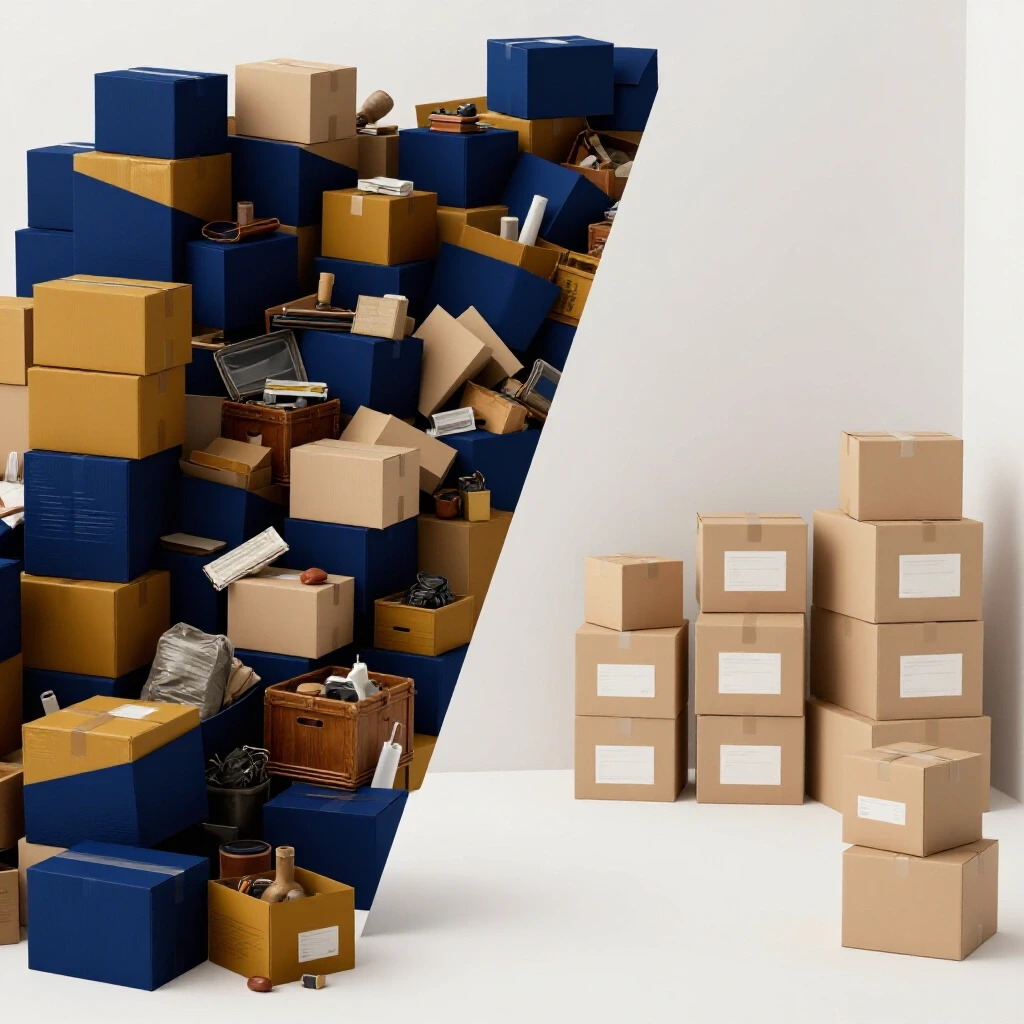
A few years ago, our attic had reached a state of “clutter paralysis.” It contained twelve large bins of mixed family history. We were visually overwhelmed and mentally fatigued every time we opened the door. We decided to stop the “purge” mindset and adopt a paced, logistical approach.
We committed to processing one bin every two weeks. We didn’t look at the other eleven bins; we focused only on the one in front of us. We used a “sorting log” to track what we kept and where it went. By the end of six months, we had reduced the twelve bins down to four high-quality archival boxes and several beautifully framed pieces throughout the house. The “friction” of the attic was gone because we knew exactly what was in every box.
Step-by-Step Sorting Log Example
- Identify the Source: Box #1 – Grandmother’s Kitchenware.
- Initial Count: 45 items.
- The Filter: Is it functional? Is it unique? Is it in good condition?
- The Result: 5 items kept for display, 10 items gifted to cousins, 30 items donated.
- Time Elapsed: 45 minutes.
Sustainable Maintenance for the Long Term
The goal of this intentional, paced approach is not a “perfect” home, but a functional one. A functional home is one where the systems are robust enough to handle the mess of daily life without collapsing.
To maintain your progress, you must treat your home like a living ecosystem. Items will always flow in—gifts, school projects, and inherited treasures. The key is to ensure the “outflow” remains steady. Every six months, we conduct a “spatial audit.” We walk through each room and ask if the items on display still represent our family’s current values. If a framed letter no longer resonates, it is moved back to the archive or passed on, making room for something new.
- Audit your storage monthly: Check for moisture or pests in archival areas.
- Rotate displays: Keep the home feeling fresh by changing which photos are framed.
- Digital backups: For paper items, a high-resolution scan can often replace the physical copy, saving significant space.
Building a System That Works for Your Family
The most important takeaway from my years in logistics is that the best system is the one you will actually use. If a professional organizer’s method feels too complex, it probably is. Simplify your labels, reduce the number of steps in your storage process, and be patient with yourself.
Sorting through family history is as much about the journey as the destination. By taking it slow, you aren’t just cleaning a room; you are curating a legacy. You are teaching your children that their history is valuable, but it shouldn’t be a burden. Start with one box, set a timer for twenty minutes, and see how much lighter your home feels when you stop rushing and start managing.
Frequently Asked Questions
How do I decide what to keep when everything feels important? Use the “Power of Three” rule. For any specific category (like old letters), try to select the three most representative or emotionally resonant items. Logistics is about managing volume; by limiting the count, you increase the value of what remains.
What is the best way to store old textiles without using plastic bins? Use acid-free archival boxes and unbuffered tissue paper. These materials allow the fabric to “breathe” and prevent the yellowing or brittle texture often caused by standard plastic or cardboard.
How can I involve my children in this process without making a bigger mess? Assign them “low-stakes” sorting tasks, such as matching old photos by the people in them. This teaches them the value of family history and spatial management without requiring them to make difficult “keep or toss” decisions.
What should I do with items that are damaged but have high emotional value? Consider “preservation through photography.” Take a high-quality photo of the item and then responsibly recycle the physical object. You keep the memory without the physical clutter or the risk of mold/deterioration.
How do I handle the guilt of getting rid of family items? Shift your perspective from “discarding” to “curating.” A museum doesn’t display every item in its collection; it chooses the best pieces to tell a story. You are doing the same for your home.
How often should I re-evaluate my storage systems? A bi-annual “spatial audit” is usually sufficient for most busy families. This aligns with the change of seasons, which is often when we are already moving items like clothing or holiday decor.
What is retrieval friction, and why does it matter? It is the physical effort needed to get an item out of storage. If it takes more than three steps to get to a box, you are less likely to put things back correctly, leading to clutter on your floors and tables.
Can I use digital inventory for my keepsakes? While I don’t recommend apps as the primary solution, a simple printed list taped to the inside of a storage closet door can serve as a highly effective, low-tech inventory system.
What are the best eco-friendly ways to dispose of unwanted family items? Look for textile recycling programs for worn-out linens, or donate usable kitchenware to local shelters. For paper, check if your local library or historical society has an interest in regional documents.
How do I stop the “rebound clutter” after I finish sorting? The key is the “Inflow/Outflow” balance. For every new sentimental item that enters the home, one must be moved to long-term storage or relocated outside the house. This maintains a steady state of organization.
(This article was written by one of our staff writers, Christopher Bennett. Visit our Meet the Team page to learn more about the author and their expertise.)