How to Fix the Most Challenging Room in Your Home (Step-by-Step)

I spent nineteen years moving my family across state lines, only to realize my biggest challenge wasn’t the 1,000-mile drive, but a 10-by-10 spare room that refused to hold a desk and a bed at the same time. We had successfully relocated four times, yet each new floor plan presented a specific area that felt fundamentally broken. These underperforming spaces often become “clutter magnets” because we try to force old habits into new, mismatched footprints.
Spatial layout adaptation is the process of modifying how you use a room to meet your current needs without structural changes. It involves analyzing traffic patterns, furniture scale, and light sources to turn a dysfunctional area into a productive one. This is vital for movers who must fit old belongings into new, often smaller, footprints.
The Foundations of Strategic Floor Plan Analysis
Spatial layout adaptation requires a deep understanding of how physical boundaries dictate human movement. Before you unpack a single box, you must evaluate the structural scale of your new home. This means looking beyond the square footage and focusing on the circulation paths—the “invisible hallways” where people actually walk.
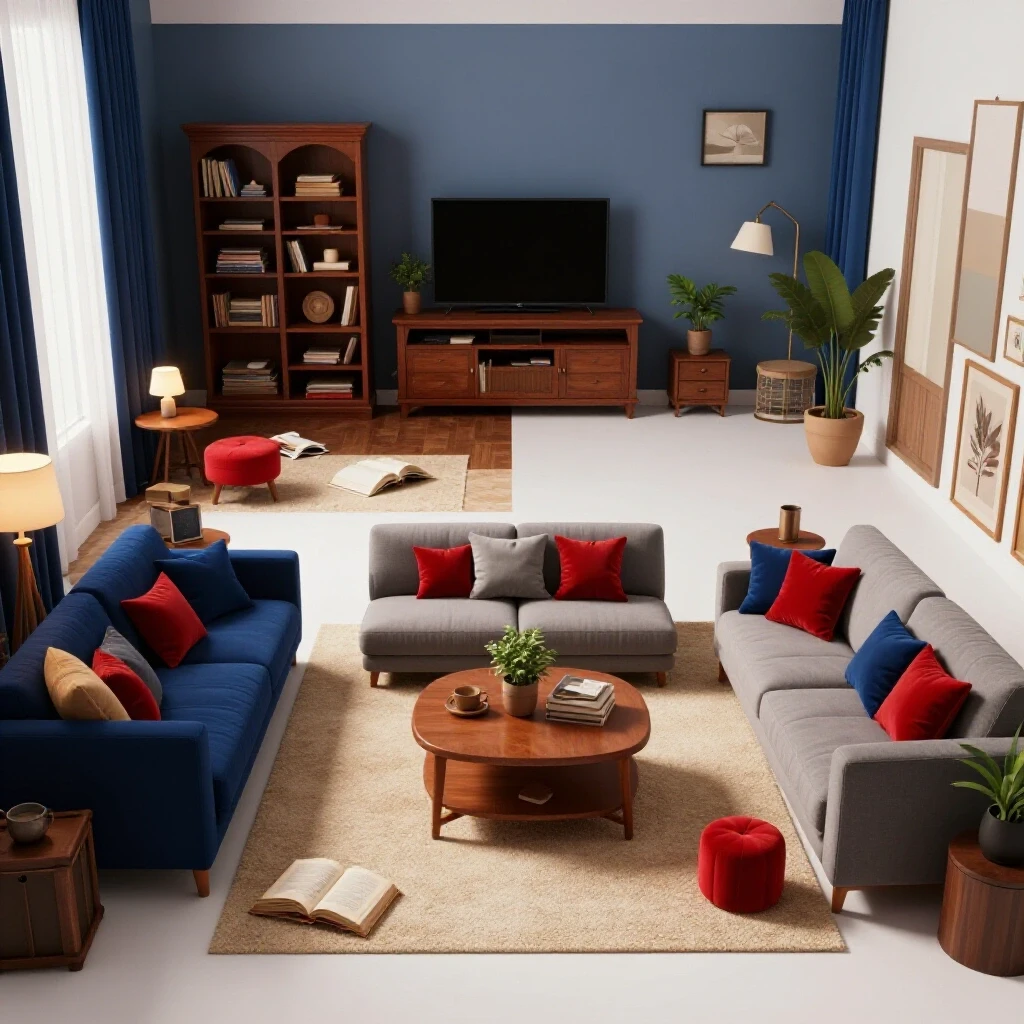
In our third move, we encountered a living room with five different doorways. It was a logistical puzzle that made traditional furniture placement impossible. By mapping the traffic flow, I realized that 30 percent of the room was unusable for seating. We had to stop viewing the room as a rectangle and start seeing it as a series of connected paths.
- Circulation Paths: Identify the natural routes between doors.
- Visual Weight: Balance heavy furniture so one side of the room does not feel “sunken.”
- Light Mapping: Note where natural light hits at different times of the day to place desks or televisions.
Managing the Logistics of a Transition
Home transition planning focuses on the coordination of moving tasks and the emotional adjustment to a new environment. It bridges the gap between leaving an old home and feeling settled in a new one. By organizing logistics early, you reduce the mental load of managing a complex relocation while maintaining family stability.
When we moved from a suburban house to a city apartment, the scale shift was jarring. Our “must-have” sectional sofa blocked the only heater in the new living room. A home moving checklist that includes a spatial audit can prevent these errors. You should measure not just the walls, but the location of outlets, vents, and window heights.
Furniture Clearance Guidelines by Room Footprint
| Area | Minimum Clearance | Purpose |
|---|---|---|
| Main Walkways | 36 Inches | Allows two people to pass comfortably. |
| Dining Chair Pull-out | 30–36 Inches | Space to sit and stand without hitting walls. |
| Coffee Table to Sofa | 15–18 Inches | Reachable for drinks but allows leg room. |
| Bed Sides | 24–30 Inches | Access for making the bed and walking. |
| Drawer Opening | 30 Inches | Full extension of dresser or desk drawers. |
Transforming Your Most Difficult Square Footage
Small room furniture layout requires a strategic approach to maximize limited square footage and improve circulation. It focuses on choosing the right scale of furniture and using vertical space to prevent a room from feeling cramped. Proper layout ensures that even the most difficult rooms in a home serve a clear, functional purpose.
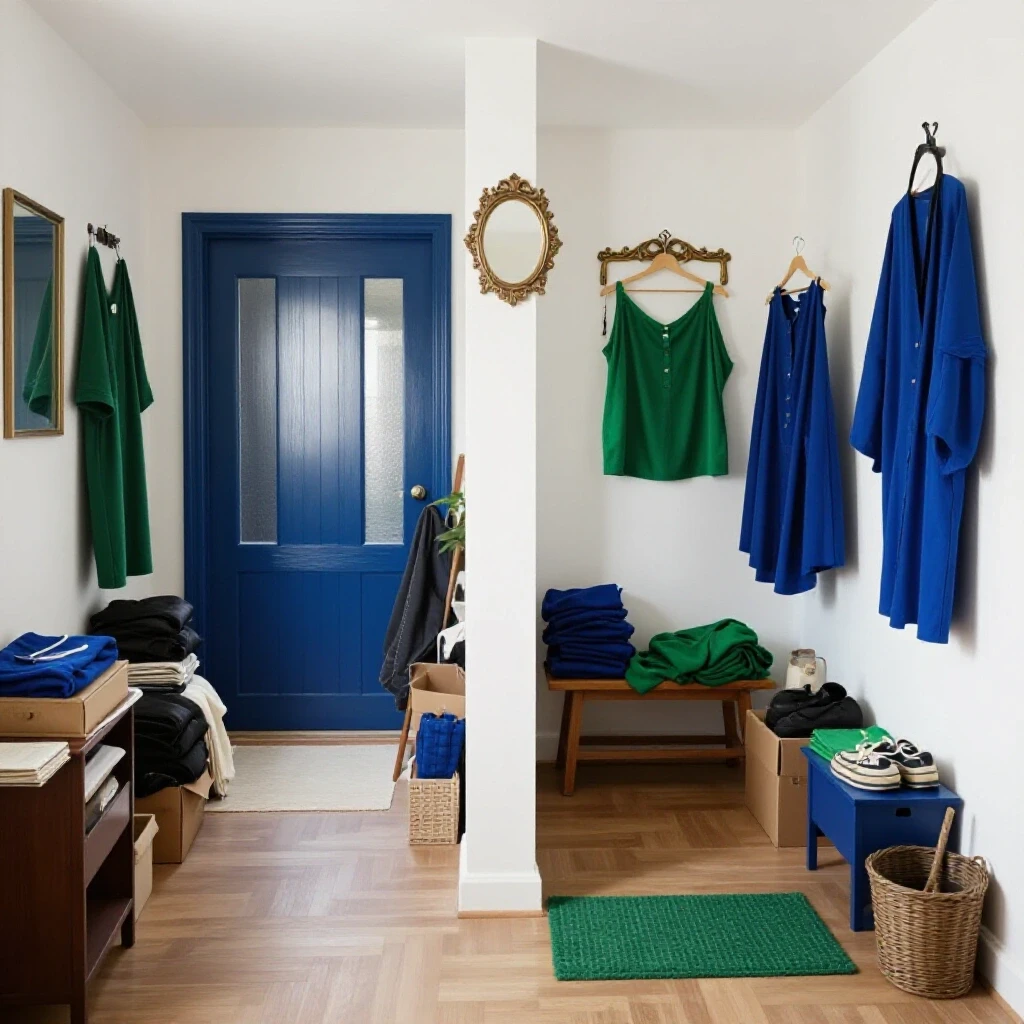
In our current home, the “problem area” was a narrow sunroom that felt like a hallway. It lacked storage and felt disconnected from the rest of the house. We solved this by creating functional zones. Instead of trying to make it a second living room, we turned one end into a dedicated mudroom and the other into a plant station. This gave the “awkward” space a reason to exist.
- Identify the Primary Friction: Ask why the room isn’t working. Is it too dark, too cramped, or lacks a clear purpose?
- Define the Zone: Assign one specific activity to the space (e.g., “This is only for reading”).
- Audit the Inventory: Determine if your existing furniture is the right scale. A large desk in a small room can kill the flow.
- Test the Layout: Use painter’s tape on the floor to mock up furniture positions for 48 hours before moving heavy pieces.
Why Blind Furniture Placement Fails
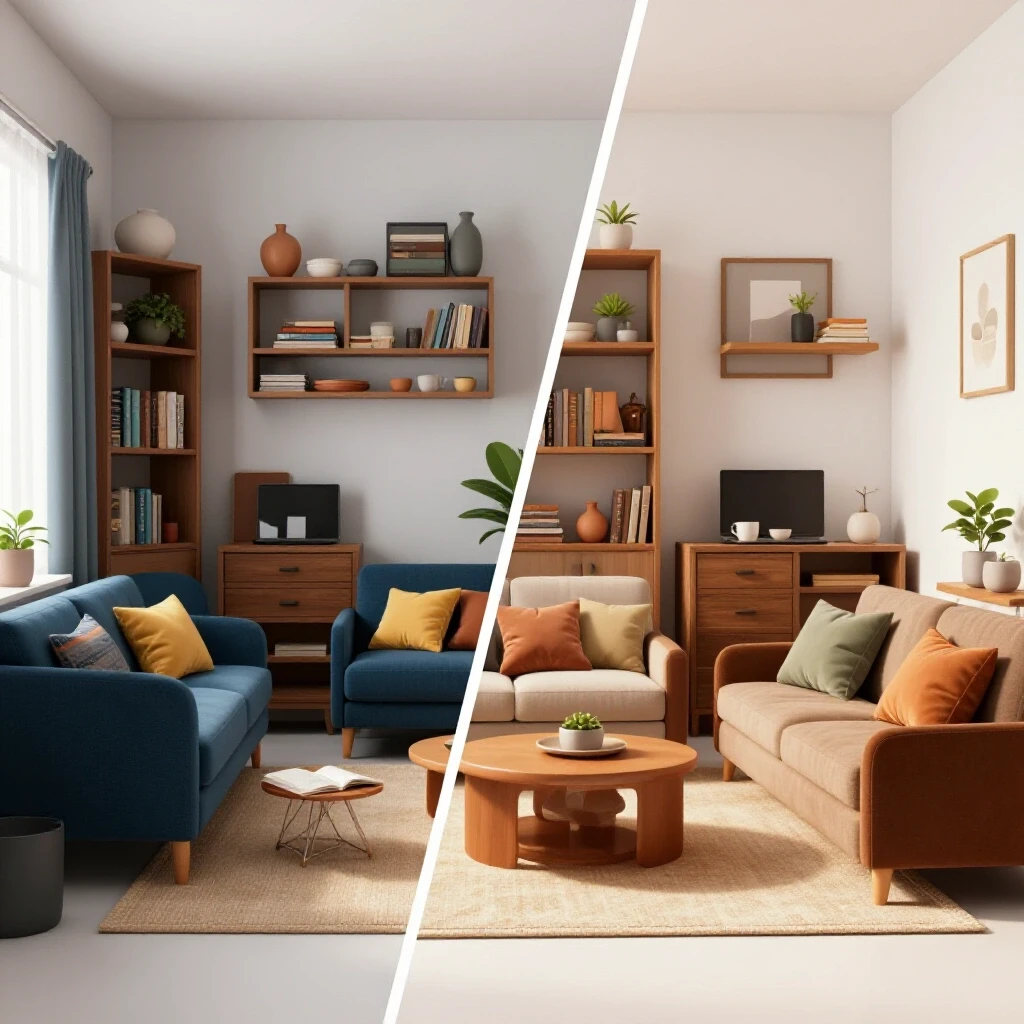
Spatial layout adaptation is not just about where things fit; it is about how they function together. Many movers make the mistake of placing furniture against every wall, which often highlights the room’s odd proportions. This “perimeter loading” can make a room feel like a waiting area rather than a home.
Interestingly, ergonomics research suggests that our brains feel more at ease when we can see the entrance to a room from our primary seated position. This is known as the “prospect-refuge” theory. If your layout forces your back to the door, you may feel subtle stress without knowing why.
Spatial Blueprint Compatibility Matrix
| Existing Furniture Item | New Room Constraint | Adaptation Strategy |
|---|---|---|
| King Sized Bed | Narrow Wall with Windows | Center bed; use low headboard to not block light. |
| Large Bookshelf | Low Ceilings | Turn horizontally or use as a room divider. |
| Sectional Sofa | Multiple Doorways | Split the sectional into a smaller sofa and ottoman. |
| Dining Table | Small Square Kitchen | Use a drop-leaf table or push one side against a wall. |
Unpacking with Purpose and Spatial Flow
Home transition planning involves a systematic approach to unpacking that prioritizes high-use areas. Setting up the kitchen and bedrooms first provides a sense of normalcy. However, the “transition zones”—like entryways and utility closets—are often ignored, leading to piles of boxes that linger for months.
During our cross-country move, I realized that the boxes we didn’t unpack in the first 30 days usually contained items we didn’t actually need. This is the “Box Audit” phase. If you are struggling to fit items into a new layout, it may be a sign that the item no longer fits your current lifestyle.
- Week 1: Focus on “Survival Zones” (Kitchen, Bathroom, Primary Bedroom).
- Week 2: Address the “Problem Room” layout using tape and templates.
- Week 3: Organize storage volumes (Closets, Garage, Basement).
- Week 4: Fine-tune the decor and visual weight of each room.
Designing Daily Routines in New Environments
Neighborhood community building and routine design are the final steps in a successful relocation. A new home layout should support your daily habits, such as where you put your keys or how you drink your morning coffee. If the layout fights your routine, the move will continue to feel stressful long after the boxes are gone.
We once lived in a house where the laundry room was in the basement, two floors away from the bedrooms. It disrupted our entire flow. We adapted by creating a “sorting station” in a hallway closet on the main floor. This small layout shift saved us hours of frustration.
- Trace Your Steps: For three days, note where you experience “friction” (e.g., “I have nowhere to put my mail”).
- Adjust the Furniture: Move a small table or hook to the point of friction.
- Map the Neighborhood: Identify your “Third Places”—the coffee shop, park, or library where you feel comfortable.
- Invite Interaction: Set up your outdoor space to encourage brief chats with neighbors.
Essential Tools for Layout Planning
To avoid the physical strain of moving furniture multiple times, use digital and physical tools to visualize the space. These resources help you maintain scale accuracy, which is the most common pitfall in home transition planning.
- MagicPlan App: Uses your phone’s camera to create an instant 2D/3D floor plan.
- Floorplanner.com: A robust browser-based tool for dragging and dropping furniture into a custom room size.
- Graph Paper and Cutouts: The classic 1:12 scale method (one inch equals one foot) is still highly effective for tactile planners.
- Painter’s Tape: Use this to mark the “footprint” of furniture on the actual floor to check clearance margins.
- Digital Level and Laser Measure: Ensures your measurements are accurate to the eighth of an inch, which matters in tight corners.
Metrics for a Successful Transition
Success in a new home isn’t about everything being “perfect.” It is about the reduction of logistical friction. You can measure your progress using these specific benchmarks:
- The 36-Inch Rule: All primary walkways should maintain a 36-inch width for safety and comfort.
- Storage Volume: Aim for 10–15% empty space in closets to allow for future growth and easy access.
- The 72-Hour Test: If a furniture arrangement feels “annoying” for more than three days, it needs a layout adjustment.
- Weight Tolerance: Ensure moving boxes do not exceed 30–40 pounds to prevent injury and box failure.
Solving the “Dead Zone” in Your New Home
Every house has one area that feels like a “dead zone”—a corner or room that simply doesn’t work. In our second move, it was a landing at the top of the stairs. It was too small for a room but too large to be empty. We turned it into a “Tech-Free Zone” with a single comfortable chair and a lamp.
By giving that underperforming space a very narrow, specific job, we stopped it from becoming a catch-all for laundry and toys. This is the heart of spatial layout adaptation. You aren’t just moving furniture; you are assigning a purpose to every square foot of your new environment.
Frequently Asked Questions
How do I know if my furniture is too big for the new room? Use the “60/40 Rule.” Furniture should occupy about 60% of the floor space, leaving 40% for “white space” and movement. If you have less than 30 inches of clearance around major pieces, the furniture is likely too large for the scale of the room.
What is the best way to handle a room with an awkward shape? Break the room into smaller, rectangular “sub-zones.” Use rugs to define these areas visually. For example, in an L-shaped room, use one rug for a seating area and another for a small workspace. This creates a sense of order in an irregular footprint.
How do I deal with a lack of natural light in a primary living area? Focus on “Visual Weight Shifts.” Use mirrors opposite windows to bounce light. Choose furniture with “legs” (rather than pieces that sit flat on the floor) to allow light to pass underneath, making the room feel airier and less shadowed.
What should I do if my existing rug is the wrong size for the new layout? If a rug is too small, layer it over a larger, inexpensive jute or sisal rug. This provides the necessary “anchor” for your furniture while allowing you to keep your preferred aesthetic piece. A rug should generally be large enough for at least the front legs of all seating to rest upon it.
How long should I wait before making permanent changes like shelving or paint? I recommend the “One Season Rule.” Live in the space for at least three months to see how the light changes and how you naturally move through the house. What feels like a problem in the first week might become a non-issue once you establish a routine.
How can I make a new neighborhood feel like home faster? Focus on “Proximity Rituals.” Find one local spot (a bakery, a park bench, or a dog park) and visit it at the same time every week. Consistency leads to recognition, which is the first step toward building a community in an unfamiliar area.
What is the most common mistake people make when unpacking? Unpacking “by box” rather than “by zone.” People often open a box and try to find a home for everything in it. Instead, designate a zone (like the coffee station) and only unpack items that belong in that specific functional area.
How do I manage the stress of living among boxes? Establish one “Box-Free Sanctuary.” This is usually the primary bedroom. Ensure this room is fully unpacked and decorated within the first 48 hours. Having one calm, organized space to retreat to will significantly lower your overall transition stress.
How do I measure for clearance if I don’t have the furniture yet? Use the standard “Human Scale” metrics. A person needs about 24 inches of width to walk comfortably and 36 inches to carry items. If you are planning a layout, ensure your “invisible hallways” meet these minimums to avoid a cramped feeling later.
Can a room have more than one functional zone? Yes, but they must be visually separated. You can use a bookshelf, a change in rug texture, or even the back of a sofa to signal where the “office” ends and the “living room” begins. Clear boundaries prevent the “clutter creep” that often ruins multi-functional spaces.
What is the “First-Month Spatial Adjustment Timeline”? In the first week, focus on basic functionality (sleeping, eating). In the second week, address major furniture placement. By the third week, install organizational systems (hooks, shelves). In the fourth week, evaluate the “flow” and make final adjustments to the layout.
How do I handle “Analysis Paralysis” when choosing a layout? Commit to a “Draft Layout” for one week. Tell yourself it is temporary. Often, the act of living with a layout—even if it isn’t perfect—will reveal exactly what needs to change. Movement is the best cure for indecision in home transition planning.
(This article was written by one of our staff writers, Kevin Thompson. Visit our Meet the Team page to learn more about the author and their expertise.)