Best Reasons to Replace a Coffee Table for Practical Living (Guide)

Moving is a test of adaptability. Over 19 years and four cross-country relocations, I have learned that a new home is not just a change of address. It is a change in how you move through your day. Each time my family and I packed our lives into boxes, we had to face the reality that what worked in one floor plan often failed in the next. Adaptability means recognizing when a piece of furniture no longer serves your daily needs and choosing a layout that supports your actual life.
Analyzing Spatial Logistics and Floor Plan Efficiency
Spatial logistics involves measuring the physical dimensions of a new home to ensure every object serves a functional purpose without obstructing movement. It focuses on the relationship between fixed walls and movable assets to maximize usable square footage during the transition period.
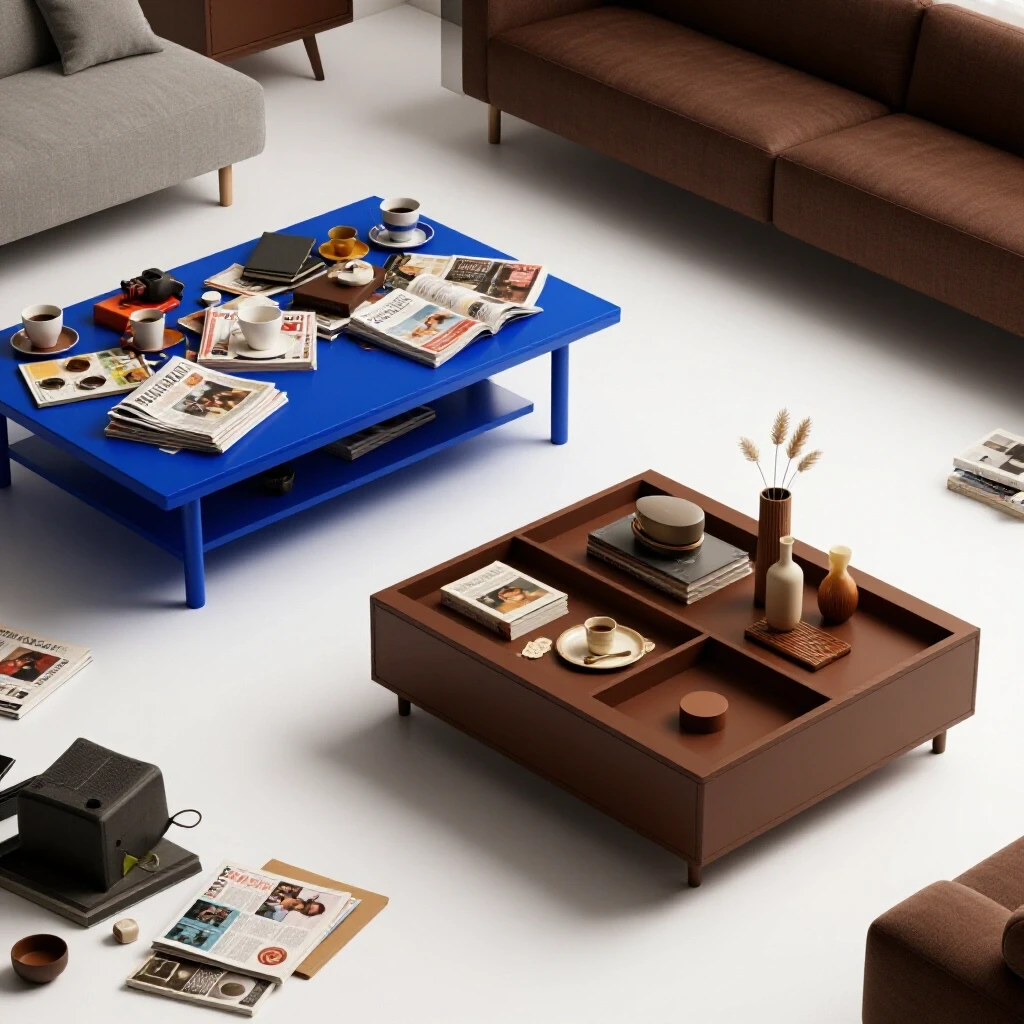
When you start your home moving checklist, the first step is a spatial audit. I remember our move to a 900-square-foot apartment after living in a larger suburban house. We tried to force our old furniture into the new living room, but the result was a bottleneck. The central table was so large that we had to turn sideways just to reach the sofa.
A successful spatial layout adaptation requires looking at “circulation paths.” These are the invisible tracks you walk every day—from the front door to the kitchen, or the sofa to the bathroom. If you have to walk around a bulky object every time you move, that object is a functional failure. In our case, the heavy, solid-base table blocked the vacuum and made it impossible for our toddler to move safely. We realized that replacing it with a smaller, more mobile version was the only way to regain our floor space.
Evaluating Furniture Utility in New Living Environments
Furniture utility evaluation is the process of assessing whether an item’s size, weight, and shape still meet the functional requirements of a new environment. This assessment helps movers decide which items to keep, sell, or replace to improve the flow and safety of their new home.
In a small room furniture layout, every inch matters. We often hold onto furniture because we own it, not because it works. During our second move, I tracked how often we actually used our large central table. It turned out it was mostly a landing pad for clutter because it was too far from the seating to be useful for drinks or laptops.
We found that a table with a smaller footprint or a nesting design provided more flexibility. If we needed floor space for the kids to play, we could slide the pieces away. If we had guests, we could pull them out. This shift in home transition planning allowed us to prioritize movement over storage.
- Standard Clearance Margins for Daily Flow:
- Main Walkways: 36 inches for comfortable two-person passage.
- Between Seating and Tables: 15 to 18 inches to allow for legroom while keeping items within reach.
- Behind Seating: 30 inches if the area serves as a primary path to another room.
- Entryways: 42 inches to accommodate moving bags, groceries, or strollers.
The Spatial Blueprint Compatibility Matrix
This matrix helps you compare your current furniture against the needs of your new floor plan to identify functional gaps.
| Furniture Item | Current Footprint | New Room Constraint | Functional Conflict | Recommended Adaptation |
|---|---|---|---|---|
| Large Central Table | 48″ x 48″ | Narrow 10′ width | Blocks primary walking path | Replace with 20″ round or nesting tables |
| Sectional Sofa | 10′ L-shape | Corner with floor vent | Blocks heating/cooling flow | Separate sections or use a straight sofa |
| King Bed Frame | 76″ x 80″ | Small 11’x11′ bedroom | Less than 24″ side clearance | Switch to Queen or low-profile frame |
| Dining Table | 6-person Fixed | Multi-use living/dining | Limits workspace for remote jobs | Use a drop-leaf or extendable table |
Mapping Furniture to New Scales and Room Volumes
Mapping furniture to scale involves using precise measurements to visualize how much volume an object occupies within a room’s three-dimensional space. This prevents overcrowding and ensures that the visual weight of furniture does not make a room feel cramped or difficult to maintain.
When we moved into our third home, a house with an awkward L-shaped living area, I used a digital floor planner to map out the room. I realized our old table was “physically heavy.” It wasn’t just the size; it was the fact that it had a solid base to the floor. This made the small room feel like it was filled with a boulder.
By replacing it with a table that had thin, raised legs, we opened up the “visual floor.” This is a key trick in small room furniture layout. When you can see the floor extending under a piece of furniture, the room feels larger. More importantly, it made cleaning much easier. We no longer had to move a 50-pound object just to sweep up dust bunnies.
Why Clearance Margins Dictate Furniture Choice
Clearance margins are the minimum distances required between furniture pieces to allow for safe and comfortable movement. Adhering to these margins reduces the risk of trips and falls while ensuring that the home remains easy to navigate for all family members.
In our experience, the “practical reason” for changing a layout often comes down to safety. In one home, the sharp corners of our rectangular table were at the exact height of our son’s forehead. In a tight space, he was constantly bumping into it.
We chose to transition to a round table with a weighted base. This removed the sharp edges and allowed for a “pivot” movement around the piece. Instead of a hard 90-degree turn, we could walk in a natural curve. This small change in home transition planning reduced daily stress significantly.
Step-by-Step Unpacking and Spatial Flow Design
A spatial flow design is a methodical plan for unpacking that prioritizes the setup of high-traffic areas and functional zones. This ensures that the most important daily routines can resume immediately, even if the rest of the house remains in boxes.
- Audit the Entryway: Clear a 42-inch path for moving boxes in and out.
- Set the Anchor Piece: Place the largest item (usually the sofa) first, ensuring it doesn’t block vents or windows.
- Measure the Remaining Gap: Before bringing in the central table, walk the path from the sofa to the door.
- Test the Reach: Sit on the sofa. If you have to lean forward more than 6 inches to set down a cup, the table is too far or too low.
- Adjust for Maintenance: Ensure there is enough space for a vacuum or mop to pass between the table and the seating without lifting the furniture.
Optimizing Awkward Spaces with Functional Zoning
Functional zoning is the technique of dividing a single room into distinct areas based on activity, such as a “work zone,” a “relaxation zone,” or a “play zone.” This helps organize life in open-concept or unusually shaped homes.
In our current home, the living room also serves as my home office. Our old furniture setup made it feel like I was working in the middle of a hallway. We had to rethink our layout to create a “mental boundary.”
We used a rug to define the seating area and replaced our large, static table with two smaller, lightweight stools. During the day, one stool moved to my desk to hold my printer. In the evening, they moved back to the sofa to hold coffee. This kind of multi-functionality is essential for a successful new home adjustment guide.
Digital Tools for Home Transition Planning
Using modern technology can take the guesswork out of your move. These tools allow you to experiment with layouts before you lift a single heavy box.
- MagicPlan: Uses your phone’s camera to create a floor plan of your new space instantly.
- Floorplanner.com: A web-based tool that lets you drag and drop furniture to see how it fits the scale of the room.
- Sortly: An inventory app that helps you track the dimensions of your furniture so you have them ready when measuring the new house.
- RoomScan Pro: Excellent for measuring rooms with awkward angles or curved walls.
Establishing Daily Routines and Neighborhood Integration
Neighborhood integration is the process of building a social and functional network in a new area. This involves establishing new routines, such as finding the most efficient route to the grocery store or joining local community groups to reduce the feeling of isolation.
A move isn’t just about the furniture inside; it’s about the life outside. In our 19 years of moving, we found that the faster we established a “home base” layout, the faster we felt comfortable exploring the neighborhood. When your home is a mess of poorly fitting furniture, you don’t want to invite people over.
By solving our spatial issues early—like replacing that oversized table—we felt confident hosting a small “meet the neighbors” coffee hour within the first month. Creating a functional environment is the first step toward building a community.
First-Month Spatial Adjustment Timeline
| Phase | Goal | Key Action |
|---|---|---|
| Week 1 | Safety and Access | Clear all 36″ walking paths; remove trip hazards. |
| Week 2 | Functional Testing | Observe where clutter builds up; this indicates a need for a table or shelf. |
| Week 3 | Scale Adjustment | Identify furniture that is too large or too heavy for the room’s flow. |
| Week 4 | Final Optimization | Replace or relocate pieces that hinder cleaning or movement. |
Practical Metrics for Furniture Scalability
When you are deciding whether to keep a piece or replace it, use these data-driven metrics to guide your choice.
- Weight Tolerance: If a piece requires two people to move it for basic cleaning, it may be a hindrance in a smaller home.
- Surface-to-Footprint Ratio: A table should provide at least 70% usable surface area relative to the floor space it occupies.
- Height Alignment: A central table should be 1-2 inches lower than the seat height of your sofa for optimal ergonomics.
- Volume Displacement: In a room under 150 square feet, furniture should occupy no more than 40% of the total floor area.
Common Layout Mistakes to Avoid
- The “Wall-Hugging” Trap: Pushing all furniture against the walls can actually make a room feel smaller and leave a “dead zone” in the middle.
- Ignoring Light Sources: Placing a tall piece of furniture in front of a window reduces natural light and makes the space feel cramped.
- Over-Sizing the Centerpiece: A table that is too large for the rug it sits on creates a tripping hazard at the edges.
- Forcing Symmetry: In awkward rooms, an asymmetrical layout often provides better traffic flow than a forced, centered design.
Conclusion and Next Steps
The goal of any move is to create a space that supports your life rather than complicating it. If you find yourself constantly navigating around a piece of furniture that doesn’t fit the scale of your new home, it is time to consider a change. Focus on clearance, mobility, and ease of maintenance.
Start by measuring your primary walkways today. If they are less than 30 inches wide, look at your largest furniture pieces. Can they be moved? Can they be replaced with something more functional? Taking these steps will help you transition from a house full of boxes to a home that truly flows.
FAQ: Navigating Spatial Transitions
How do I know if my furniture is too big for the new room? If you cannot walk past the item without turning your shoulders or if it blocks a natural path to another room, it is functionally too large. You should have at least 30 inches of clear space in any major walkway.
What are the standard clearance margins for a living room? The most important margin is the 15-18 inches between your seating and your central table. This allows for legroom while keeping the table within reach. Main walkways should be 36 inches wide.
Why should I wait to finalize my layout? Living in the space for 14 to 30 days allows you to see the “natural paths” you and your family take. You might find that you always walk a certain way, and your initial furniture placement is in the way.
How does furniture height affect room functionality? Furniture that is too high can block sightlines and light, making a room feel smaller. Furniture that is too low can be difficult to use. A central table should be roughly the same height as your sofa cushions.
What is “functional zoning”? It is the practice of using furniture, rugs, or lighting to define specific areas for different activities (like eating, working, or playing) within a single room.
How do I handle narrow hallways during a move? Measure the narrowest point of the hallway before the move. If a piece of furniture is wider than that point, it must be disassembled or replaced. Always leave at least 36 inches for daily passage.
When should I replace a piece instead of forcing it to fit? Replace a piece if it creates a safety hazard (like sharp corners in a tight path), makes cleaning significantly harder, or prevents you from using the room for its intended purpose.
How can I map out my new neighborhood effectively? Start by walking. Use the first week to find the nearest grocery store, pharmacy, and park. Establishing these “outer routines” helps you feel settled as you work on the “inner routines” of your home layout.
What is the best way to measure a room for a new layout? Use a metal measuring tape for accuracy. Measure wall to wall, then subtract the space for door swings and floor vents. Map this on grid paper or a digital app to see your “usable” floor space.
How do I deal with “visual weight” in a small room? Choose furniture with legs rather than solid bases. This allows light and sightlines to pass under the furniture, which makes the floor seem more expansive and the room less cluttered.
What are the benefits of nesting tables over a single large table? Nesting tables offer high flexibility. They can be tucked away to clear floor space for activities or spread out when you need more surfaces for guests or projects.
How can I reduce move-day stress related to layout? Have a “Plan A” and “Plan B” for your largest pieces. Know exactly where the sofa and bed will go before the movers arrive. This prevents the stress of making big decisions while the clock is ticking.
(This article was written by one of our staff writers, Kevin Thompson. Visit our Meet the Team page to learn more about the author and their expertise.)