How to Organize a Utility Closet for Better Storage (Step-by-Step)

What if every time you reached for a microfiber cloth or the vacuum, you didn’t have to dodge a falling mop or dig through a mountain of loose batteries? Imagine opening a small door and seeing exactly where your cleaning supplies, linens, and household tools are located, all neatly arranged and labeled. This level of order isn’t just for show; it is the backbone of a well-run home.
In my 18 years as a construction project coordinator, I have seen homeowners spend $80,000 on a kitchen only to be frustrated daily by a chaotic broom closet. During my own first full-home renovation, I made the mistake of leaving the small storage spaces for last. I ended up with a beautiful house where I still couldn’t find the light bulbs. I quickly learned that optimizing these high-traffic service zones requires the same level of planning as a master bath.
Defining the Scope for Better Storage Layouts
A scope of work is a detailed list of every task and material needed to complete a project. For a small storage area, this means deciding if you are simply adding bins or installing a full modular shelving system. Defining this early prevents “scope creep,” which is when a small project slowly grows into a bigger, more expensive one.
When I plan a residential renovation, I start with a needs assessment. I ask: What is currently failing in this space? Often, it is a lack of verticality. Most standard closets have one high shelf and a lot of wasted air. By defining your scope to include wall-mounted racks and adjustable shelving, you turn a single-dimension closet into a multi-layered storage hub.
Estimating Costs for Modular Storage Systems
Budget forecasting is the process of predicting the total cost of materials and supplies before you spend a dime. For a DIY storage project, you need to account for shelving units, specialized hooks, containers, and labeling tools. Accurate forecasting keeps you from making three extra trips to the hardware store.
Based on my experience and RSMeans construction data, a standard reach-in storage area can be overhauled for a fraction of a contractor’s fee if you manage the procurement yourself. Below is a breakdown of what you might expect to spend on quality DIY materials versus a basic setup.
Table 1: Estimated Material Costs for Storage Optimization
| Item Description | Basic Setup (Lower End) | Modular/Adjustable (Mid-Range) |
|---|---|---|
| Wire Shelving (per linear foot) | $5.00 – $8.00 | $12.00 – $18.00 |
| Wall-Mounted Tool Racks | $15.00 | $45.00 |
| Clear Labeled Bins (Set of 6) | $25.00 | $60.00 |
| Over-the-Door Organizers | $12.00 | $35.00 |
| Total Estimated Project Cost | $150 – $250 | $450 – $750 |
Why Hidden Structural Surprises Blow Budgets
Even in a simple storage project, you must look for “hidden conditions.” These are issues like mold behind a baseboard or crumbling drywall that isn’t visible until you empty the space. If you don’t plan for these, a $200 project can quickly double in price.
During a renovation on my second property, I pulled out a built-in shelf in a hallway closet and found significant moisture damage from an old, slow leak. Because I hadn’t set aside a contingency fund, I had to pause the project to fix the wall. I always recommend a 15% contingency buffer for any home project, regardless of size. This ensures that if you find a hole in the drywall or a stud that isn’t where it should be, you have the cash to fix it properly.
Table 2: Contingency Buffer Allocations by Property Age
| Property Age | Recommended Contingency % | Common Issues Found |
|---|---|---|
| 0 – 10 Years | 5% – 10% | Poor original installation, minor settling |
| 11 – 30 Years | 15% | Drywall damage, outdated shelving hardware |
| 31+ Years | 20% – 25% | Mold, rot, plaster failure, uneven walls |
Sequencing the Installation for Maximum Efficiency
Construction sequencing is the logical order of tasks to ensure no work has to be redone. For a storage area, you don’t want to install new shelves only to realize you need to paint the back wall. Proper sequencing saves time and reduces the frustration of working in a cramped environment.
I follow a strict “Top-Down, Back-to-Front” rule. Building on this, you should always handle any wall repairs and painting before you mount a single bracket. Interestingly, many homeowners rush to install the “fun” parts like racks and bins before the foundation of the space is ready. This leads to a messy finish and potential damage to new hardware.
- Phase 1: Demolition and Cleaning. Remove all old shelving and patch any holes.
- Phase 2: Surface Preparation. Sand the walls and apply a fresh coat of semi-gloss paint for easy cleaning.
- Phase 3: Vertical Infrastructure. Install wall standards, tracks, or heavy-duty hooks.
- Phase 4: Component Placement. Add the shelves, drawers, and hanging rods.
- Phase 5: Organization. Place labeled bins and items back into the space.
Maximizing Vertical Space with Wall-Mounted Solutions
Vertical space refers to the unused wall area between the floor and the ceiling. In many homes, the top three feet of a closet are completely empty. Utilizing this area is the most effective way to improve the functionality of a small service room without expanding the footprint.
In my professional career, I have seen how wall-mounted racks for mops and brooms can clear up floor space instantly. As a result, the “floor clutter” that usually makes a closet feel small disappears. Use adjustable track systems that allow you to move shelves up or down as your needs change. This flexibility is a hallmark of professional residential renovation planning.
Selecting the Right Bins and Labeling Systems
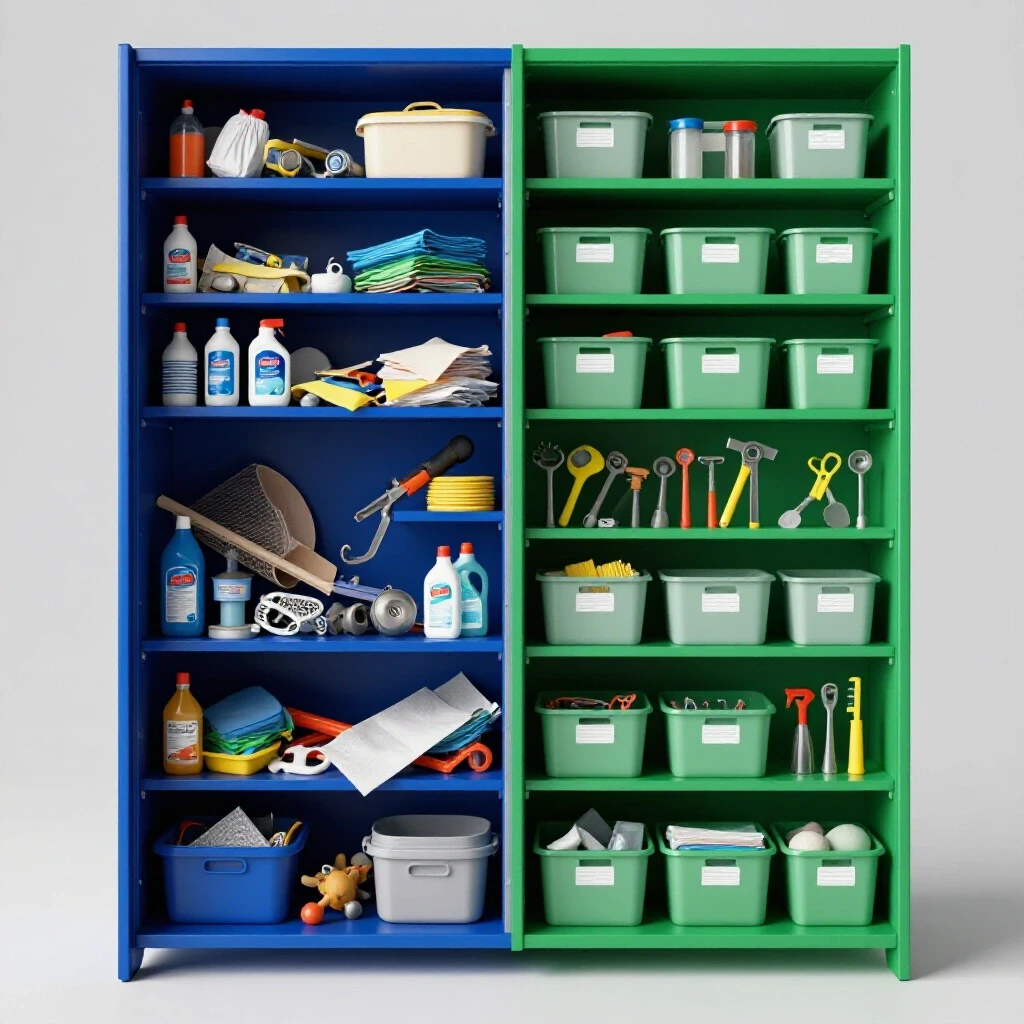
Modular shelving is only half the battle; the other half is how you categorize your items. Using clear bins allows you to see the contents without opening them, which prevents “searching fatigue.” Labels provide a clear instruction manual for everyone in the household on where things belong.
I once worked on a project where the homeowner spent thousands on custom wood shelving but didn’t use bins. Within three months, the closet was a disaster again. The lesson here is that systems, not just structures, maintain order. Use uniform bins to create a clean visual line, which reduces the mental stress of looking at a cluttered space.
- Uniformity: Use the same style of bin for a cohesive look.
- Visibility: Choose clear plastic or open-front wire baskets.
- Accessibility: Place frequently used items at eye level.
- Labeling: Use a label maker or durable tags for every single container.
Avoiding Common Design Errors in Small Spaces
A design error is a mistake made during the planning phase that results in a space that is difficult to use. In storage areas, common errors include shelving that is too deep or racks placed behind the swing of the door. These mistakes make it hard to reach the items you need, defeating the purpose of the project.
For example, a shelf deeper than 16 inches in a standard closet often leads to “lost” items at the back. I recommend using shallower shelves (12 inches) for cleaning supplies so everything stays in the front row. Also, consider the “door swing.” If your closet door opens inward, you cannot use the wall space behind it for anything thick.
Monitoring Your Progress and Quality Control
Quality control is the process of checking your work against a set of standards. For a DIY storage project, this means ensuring shelves are level and brackets are secured into wall studs. A shelf that isn’t level will cause round items to roll off, and a bracket not in a stud will eventually pull out of the drywall.
I always use a “stud finder” and a four-foot level during installation. If you are mounting heavy items like a vacuum or a gallon of floor cleaner, the hardware must be anchored into the wooden frame of the house. This is a non-negotiable step in any home remodeling tip list. If you miss the stud, use high-quality toggle bolts rather than cheap plastic anchors.
Change Order Impact Analysis for Small Projects
In professional construction, a “change order” is a formal document used to change the original scope of work. For a homeowner, a change order happens when you decide mid-project to buy a different shelving system or add more bins. These changes usually cost more money and add time to the schedule.
Before you start, finalize your material list. If you change your mind once the holes are already drilled in the wall, you face “rework,” which is the most expensive part of any renovation. I suggest “mocking up” your layout with painter’s tape on the wall before you buy your materials. This allows you to see the scale and reach of the shelves in real life.
Post-Occupancy Evaluation: Does It Actually Work?
A post-occupancy evaluation is a check-up done a few weeks after a project is finished to see if it meets the original goals. For your newly organized space, ask yourself: Can I find the glass cleaner in five seconds? Is it easy to put the vacuum away? If the answer is no, you may need to adjust your shelf heights or bin locations.
In my own home, I realized after two weeks that the kids couldn’t reach the bins with their school supplies. Because I used an adjustable track system, I was able to lower those specific shelves in ten minutes. This flexibility is why I advocate for modular systems over fixed wooden cleats.
Final Benchmarks for a Successful Storage Project
To ensure your project is a success, aim for these specific benchmarks. These are the same standards I used when overseeing multi-million dollar residential builds, scaled down for a single closet.
- Structural Integrity: Every shelf should be able to hold 50 lbs without bowing.
- Accessibility: 90% of items should be reachable without moving another item.
- Visibility: Labels should be legible from the doorway.
- Efficiency: The floor should be 80% clear of loose items.
- Budget Adherence: Total spend should be within 10% of the initial forecast (plus contingency).
By following these steps, you move from a place of “guessing” to a place of “managing.” You treat your home like the valuable asset it is. While a closet might seem small, the habits you build here—planning, sequencing, and quality control—will serve you well when you tackle your next big kitchen or bathroom remodel.
Frequently Asked Questions
How much should I realistically spend on a storage overhaul? For a standard 4-foot to 6-foot closet, a budget of $300 to $600 covers high-quality modular shelving and bins. If you opt for basic fixed wire shelving, you can stay under $200. Always include a 15% contingency for wall repairs.
Do I really need to paint the inside of the closet? Yes. A fresh coat of white, semi-gloss paint reflects light, making it easier to see into dark corners. Semi-gloss is also scrubbable, which is vital in a space where you store wet mops or cleaning chemicals.
How do I know if my shelving is anchored safely? You should always use a stud finder to locate the vertical wood framing behind the drywall. If you cannot hit a stud, use “toggle bolts” which expand behind the wall. Never rely on “press-in” plastic anchors for shelves holding heavy liquids or tools.
What is the best way to store long items like brooms and mops? Wall-mounted friction grips or “S-hooks” are best. They keep the heads of the mops off the floor, which prevents mildew and keeps the floor clear for larger items like vacuums or buckets.
Should I use open bins or bins with lids? For items you use weekly, use open-front bins or bins without lids. Lids create a “barrier to entry” that often leads to people leaving items on top of the bin rather than inside it. Use lids only for long-term storage like seasonal light bulbs.
What is the most common mistake in closet organization? Buying the bins before measuring the shelves. I have seen homeowners stuck with dozens of containers that are a half-inch too wide for their new shelving. Always measure the “clear opening” of your shelves before shopping.
How do I handle the gap between the top shelf and the ceiling? This is prime territory for lightweight, rarely used items. Use large, labeled bins for things like extra paper towels or seasonal decorations. Ensure you have a sturdy step stool nearby to access this area safely.
Can I install these systems myself if I’m not “handy”? Most modular track systems only require a drill, a level, and a screwdriver. If you can hang a heavy picture frame, you can likely install a track-based shelving system. Just take your time with the initial leveling of the top rail.
How do I manage the project if I have a very busy schedule? Break the project into three weekends. Weekend one is for emptying and painting. Weekend two is for installing the hardware. Weekend three is for sorting and labeling. This prevents “renovation fatigue.”
What should I do if I find mold or water stains when I empty the closet? Stop and identify the source. If it’s an exterior wall, it could be a siding leak. If it’s near a bathroom, it could be a pipe. Fix the leak and replace the damaged drywall before installing new shelves, or the mold will simply return and ruin your supplies.
(This article was written by one of our staff writers, David Langford. Visit our Meet the Team page to learn more about the author and their expertise.)