Home Organization Mistakes to Avoid for Lasting Results (Guide)

For years, I believed that the secret to a tidy home was simply owning more containers. I would spend weekends buying matching bins and labels, convinced that a new set of hardware would finally solve our family’s clutter issues. However, by Tuesday morning, the kitchen counters would be buried again, and the kids’ shoes would be scattered across the hallway. I was making the classic mistake of treating symptoms rather than the underlying logistical system. I focused on the “look” of the room instead of how items actually moved through our lives.
As an operations professional, I eventually realized that a home is essentially a small-scale warehouse and distribution center. If the “inflow” of items exceeds our “outflow” capacity, or if the “retrieval friction” is too high, any system will collapse. I had to stop looking for aesthetic fixes and start looking at spatial data. Once I shifted my focus to how my family naturally behaved, the chaos began to subside. These are the core principles I discovered after a decade of trial, error, and system redesigns.
Why Home Organization Systems Often Fail After a Week
This phase involves analyzing why neat spaces return to chaos by examining the gap between visual appeal and functional movement within a family home. Most failures occur because the system requires more energy to maintain than the family can realistically provide during a busy work week.
In my early days of managing our household, I designed systems that looked beautiful but were a logistical nightmare. For example, I used deep, lidded bins for the kids’ building blocks. On paper, it looked organized. In reality, it created high “retrieval friction.” To put one block away, a child had to find the bin, pull it out from under a stack, remove the lid, and then place the item inside. This three-step process was too slow for a five-year-old.
Research in environmental psychology suggests that “visual processing overload” happens when we are surrounded by too many items that don’t have a clear, easy-to-reach home. When a system is too complex, our brains experience decision fatigue. We simply stop putting things away because the mental cost is too high. I learned that for a system to last, it must be designed for our “laziest” moments, not our most motivated ones.
The Psychological Cost of Visual Clutter
This section explores how excessive physical items impact mental bandwidth, leading to increased stress and decreased focus for busy parents. When every surface is covered, the brain constantly scans the environment, which prevents true relaxation and increases cognitive load.
Studies in organizational behavior show a direct link between clutter and elevated cortisol levels, particularly in women. My wife and I noticed that our evening arguments often peaked when the living room was at its messiest. It wasn’t just the mess; it was the “unsolved problems” the mess represented. Every stray toy or unfiled mailer was a micro-task demanding our attention.
Defining Retrieval Friction and Spatial Capacity
This concept explains the physical and mental effort required to access or put away an item, alongside the physical limits of a given storage area. High friction leads to abandonment of the system, while exceeding capacity leads to visual spillover.
I use a metric called the Retrieval Step Count. A low-friction system has a step count of one (e.g., dropping keys in a bowl). A high-friction system has a count of four or more (e.g., opening a closet, moving a box, unlatching a lid, and then placing the item). In our home, we aim for a step count of two or less for any item used daily.
Shifting from Aesthetics to Logistics in Sustainable Decluttering
This transition moves the focus from purely visual storage goals to movement efficiency, item density, and the speed of daily cleanup routines. It prioritizes how a room works over how it looks in a photograph, ensuring the system survives real-life use.
In my professional life, we measure “flow rates”—how fast goods move through a facility. I applied this to our laundry room. We used to have one large hamper, but it created a bottleneck. Sorting became a massive weekend chore. I redesigned the space with three open-top bins for whites, colors, and towels. By removing the “sorting” step from the weekend and making it a “drop-in” action during the week, we reduced our total labor time by 40 minutes per week.
| Storage Type | Friction Level | Best Use Case | Risk Factor |
|---|---|---|---|
| Open Baskets | Low (1-2 steps) | Toys, daily shoes, blankets | Can look “messy” if overfilled |
| Lidded Totes | High (4-5 steps) | Holiday decor, seasonal clothes | Items often left on top of lid |
| Clear Acrylic Bins | Medium (2 steps) | Pantry items, craft supplies | Requires consistent category logic |
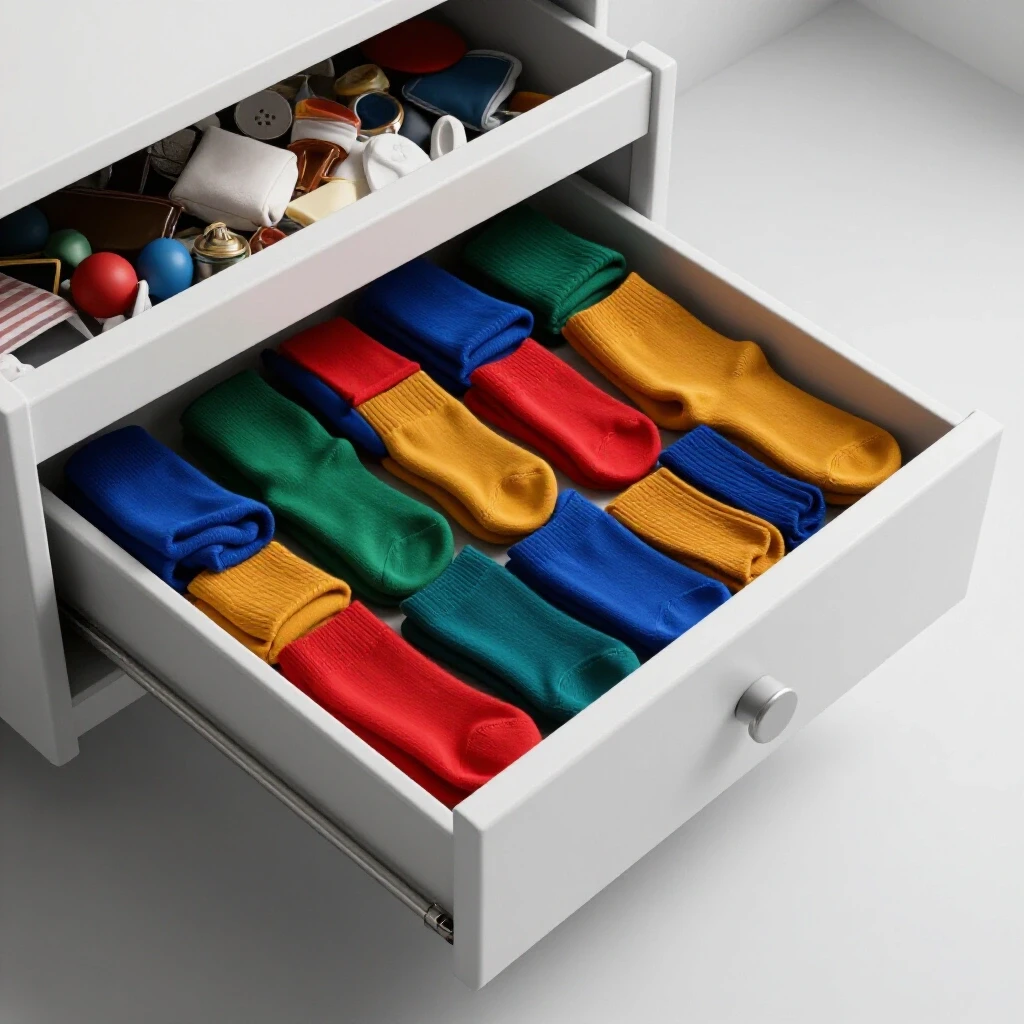
| Drawer Dividers | Low (1 step) | Utensils, socks, office tools | Items can migrate if not snug |
Understanding the 80% Spatial Capacity Rule
This rule suggests that storage areas should never be more than 80% full to allow for the easy movement of items. Leaving a 20% “buffer” prevents the system from becoming jammed and makes it easier to see what you own.
Whenever I saw a drawer getting stuck, I knew we had hit the “spatial capacity limit.” In logistics, a 100% full warehouse is an inefficient one because you can’t move anything to get to what you need. By keeping our shelves at 80% capacity, we reduced the time spent “digging” for items. If a new item comes in and we are at 80%, an old item must leave.
Mapping High-Efficiency Zoning for Family Life
This strategy involves creating specific functional areas within a room to ensure every item has a logical home based on its frequency of use. Zoning reduces the time spent searching for items by grouping them where the “action” happens.
I divided our home into three primary zones: Active, Passive, and Deep Storage. This was a major turning point in our decluttering journey. Before this, I would store my heavy winter coat in the same closet as my daily work jacket. This “mixed density” storage made the closet feel cramped and difficult to navigate every morning.
- Active Zone: Items used daily (coffee mugs, school bags, keys). These must be at eye or waist level.
- Passive Zone: Items used weekly (baking supplies, library books). These can be on higher shelves or lower cabinets.
- Deep Storage: Items used seasonally or annually (holiday lights, camping gear). These go in the garage or attic.
Creating a Functional Home Storage Map
A storage map is a mental or physical layout that dictates where categories of items live. It ensures that every family member knows exactly where an item belongs, reducing the “mental load” on the parents to find things for others.
In our mudroom, I realized the kids were dropping their bags on the floor because the hooks were too high. By lowering the hooks (the Active Zone) to their height, the “floor clutter” vanished overnight. We didn’t need a lecture on neatness; we needed a better spatial map that accounted for the heights of the users.
The Sorting Framework: Reducing Household Clutter with Logistics
This systematic approach categorizes items based on utility and volume rather than sentiment, designed to speed up the decluttering journey. It uses industrial sorting metrics to help families make faster decisions about what to keep.
When we tackle a room, I use a “Sorting Time-Box.” We set a timer for 20 minutes. Decisions must be made in under five seconds per item. If we hesitate, the item goes into a “Transition Box” for one week. If we don’t look for it in that week, it gets donated. This prevents the “decision fatigue” that often stalls home organization systems.
Inflow and Outflow Control
This principle focuses on managing the volume of items entering and leaving the home. Without controlling the inflow, even the best storage solutions for families will eventually be overwhelmed by sheer mass.
We established a “One-In, One-Out” policy for specific categories, like shoes and toys. To track our progress, I kept a simple log for one month. We discovered that we were bringing in roughly 15 new items a week (mostly mail, small toys, and household gadgets) but only removing five. By identifying this 10-item surplus, we were able to adjust our buying habits.
| Category | Monthly Inflow | Monthly Outflow | Net Gain/Loss |
|---|---|---|---|
| Children’s Toys | 8 items | 4 items | +4 (Congestion) |
| Clothing | 5 items | 6 items | -1 (Improving) |
| Kitchen Gadgets | 2 items | 0 items | +2 (Congestion) |
| Books/Media | 3 items | 10 items | -7 (Optimal) |
Selecting Functional Home Storage with Low Friction
This involves choosing storage materials and designs that prioritize ease of access and replacement over decorative appearance. The goal is to ensure long-term maintenance by making it easier to put things away than to leave them out.
I learned to avoid “opaque” storage for items we use frequently. If I can’t see what’s inside a bin, I forget it exists, or I buy duplicates. Clear containers are a staple in our functional home storage plan. They provide an immediate visual inventory, which reduces the “cognitive load” of remembering where everything is hidden.
- Label Everything: Even if the bin is clear, a label acts as a “boundary marker” for other family members.
- Use Uniform Sizes: Standardizing bin sizes allows for modular stacking and better space utilization percentages.
- Prioritize Durability: In a high-traffic family home, flimsy baskets will break. We switched to heavy-duty canvas or thick plastic that can withstand daily use.
- Avoid “Nesting” Bins: If you have to move one bin to get to another, the bottom bin will eventually become a “black hole” of forgotten items.
The Impact of Material Selection on Room Aesthetics
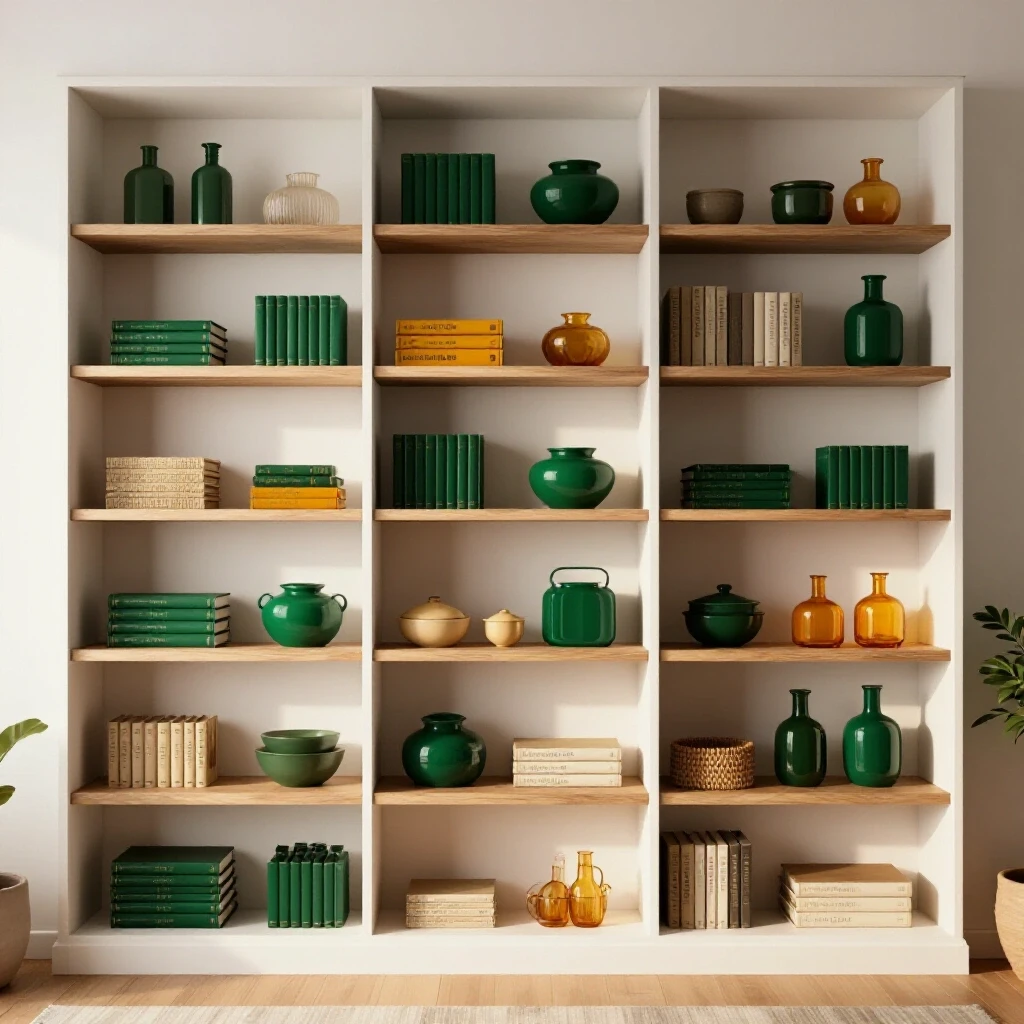
Choosing the right materials ensures that your organization systems blend into the room’s design without sacrificing utility. Natural textures like wood or wicker can hide visual noise while still providing accessible storage.
In our living room, we replaced open plastic crates with woven baskets that had no lids. This maintained the room’s aesthetic while keeping the “low friction” requirement for the kids’ toys. The lesson here is that you don’t have to sacrifice style for function; you just have to ensure the “function” doesn’t require extra steps like unlatching a lid.
Aligning Household Behavior with New Systems
This phase focuses on training family members to use organizational structures by lowering the barrier to entry and creating intuitive habit loops. It recognizes that a system is only as good as the people using it.
One of the biggest lessons I learned was that I couldn’t force my family to follow a system that didn’t fit their natural habits. I noticed my daughter always left her hair ties on the bathroom counter. Instead of fighting it, I put a small, open dish exactly where she was already dropping them. The “clutter” didn’t disappear, but it was now “contained.” This is a “System Feedback Loop”—using natural behavior to dictate the storage location.
Establishing Daily Maintenance Timelines
Maintenance timelines are short, scheduled intervals where the family resets the home to its “baseline” state. This prevents the “reversion” that happens when small messes accumulate into an overwhelming project.
We use a “15-Minute Reset” every evening before bed. Because our systems are low-friction, 15 minutes is plenty of time for a family of four to clear all Active Zones.
- Kitchen Reset (5 mins): Clear counters, start dishwasher.
- Entryway Reset (3 mins): Shoes in bins, bags on hooks.
- Living Room Reset (4 mins): Fold blankets, toss toys in baskets.
- Personal Reset (3 mins): Hang up clothes, clear nightstands.
Long-Term Maintenance: Keeping the Home Functional
This final stage involves establishing recurring, low-effort checks to prevent spatial capacity limits from being exceeded. It ensures the home remains a place of rest rather than a source of stress.
Every six months, I perform a “Spatial Audit.” I walk through the house with a critical eye, looking for areas where the 80% rule is being violated. If a shelf is overflowing, it’s a sign that our “outflow” has stalled. We don’t need a new shelf; we need to purge the items that have migrated from the Active Zone to the “I might use this someday” zone.
Sustainable Habits for Busy Professionals
For those of us with demanding careers, home organization must be a background process, not a second job. I’ve found that the most sustainable habit is “Touch It Once.” If you pick up a piece of mail, don’t put it on the counter to deal with later. Walk it to the recycling bin or the “To-Do” folder immediately. This reduces the number of “micro-decisions” you have to make later in the day when your energy is low.
Common Questions About Sustainable Home Systems
How do I stop my home from getting messy again after I just organized it? The “reversion” usually happens because the system’s friction is too high. If it takes more than two steps to put something away, it will likely end up on a flat surface instead. Simplify your storage by removing lids and placing bins exactly where the clutter naturally accumulates.
What is the best way to start when the whole house feels overwhelming? Start with a “High-Traffic Audit.” Identify the one area that causes the most daily frustration—usually the entryway or the kitchen counter. Fix the logistics of that one spot first. Success in one zone provides the mental energy needed to tackle the next.
How do I get my kids and spouse to follow the system? Design the system around their existing flaws. If they drop laundry on the floor, put an open hamper exactly where the pile forms. Use clear labels with pictures for children. The goal is to make the “right” thing to do the “easiest” thing to do.
Do I really need to buy expensive organizing products? No. In fact, many expensive products are too specialized and lack flexibility. Use what you have first—shoeboxes without lids are excellent drawer dividers. Focus on the logic of the placement before the beauty of the container.
How much time should I realistically spend on maintenance? For a family of four, 15 to 20 minutes of total daily maintenance is the “sweet spot.” If it takes longer than that, your systems are likely too complex or you have too many items for your home’s spatial capacity.
What is the “80% rule” in home organization? It means never filling a shelf, drawer, or closet more than 80% full. This extra space allows you to move items around without causing a “clutter landslide” and makes it easier to see what you actually own.
How do I handle sentimental items that I can’t throw away? Move them out of your “Active Zones.” Sentimental items belong in “Deep Storage” (like the attic or a high closet shelf) because you don’t need to access them daily. This frees up prime real estate for the things you use every day.
Is it better to organize one room at a time or by category? For busy parents, organizing by “Zone” is often best. Tackle the “Entryway Zone” or the “Morning Coffee Zone.” This provides immediate, measurable improvements to your daily routine, which helps reduce the mental fatigue of a cluttered home.
Why do I feel so tired when I try to declutter? This is “Decision Fatigue.” Every item you pick up requires a choice: Keep, Toss, or Move? To fight this, use a strict sorting framework and set a timer. Don’t try to declutter for more than 90 minutes at a time.
What should I do with items that are still “good” but I don’t use? Recognize that the “cost” of keeping an item you don’t use is the mental stress and physical space it consumes. If it hasn’t been used in 12 months, its value to you is lower than the value of the empty space it would leave behind. Donate it to someone who will actually use it.
(This article was written by one of our staff writers, Christopher Bennett. Visit our Meet the Team page to learn more about the author and their expertise.)