How to Optimize a Small Laundry Area for Efficient Living (Guide)

When we move, we often focus on the big rooms like the living area or the master bedroom. However, for a family with children, the smallest spaces often dictate the rhythm of our daily lives. I remember our second move, where my kids were five and seven. We transitioned into a house where the laundry area was tucked into a narrow hallway. The kids were constantly tripping over baskets of soccer uniforms and school clothes. It was a high-stress environment because we had not planned for the physical constraints of that tiny footprint.
Moving with children requires more than just packing boxes; it involves mapping out how they will move through the house. When a utility space is cramped, it creates a bottleneck for the whole family. Over nineteen years and four different homes, I have learned that adapting to a small utility zone is a vital part of home transition planning. It is about more than where the washer goes. It is about how you maintain your family’s routine without feeling like the walls are closing in.
Why Blind Furniture Placement Fails—And How to Draft Your First Spatial Layout Blueprint
Spatial layout adaptation involves analyzing the physical dimensions and utility connections of a room to ensure furniture and appliances fit while allowing for movement. It is the process of mapping out where items go before they arrive to prevent physical blockages and operational frustration during a move.
Most people wait until moving day to decide where their sorting bins or folding tables will go. This is a mistake. In a tight laundry zone, every inch matters. You need to account for the “swing” of the machine doors and the “reach” of the person using them. If you have a front-loading washer, you typically need 42 to 48 inches of clearance in front of the machine to comfortably load and unload clothes.
I once moved into a rental where the dryer door hit the opposite wall every time I opened it. It made a simple chore feel like a battle. To avoid this, use blue painter’s tape on the floor of your new home before the movers arrive. Outline the footprint of your machines and your hampers. This helps you visualize the “traffic flow” and see if you have enough room to stand and move.
Spatial Blueprint Compatibility Matrix
| Appliance/Item | Standard Footprint | Required Clearance | Common Conflict |
|---|---|---|---|
| Front-Load Washer | 27″ W x 32″ D | 48″ in front | Door hits walls or hampers |
| Top-Load Washer | 27″ W x 28″ D | 36″ above | Shelving placed too low |
| Slim Drying Rack | 15″ W x 15″ D | 24″ around | Blocks hallway passage |
| Standard Hamper | 14″ W x 14″ D | 0″ (flush) | Trips family members in dark halls |
Navigating the Transition: A Home Moving Checklist for Compact Utility Zones
A home transition planning strategy for utility areas focuses on the sequence of events from measuring the old space to setting up the new one. It ensures that essential services like laundry remain functional during the high-stress first weeks of a relocation, preventing a backlog of chores.
When you are in the middle of a move, laundry is often the first thing to pile up. A solid home moving checklist should prioritize getting the utility area functional by day two. This requires a “spatial audit” of the new location. Check the height of the water valves and the location of the dryer vent. In one of our cross-country moves, we found the dryer vent was on the opposite side of the machine’s exhaust. We had to buy a periscope vent kit just to push the machine closer to the wall.
- Measure the doorway: Ensure the opening is at least 30 to 32 inches wide.
- Check the depth: Standard machines are 30 to 34 inches deep, but you need 6 inches of extra space behind them for hoses and vents.
- Identify the power: Confirm if you need a 3-prong or 4-prong cord for the dryer.
- Audit the lighting: Small spaces are often dark; plan for a battery-powered motion light.
First-Month Spatial Adjustment Timeline
- Week 1: Set up the machines and clear a path for the “dirty to clean” workflow.
- Week 2: Observe where the “clutter hotspots” are. Do clothes end up on the floor because there is no folding surface?
- Week 3: Install temporary vertical solutions, like over-the-door racks or tension rods.
- Week 4: Finalize the layout and establish a daily routine that fits the smaller scale.
Small Room Furniture Layout: Managing the “Awkward Corner” Challenge
Small room furniture layout in a laundry context refers to the strategic placement of drying racks, sorting bins, and ironing boards within a limited footprint. It prioritizes verticality and multi-functional surfaces to maximize the utility of every square inch without requiring structural changes.
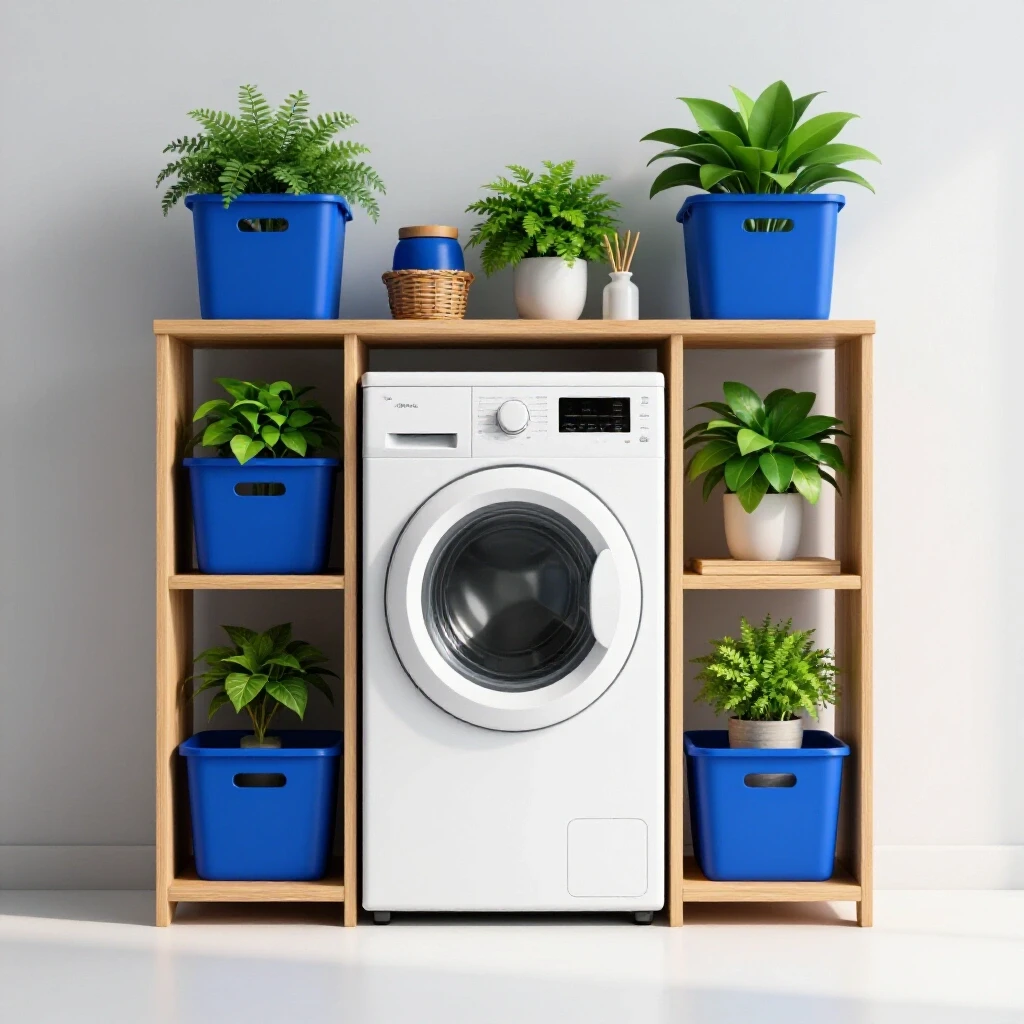
In my third move, I had to fit a full family’s laundry needs into a space no bigger than a walk-in closet. The key was to stop looking at the floor and start looking at the walls. Vertical adaptation is the only way to survive a small room furniture layout. If you cannot fit a folding table, a wall-mounted drop-leaf table can provide a surface when you need it and disappear when you don’t.
Research from housing ergonomics studies suggests that keeping frequently used items between hip and shoulder height reduces physical strain. In a cramped space, this means putting your most-used detergents on a slim rolling cart that slides between the machines. This keeps the floor clear and the items within reach.
- Use the “Gap”: A 6-inch gap between the washer and the wall can hold a slim rolling pantry for supplies.
- Tension Rods: Place a rod between two cabinets or walls to hang-dry shirts without using a bulky floor rack.
- Magnetic Organizers: If your machines are metal, use magnetic lint bins and soap holders to free up shelf space.
Unpacking and Spatial-Flow Designs for a New Home Adjustment Guide
A new home adjustment guide for utility spaces focuses on the “workflow” or the path a person takes while performing a task. It emphasizes organizing items based on the order of use to minimize unnecessary movement in a confined or awkward area.
When you start unpacking, do not just put boxes wherever they fit. Think about the “Clean Path.” In a small layout, you want the dirty clothes to enter at one point and the clean, folded clothes to exit at another without crossing paths. This prevents “re-contamination” of clean clothes and keeps the floor clear for walking.
I found that using color-coded bins for each family member helped immensely during our last move. In a small space, you don’t have room for a giant sorting table. Instead, we gave each child a specific bin. Once the dryer buzzed, the clothes went directly into those bins. This moved the “folding” task out of the cramped laundry room and into the bedrooms, where there was more space.
- Stage 1: The Drop Zone. A dedicated spot for dirty hampers.
- Stage 2: The Action Zone. The immediate area around the machines.
- Stage 3: The Transit Zone. Where clean clothes sit before being moved to closets.
Building Neighborhood Community Through Shared Household Needs
Neighborhood community building involves identifying local resources that supplement your home’s limitations. For those with small laundry areas, this means finding local dry cleaners or laundromats for oversized items like comforters, which facilitates natural social interactions with neighbors.
When you move into a new area, you might feel isolated. Interestingly, your household limitations can be a bridge to meeting people. If your new laundry area is too small to handle a king-sized duvet, ask your neighbor where they take their large items. This is a low-pressure way to start a conversation.
During our move to a smaller urban apartment, I discovered a local “wash and fold” service through a neighbor’s recommendation. Not only did it solve my space problem for heavy winter blankets, but it also introduced me to a local business owner who knew everyone in the block. These small interactions are the building blocks of feeling “at home” in a new place.
Furniture Clearance Guidelines by Room Footprint
| Room Width | Recommended Buffer | Activity Possible |
|---|---|---|
| 5 Feet | 30 Inches | One person standing, door half-open |
| 6 Feet | 36 Inches | One person moving, door fully open |
| 8 Feet | 48 Inches | Two people passing, basket on floor |
Digital Tools for Mapping Your New Environment
- MagicPlan: This app allows you to use your phone’s camera to map the dimensions of your new utility room. It is excellent for checking if your existing machines will fit the floor plan.
- Floorplanner: A web-based tool that is great for dragging and dropping furniture into a 2D or 3D space. I use this to test where the drying rack will go before I even buy it.
- RoomScan Pro: This tool is helpful for awkward, non-rectangular rooms. It helps you find the exact angles so you don’t buy shelving that won’t fit the corners.
- Trello or Notion: I use these for my home moving checklist. You can create a “Laundry Zone” board to track measurements, serial numbers, and the location of the water shut-off valve.
Practical Metrics for a Functional Layout
When you are adapting to a small space, you need to live by the numbers. Here are the standard measurements I have used to keep our family moves organized:
- 30 inches: The minimum width for a comfortable walking path.
- 6 inches: The clearance needed behind a dryer for the vent hose to avoid fire hazards.
- 1 inch: The “vibration gap” you should leave between the washer and dryer so they don’t bang into each other during the spin cycle.
- 36 to 42 inches: The ideal height for a folding surface to prevent back pain.
- 15 pounds: The maximum weight for a single “transit bin” so it is easy for a child or adult to carry through the house.
Adapting Your Routine to the Physical Reality
The most important part of moving is realizing that your old habits might not fit your new house. If you were used to doing laundry once a week in a large house, a small utility area will force you to change. In a small space, a week’s worth of laundry becomes a mountain that blocks the door.
We adapted by switching to a “one load a day” system. This kept the volume low and ensured the small drying rack was never overwhelmed. It took my family about three weeks to get used to this new rhythm. Be patient with yourself and your children. The first month is about testing and adjusting, not about being perfect.
If a layout isn’t working after two weeks, change it. Move the hamper. Buy a different rack. The goal of spatial layout adaptation is to serve the family, not to stick to a plan that causes stress. My 19 years of moving have taught me that the most successful transitions are the ones where the family is willing to experiment with their space until it feels right.
Common Moving Layout Mistakes to Avoid
- Ignoring the Door Swing: Always check which way the room door and the machine doors open. If they collide, you will be frustrated every single day.
- Overloading the Vertical Space: Don’t stack heavy detergent bottles on high, flimsy shelves. It is a safety risk, especially with kids around.
- Blocking the Shut-off Valve: Never place a heavy shelf or cabinet in front of the water shut-off. In an emergency, you need to reach it in seconds.
- Forgetting the “Sorting” Space: Even a small room needs a spot to separate lights and darks. If you don’t plan for it, the floor will become the default sorting area.
Frequently Asked Questions
How do I know if my old washer and dryer will fit in a smaller home?
You must measure the “path of entry” and the “final footprint.” Measure every doorway from the front door to the laundry room. Then, ensure the laundry room has the depth of the machine plus six inches for hookups. If the space is too shallow, you may need to look for “closet-depth” machines or use a periscope vent to save space.
What is the best way to handle laundry sorting when there is no floor space?
Use vertical sorting bins or hanging bags. You can find triple-sorters that hang on the back of a door or slim, stackable bins that take up very little floor space. This keeps the floor clear for walking and prevents the “mountain of clothes” effect.
How much clearance do I really need in a narrow laundry hallway?
You need at least 30 inches of width to walk comfortably. If you are carrying a laundry basket, 36 inches is much better. If your machines are in a hallway, ensure that when the doors are open, there is still enough room for someone to squeeze past in an emergency.
Can I stack any washer and dryer to save space?
No, only specific front-loading models are designed to be stackable. You will also need a “stacking kit” specific to your brand and model. Never stack machines that are not rated for it, as the vibration can cause the top unit to fall.
How do I manage drying clothes if I don’t have room for a floor rack?
Look for wall-mounted drying racks that fold flat against the wall when not in use. Another option is a retractable clothesline or a tension rod placed high up in a doorway or between two walls. This uses “dead space” above head height.
What should I do if my laundry room is also a mudroom or entry point?
Create clear “zones.” Use a small rug to define the entry path and keep it clear of laundry baskets. Use hooks for coats and bags to keep them off the floor, and ensure your laundry sorting bins have lids to keep the space looking tidy for guests.
How can I make a small, dark laundry area feel less stressful?
Lighting is key. Use bright, daylight-toned LED bulbs. If there are no outlets for extra lamps, use battery-powered motion-sensor lights under shelves. Adding a mirror can also help bounce light around and make the small space feel less enclosed.
How do I involve my children in the new laundry routine without creating a mess?
Give each child a small, lightweight bin that fits their scale. Assign them a specific day or time to bring their bin to the laundry area. By breaking the task into smaller, kid-sized pieces, you prevent the small space from being overwhelmed by a huge pile of family clothes all at once.
What is the “one load a day” rule?
This is a strategy for small spaces where you wash, dry, and put away one load of laundry every day instead of doing it all on the weekend. This prevents large piles of clothes from cluttering your limited floor space and keeps the workflow manageable.
How do I find out about local laundry services in a new neighborhood?
Ask your neighbors or join a local community social media group. Mention that you have a small laundry space and are looking for a place to do large items like comforters. This is a great way to get honest reviews and meet people living near you.
(This article was written by one of our staff writers, Kevin Thompson. Visit our Meet the Team page to learn more about the author and their expertise.)