How to Build a Bench Seat With Hidden Storage (Step-by-Step Guide)

According to a recent survey by the National Association of Realtors, homeowners who complete interior functional upgrades report a “Joy Score” of 10 out of 10, with increased organizational capacity being a primary driver of long-term satisfaction. For many of us balancing a 40-hour work week and family life, the appeal of adding custom cabinetry isn’t just about the aesthetics; it is about reclaiming space. Creating a custom seating area with internal volume for blankets, shoes, or seasonal gear is a project that bridges the gap between basic furniture assembly and advanced carpentry.
In my twelve years as a facilities manager, I have seen how poor planning can turn a weekend task into a month-long headache. I remember my first attempt at a mudroom upgrade in my previous home. I rushed the measurements and didn’t account for the thickness of the baseboards. When I tried to slide the unit into place, it was three-quarters of an inch too wide. I had to tear the entire frame apart and start over. That experience taught me that in DIY home improvement, the “measure twice, cut once” rule is only the beginning. You also have to understand the physics of the materials you are using.
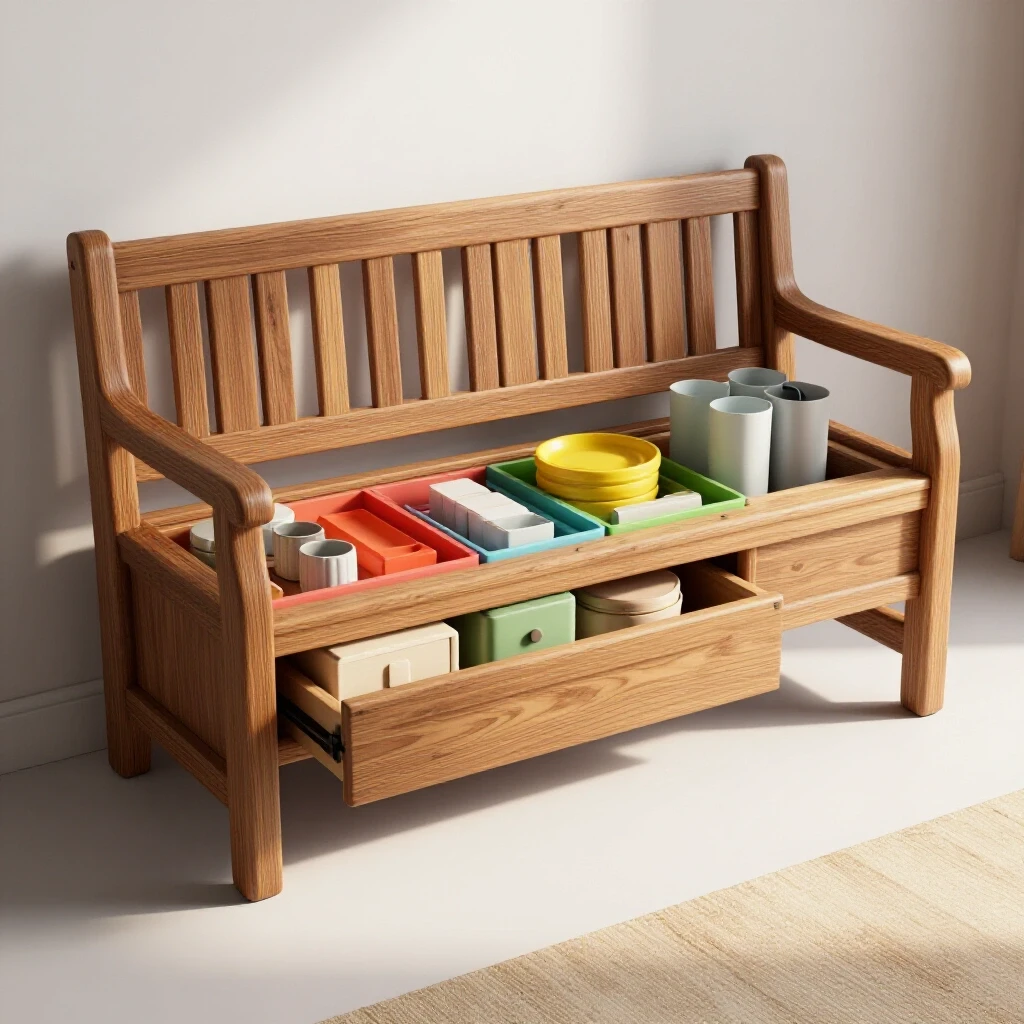
This guide focuses on constructing a sturdy, functional wooden box designed for seating that features a lift-top lid. We will prioritize structural integrity, clean joinery, and realistic timelines so you can avoid the common pitfalls that lead to unfinished projects or calls to expensive contractors.
Foundations of Functional Furniture Design
Establishing the correct dimensions and material requirements is the first step in ensuring your seating unit is both comfortable and durable. This phase involves calculating the height, depth, and internal volume needed to serve your specific storage goals while fitting the ergonomics of the human body.
When I plan a project like this, I look at the standard ergonomic data used in commercial facility maintenance. For a comfortable seat, the top of the lid should sit between 17 and 19 inches from the floor. If you plan to add a cushion, you must subtract the thickness of that foam from your wooden frame height. For example, if you have a 3-inch cushion, your wooden box should only be 15 inches tall.
Material selection is equally critical. I recommend using 3/4-inch hardwood plywood, such as birch or oak. Plywood is more dimensionally stable than solid wood, meaning it won’t warp as much when the humidity in your home changes. Avoid using thin 1/2-inch materials for the main carcass, as they can bow under the weight of an adult sitting down.
Estimating Time and Effort
| Project Phase | Active Working Hours | Skill Level | Physical Intensity |
|---|---|---|---|
| Planning & Measuring | 1–2 Hours | Beginner | Low |
| Material Sourcing | 2–3 Hours | Beginner | Moderate (Lifting) |
| Cutting & Prep | 3–4 Hours | Intermediate | Moderate |
| Assembly (The Frame) | 4–5 Hours | Intermediate | Moderate |
| Finishing (Sanding/Paint) | 6–8 Hours (inc. dry time) | Beginner | Low |
| Total Weekend Impact | Full Saturday & Sunday | Moderate | High Satisfaction |
Essential Equipment for Construction
Having the right tools is the difference between a project that looks professional and one that looks like a high school shop class failure. You don’t need a full industrial workshop, but you do need specific precision instruments to ensure your cuts are square and your joints are tight.
- Circular Saw or Miter Saw: A miter saw is best for cross-cutting the frame pieces, while a circular saw with a straight-edge guide is necessary for breaking down large sheets of plywood.
- Pocket Hole Jig: This tool allows you to drill angled holes into the wood, creating a strong, hidden joint when screws are driven through. It is a staple for step-by-step home upgrades because it simplifies complex joinery.
- Power Drill and Impact Driver: You will use the drill for the pocket holes and the driver for setting the screws.
- Orbital Sander: This is essential for removing mill marks and preparing the surface for paint or stain.
- Speed Square: A triangular marking tool used to ensure every corner is exactly 90 degrees.
- Clamps (at least four): These act as your “extra hands” during assembly, holding pieces in place while you drive screws.
Technical Definition: Pocket Hole Joinery Pocket hole joinery is a method where a hole is drilled at a shallow angle into one board, allowing a specialized screw to pass through and pull it tightly against a second board. This creates a mechanical bond that is much stronger than a simple “butt joint” where two flat ends are just glued or nailed together.
Safety Protocols and Workspace Preparation
Safety in a DIY environment is about more than just wearing goggles; it is about controlling your environment and respecting the power of your tools. Before the first cut, you must establish a “safe zone” that is free of clutter and well-ventilated to handle sawdust.
I have seen many DIYers ignore dust collection, only to find fine particulate matter in their HVAC filters weeks later. Always use a shop vacuum attached to your saws if possible. Furthermore, never wear loose clothing or jewelry when operating a circular saw. I once had a sleeve catch on a stationary drill press; luckily, I hit the kill switch in time, but it was a reminder that the machine doesn’t care what it’s cutting.
- Eye Protection: Use Z87+ rated safety glasses.
- Hearing Protection: Power saws can exceed 100 decibels, which causes permanent damage over time.
- Respiratory Care: Use an N95 mask when sanding, especially with treated woods or plywoods containing adhesives.
- Blade Depth: Set your circular saw blade so it only extends 1/8 inch below the thickness of the wood you are cutting. This minimizes the risk of kickback.
Phase 1: Breaking Down the Materials
The initial stage involves translating your paper plan into physical components by cutting the plywood into the sides, bottom, and lid of your unit. Precision at this stage is non-negotiable, as a 1/8-inch error here will compound as you begin assembly.
When I start a weekend DIY project, I always perform a “dry-cut” check. This means I mark all my lines on the plywood first, then step back and visualize how they fit together. I use a “cut list,” which is a detailed inventory of every piece I need and its exact dimensions.
The “Kerf” Factor One common mistake is forgetting the “kerf,” which is the thickness of the saw blade itself (usually 1/8 inch). If you need two 24-inch pieces and you cut a 48-inch board exactly in half, both pieces will be slightly short because the blade turned 1/8 inch of that wood into sawdust. Always measure and cut each piece individually.
Phase 2: Assembling the Main Carcass
Construction begins by joining the front, back, and side panels to create the rectangular box that will serve as the seating base. This is where your pocket hole jig becomes the star of the show, providing the structural integrity needed to support weight.
I recommend spacing your pocket holes every 6 to 8 inches along the interior edges. This ensures the load is distributed evenly. Before you drive a single screw, apply a thin bead of wood glue (PVA glue) to the joint. While screws provide the initial hold, the glue creates a chemical bond that is actually stronger than the wood fibers themselves once it cures.
Dry-Fit Testing Before applying glue, I always perform a “dry-fit.” I clamp the pieces together without screws to see if the box is square. I measure the diagonals of the box from corner to corner. If the two diagonal measurements are identical, the box is perfectly square. If they differ, the box is a “parallelogram” and needs to be nudged before the glue sets.
Phase 3: Installing the Floor and Support Cleats
The bottom of the unit needs to be strong enough to hold whatever you store inside, whether it is heavy boots or stacks of books. Instead of just screwing the bottom into the sides, we use support cleats for added strength.
Cleats are small strips of wood (usually 1×1 or 1×2) that you screw into the inside walls of the box near the bottom. The floor panel then rests on these cleats. This transfers the weight of the stored items onto the cleats and the vertical walls, rather than relying solely on the shear strength of the screws holding the floor in place.
- Cut four cleats to fit the inner perimeter of your box.
- Fasten them using glue and 1-1/4 inch screws.
- Drop the floor panel onto the cleats.
- Secure the floor to the cleats from above.
Phase 4: The Lid and Hinge Mechanism
The lid is the most interactive part of the project and requires careful hardware selection to ensure it opens smoothly and stays safe for all users. A heavy wooden lid can be a finger-pinching hazard, so we must address the closing speed.
I prefer using a “piano hinge” (also called a continuous hinge) for this type of project. It runs the entire length of the lid, providing maximum support and preventing the wood from sagging or twisting over time. For the “hidden” aspect of the storage, ensure the lid has a slight overhang of about 1/2 inch on the front and sides to make it easy to grasp without needing a bulky handle.
Safety Feature: Torsion Hinges If you have children or pets, standard hinges are not enough. I highly recommend installing torsion hinges or lid stays. These are specialized hardware components that provide resistance, preventing the lid from slamming shut. They hold the lid in any position you leave it in, much like a laptop screen.
Phase 5: Sanding and Surface Preparation
Finishing is often the most tedious part of safe home repairs and upgrades, but it determines the final quality of the piece. Skipping steps here will result in a rough texture that catches on clothing or looks “DIY” in a negative way.
I follow a specific sanding progression: start with 80-grit sandpaper to remove major imperfections, move to 120-grit to smooth the surface, and finish with 220-grit for a buttery-smooth feel. Always sand in the direction of the wood grain. If you sand across the grain, you will create scratches that become painfully obvious once you apply a stain.
- Edge Banding: If you are using plywood, the edges will show the “layers” of the wood. You can hide this by applying iron-on edge banding. This is a thin strip of real wood veneer with heat-activated glue on the back. You simply iron it on, trim the excess with a utility knife, and sand it flush.
Troubleshooting Common Assembly Issues
Even with the best planning, wood is a natural material that can be unpredictable. Being able to pivot when things go wrong is what separates a seasoned DIYer from a frustrated one.
The Box is “Racking”
If your box feels wobbly or leans to one side, it is “racking.” This usually happens if the back panel isn’t perfectly square or if the floor isn’t seated tightly. To fix this, you can add small L-brackets to the interior corners or ensure your back panel is made of a solid piece of plywood that is glued and screwed into every vertical member.
The Lid Won’t Close Flush
This is almost always a hinge alignment issue. If the lid is sticking up on one side, loosen the screws on the hinge slightly, shift the lid into the correct position, and re-tighten. If the wood has warped slightly, you may need to add a small “stop” block inside the frame to give the lid a level place to rest.
Wood Splitting
If you drive a screw too close to the edge of a board without a pilot hole, the wood will split. Always drill a pilot hole (a small hole slightly narrower than the screw) first. If a split does occur, back the screw out, fill the crack with wood glue, clamp it tight until dry, and then redrill your hole.
Finishing Touches and Maintenance
Once the structure is sound, you need to protect the wood from the wear and tear of daily use. For a high-traffic seating area, a durable topcoat is essential.
I recommend a water-based polyurethane. It dries quickly (usually within 2 hours), doesn’t have a strong chemical odor, and won’t yellow over time. Apply at least three coats, lightly sanding with 320-grit sandpaper between coats to remove any “nibs” or dust particles that settled in the wet finish.
Maintenance Checklist: * Monthly: Check hinge screws for tightness. Repeated opening and closing can vibrate them loose. * Quarterly: Wipe down the interior with a damp cloth to prevent dust buildup. * Annually: Inspect the finish for scratches. A quick touch-up with a finish pen can prevent moisture from reaching the wood fibers.
Project ROI and Final Analysis
When you complete a project like this, you aren’t just saving money on furniture; you are investing in your home’s infrastructure. A custom-built unit that fits your specific space is always more valuable than a mass-produced piece that leaves awkward gaps.
| Factor | DIY Approach | Professional Custom Build |
|---|---|---|
| Material Cost | $150 – $250 | $150 – $250 |
| Labor Cost | $0 (Your sweat equity) | $600 – $1,200 |
| Customization | Infinite | Limited by contractor’s “standard” |
| Time to Completion | 1 Weekend | 2–4 Weeks (Lead time) |
| Tool Investment | $200 (If starting from scratch) | Included in pro fee |
By taking the time to understand the “why” behind each step—from the physics of the pocket hole to the chemistry of the wood glue—you ensure that your weekend DIY projects are code-compliant, safe, and built to last. The satisfaction of sitting on something you built, while knowing your clutter is neatly tucked away inside it, is the ultimate reward for the busy professional.
Frequently Asked Questions
What is the best wood for a project involving internal storage? For most indoor applications, 3/4-inch Cabinet Grade Birch Plywood is the best choice. It offers a smooth surface for painting or staining, is incredibly strong, and is more affordable than solid hardwoods like oak or walnut. It also resists the warping that often plagues solid wood in climate-controlled homes.
Do I really need a pocket hole jig? While you can use basic wood screws through the face of the boards, a pocket hole jig allows for much stronger, hidden connections. It is one of the best tool investments for someone interested in building-code-compliant DIY furniture because it eliminates the need for complex mortise-and-tenon joinery.
How do I make the storage unit look “built-in” to the wall? To achieve a built-in look, remove the baseboards behind where the unit will sit so it can push flush against the wall. Then, install new baseboard molding around the bottom of the unit, matching the rest of the room. Use caulk to fill any gaps between the wood and the wall before painting.
What is the weight limit for a DIY wooden bench? If built with 3/4-inch plywood and proper internal cleats, a 4-foot long unit can easily support two adults (approximately 400–500 lbs). If you are building a unit longer than 4 feet, you must add a vertical center divider inside the storage area to prevent the lid and frame from sagging.
How do I prevent the lid from slamming on fingers? Use “soft-close” lid stays or torsion hinges. These are rated by the “inch-pounds” of the lid. To calculate this, multiply half the lid’s depth (in inches) by the lid’s weight (in pounds). Most manufacturers provide a chart to help you pick the right strength.
Should I paint or stain the inside of the storage area? I always recommend at least a clear coat of polyurethane on the inside. Raw wood can snag fabric or absorb odors. A sealed interior is much easier to clean and prevents moisture from affecting the structural integrity of the plywood.
Can I use a regular door hinge for the lid? You can, but it is not ideal. Regular door hinges require you to “mortise” (cut a recess) into the wood for them to sit flush. A piano hinge or a surface-mount chest hinge is much easier for a weekend project and provides better weight distribution across the back of the lid.
How do I fix a gap between the lid and the frame? If the gap is consistent, you may need to adjust the hinge depth. If the gap is only in one corner, the box might be slightly out of square. You can often “hide” small gaps by adding a thin strip of foam weatherstripping, which also acts as a silencer when the lid closes.
What is the most common mistake beginners make? The most common error is failing to account for the thickness of the wood when measuring. If you want a box that is 15 inches wide and you are using 3/4-inch wood, your top and bottom pieces need to be sized differently than your sides. Always draw a 3D diagram with the wood thickness labeled.
Is it safe to build this over a floor vent? Never cover a HVAC floor vent completely. If your seating unit must go over a vent, you must build a “toe-kick” (a recessed area at the bottom) and install a duct extender to redirect the airflow out the front of the unit’s base. Covering a vent can cause your furnace to overheat and poses a fire risk.
(This article was written by one of our staff writers, Robert Callahan. Visit our Meet the Team page to learn more about the author and their expertise.)