How to Replace a Cracked Window Seal (Step-by-Step Guide)

Do you remember the crisp clarity of the view through your windows when you first moved in, before the edges began to cloud or the drafts began to whistle through the sills? For many owners of older homes, that clear view eventually gives way to a persistent haze or a subtle chill that signals a failure in the building envelope.
In my 17 years as a facilities technician, I have crawled through more crawlspaces and inspected more window sashes than I can count. I have learned that a home is a living system where every component relies on the integrity of the next. When the bond between your glass and its frame fails, it is not just a cosmetic issue; it is a breach in your home’s primary defense against the elements. My experience maintaining legacy properties has taught me that diagnosing these failures early is the difference between a simple afternoon repair and a massive structural headache.
Understanding the Building Science of Thermal Envelopes
The thermal envelope is the physical separator between the conditioned interior and unconditioned exterior of a building. In windows, this relies on a hermetic seal that prevents gas exchange and moisture intrusion. When this barrier is compromised, the window loses its ability to resist heat flow, leading to higher energy costs and potential moisture damage to the surrounding woodwork.
Building science tells us that windows are often the weakest link in a home’s insulation. We measure this through thermal resistance, or R-values. A standard double-pane window might have an R-value of 3.0 to 4.0, but if the perimeter seal fails, that effectiveness drops significantly as air bypasses the glass entirely. I often look for “solar pumping,” a process where the sun heats the air between panes, causing it to expand and put pressure on the seals. Over years of daily expansion and contraction, even the best materials can develop microscopic fractures.
Why Insulated Glass Units Fail
Most modern windows use two or more panes of glass separated by a spacer and sealed into a single unit. When this seal breaks, the inert gas escapes and moist air enters, leading to fogging or mineral deposits between the panes. This is often caused by “desiccant saturation,” where the moisture-absorbing material inside the spacer can no longer hold any more water.
In older properties, I frequently see “glazing failure,” where the putty or silicone holding the glass in the sash becomes brittle and pulls away. This allows liquid water to sit against the wood or metal frame. If the moisture content in a wooden sash exceeds 15% to 20%, you are inviting rot and mold. Tracking these failures requires a systematic approach to diagnostics before you ever pick up a tool.
| Symptom | Potential Root Cause | Diagnostic Test |
|---|---|---|
| Fogging between panes | IGU seal breach | Visual check for “river tracking” or mineral spots |
| Drafts at the sash edge | Perimeter sealant failure | Smoke pen or incense stick test |
| Peeling paint on sills | Exterior glazing crack | Moisture meter check (>15% is a red flag) |
| Difficulty opening window | Frame warping from moisture | Squareness check with a framing square |
Diagnostic Tools for Assessing Perimeter Integrity
Identifying a failure requires more than a visual check; it involves measuring temperature variances and moisture levels around the frame. These tools help confirm if the issue is a failed seal or simple surface condensation. By using empirical data, you can move from guessing about a problem to knowing exactly where the thermal bridge is located.
When I begin an inspection, I rely on a specific kit of tools that provide objective measurements. This removes the guesswork and helps me prioritize which windows need immediate attention during the weekend repair cycle.
- Non-contact Infrared Thermometer: This allows you to measure the temperature of the glass and the frame. A Delta T (temperature difference) of more than 5-10 degrees between the center of the glass and the edge often indicates a thermal bridge where the seal has failed.
- Pinless Moisture Meter: I use this to scan the wooden sashes and sills. If I see readings above 12%, I know moisture is bypassing the exterior sealant and saturating the wood.
- Flashlight and Inspection Mirror: Essential for looking at the underside of the exterior sill and the corners of the glazing where cracks often start.
- Suction Cup Glass Lifter: Useful for safely checking if a glass unit is loose within its seat after the stop has been removed.
Using Thermal Imaging and Moisture Meters
Thermal cameras detect heat leakage, while moisture meters measure the water content in wooden sashes. These devices provide empirical data to prioritize which windows need immediate attention. In my facility logs, I have noted that a window with a 15% moisture reading in the wood is at high risk for structural decay within two seasons if not resealed.
Interestingly, surface condensation on the inside of the glass doesn’t always mean the seal is broken. If the moisture wipes away, it’s a humidity issue inside the house. However, if you see “fog” that you cannot touch, the seal between the panes has failed. At this point, the desiccant is overwhelmed, and the thermal performance is compromised.
Step-by-Step Restoration of the Glass-to-Frame Bond
This process involves removing the old glazing or sealant and applying a new, flexible barrier. It ensures the glass remains seated and the interface between the sash and the pane is airtight. A successful repair depends entirely on the preparation of the surfaces and the choice of a high-quality, flexible sealant that can handle the expansion and contraction of the home.
I have found that many homeowners rush this process. In my experience, 90% of the work is in the cleaning and 10% is in the application. If you apply new sealant over old, oily residue or crumbling putty, the new bond will fail within months.
Preparing the Sash for New Sealant
Proper adhesion requires a clean, dry, and stable surface. Removing old, brittle putty or silicone without damaging the wood or glass is the most critical phase of the repair. I use a stiff-bladed glazing knife and, occasionally, a heat gun on a very low setting—never exceeding 200 degrees Fahrenheit—to soften old compounds.
- Step 1: Removal. Carefully scrape away the old, cracked sealant. If you are working with old-fashioned putty, be careful not to gouge the wood.
- Step 2: Cleaning. Use a microfiber cloth and denatured alcohol to remove any oils or dust. The surface must be “squeaky clean.”
- Step 3: Inspection. Check the “rabbet” (the groove where the glass sits). If the wood is bare, I apply a thin coat of oil-based primer to prevent the wood from sucking the oils out of the new sealant.
- Step 4: Shimming. Ensure the glass is centered. I use small 1/8 inch plastic shims to keep the glass from resting directly on the bottom of the frame, which allows for drainage and expansion.
Applying the New Sealant Bead
Once the preparation is complete, the application of the new seal must be precise. I prefer a high-grade neutral-cure silicone or a modern polymer glazing compound. Unlike older putties, these remain flexible.
- Cut the nozzle: Aim for a 45-degree angle and a hole size that matches the width of the gap, usually about 1/4 inch.
- Steady Pressure: Apply a continuous bead along the perimeter. Avoid “stop and start” motions which create weak points.
- Tooling: Use a specialized caulking tool or a gloved finger dipped in soapy water to smooth the bead. The goal is a “concave” shape that sheds water away from the glass.
- Curing: Allow at least 24 hours of dry weather for the seal to skin over before painting or exposing it to heavy rain.
Long-Term Prevention and Maintenance Schedules
Preventive care involves regular inspections and minor touch-ups to the exterior weatherproofing. A systematic schedule stops small hairline cracks from becoming major moisture entry points. By treating your windows as a critical mechanical system, you can extend their lifespan by decades.
In my years maintaining older properties, I have developed a “Window Health Log.” This simple document tracks the age of the seals and any noted issues during seasonal cleanings. It turns a reactive “emergency repair” into a controlled, proactive maintenance task.
| Frequency | Task | Metric of Success |
|---|---|---|
| Every Spring | Wash glass and inspect perimeter beads | No visible gaps or peeling |
| Every Fall | Check weatherstripping and sash locks | Tight seal with no light visible |
| Every 3 Years | Test wood moisture levels at the sills | Readings remain below 12% |
| Every 5 Years | Re-tool or “cap” any thinning sealant | Flexible, continuous barrier |
Developing a Residential Diagnostic Routine
A home maintenance checklist should always include a section for the building envelope. I recommend doing a “walk-around” during a heavy rainstorm. This is when the failures are most obvious. Look for water “pooling” in the corners of the window frames or areas where the water isn’t shedding properly.
If you find a small crack in the sealant, don’t wait for it to grow. A five-minute touch-up today prevents a three-day repair next year. Use a non-conductive probe (like a plastic toothpick) to check the firmness of the sealant. If it feels like hard plastic rather than rubber, its lifespan is over.
Critical Safety and Execution Metrics
When working with glass and chemical sealants, safety is paramount. I have seen many DIYers end up in the emergency room because they underestimated the weight of an IGU or the sharpness of a broken pane. Always wear cut-resistant gloves and eye protection.
- Weight Capacity: A standard double-pane glass unit can weigh 3 to 5 pounds per square foot. Ensure your workspace is stable.
- Temperature Ranges: Never apply sealant if the ambient temperature is below 40 degrees Fahrenheit or above 90 degrees Fahrenheit. The material will not cure correctly.
- Expansion Gaps: Always leave a small gap (approx 1/16 to 1/8 inch) between the glass edge and the frame to allow for thermal expansion. A “tight fit” is actually a recipe for a future crack.
Final Steps for the Prevention-Focused Homeowner
The goal of maintaining your window seals is to preserve the structural integrity of your home. By mastering the diagnostics and the repair process, you take control of your home’s performance. You move from being a victim of “unexpected repairs” to being a steward of a well-maintained legacy property.
Start by auditing one room this weekend. Use your infrared thermometer to check for temperature drops at the edges of the glass. If you find a failure, address it methodically. Clean the area, remove the old material, and apply a high-quality seal. Your reward will be a quieter, warmer, and more efficient home that stands the test of time.
Frequently Asked Questions
How can I tell if the fog in my window is a permanent seal failure? If the fog or condensation is located between the two panes of glass and cannot be wiped away from either the inside or outside, the hermetic seal has failed. This means the desiccant is saturated and the insulating gas has escaped.
Can I reseal the space between the panes myself? Generally, no. The space between the panes is vacuum-sealed or filled with inert gas (like Argon) at the factory. DIY repairs usually focus on the “perimeter seal”—the bond between the glass unit and the window frame—which prevents air and water from entering the house.
What is the best type of sealant for a window-to-frame bond? For most modern applications, a neutral-cure silicone is best because it does not react with the coatings on the glass and remains flexible for decades. For older wooden windows, a high-quality polymer-based glazing compound is often preferred for its aesthetic match to traditional putty.
How does “solar pumping” affect my window seals? Solar pumping is the daily cycle of the air between panes heating up (expanding) and cooling down (contracting). This constant movement puts physical stress on the seals. Over 10-15 years, this stress can cause microscopic tears in the sealant.
What should I do if my wooden window sash has a high moisture reading? If a moisture meter shows above 15%, you must identify the entry point immediately. This is usually a crack in the exterior glazing or a failed bead of caulk. Dry the wood thoroughly (using a fan or dehumidifier) before applying any new sealant.
Is it necessary to remove all the old caulk before applying new? Yes. New sealant will not bond properly to old, weathered, or dirty material. For a lasting repair, you must scrape the surface down to the original substrate (wood, vinyl, or metal) and clean it with a solvent like denatured alcohol.
How long does a typical perimeter seal repair take? For a single standard-sized window, the diagnostic and cleaning phase takes about 45 minutes. Applying the new sealant takes 15 minutes. However, the curing process requires 24 to 48 hours of dry weather.
Can a failed seal cause my window frame to rot? Absolutely. A failed seal allows water to bypass the glass and sit in the “glazing pocket” of the frame. In wooden windows, this leads to “bottom-up” rot that can eventually destroy the entire sash and even the wall studs below it.
Does a broken seal affect my home’s energy efficiency? Yes. A failed seal in a double-pane window can reduce its R-value by as much as 25-30%. It also allows for air infiltration (drafts), which forces your heating and cooling systems to work harder to maintain a constant temperature.
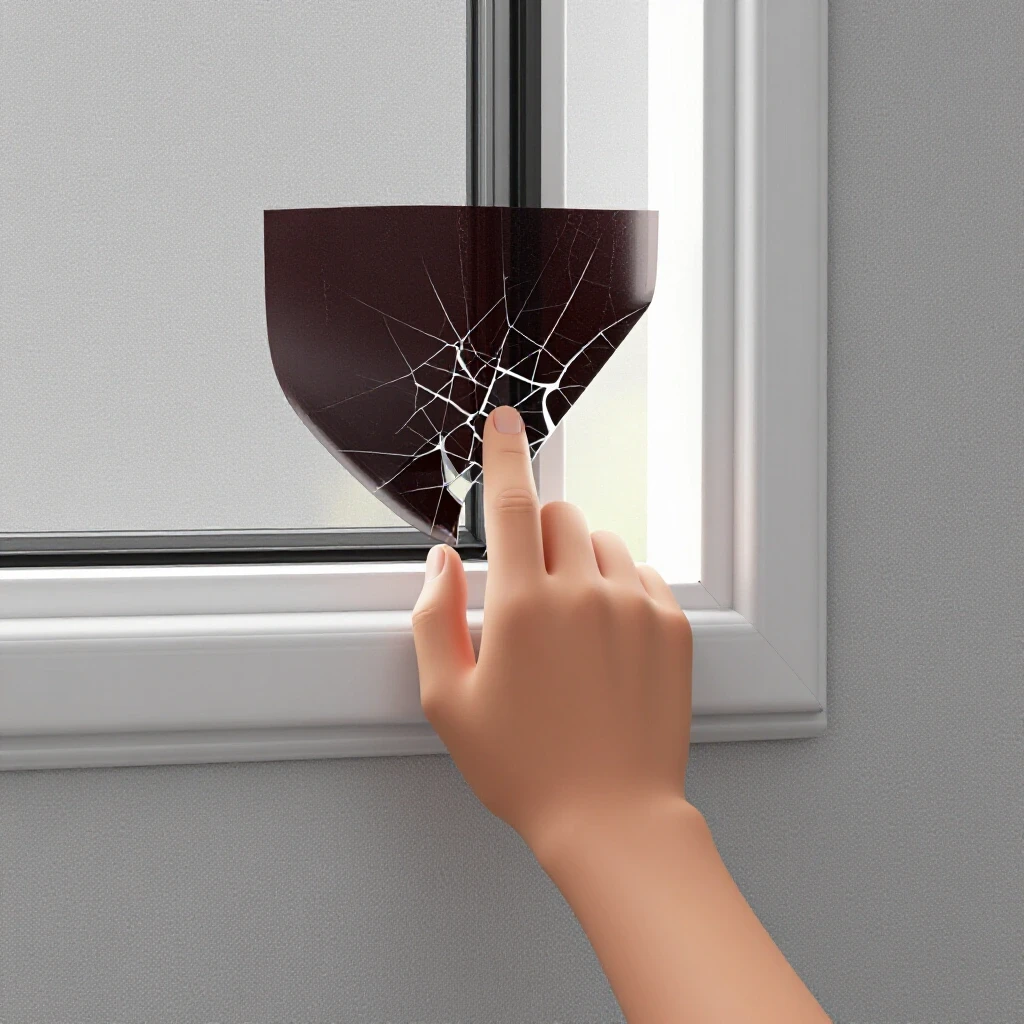
What are the signs that a seal is about to fail? Look for “alligatoring” (small cracks that look like reptile skin) in the sealant, or areas where the bead has pulled away from the glass. If you see the sealant becoming brittle or changing color, it is nearing the end of its functional life.
(This article was written by one of our staff writers, Daniel Whitaker. Visit our Meet the Team page to learn more about the author and their expertise.)