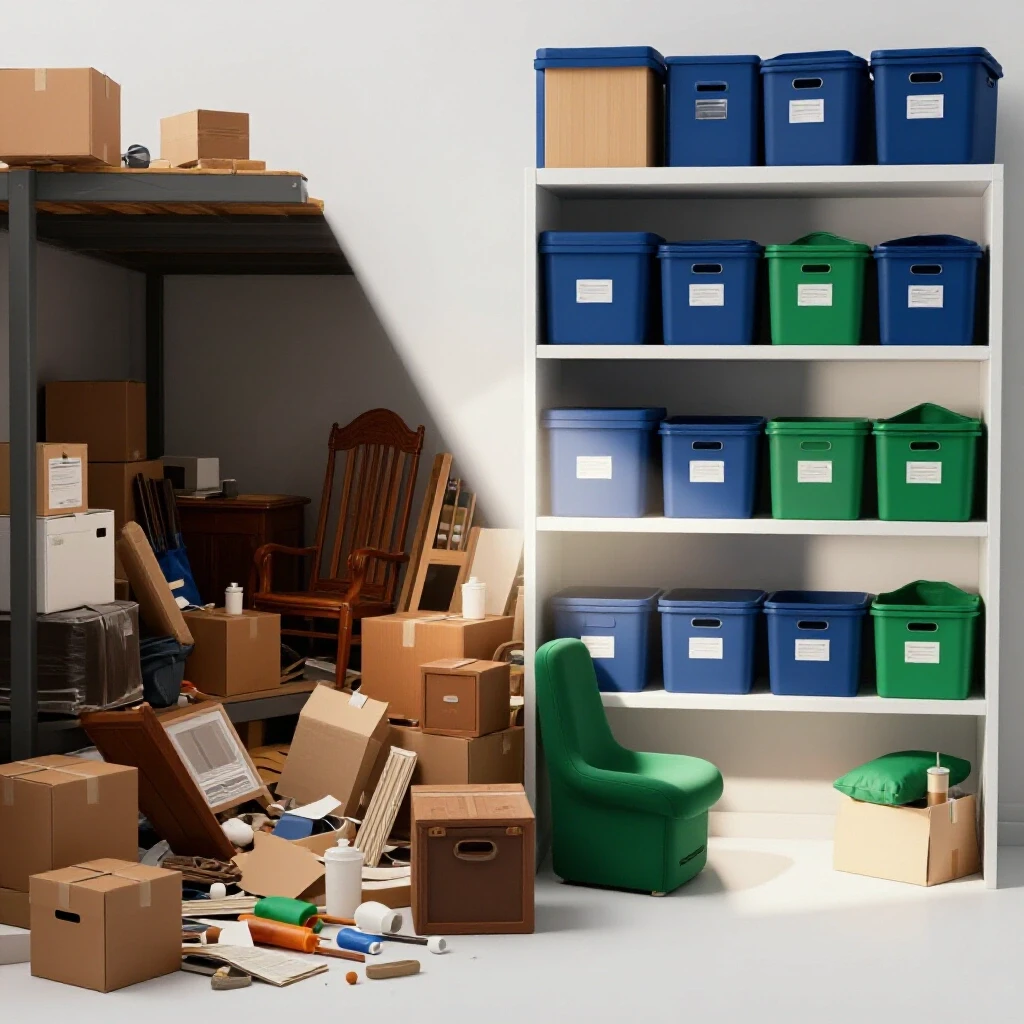
Daily Tidy Habits for Sustainable Home Organization (Guide)

The best option for a home that stays tidy isn’t a complex filing system or a series of expensive, matching glass jars. Instead, it is a system built on low-friction logistics that accounts for human exhaustion at the end of a long workday. In my 11 years managing operations and logistics, I have learned that if a process is hard to follow, people will bypass it. This principle applies to a warehouse, and it certainly applies to a living room filled with children and busy professionals.
My own journey into sustainable decluttering began after a particularly frustrating Saturday. I had spent four hours organizing our “catch-all” closet. I used color-coded bins and tight-fitting lids. Within three days, the floor was covered again. My family wasn’t lazy; the system was simply too difficult to maintain. I had built a “high-friction” environment that required too many steps to put a single pair of scissors away. Since then, I have focused on resilient spatial management that survives the reality of a lived-in home.

Why Traditional Home Organization Systems Often Collapse within Days
Sustainable order fails when we prioritize how a room looks over how it functions. When the effort to put an item away exceeds the user’s energy level, clutter accumulates. Understanding spatial ergonomics helps us build systems that survive the reality of a busy Tuesday evening without requiring constant oversight or deep-cleaning marathons.
In the world of logistics, we look at “flow rates.” If items enter a home faster than they can be processed and stored, you face a bottleneck. Most families suffer from a “processing bottleneck.” We have the bins, but we don’t have the time to open three drawers and a lid just to put away a remote control. Research in environmental psychology suggests that visual clutter increases cortisol levels, especially in women. This mental fatigue makes it even harder to make the small decisions required to keep a space tidy.
Interestingly, a study published in the Journal of Environmental Psychology found that people in cluttered environments are more likely to procrastinate on simple tasks. The mess creates a feedback loop of stress. To break this, we must move away from “aesthetic organization” and toward “functional logistics.” This means accepting that a bin without a lid might not look as “perfect” on social media, but it is much more likely to be used by a six-year-old or a tired parent.
Reducing Retrieval Friction to Ensure Sustainable Decluttering
Retrieval friction is the number of physical and mental steps required to access or store an object. High-friction systems use lids, latches, and hidden layers. Low-friction systems use open-top containers and clear sightlines, making it easier for every family member to participate in upkeep without feeling overwhelmed by the process.
When I redesigned our family entryway, I measured how many steps it took to put away a coat and shoes. Originally, it was six steps: open the closet, find a hanger, unzip the coat, hang it up, place shoes in a rack, and close the door. By switching to sturdy wall hooks and an open floor bin for shoes, we reduced the “transaction cost” to two steps. The floor stayed clear for the first time in years.
The Storage Friction Index by Container Type
This index measures how likely a system is to fail based on the physical effort required to use it. A score of 1 is the easiest to maintain, while a score of 5 is the most likely to revert to clutter.
| Container Type | Steps to Store | Friction Score | Best Use Case |
|---|---|---|---|
| Open Basket/Bin | 1 (Drop) | 1 | Toys, shoes, daily mail |
| Wall Hooks | 1 (Hang) | 1 | Coats, bags, keys |
| Clear Drawer | 2 (Pull, Drop) | 2 | Office supplies, snacks |
| Lidded Bin | 3 (Lift, Drop, Replace) | 4 | Seasonal decor, keepsakes |
| Labeled Opaque Box | 4 (Read, Lift, Drop, Replace) | 5 | Long-term storage only |
By focusing on functional home storage, we aim to keep 90% of daily-use items at a friction score of 1 or 2. If you find a specific area of your home constantly messy, count the steps required to tidy it. If it’s more than three, the system is the problem, not the person.
Designing Functional Home Storage Using Industrial Zoning Principles
Zoning involves grouping items by frequency of use and the location of the activity they support. By mapping your home into high-velocity zones for daily items and low-velocity zones for occasional items, you minimize the time spent searching and maximize the efficiency of your living space for everyone.
In logistics, we use “ABC analysis” to organize inventory. “A” items are used daily, “B” items weekly, and “C” items monthly or less. Your home should follow the same logic. I recommend a spatial audit to identify your “Prime Real Estate”—the areas between your shoulders and knees. This is where your “A” items must live.
High-Speed Zoning Map for a Family Home
- Zone 1: The Landing Strip (Entryway)
- Purpose: Capture items before they migrate into the living space.
- Items: Keys, mail, bags, shoes.
- Metric: Should take less than 30 seconds to clear upon arrival.
- Zone 2: High-Velocity Storage (Kitchen/Living Room)
- Purpose: House items used multiple times per day.
- Items: Remote controls, daily cooking tools, chargers.
- Metric: Must be reachable without moving another object.
- Zone 3: Support Zones (Closets/Cabinets)
- Purpose: Store weekly-use items.
- Items: Cleaning supplies, board games, specific hobby gear.
- Metric: Accessible within 3 steps of the activity area.
- Zone 4: Deep Storage (Garage/Attic)
- Purpose: Long-term retention.
- Items: Holiday decor, out-of-season clothing.
- Metric: High friction is acceptable here.
Improving Household Flow with Effective Sorting Frameworks
A sorting framework is a set of rules that governs how new items enter the home and where they go. Effective frameworks reduce decision fatigue by providing a “default” action for every object. This prevents the “I’ll deal with this later” pile, which is the primary source of household clutter.
One of the most effective methods I’ve implemented is the “One-Touch Rule.” This principle states that you should only handle an item once before it reaches its final destination. For example, when you bring in the mail, don’t put it on the counter (Touch 1) to move it to the desk later (Touch 2). Instead, walk it directly to the recycling bin or the “action” folder.
Daily Maintenance Timelines by Family Size
Keeping a home functional requires small, timed intervals of maintenance rather than massive weekend projects. Based on my observations of family logistics, these are the average daily times required to keep a system from reverting.
| Family Size | Morning Reset | Evening Sweep | Total Daily Effort |
|---|---|---|---|
| 1-2 People | 5 Minutes | 10 Minutes | 15 Minutes |
| 3-4 People | 10 Minutes | 20 Minutes | 30 Minutes |
| 5+ People | 15 Minutes | 30 Minutes | 45 Minutes |
These times are not for deep cleaning. They are for “logistical resets”—returning items to their designated zones. If your daily reset takes longer than this, you likely have a “volume issue” (too much stuff) or a “zoning issue” (items are stored too far from where they are used).
Selecting Storage Solutions for Families that Actually Last
The best storage solutions for families are those that accommodate the lowest common denominator of effort. This means choosing containers that are durable, easy to clean, and simple to navigate. Overly decorative or fragile systems often fail because they cannot withstand the rigors of a busy household.
When selecting gear, I look for “visual transparency.” If you can’t see what is inside a bin, your brain treats it as a “black hole.” This leads to overbuying because you forget you already own the item. Organizational behavior studies suggest that “out of sight, out of mind” is a literal cognitive hurdle for many people.
Guidelines for Low-Maintenance Storage Gear
- Prioritize Square Over Round: Round bins create “dead space” in corners. Square or rectangular bins maximize the spatial capacity of your shelves.
- Use “Micro-Bins” for Small Parts: In drawers, use small dividers to prevent items from sliding and mixing. This maintains the “sorting integrity” of the space.
- Label for Others, Not Yourself: If you live with others, labels serve as a map. Use simple, broad categories like “Batteries” or “Pasta” rather than hyper-specific ones.
- Avoid Oversized Bins: A large bin becomes a “junk drawer” very quickly. Smaller, categorized bins force you to maintain the system.
Building Resilient Habit Loops for Long-Term Order
A habit loop consists of a cue, a routine, and a reward. In a home setting, the “cue” is often an environmental trigger, like finishing a meal or arriving home. By tying tidying actions to these existing cues, you create a sustainable decluttering journey that doesn’t rely on willpower alone.
In my home, we use the “Transition Tidy.” Every time we move from one activity to another (e.g., from dinner to homework), we spend exactly two minutes resetting the current zone. This prevents the “compounding effect” of clutter, where one mess invites another. According to a report on habit formation from University College London, it takes an average of 66 days for a new behavior to become automatic. Consistency in these small resets is more important than the intensity of the effort.
Practical Metrics for a Functional Home
- Item Density: No shelf or drawer should be more than 80% full. This “buffer space” allows for easy retrieval without knocking other items over.
- Sorting Time-Box: Never spend more than 15 minutes sorting a single area. If it takes longer, the task is too large; break it down into smaller sub-zones.
- The 10-Second Rule: You should be able to find and retrieve any “A” zone item in under 10 seconds.
Overcoming the Psychological Costs of Household Disorganization
Visual overload is a real phenomenon where the brain is bombarded by too many stimuli, leading to decreased focus and increased irritability. By reducing household clutter through logistical systems, we are not just cleaning; we are performing “cognitive maintenance.”
I’ve seen this in my own family. When the kitchen counters are clear, everyone is calmer. When the “Landing Strip” is organized, the morning rush is less chaotic. We moved away from “hiding” things in cupboards and toward “editing” what we own. This shift from “where do I put this?” to “do we need this?” is the foundation of a resilient home.
Avoiding Common Organizing Mistakes
- Buying Bins First: Never buy containers before you have decluttered and measured your space. This often leads to “container clutter.”
- Organizing “Trash”: Don’t spend time finding a perfect home for items you no longer use.
- Complexity Over Habit: If a system requires a manual to explain, it will fail. Keep it simple enough for a guest to understand.
Actionable Matrix for Sustainable System Design
Use this matrix to evaluate any new organization project before you begin. It helps ensure the system will survive the daily grind.
| Criteria | High-Maintenance (Avoid) | Low-Maintenance (Goal) |
|---|---|---|
| Visibility | Opaque, stacked boxes | Clear bins or open shelving |
| Access | Requires moving other items | Single-layer access |
| Labeling | Handwritten, tiny, or absent | Large, clear, printed labels |
| Categorization | Hyper-specific (e.g., “Blue Pens”) | Broad (e.g., “Writing Tools”) |
| Location | Where it “looks best” | Where it is “used most” |
Final Steps for a Resilient Living Space
To start your transition to a more functional home, choose one “high-traffic” area this week. Apply the principles of retrieval friction and zoning. Replace a lidded bin with an open basket. Install hooks for bags that usually end up on the floor.
Remember, the goal is not a house that looks like a museum. The goal is a home that supports your life rather than draining your energy. By treating your household management like a logistics professional, you can create a space that stays tidy because it is finally easy to maintain.
Frequently Asked Questions
How do I get my children to follow these systems? Children respond best to low-friction, visual systems. Use open bins at their height and replace complex latches with simple “drop-in” baskets. Labeling with pictures instead of words also helps younger children identify where items belong without needing adult assistance.
What is the best way to handle the “paper trail” of mail and school forms? Establish a “one-touch” station in your Landing Strip zone. Use a vertical file holder with three slots: “To Action,” “To File,” and “To Recycle.” Process the mail immediately upon entering the house so it never touches your kitchen counter.
Why do my clear bins still look messy? Clear bins provide “visual feedback,” which is good for finding things but can look busy. To solve this, use “uniformity.” Matching clear bins look more organized than a mix of different styles. If the visual noise is too much, use opaque bins only for items that are strictly categorized and labeled in large text.
How often should I re-evaluate my home’s zones? Life stages change, and so should your zones. I recommend a “Logistics Check” every six months. If a child starts a new sport or a parent starts working from home, your high-velocity zones will need to shift to accommodate the new equipment and routines.
What should I do if I have a very small home with limited storage? In small spaces, vertical real estate is your best friend. Use wall-mounted shelving and over-the-door organizers to keep floors clear. In these environments, the “80% capacity rule” is even more critical to prevent the space from feeling claustrophobic.
Is it worth investing in “smart” labeling systems? Smart labels (like those with QR codes) are excellent for “Zone 4” storage (attic/garage). They allow you to see what is inside a box using your phone without having to move or open it. For daily-use items, however, simple physical labels are usually faster and more effective.
How do I manage items that don’t seem to have a “home”? If an item doesn’t have a home, it is either a “homeless” item that needs a new category or it is clutter that should be removed. Create a “Transit Bin” for items that belong in other rooms, and empty it once at the end of every day during your evening sweep.
What is the most common reason a “tidy habit” fails? The most common reason is “High Transaction Cost.” If it takes more than 10 seconds to put something away, you will eventually stop doing it. Always look for ways to shave seconds off your daily routines by moving storage closer to the point of use.
How can I reduce the “mental load” of keeping the house organized? The mental load comes from making decisions. By creating a strict zoning map and a “one-touch” rule, you remove the need to decide where things go. The system makes the decision for you, which significantly reduces mental fatigue.
Can these systems work for someone with ADHD? Yes, low-friction and high-visibility systems are often recommended for neurodivergent individuals. Clear bins and open storage reduce the “out of sight, out of mind” struggle, while the “one-touch” rule helps prevent the overwhelm of multi-step tasks.
(This article was written by one of our staff writers, Christopher Bennett. Visit our Meet the Team page to learn more about the author and their expertise.)