How to Use Photos to Let Go of Sentimental Clutter (Guide)

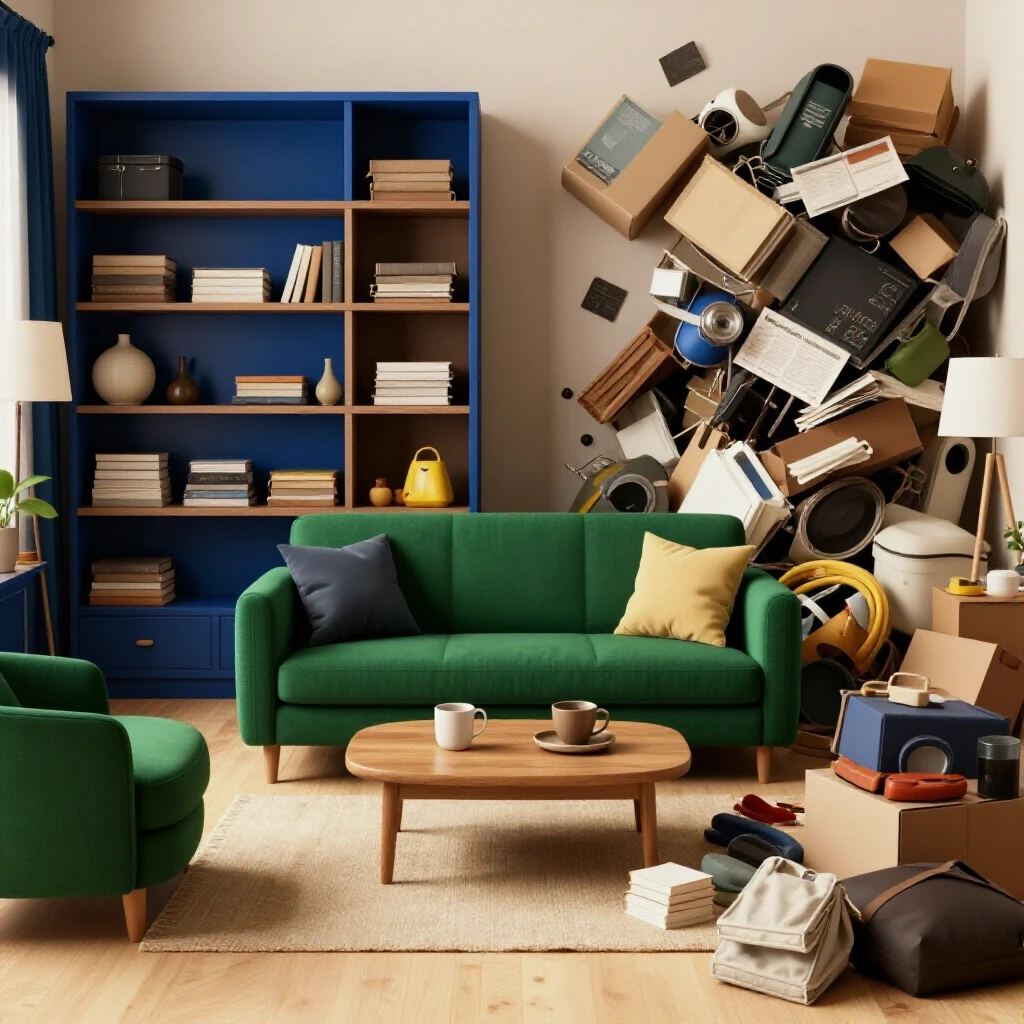
Imagine you are standing in your garage, staring at a stack of plastic bins that haven’t been opened in three years. Inside one is a set of ceramic mugs from a college road trip; in another, a collection of your child’s finger paintings from preschool. You know these items are taking up valuable real estate, yet every time you reach for a heavy-duty trash bag, a wave of hesitation stops you. You aren’t keeping the ceramic—you are keeping the memory of the sunset in Big Sur. This is the primary logistical bottleneck in most home organization systems: the emotional weight of an object exceeds its physical utility.

In my eleven years managing supply chains and family logistics, I have found that the most successful systems aren’t built on rigid perfection, but on reducing the friction of letting go. We often treat our homes like permanent warehouses rather than active transit hubs. When we view our belongings through the lens of spatial capacity, we realize that every sentimental item kept “just because” is a tax on our daily movement and mental clarity. By using a digital record as a bridge, we can preserve the data of our lives without the physical overhead.
Why Sentimental Items Create Logistical Bottlenecks
Sentimental items often act as anchor objects that consume high-value real estate without providing daily utility. These items create logistical bottlenecks because they are difficult to categorize and even harder to discard. By understanding the spatial cost of these objects, families can begin to prioritize functional living over long-term storage of stagnant inventory.
In logistics, we look at “flow rates”—how quickly items move in and out of a system. Most household clutter happens because the inflow of items (gifts, school papers, purchases) is faster than the outflow. Sentimental items have a near-zero outflow rate, which leads to “clutter compounding.” Research in environmental psychology, such as studies from the UCLA Center on Everyday Lives of Families (CELF), shows a direct correlation between high object density and elevated cortisol levels in mothers. When every surface is a reminder of a past event, the brain cannot rest in the present.
I remember a specific sprint where my family tried to reorganize our basement. We had bins of “memory items” that occupied 30% of our total storage volume. By applying a digital preservation strategy, we reduced that volume to a single shelf. We didn’t lose the memories; we simply converted high-volume physical data into low-volume digital data. This shift allowed us to implement more effective storage solutions for families that actually serve our current needs, like sports equipment and seasonal gear.
The Role of Digital Records in Sustainable Decluttering
Using digital records bridges the gap between emotional attachment and physical space management by allowing for memory retention without physical bulk. This method serves as a lightweight preservation tool that supports decluttering routines within a modern home. It transforms a difficult emotional decision into a simple logistical transfer of information.
When we hold onto an old trophy or a tattered concert tee, we are engaging in what psychologists call the “Endowment Effect.” This is the tendency to overvalue things merely because we own them. Interestingly, a study published in the Journal of Consumer Research suggests that when people take a photo of a sentimental item, they find it significantly easier to donate or discard it. The photo serves as a “memory trigger,” providing the same emotional spark as the object itself but requiring zero square footage.
In our home, we use a “Visual Inventory” approach. Before an item leaves the house, we capture a clear, well-lit image of it. This isn’t about professional photography; it’s about capturing the “metadata” of the memory. We then store these in a dedicated digital folder. This transition from physical to digital reduces what I call “visual processing overload,” where your brain is constantly scanning and cataloging the items in your peripheral vision, leading to mental fatigue.
| Storage Type | Retrieval Friction | Spatial Cost | Maintenance Level |
|---|---|---|---|
| Deep Bins (Lidded) | High (4-5 steps) | High | Low |
| Open Shelving | Low (1 step) | Medium | High |
| Digital Archive | Low (Searchable) | Zero | Very Low |
| Under-Bed Storage | Medium (3 steps) | Low (Tucked) | Medium |
Designing Low-Maintenance Home Organization Systems
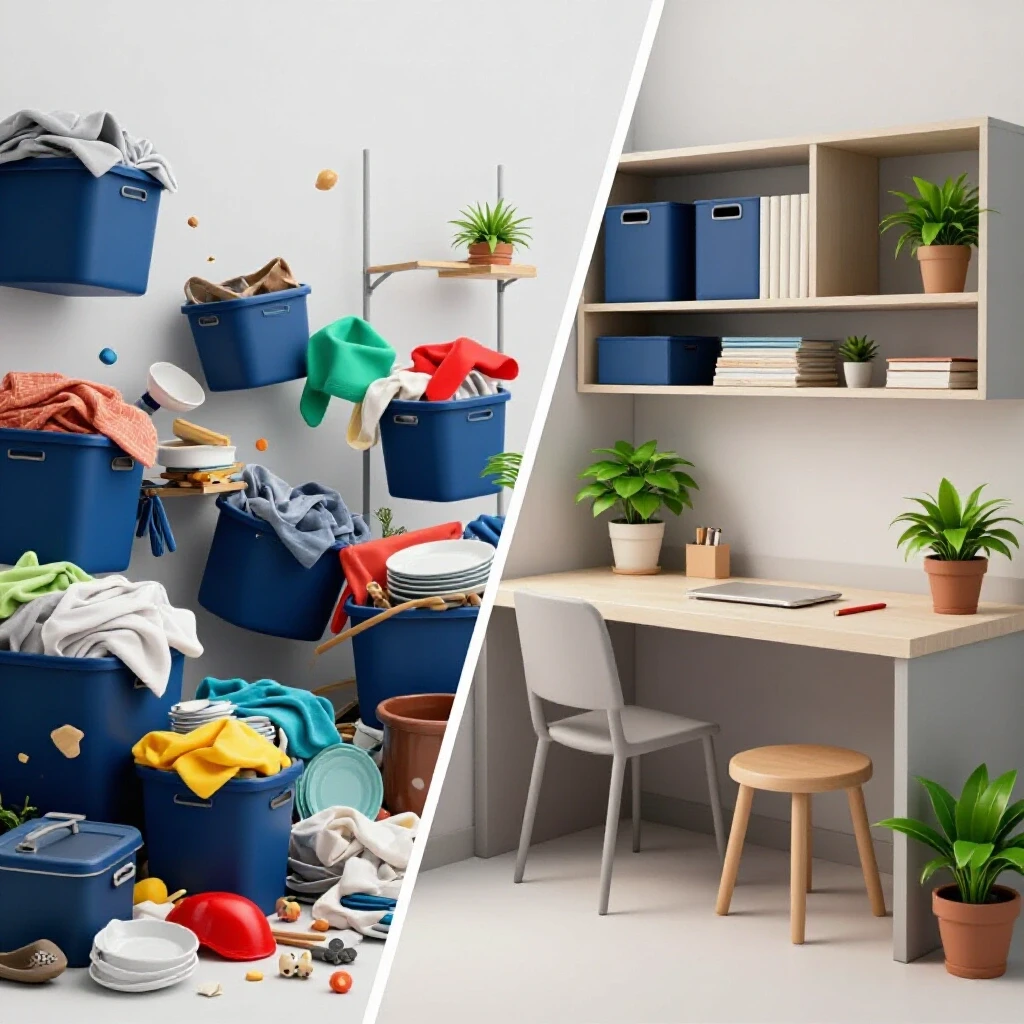
Functional home storage must account for the reality of family life, prioritizing ease of use over aesthetic perfection. A sustainable system focuses on reducing the number of steps required to put something away. When systems are too complex, they inevitably fail, leading to the rapid reversion of a tidy space back into a cluttered one.
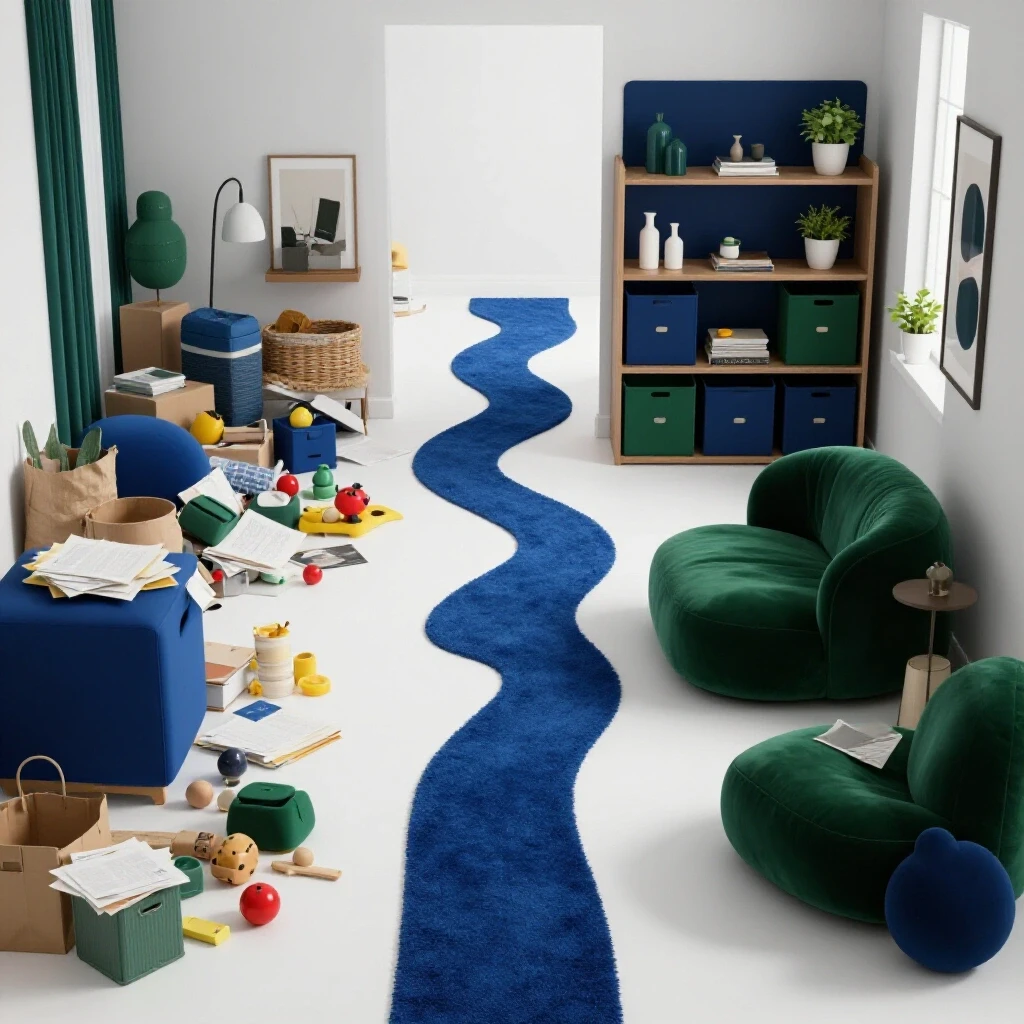
Most families fail at organization because they buy the containers before they understand their flow. In my professional background, we call this “equipment-led design,” and it is a recipe for wasted capital. Instead, we should use “process-led design.” This means observing where items naturally land—the “hot spots”—and placing low-friction storage solutions there.
For example, we once installed a complex, color-coded filing system for school memories. It lasted four days. The friction of finding the right folder, opening the ring binder, and hole-punching the paper was too high. We replaced it with a “Capture Station”: a simple tray where papers sit until they are photographed and recycled at the end of the week. This reduced our daily sorting time from fifteen minutes to less than two.
- Retrieval Step Count: Aim for 2 steps or fewer for daily-use items.
- Sorting Time-Box: Limit decluttering sessions to 15-28 minute intervals to avoid decision fatigue.
- Space Utilization: Never exceed 80% capacity in any bin or shelf to allow for easy item removal.
Tactical Steps for Documenting and Releasing Physical Items
A structured workflow for transitioning items from physical storage to digital archives ensures that the decluttering journey remains consistent and manageable. This process involves sorting by category, capturing the essence of the object, and immediately moving the item to its next destination. This prevents “limbo clutter” from accumulating in transition zones.
To start reducing household clutter, I recommend the “Box-to-Binary” method. Pick one bin of sentimental items. For each piece, ask: “If I have a high-quality photo of this, do I still need the physical weight of it?” If the answer is no, follow these steps:
- Clean the Object: Wipe off dust so the photo looks like a tribute, not a chore.
- Capture the Story: Take the photo. If there is a story behind it, record a quick voice note or type a one-sentence caption in the photo’s metadata.
- The Immediate Exit: Place the item directly into a donation box or trash bag. Do not let it sit on the counter.
- Digital Filing: Move the photo to a folder labeled “Archive [Year]” or “[Category] Memories.”
By treating your home like a high-efficiency fulfillment center, you focus on the “outflow.” We found that by setting a “processing goal” of five items per day, we could clear an entire attic space in a month without feeling the sting of loss. The key is the immediate exit; once an item is “digitized,” its physical presence in the home becomes a logistical error.
Establishing Family Behavior Systems for Long-Term Order
Long-term organization requires a shift in household habits that emphasizes the “one-in, one-out” rule and shared responsibility. By involving the whole family in the documentation process, children and adults alike learn that memories are not tied to physical mass. This builds a sustainable culture of clutter management that survives the chaos of daily life.
Reducing household clutter isn’t a one-time event; it’s a maintenance cycle. In our house, we have “Sunday Resets.” We spend twenty minutes as a family checking our zones. If my kids have a new drawing they love, we take a photo of it together, “favorite” it on the tablet, and then recycle the paper. This teaches them spatial awareness and the value of digital over physical hoarding.
We also use a “Friction Log” to identify why certain areas keep getting messy. If the shoe rack is always overflowing, it’s usually because the “retrieval friction” is too high or the “spatial capacity” is exceeded. We don’t blame the people; we fix the system.
- Daily Cleanup Average: 10-15 minutes for a family of four.
- Item Density Guideline: One sentimental item per shelf; the rest are digital.
- Habit Tracking: Use a simple sticker chart or digital log for the first 21 days of a new system.
Conclusion: Small Steps Toward a Functional Living Space
The goal of sustainable decluttering is not to live in an empty box, but to ensure that every item in your home earns its place. By using photography as a memory-preservation tool, you decouple the emotional value of an object from its physical footprint. This simple trick reduces the mental fatigue of decision-making and allows you to reclaim your home’s square footage for living, not just storing.
Start small. Choose one drawer or one box this weekend. Don’t worry about the whole house yet. Just practice the act of capturing the memory and releasing the weight. You will likely find that the “mental lightness” you feel after clearing a space is far more valuable than the dusty trophy you were protecting. Your home should be a launchpad for your family’s future, not a museum of its past.
Frequently Asked Questions
Does taking a photo really help me feel less guilty about throwing things away?
Yes, research suggests that the act of “archiving” an item through a photo satisfies the brain’s need to preserve the memory. The guilt often stems from a fear of forgetting a specific time or person. A photo acts as a permanent “save point” for that memory, which logically reduces the emotional barrier to letting the physical object go.
How do I handle items that are too large to photograph easily?
For large items like furniture or bulky equipment, focus on detail shots. Take a photo of a specific carving, a label, or a unique texture. You can also take a photo of the item in use (e.g., a child sitting at an old desk). These “contextual photos” are often more powerful memory triggers than a standard wide shot of the object in a dark garage.
What is the best way to organize these photos so they don’t just become “digital clutter”?
Create a simple folder structure on your computer or cloud storage. I recommend organizing by year (e.g., “Memories 2023”) or by person. Avoid over-complicating the folders. The goal is to make them searchable. You can also use “tags” or “keywords” like “college,” “baby,” or “wedding” to find things quickly without digging through thousands of files.
My kids are very attached to their toys. Can this method work for them?
Absolutely. In fact, it’s a great teaching tool. Let the child take the photo themselves. Ask them to tell you why the toy is special and record their voice. Often, once they know the “story” is saved in “the cloud” or on “Mom’s phone,” they feel a sense of pride in “donating” the toy to another child who needs it.
What if I regret throwing something away after taking a photo?
In my experience and based on feedback from many families, “discard regret” is extremely rare—usually less than 1% of items. Most people find that once the item is out of their sight for 48 hours, they completely forget about its physical presence and only remember it when they happen to see the photo.
How many photos should I take of a single item?
One to three photos is usually sufficient. Take one “hero shot” of the whole item and one or two detail shots if there are specific features that carry emotional weight. Taking fifty photos of one item just creates a different kind of clutter. The goal is a representative sample, not a full forensic catalog.
Is it better to print these photos or keep them digital?
Keep them digital for the purpose of decluttering. If you print every photo of a discarded item, you are simply replacing one physical object with another. If an item is truly special, you might include its photo in a yearly family photobook, which condenses hundreds of memories into a single, slim volume on a coffee table.
How do I start if I have an entire attic full of sentimental items?
Use the “15-Minute Sprint” method. Don’t try to do the whole attic at once. Take one box down to a well-lit area, process it using the photo method, and then stop. Consistency is more important than intensity. If you process just five items a day, you will have removed over 1,800 items from your home in a single year.
(This article was written by one of our staff writers, Christopher Bennett. Visit our Meet the Team page to learn more about the author and their expertise.)