How to Create Privacy in Shared Living Spaces (Easy Ideas)

Moving into a new home often feels like trying to solve a puzzle where the pieces keep changing shape. In my 19 years of navigating four major relocations, including two cross-country moves with a growing family, I have learned that the hardest part isn’t the heavy lifting. The real challenge is the “fishbowl effect”—that feeling of being exposed and unsettled in an open-plan house or a small apartment where every room serves three different purposes. When you are surrounded by boxes and an unfamiliar floor plan, the lack of defined personal zones can make a new house feel like a temporary camp rather than a home.

Auditing Your New Floor Plan for Zonal Potential
Spatial layout adaptation is the process of arranging furniture and decor to define functional areas within a room. It involves analyzing traffic patterns, light sources, and floor dimensions to ensure a home supports both social interaction and individual retreat. By understanding these foundations, you can turn a chaotic room into a balanced environment.
Before you slide a single dresser across the floor, you need to understand the “bones” of your new space. I remember walking into our third home, a house with a massive “great room” that felt more like a gymnasium than a living area. My first instinct was to push everything against the walls to keep the middle open. This was a mistake. It left us feeling exposed and made the room feel cold. Instead, we had to learn how to map out “rooms within rooms.”
Start by identifying the natural circulation paths. These are the “invisible hallways” where people walk to get from the front door to the kitchen or from the bedroom to the bath. You should leave at least 30 to 36 inches for these walkways. Once you mark these paths, the remaining “islands” of space are where you can build your personal zones. This home transition planning phase is vital for reducing the stress of a move.
Why Blind Furniture Placement Fails and How to Draft a Blueprint
A spatial layout blueprint is a scaled drawing or digital map of your room that accounts for furniture dimensions and clearance margins. It helps you visualize how items will fit before you exert physical effort. Creating this plan prevents the common error of overcrowding a small room or leaving a large room feeling cavernous.
In our move from a wide suburban house to a narrow city apartment, our old sectional sofa was a nightmare. It blocked the only path to the balcony. I learned then that you cannot force a layout; you have to listen to the room’s dimensions. Use a home moving checklist that includes a “furniture-to-room” scale check. If a piece of furniture leaves less than 24 inches of clearance around it, it will likely create a bottleneck that adds to your daily frustration.
Furniture Clearance Guidelines by Room Footprint
| Area | Recommended Clearance | Purpose |
|---|---|---|
| Main Hallways | 36 inches | Comfortable walking for two people |
| Behind Dining Chairs | 24 inches | Room to pull out chair and sit |
| Coffee Table to Sofa | 14–18 inches | Easy reach but enough legroom |
| Between Large Furniture | 30 inches | Prevents a “cluttered” visual feel |
| Entryway Landing | 48 inches | Space for door swing and shoe removal |
Strategic Furniture Placement for Boundary Creation
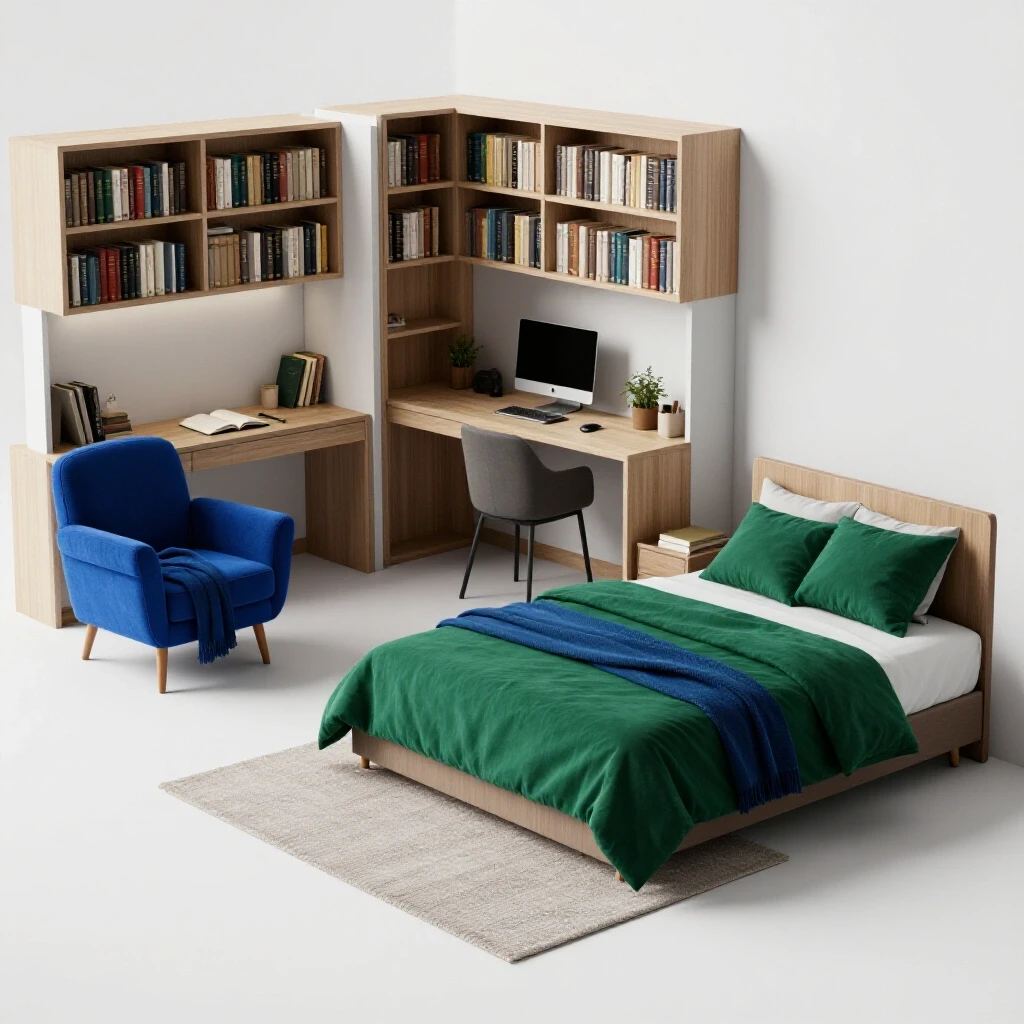
Furniture-based segmentation involves using large items like bookshelves, sofas, or consoles to act as non-permanent walls. This method creates visual and physical boundaries without the need for construction. It is a highly effective way to provide a sense of seclusion in shared living areas or multi-purpose rooms.
One of the most effective strategies I have used is the “Back-to-Back” method. In one of our smaller apartments, my home office had to be in the living room. Instead of facing the desk toward the TV, I placed the sofa in the middle of the room with its back to the desk. This created a mental shift. When I was at the desk, I couldn’t see the “relaxation zone,” and when I was on the sofa, the “work zone” disappeared from my line of sight.
You can also use open-backed shelving units to divide a space. These are excellent because they provide storage while allowing light to pass through, keeping the room from feeling small. In my experience, a shelf that stands 5 to 6 feet tall is the sweet spot. It is high enough to block the view of someone sitting on the other side but low enough to keep the ceiling feeling high.
Soft Barriers and Visual Screening Techniques
Visual screening uses lightweight materials like fabric, tall plants, or folding screens to block sightlines and dampen sound. These tools are flexible and can be moved as your needs change during the first few months of a move. They add a layer of softness to a room while providing a clear sense of individual space.
If you are dealing with a “fishbowl” feeling from large windows or an open floor plan, layered window treatments are your best friend. In our second move, we had a ground-floor unit with massive windows. We used a combination of sheer curtains for daytime light and heavier blackout curtains for evening seclusion. This simple small room furniture layout trick allowed us to control how much of the outside world we let in.
Vertical gardens or a row of tall potted plants (like snake plants or bamboo) can also act as a “living wall.” In a move to a house with an awkward “nook” in the hallway, I used three tall planters to shield a reading chair from the main traffic path. It didn’t stop the noise, but the visual barrier made the space feel private.
The First-Month Spatial Adjustment Timeline
The first month in a new home is a period of high-stakes adaptation where routines are either established or broken. Following a structured timeline allows you to test your layout and make changes before habits become set in stone. This phased approach reduces the pressure to have a “perfect” setup on day one.
Most people try to unpack everything in 48 hours. I have found that this leads to “clutter-blindness,” where you stop noticing that a box is in the way because you are too tired to move it. Instead, treat your layout as a living experiment.
- Week 1: The Essentials Audit. Focus on the “Big Three”: sleeping, eating, and hygiene. Set up the beds and the kitchen table. Keep hallways clear of boxes to maintain a sense of order.
- Week 2: The Traffic Test. Observe where people naturally congregate. Is the kids’ toy box blocking the path to the kitchen? Move it. This is when you start your new home adjustment guide notes.
- Week 3: Boundary Implementation. Now that you know the flow, use your furniture and screens to create your zones. Set up the “work from home” corner or the “quiet reading” spot.
- Week 4: Refinement. Swap out rugs or move lamps to finalize the “feel” of each zone. This is when the house starts to feel like yours.
Mapping Furniture to New Scales
Scale adjustment is the practice of ensuring your furniture’s physical size matches the volume of your new rooms. It requires measuring both the floor area and the “vertical volume” of a space to prevent pieces from looking either tiny or overwhelming. Proper scaling is essential for maintaining a balanced and functional environment.
When we moved cross-country, we went from a home with 10-foot ceilings to one with 8-foot ceilings. Our tall armoire suddenly looked like a giant in a dollhouse. To fix this, we had to focus on “visual weight.” If a room feels cramped, use furniture with legs (so you can see the floor underneath) and lighter colors.
For spatial layout adaptation, use the “60-30-10” rule for space. Roughly 60% of the room should be occupied by furniture and “living” areas, 30% should be clear for walking and “breathing room,” and 10% should be for decorative accents. If your furniture covers more than 70% of the floor, the room will feel stressful, regardless of how much you clean it.
Spatial Blueprint Compatibility Matrix
| Room Type | Primary Goal | Best Divider Method | Key Metric |
|---|---|---|---|
| Studio/Open Plan | Zone Separation | Double-sided Bookshelf | 60-inch height min |
| Shared Bedroom | Individual Space | Fabric Ceiling Track | 12-inch ceiling gap |
| Living/Office Combo | Work/Life Balance | Sofa Back / Console | 30-inch desk depth |
| Entry/Living | Mudroom Definition | Area Rug + Bench | 4×6 foot rug min |
Transitioning Routines and Neighborhood Integration
Building community in an unfamiliar neighborhood is a gradual process of establishing presence and seeking out local touchpoints. It involves moving your daily routines from inside the house to the surrounding streets and parks. This transition helps reduce the isolation often felt after a major relocation.
Your layout affects your community life more than you might think. If your “unwinding” routine involves sitting on a front porch or near a front window, you are more likely to meet neighbors. In our last move, I made it a point to set up our “morning coffee” spot near the front of the house. This led to more “wave-and-hello” moments with people walking their dogs than if I had stayed hidden in the back.
For neighborhood community building, I recommend the “Three-Node Rule.” Find three local places—a coffee shop, a park, and a grocery store—and visit them at the same time every week. This creates a sense of familiarity and routine that mimics the feeling of “belonging” long before you actually know everyone’s names.
Tools and Resources for Layout Planning
Managing a move requires a mix of digital precision and physical tracking. These resources help you maintain a bird’s-eye view of your transition, ensuring that no detail is lost in the chaos of packing and unpacking.
- Floor Plan Apps (MagicPlan or RoomScan Pro): These allow you to scan your new rooms with your phone camera to create instant 2D and 3D models.
- Digital Moving Trackers (Sortly): Use this to catalog what is in every box. When you need to find the “curtain tension rods” to set up a divider, you’ll know exactly which box to open.
- Physical Layout Templates: Cut out paper shapes representing your furniture at a 1:12 scale (1 inch = 1 foot) and move them around on a printed floor plan.
- Blue Painter’s Tape: This is my favorite tool. Tape out the footprint of your furniture on the floor of the new house before you move the actual pieces. It helps you feel the “clearance margins” in real life.
Lessons from Four Family Relocations
I have moved four times in 19 years, and each move taught me something different about the importance of personal space. My first move was as a single person in a 500-square-foot studio. I learned that a rug is not just a decoration; it is a boundary. A rug under a bed tells your brain, “This is the bedroom,” even if the kitchen is five feet away.
My most recent move involved a cross-country transition with two kids. We moved into a house that was smaller than our previous one. We had to be ruthless with our home moving checklist. We measured every closet and every corner. We realized that by using a tall dresser as a divider in the kids’ shared room, we gave them each a “wall” they could call their own. It wasn’t about the square footage; it was about the “spatial sovereignty.”
Practical Next Steps for Your Move
Transitioning into a new home is a marathon, not a sprint. To avoid burnout and spatial frustration, focus on these immediate actions:
- Measure your “must-have” furniture today. Do not guess. Write down the length, width, and height.
- Identify your “Quiet Zone.” Even in a busy household, everyone needs one corner that is theirs. Use a chair, a lamp, and a small rug to claim it.
- Use the “One-Box-A-Day” rule. After the initial essentials are unpacked, commit to unpacking and organizing just one box per day. This prevents the “sea of cardboard” from becoming a permanent part of your layout.
- Walk the neighborhood daily. Spend 15 minutes outside. It breaks the isolation of the unpacking process and helps you feel like a local.
Frequently Asked Questions
How do I create a separate office space in a living room without building walls? Use the “back-to-the-room” strategy. Place your desk facing a wall or window and put a sofa or a row of tall plants behind your chair. This creates a physical barrier that signals to others (and your own brain) that you are in a different “zone.” Using a dedicated area rug for the desk area also helps visually define the workspace.
What are the best non-permanent ways to divide a shared bedroom for kids? Tension rods with heavy floor-to-ceiling curtains are the most flexible option. They provide visual privacy and some sound dampening. Alternatively, placing two identical tall bookshelves back-to-back in the center of the room creates a solid “wall” that provides storage for both children while clearly marking their individual territories.
How much space should I leave for walkways in a small apartment? You should aim for a minimum of 30 inches for secondary walkways and 36 inches for main paths. In very tight spaces, you can drop to 24 inches, but this will feel cramped and may make moving through the home difficult, especially when carrying groceries or laundry.
How can I make an open-plan “great room” feel more cozy and less exposed? Break the room into smaller functional “islands.” Use large area rugs to anchor each group of furniture (e.g., one rug for the seating area, one for the dining area). Avoid pushing all furniture against the walls; bringing pieces toward the center of the rugs creates more intimate conversation zones and reduces the “gymnasium” feel.
What is the best way to handle window privacy in a ground-floor home? Top-down, bottom-up shades are highly effective. They allow you to cover the bottom half of the window for privacy from the street while leaving the top half open to let in natural light and views of the sky. Layering these with sheer curtains adds an extra level of daytime screening without making the room dark.
How do I know if my old furniture will fit in the new house before I move? Use blue painter’s tape to outline the dimensions of your largest pieces on the floor of the new space. This “ghost layout” allows you to walk through the rooms and check for clearance margins (the 30–36 inch rule) before the moving truck arrives. If the tape shows that a path is blocked, you know you need to sell or store that piece.
How can I use lighting to create boundaries in a shared space? Lighting creates “pools” of focus. Use a pendant light over a dining table and a dedicated floor lamp next to a reading chair. By keeping the “overhead” lights off and using localized task lighting, you can make the rest of the room fade into the background, effectively “shrinking” the space to just the area you are using.
What should I prioritize unpacking first to help with the transition? Beyond the basic kitchen and bathroom needs, prioritize the “relaxation anchor.” For some, this is the bed; for others, it’s the sofa and TV. Having one completely set-up, box-free area to retreat to at the end of a long day of moving significantly reduces the emotional stress of the transition.
(This article was written by one of our staff writers, Kevin Thompson. Visit our Meet the Team page to learn more about the author and their expertise.)