How to Solve the ‘Nothing Fits’ Problem in New Spaces (Guide)

There is a common myth that moving into a new home requires a complete overhaul of your furniture or a massive budget for custom organizational systems. Many people believe that if their old sofa or dining table doesn’t look right in the first few days, they have made a mistake in their move. In my 19 years of navigating four different family relocations, I have found that the opposite is true. Success in a new space isn’t about buying your way out of a cramped layout; it is about the disciplined auditing of your physical items and a willingness to test how they interact with a new floor plan over time.

Auditing Your Spatial Footprint Before the Moving Truck Arrives
A spatial audit is the process of measuring your current furniture’s physical dimensions and comparing them against the floor plan of your next residence. It helps identify which pieces will obstruct walkways or overwhelm a room’s volume before you pay to move them. This step prevents the physical and financial stress of transporting items that simply cannot function in the new environment.
When I prepared for my move from a wide suburban ranch to a narrow two-story home, I realized my oversized sectional was six inches too long for the only available living room wall. By conducting a spatial layout adaptation early, I decided to sell the sectional and replace it with a smaller sofa and two chairs. This allowed for a 36-inch clearance in the main walking path, which is the standard ergonomic recommendation for comfortable movement. If I hadn’t measured the “footprint” of my life beforehand, the moving day would have ended in a blocked hallway and high frustration.
To perform a manual audit, you only need a 25-foot metal tape measure and a notepad. Measure the length, width, and height of every major piece of furniture. Next, obtain the dimensions of your new rooms. Pay close attention to the “swing” of doors and the location of floor vents or radiators. These fixed elements often dictate where furniture can actually sit, regardless of what looks best in a photo.
Why Blind Furniture Placement Fails in New Environments
Blind placement occurs when items are moved into a room without a predetermined plan for traffic flow or functional zones. This often results in blocked outlets, covered vents, and cramped walkways that make a new house feel disorganized and stressful. It ignores the “circulation paths” that dictate how you move from the kitchen to the sofa or from the bed to the bathroom.
In my second move, we tried to “wing it” by letting the movers place boxes and furniture wherever there was open floor space. Within 48 hours, we realized we couldn’t open the refrigerator fully because the dining table was three inches too close. This is a classic example of failing to account for functional margins. According to housing adaptation research, a minimum of 30 to 36 inches is required for major traffic lanes, while 18 to 24 inches is necessary between a coffee table and a sofa for legroom.
To avoid this, I recommend the “Tape and Floor” method. Before the furniture arrives, use blue painter’s tape to outline the dimensions of your largest pieces on the floor of the new home. This physical representation allows you to walk through the room and feel the scale. If you find yourself bumping into the “tape sofa” while trying to reach the window, you know you need to adjust the layout before any heavy lifting occurs.
Spatial Blueprint Compatibility Matrix
| Furniture Item | Standard Footprint | Required Clearance Margin | Common Conflict Point |
|---|---|---|---|
| King Size Bed | 76″ x 80″ | 30″ on both sides | Blocks closet doors or heaters |
| Dining Table (6-seat) | 36″ x 72″ | 24″ behind chairs | Restricts path to kitchen |
| Large Dresser | 18″ – 22″ deep | 36″ for drawer extension | Prevents bedroom door from opening |
| Sofa / Couch | 35″ – 40″ deep | 18″ to coffee table | Overlaps with fireplace hearth |
| Desk / Workspace | 24″ – 30″ deep | 42″ for chair pull-out | Blocks natural light from windows |
Solving the Awkward Room Puzzle Through Scale and Proportion
Scale and proportion refer to how furniture size relates to the total volume of a room and the other objects within it. When a room feels “off,” it is usually because the visual weight of the furniture is unevenly distributed or the pieces are too large for the ceiling height and floor area. Mastering this balance is essential for making smaller or oddly shaped rooms feel intentional rather than cluttered.
During one of our mid-career moves, we encountered a long, narrow “railroad” style living room. My instinct was to push all the furniture against the walls to save space. However, this created a “bowling alley” effect that felt cold and unusable. I applied a functional zoning strategy by splitting the room into two distinct areas: a conversation circle at one end and a small reading nook at the other. By pulling the sofa away from the wall by just 12 inches, the room suddenly felt wider and more balanced.
For those dealing with small room furniture layout challenges, remember that “visual weight” matters. A heavy, dark wood coffee table can make a small room feel crowded, whereas a table with thin metal legs or a glass top allows the eye to see the floor, creating an illusion of more space. If you are moving into a home with lower ceilings, consider lower-profile furniture to increase the “vertical volume” of the room.
Functional Zoning for Daily Routines
Functional zoning is the practice of dividing a single room into specific areas dedicated to different activities, such as working, eating, or relaxing. This is particularly useful in open-concept homes or multi-purpose rooms where a lack of physical walls can lead to a chaotic environment. By creating “invisible borders” with furniture placement, you establish a sense of order that supports your daily habits.
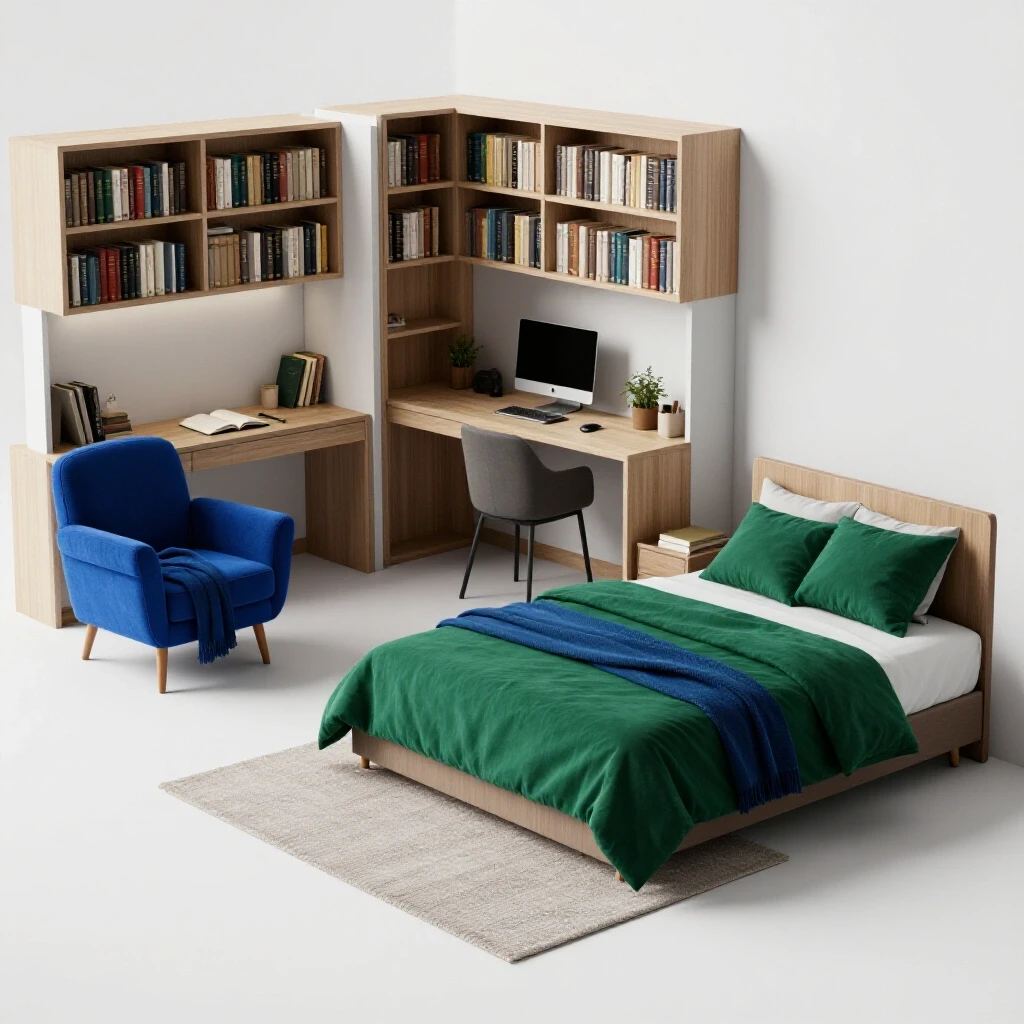
When my family moved into a house that lacked a dedicated office, I had to create a workspace in the corner of the guest bedroom. I used a small rug to “zone” the desk area away from the bed. This simple physical boundary helped my brain switch from “sleep mode” to “work mode.” Research into home environment transitions suggests that clearly defined zones reduce cognitive load and help family members respect each other’s space during the day.
- Entryway Zone: Dedicate a 4-foot area near the door for shoes and keys to prevent “clutter creep.”
- Rest Zone: Keep electronic devices and work-related items at least 6 feet away from the bed.
- Play Zone: Use a specific rug or a low shelf to contain toys to one corner of a living area.
- Dining Zone: Ensure there is at least 36 inches between the table edge and the nearest wall for easy movement.
The First-Month Spatial Adjustment Timeline
A spatial adjustment timeline is a structured four-week plan for testing and refining your home layout after the initial move-in. It acknowledges that the first way you set up a room is rarely the best way, and it provides a schedule for making incremental changes based on how you actually use the space. This period of “living in” the house is the most important part of home transition planning.
In my 19 years of experience, I have never seen a layout that didn’t need a tweak after the first week. In our third move, we initially placed the trash can under the sink, as we always had. But the new kitchen layout meant the sink was in a high-traffic “pinch point.” Every time someone threw something away, they blocked the stove. By week two, we moved the bin to the end of the island, and the kitchen flow improved immediately.
| Week | Phase | Focus Task |
|---|---|---|
| Week 1 | Essential Function | Unpack kitchen, beds, and bathroom; prioritize “pathway” clearing. |
| Week 2 | Traffic Testing | Observe where people “clump” or bump into furniture; move items 6-12 inches. |
| Week 3 | Storage Refinement | Adjust shelf heights and closet layouts based on what you reach for most. |
| Week 4 | Final Anchoring | Secure heavy furniture to walls and place rugs once the layout is set. |
Why Circulation Paths Dictate Your Comfort
Circulation paths are the “highways” of your home—the routes you take most frequently between rooms. If these paths are zigzagged or narrow, the house will feel smaller and more stressful than it actually is. Maintaining clear, straight-line paths of at least 32 to 36 inches is the most effective way to make a new environment feel spacious and functional.
I once moved into a home where the previous owners had placed a large armchair directly in the path from the front door to the stairs. It looked beautiful in photos, but in practice, every family member had to turn sideways to pass it. We moved that chair into a corner and replaced it with a narrow 12-inch console table. The change in “felt space” was dramatic. We went from feeling trapped to feeling like the house had opened up, simply by respecting the natural flow of movement.
Box Inventory Packing Log for Smooth Transitions
A box inventory log is a manual record that links a numbered box to a specific room and a priority level. This system ensures that high-priority items—like the coffee maker, basic tools, and bed linens—are the first things you find when you arrive at the new house. It eliminates the “hidden box” syndrome where essential items remain buried under stacks of non-essentials for weeks.
- Box #001 (Priority: High): Coffee maker, 4 mugs, paper plates, dish soap, 1 pot.
- Box #002 (Priority: High): Bed sheets, pillows, shower curtain, 2 towels per person.
- Box #003 (Priority: Medium): Basic tool kit (tape measure, screwdriver, hammer, blue tape).
- Box #004 (Priority: Low): Seasonal decor, books, extra linens.
Neighborhood Community Building and Social Integration
Neighborhood integration is the intentional process of establishing social connections and familiarizing yourself with the local geography and resources of your new area. It involves moving beyond the walls of your home to build a support network, which is vital for reducing the feeling of isolation that often follows a move. This is just as important as furniture placement for a successful transition.
After our cross-country move, we felt like strangers in our own zip code. I made it a rule to spend 30 minutes every evening sitting on the front porch or walking the dog at the same time. This consistency led to “micro-interactions” with neighbors. Within a month, we knew who had the best lawnmower and which local park was the safest for the kids. Building community isn’t about grand gestures; it’s about being visible and approachable in your new surroundings.
Practical Furniture Clearance and Scale Guidelines
These metrics are derived from standard ergonomics and housing studies to ensure that your home remains functional and safe. Adhering to these measurements prevents the “overcrowding” that occurs when we try to force too much furniture into a limited square footage.
- Hallway Width: Maintain a minimum of 36 inches for two people to pass or for moving laundry baskets.
- Dining Room: Allow 24 inches of space behind a chair when someone is seated so others can walk behind them.
- Bedroom: Ensure there is at least 30 inches between the side of the bed and the wall or dresser to allow for easy bed-making.
- Living Room: The distance between the television and the sofa should be roughly 1.5 to 2.5 times the diagonal screen size.
- Kitchen Work Triangle: The total distance between the sink, stove, and refrigerator should be between 12 and 26 feet for maximum efficiency.
Essential Toolkit for Layout Adaptation
You do not need expensive software to plan a home. These simple, physical tools are what I have used for nearly two decades to manage my own moves.
- 25-Foot Metal Tape Measure: For measuring rooms and furniture with precision.
- Roll of Blue Painter’s Tape: For “drawing” furniture footprints on the floor without damaging the finish.
- Graph Paper (1/4 inch scale): For sketching room layouts where 1 square equals 1 foot.
- Multi-Bit Screwdriver and Hex Key Set: For disassembling and reassembling furniture to fit through narrow doorways.
- Heavy-Duty Furniture Sliders: For moving heavy pieces easily as you test different layout configurations.
Conclusion: Embracing the Gradual Transition
Moving into a new home is a marathon, not a sprint. The stress of things “not fitting” is often just a sign that the space hasn’t been properly audited or zoned yet. By using manual measurements, testing traffic paths with tape, and allowing yourself a month to adjust your routines, you can turn an awkward floor plan into a functional home. I have learned through 19 years of trial and error that the most comfortable homes aren’t the ones with the newest furniture, but the ones where the layout respects the way the family actually lives. Take it one room at a time, keep your tape measure handy, and remember that a house only becomes a home once you’ve figured out how to move through it with ease.
Frequently Asked Questions
What should I do if my sofa is too big for the new living room? First, check if the sofa can be disassembled. Many modern sofas have removable legs or can be split into sections. If it still blocks a primary walkway (less than 30 inches of clearance), consider “floating” it in the center of the room rather than pushing it against a wall. If it still obstructs movement, it may be better to sell it and find a piece that fits the scale of the new room.
How do I measure a room if I don’t have the official floor plan? Use a metal tape measure to record the length and width of each wall. Note the location of windows, doors, and outlets. Be sure to measure the “casing” or trim around doors, as this can take up 2-4 inches of wall space. Sketch this on graph paper using a 1-inch to 1-foot scale for a manual layout guide.
What is the most common mistake people make when arranging furniture in a new home? The most common mistake is pushing all furniture against the walls. This often creates a large, empty, and unusable space in the center of the room while making the walls feel cluttered. Creating “zones” by pulling furniture away from the walls can make a room feel more intimate and functional.
How much space do I really need for a home office? A functional home office requires a minimum area of about 4 feet by 5 feet. This allows for a standard 48-inch desk and 42 inches of “pull-out” space for an office chair. If you are tight on space, consider a “cloffice” (closet office) by removing closet doors and installing a desk surface.
How can I make a small, dark room feel larger without renovating? Use furniture with “legs” rather than pieces that sit flat on the floor; seeing the floor underneath furniture creates a sense of openness. Additionally, ensure you aren’t blocking natural light from windows. Keep your walkways clear (at least 32 inches) to prevent the room from feeling “trapped.”
What are the “essential” boxes I should unpack first? Focus on the “First Night” boxes: bedding, basic toiletries, a change of clothes, and basic kitchen items (coffee maker, a few plates, and a pot). Having a functional place to sleep, bathe, and eat breakfast the next morning reduces the immediate stress of the move significantly.
How do I handle “dead corners” in an awkward layout? Dead corners can be utilized for secondary functions. A small corner can hold a floor lamp and a single chair for a reading nook, or a tall, narrow bookshelf. If the corner is near an entryway, it can serve as a “drop zone” for umbrellas and bags.
Is it okay to leave some boxes unpacked for a while? Yes. In fact, it is often better to leave non-essential boxes (like seasonal decor or extra books) packed until you have finalized your main furniture layout. This keeps the floor clear so you can test traffic paths and functional zones without tripping over clutter.
How do I integrate into a neighborhood if I’m an introvert? Start with small, low-pressure actions. Wave to neighbors when you get the mail or spend time in your front yard or on your porch. These “passive” social signals show that you are part of the community. Over time, these lead to natural conversations without the pressure of a formal “meet and greet.”
What is the “36-inch rule” in home planning? The 36-inch rule suggests that all major traffic paths (hallways, paths between rooms, and the space in front of major appliances) should be at least 36 inches wide. This ensures that the home remains accessible and easy to navigate for all family members, including those carrying groceries or laundry.
(This article was written by one of our staff writers, Kevin Thompson. Visit our Meet the Team page to learn more about the author and their expertise.)