How to Measure Sofa Depth for Comfort (Step-by-Step Guide)

Finding the right seating depth can transform a living room from a stiff, formal space into a sanctuary where your family actually wants to spend time. When you understand how seat measurements interact with your body, you stop buying furniture based on looks alone and start investing in long-term physical well-being.
During my 15 years as a retail merchandising manager, I watched thousands of customers sit on hundreds of different sofas. I noticed a recurring pattern: people would fall in love with a fabric or a silhouette, sit for three seconds, and declare it “perfect.” Six months later, those same people would return, complaining of lower back pain or the inability to get out of the seat comfortably. They had prioritized the initial aesthetic over the fundamental ergonomics of seat depth. In my own homes, from small city apartments to larger family layouts, I have applied a more rigorous evaluation process. I have learned that the distance from the front of the seat to the back cushion is the single most important factor in whether a piece of furniture remains functional after three years of daily use.
The Relationship Between Seat Depth and Human Ergonomics
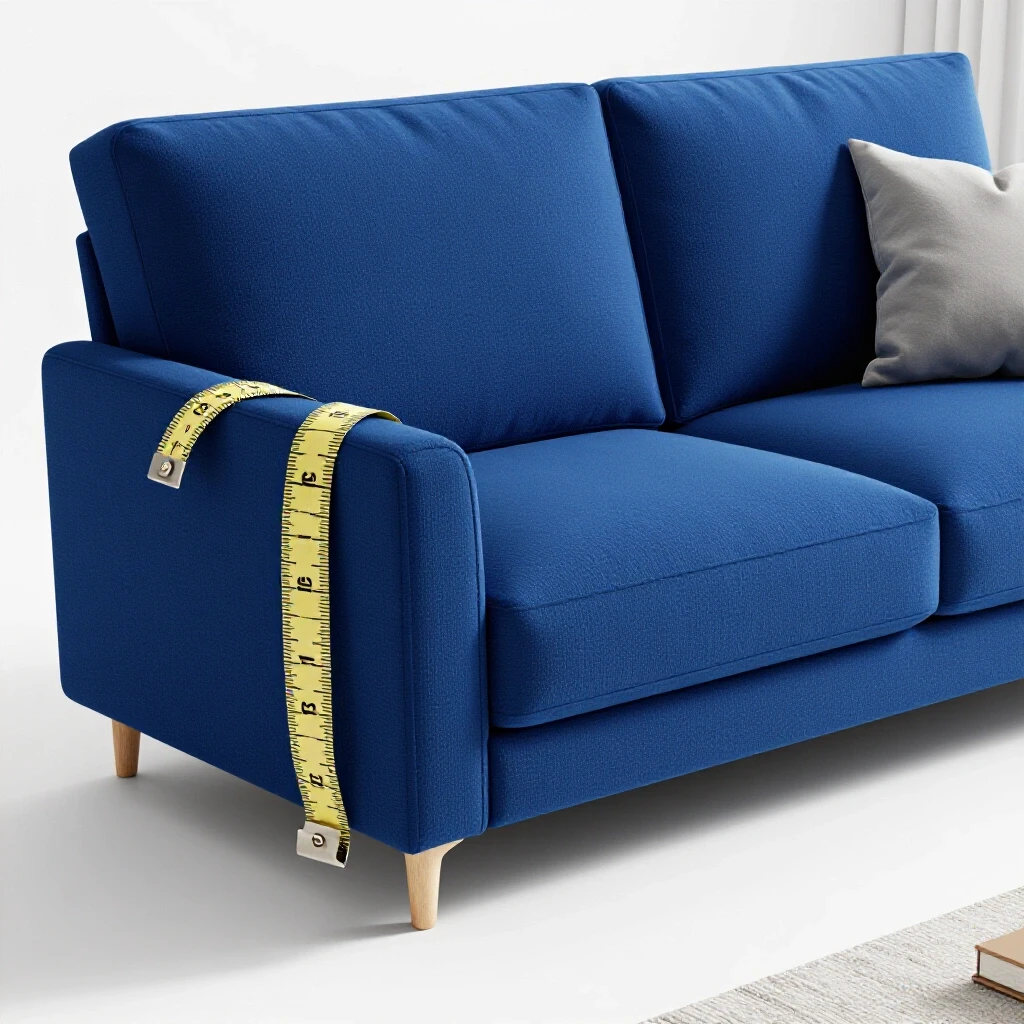
Seating depth refers to the measurable distance between the front edge of the seat cushion and the point where it meets the backrest. This dimension determines how much of your upper leg is supported and where your spine aligns relative to the sofa’s structure.
Understanding this measurement is vital because it directly impacts your posture and circulatory health. If a seat is too deep, the edge of the cushion presses against the back of your knees, often causing you to slump forward to find floor contact. Conversely, a seat that is too shallow leaves the thighs unsupported, placing excessive pressure on the sit-bones and lower back. Environmental psychology studies suggest that when a seat does not match a user’s physical proportions, they experience increased restlessness and decreased “dwell time” in a room. For a family room to be truly functional, the seating must accommodate the varied heights of all residents.
Evaluating Comfort Through Multi-User Feedback Loops
A reliable evaluation of comfort requires more than a single person sitting down once; it involves observing how different body types interact with the furniture over extended periods. We can achieve this by using a diverse group of “testers” to identify where a specific depth fails or succeeds.
In my experience, a seat that feels like a “cloud” to a six-foot-tall person often feels like a “trap” to someone who is five-foot-two. To get real-world results, we must measure how much space remains between the back of the knee and the cushion edge for various heights. A gap of roughly two to three inches is generally considered the standard for upright, ergonomic support. When we tested various depths in a home setting, we found that “active sitting”—such as having coffee or talking—requires a much shallower depth than “passive lounging” like watching a movie.
The Impact of User Height on Depth Satisfaction
| User Height | Ideal Seat Depth (Upright) | Ideal Seat Depth (Lounging) |
|---|---|---|
| Under 5’4″ | 20 – 21 inches | 23 – 24 inches |
| 5’5″ – 5’10” | 21 – 22 inches | 24 – 25 inches |
| 5’11” – 6’2″ | 22 – 23 inches | 25 – 27 inches |
| Over 6’2″ | 23 – 24 inches | 28+ inches |
This data shows that a “one size fits all” approach rarely works for family furniture. If your household has a wide range of heights, the best decorating decision is often to choose a medium depth and use weighted throw pillows to adjust the support for shorter individuals.
The Compression Factor: Why Cushion Material Changes Perceived Depth
Cushion compression is the degree to which a seat sinks when a person sits down, which effectively changes the angle of the hips and the reachable depth of the backrest. A measurement on a spec sheet rarely accounts for how much you will “bottom out” or “float” on the surface.
When we evaluated various filling types, we found that high-resiliency foam provides a consistent depth because it resists deep compression. In contrast, down-wrapped or fiber-fill cushions allow the body to sink backward and downward. This sinking action effectively increases the seat depth by two or more inches once you are settled. For long-term livability, it is essential to account for this “settling” effect. If you prefer a soft, deep-sink cushion, you may actually need a shorter frame depth to prevent your feet from dangling once the cushion compresses.
Comparing Cushion Types and Depth Stability
- High-Density Foam: Offers the most stable depth; what you measure is what you feel.
- Down-Wrapped Foam: Provides a soft initial feel but can increase perceived depth as you sink.
- Pure Down/Fiber: These require the most “depth management” as they lose shape and depth consistency over hours of use.
- Innerspring Cushions: These maintain a very consistent height and depth, similar to a mattress, making them ideal for those with mobility issues.
Spatial Planning and the Footprint of Deep Seating
The depth of your seating does not just affect your back; it dictates the entire flow of your room layout. Deep seating requires a larger “spatial budget,” which can quickly lead to cluttered or awkward pathways if not calculated correctly.
A sofa with a 24-inch interior seat depth often has a total exterior depth of 40 to 42 inches once you include the back frame and tilt. In a standard living room, you must maintain a walking pathway of at least 30 to 36 inches behind or in front of the furniture. If you choose an extra-deep “movie night” style sofa, you might find yourself forced to push it against a wall, which can stifle the room’s visual balance. I have seen many homeowners buy deep sectionals only to realize they can no longer fit a coffee table within a comfortable reaching distance of 14 to 18 inches.
Standard Clearance Guidelines for Seating Layouts
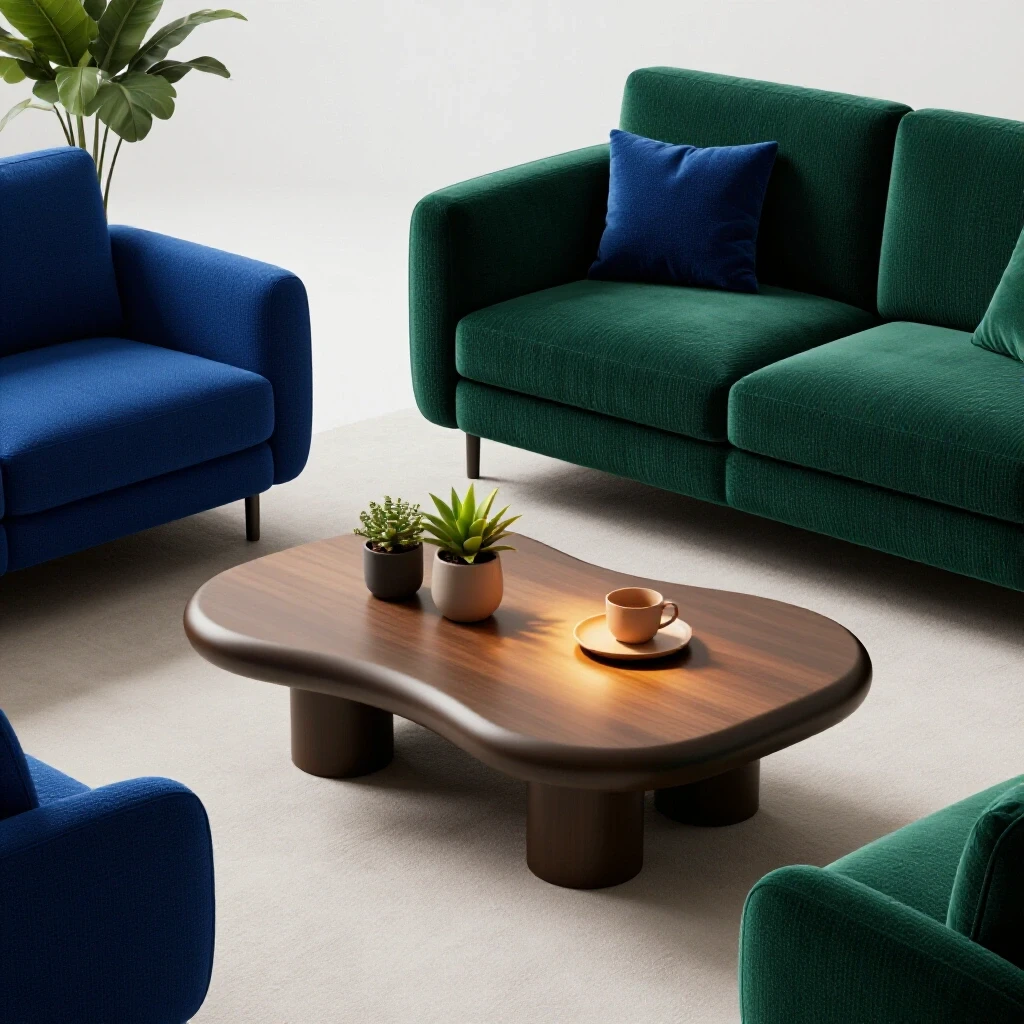
- Sofa to Coffee Table: 14 – 18 inches (allows for legroom while keeping items reachable).
- Major Traffic Path: 36 inches (allows two people to pass or one person to move comfortably).
- Minor Traffic Path: 24 – 30 inches (sufficient for moving between chairs or side tables).
- Seat Height to Table Height Ratio: The coffee table should be within 1-2 inches of the seat cushion height for ergonomic ease.
Posture and the Psychology of Relaxation
The way we sit influences our mood and our social interactions, a concept often explored in environmental psychology. Seat depth is the primary driver of these sitting “modes.”
A shallow seat depth of 20 to 22 inches encourages an upright posture, which is better for conversation and formal hosting. It keeps the spine in a neutral position and makes it easy to stand up. A deep seat of 24 to 27 inches signals to the brain that it is time to “offload” weight. While this is excellent for decompression after work, it can make social interaction feel more sluggish. In my years of analyzing home layouts, I have found that rooms used for both hosting and relaxing benefit from a “hybrid” approach: a standard-depth sofa paired with deep-seated accent chairs, or vice versa.
How to Conduct a Home Sit-Test Before Buying
You do not need a laboratory to determine what works for your family. You can use your current furniture as a baseline to gather data on what feels comfortable for long-term use.
- Measure your current “favorite” seat: Find the chair or sofa spot everyone fights over. Measure the interior depth from the back cushion to the front edge.
- Identify the “Aching Point”: Sit in your current furniture for 30 minutes. Note if you feel the need to tuck your legs under you (often a sign the seat is too deep) or if you feel like you are sliding off (a sign it is too shallow).
- Use a “Depth Simulator”: If you are considering a deeper sofa, pull your current sofa away from the wall and place firm pillows behind you to shorten the depth, or remove the back cushions to increase it.
- Check the 90-Degree Rule: When sitting back against the frame, your knees should be at a 90-degree angle with your feet flat on the floor. If your heels lift, the seat is too high or too deep.
- Test the “Exit Strategy”: See how much effort it takes to stand up. If you have to “rock” three times to get momentum, the depth and cushion softness are likely working against your body’s mechanics.
Long-Term Livability and the “Day 1,000” Audit
When we look at furniture through the lens of a “Day 1,000” perspective, we see how initial comfort can degrade. A deep, soft sofa might feel like a dream in the showroom, but after three years, the frame and cushions may settle, making that depth feel even more pronounced.
For durable home decor, look for frames with kiln-dried hardwoods and sinuous springs that hold the cushions at a consistent angle. If the seat depth is too great, the fabric on the cushions will often stretch and “puddle” over time because users are constantly shifting to find a comfortable spot. A well-fitted seat depth keeps the user centered on the support system, which actually extends the life of the upholstery and the internal foam.
Actionable Metrics for Your Next Purchase
To ensure your decorating decisions balance visual appeal with multi-year livability, keep these specific metrics in mind while shopping or planning your layout.
- The 2-Inch Rule: Ensure there are at least 2 inches between the edge of the seat and the back of your calf.
- Standard Depth Range: 21 to 23 inches is the “safe zone” for most adults between 5’4″ and 5’11”.
- The Lounger’s Depth: 24 to 26 inches is ideal if you primarily sit with your legs tucked up or use an ottoman.
- Seat Height Correlation: A deeper seat should generally be lower to the ground (15-17 inches) to allow for a reclined posture, while a shallower seat can be higher (18-20 inches).
- Total Exterior Depth: Always allow for 38-40 inches of floor space for a standard sofa and 42-45 inches for deep-seated models.
Summary of Real-World Comfort Results
Our evaluation shows that seat depth is not a matter of “more is better.” Instead, it is a precise calculation of body proportions, cushion physics, and room flow. A seat that is too deep becomes a storage bin for pillows you have to move every time you sit down. A seat that is too shallow becomes a formal bench that no one uses during a movie marathon. By measuring your family’s height and observing your sitting habits, you can choose a depth that supports your lifestyle for years to come.
Frequently Asked Questions
What is the most common mistake people make when choosing a sofa depth? The most frequent error is testing a sofa for only a few seconds in a showroom. People often choose “extra deep” because it feels luxurious initially, but they fail to consider how difficult it is to sit upright for a conversation or to get out of the seat. They also often forget to measure how that extra depth will eat into their walking paths at home.
How can I make a deep sofa more comfortable for a shorter person? The most practical solution is using “lumbar” or “kidney” pillows. These are long, narrow pillows placed at the base of the backrest. They effectively shorten the interior seat depth by 2 to 4 inches, allowing a shorter person’s feet to touch the floor while still providing back support.
Does seat depth affect how long the cushions will last? Yes. If a seat is too deep for the user, they tend to sit on the very edge of the cushion to keep their feet on the floor. This puts uneven pressure on the front “nose” of the cushion, causing it to break down and lose its shape much faster than if the user sat back fully against the frame.
Is there a “standard” depth that works for most families? A depth of 22 inches is often cited as the “golden mean.” It is deep enough for a slight lean-back during relaxation but shallow enough that most adults can sit with their feet on the floor. It also fits well in average-sized rooms without dominating the floor plan.
How do I know if my current sofa is too shallow? If you feel like your thighs are “hanging off” the edge or if you find yourself constantly sliding your hips forward to get more support under your legs, the seat is likely too shallow. You may also notice tension in your lower back because your weight isn’t being distributed across the full length of your upper legs.
Does the height of the seat change how the depth feels? Absolutely. A high seat (19-20 inches) with a deep interior (25 inches) is very difficult for anyone under six feet tall to use comfortably. Generally, as seat depth increases, seat height should slightly decrease to keep the body’s center of gravity stable and comfortable.
Should I get a deep sofa if I have a small living room? It is usually discouraged unless the sofa is the only piece of furniture in the room. Deep sofas have a larger “visual weight” and physical footprint. In a small space, a deep sofa can make the room feel cramped and reduce the clearance paths to less than the recommended 30 inches, making the room feel cluttered.
How does cushion firmness impact the depth I should choose? If you choose very soft cushions (like down), you should opt for a slightly shallower frame depth. Because you will sink into the back and bottom cushions, you will “lose” about 2 inches of reachable space. If you choose firm, high-density foam, the measured depth will be exactly what you experience.
Can I use an ottoman to fix a sofa that is too shallow? Yes, an ottoman is an excellent “depth extender.” It allows you to stretch your legs out, effectively turning a shallow, formal sofa into a chaise lounge. This is a great strategy for multi-functional rooms where you need formal seating for guests but want to lounge during the evening.
What is the “popliteal height” and why does it matter? Popliteal height is the distance from the underside of your foot to the crease behind your knee. This measurement dictates both the ideal seat height and depth. If the seat depth exceeds your thigh length, the edge of the seat will rub against the popliteal tendon, which can restrict circulation and cause discomfort over time.
(This article was written by one of our staff writers, James Whitaker. Visit our Meet the Team page to learn more about the author and their expertise.)