Kids’ Room Organization That Lasts: What Works Long-Term (Guide)

As the seasons shift and we move from the outdoor chaos of summer into the structured rhythm of the school year, the state of our children’s personal spaces often comes into sharp focus. For many parents, this transition reveals a frustrating cycle: we spend an entire weekend purging toys and folding clothes, only to find the floor invisible again by Tuesday. My own journey into the logistics of home management began exactly this way, standing in the doorway of a cluttered bedroom feeling the weight of mental fatigue.
With 11 years of experience in operations and logistics, I realized that my family’s struggle wasn’t a lack of effort. It was a design flaw. Most storage systems are built for how things look, not how humans—especially small ones—actually move through a space. By applying spatial management principles to our home, I moved away from “perfect” looking rooms and toward systems that could actually survive the reality of daily life for more than a few days.
Why Traditional Bedroom Storage Often Fails After a Few Weeks
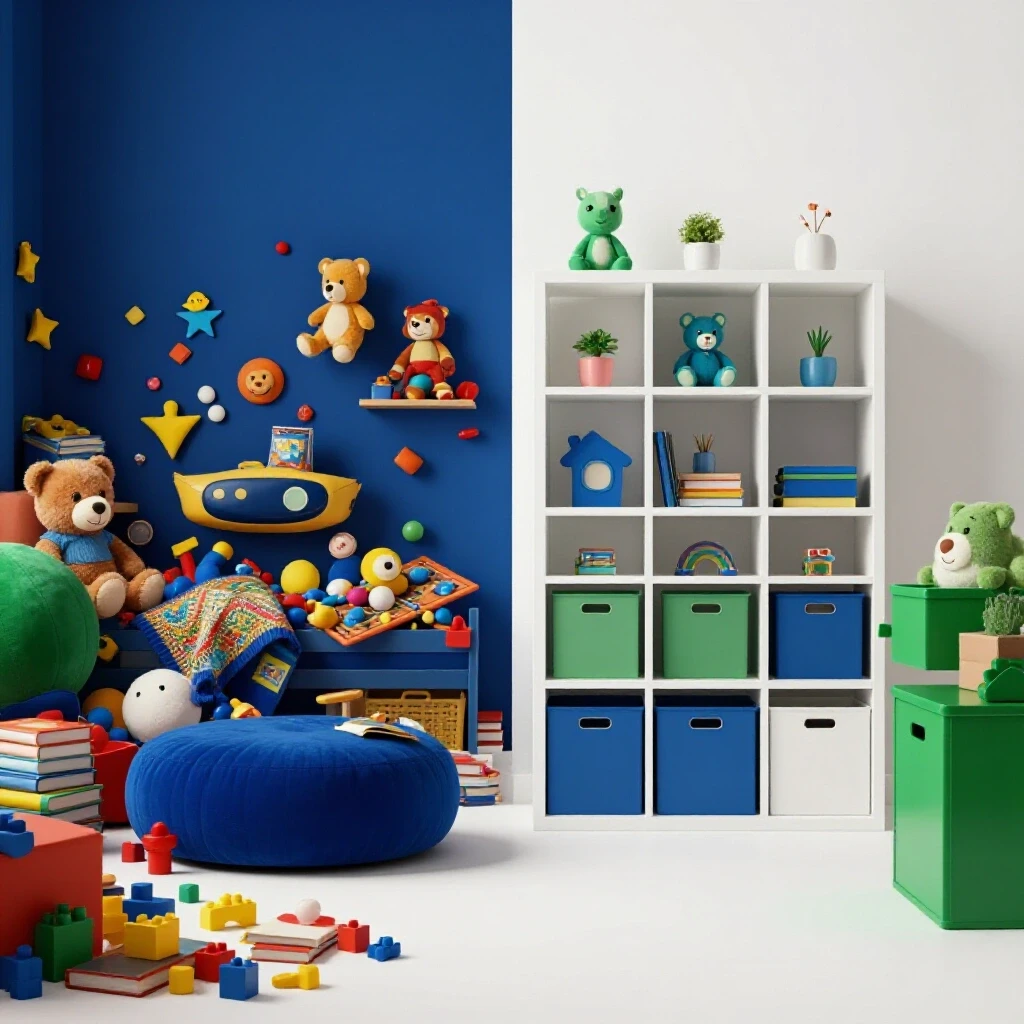
This section explores the disconnect between high-effort organization and the actual behavioral patterns of children, focusing on why complex systems lead to rapid clutter reversion.
In my professional background, we talk about “retrieval friction.” This is the amount of effort required to get an item out or put it away. If a child has to move two other boxes and unlatch a lid to put away a single action figure, the system will fail. Research in environmental psychology suggests that visual clutter can increase cortisol levels in both adults and children. When a system is too hard to maintain, the clutter returns, and the cycle of stress continues.
Interestingly, many parents fall into the trap of “micro-sorting.” This is the practice of creating very specific categories, like separating building blocks by color. While this looks great on social media, it creates massive cognitive load. For a system to last a full year, it must accommodate “macro-sorting,” where broad categories allow for quick, low-effort cleanup.
Applying Logistics Principles to Child-Centric Spaces
This involves using professional supply chain concepts like “flow rates” and “point-of-use storage” to create a room layout that effectively manages itself.
In a warehouse, the most frequently used items are placed at waist height in easy-to-reach bins. We can apply this to a bedroom by analyzing “spatial capacity limits.” Every shelf and bin has a maximum volume it can hold before it becomes dysfunctional. I recommend keeping most containers at 70% capacity. This allows for easy “searching” without items spilling onto the floor.
Building on this, we must manage the “inflow and outflow” of the room. Clutter is often just a backlog of items that no longer have a purpose but haven’t been moved out. By setting a physical boundary—such as a specific “outbox” for outgrown clothes—we create a clear logistical path for items to leave the room.
Table: Storage Friction Index by Bin Type
| Container Type | Friction Level | Retrieval Steps | Best Use Case |
|---|---|---|---|
| Open Top Basket | Low | 1 (Drop-in) | Daily toys, stuffed animals |
| Clear Bin (No Lid) | Low | 1 (Drop-in) | Art supplies, building blocks |
| Lidded Latch Box | Medium | 3 (Unlatch, Lift, Place) | Long-term keepsakes |
| Color-Coded Micro-Bins | High | 5+ (Sort, Match, Place) | Not recommended for daily use |
| Under-Bed Drawers | Medium | 2 (Pull, Drop) | Off-season clothing |
The Sorting Framework: Reducing Decision Fatigue
A logical method for categorizing belongings that minimizes the mental energy required for both parents and children during the cleanup process.
Decision fatigue is a real logistical bottleneck. When a child looks at a pile of mixed items, their brain has to make a choice for every single piece. To combat this, I implemented a “three-second rule” in our home. If you can’t tell exactly where an item goes within three seconds, the category is too specific.
In my own family’s redesign, we moved to broad, functional categories. Instead of “Cars,” “Trucks,” and “Planes,” we simply have “Things with Wheels.” This reduction in sorting complexity cut our daily cleanup time from 20 minutes down to roughly 6 minutes. By lowering the “sorting speed” requirements, the kids were able to take ownership of the process without feeling overwhelmed.
Mapping High-Efficiency Zones for Daily Use
This strategy involves dividing the room into specific “workstations” based on the frequency of activity and the physical reach of the child.
Spatial ergonomics teaches us that the most valuable real estate is between a child’s knees and their shoulders. Items placed here are used most often. We call this “Zone 1.” Items used once a week go in “Zone 2” (lower or higher shelves), and “Zone 3” is for items used once a month or less (top of closets or under the bed).
- Zone 1 (High Frequency): Current favorite toys, school clothes, daily shoes.
- Zone 2 (Medium Frequency): Board games, specialized hobby gear, weekend outfits.
- Zone 3 (Low Frequency): Heavy coats, holiday costumes, sentimental items.
As a result of this zoning, my children no longer have to climb furniture or dig through the bottom of a deep toy box to find what they need. This reduces the “explosion” of items that typically occurs when a child is searching for one specific thing.
The 12-Month Durability Test: What Actually Survived
An analysis of specific storage tools and furniture configurations that remained functional and intact after a full year of real-world use.
Over the past year, I tracked which of our organizational tools actually held up. Surprisingly, the most expensive “designer” bins were the first to break or be abandoned. The winners were modular, heavy-duty plastic or reinforced fabric bins with open tops. These units survived because they are flexible; as a child’s interests change, the bin stays the same, only the label changes.
Interestingly, DIY-built shelving that was secured to the wall outperformed free-standing units. From a safety and logistics standpoint, stability is key. If a shelf wobbles when a child reaches for a book, they will stop using that shelf, and those books will end up on the floor.
Metrics of a Sustainable System
- Retrieval Time: Should be under 5 seconds for any daily item.
- Cleanup Duration: Should not exceed 10 minutes for a standard daily reset.
- Space Utilization: Aim for 70-80% to allow for “visual breathing room.”
- Maintenance Frequency: The system should only need a “deep reset” once every 3 to 6 months.
Building Sustainable Habit Loops for Families
Practical routines that integrate organization into the natural flow of the day, ensuring the room remains functional without constant adult intervention.
A system is only as good as the habits that support it. In logistics, we use “feedback loops” to catch errors before they become disasters. For a family, this looks like a “nightly sweep.” This isn’t a deep clean; it’s a 5-minute movement of items back to their designated zones.
We found that pairing this habit with an existing one—like brushing teeth—made it stick. We also introduced a “One-In, One-Out” volume rule. If a new large toy enters the room, an old one must be moved to the “outbox” for donation or storage. This prevents the “spatial capacity” of the room from being exceeded, which is the primary cause of system collapse.
Numbered Steps for a Successful Room Reset
- Empty the Floor: Clear the largest surface area first to reduce visual overwhelm.
- Sort by Zone: Move items toward their designated zones without putting them away yet.
- High-Speed Binning: Toss items into their broad-category, low-friction containers.
- Surface Wipe: A quick clear of the desk or nightstand provides a psychological “finish line.”
- The Outbox Check: Quickly identify 1-2 items that are no longer being used and move them to the exit.
Navigating the Psychological Costs of Clutter
Understanding the mental impact of disorganization on both parents and children and how a functional room can improve family dynamics.
When a child’s room is in a constant state of chaos, it creates a “background hum” of stress. Organizational behavior studies show that environments with high visual complexity make it harder to focus. By simplifying the room, we aren’t just cleaning up; we are creating a “low-stimulus” environment that supports better sleep and calmer play.
I noticed a significant shift in my own frustration levels once I stopped expecting “flawless neatness.” Instead, I aimed for “functional flow.” When the floor is clear, I am a calmer parent. When the kids can find their own socks, they feel more independent. This mutual benefit is what makes a low-maintenance system worth the initial setup effort.
Frequently Asked Questions
How do I handle toys with many small pieces? Use clear, stackable bins with easy-to-remove lids. Keep these on a mid-level shelf. The key is “one bin out at a time.” If the pieces from three different sets get mixed, the “sorting friction” becomes too high for a child to manage alone.
What is the best labeling system for children who can’t read yet? Use photo labels. Take a picture of the items that belong in the bin, print it, and tape it to the front. This removes the language barrier and provides a clear visual target for where things go.
My child refuses to get rid of anything. How do I manage the inflow? Implement a “Library System.” Store some toys in a closet or garage and rotate them in and out. This keeps the room’s “volume” manageable while making “old” toys feel new again when they reappear.
How often should I re-evaluate the room’s zones? Every 6 months is usually enough. Children grow and their physical reach changes, as do their interests. A quick “spatial audit” twice a year ensures the most-used items are still in Zone 1.
What should I do if the system breaks down after a few days? Identify the bottleneck. If clothes are on the floor, is the hamper too far away? If toys are piled up, is the bin too small or too hard to open? Adjust the system to match the behavior, don’t try to force the behavior to match the system.
Is it better to have one large toy box or many small bins? Many small-to-medium bins are superior. Large toy boxes become “black holes” where items at the bottom are forgotten and broken. Smaller bins allow for better categorization and easier transport to different areas of the room.
How do I manage school papers and artwork? Create a “One-In, One-Out” display board. When a new piece of art comes home, an old one goes into a “memory box” or the recycling bin. This prevents paper clutter from taking over desks and dressers.
What is the most common mistake parents make when organizing? Buying the containers before doing the sorting. You must know the volume and category of your items before you can choose the right “vessel” to hold them. Measuring your shelf space is also a critical, often skipped, step.
How do I encourage my child to participate in the maintenance? Make it a game of “speed sorting.” Use a timer and see how fast the “Zone 1” items can be returned to their bins. Focus on the effort and the “clear floor” result rather than perfection.
What if the room is very small? Utilize vertical space and “dead zones” like the back of the door. Over-the-door organizers are excellent for shoes, small toys, or even socks. In small rooms, the “70% capacity rule” is even more important to prevent a cramped feeling.
By focusing on low-friction systems and logical zoning, we can create children’s spaces that are not only tidy but truly functional. The goal isn’t a museum-quality room; it’s a home that supports your family’s daily life without adding to your mental load. After a year of testing these principles in my own home, the results are clear: when you design for reality, the organization actually lasts.
(This article was written by one of our staff writers, Christopher Bennett. Visit our Meet the Team page to learn more about the author and their expertise.)