How to Declutter and Organize Your Bathroom Vanity (Step-by-Step)

In my eleven years managing logistics for large-scale operations, I have learned that the most efficient systems are often the simplest. This principle applies just as much to a busy family bathroom as it does to a shipping warehouse. When we decided to overhaul our daily grooming station, the goal was not to create a museum-quality display. Instead, we focused on “flow rates”—how quickly an item can be found, used, and returned to its home without causing a bottleneck in our morning routine.
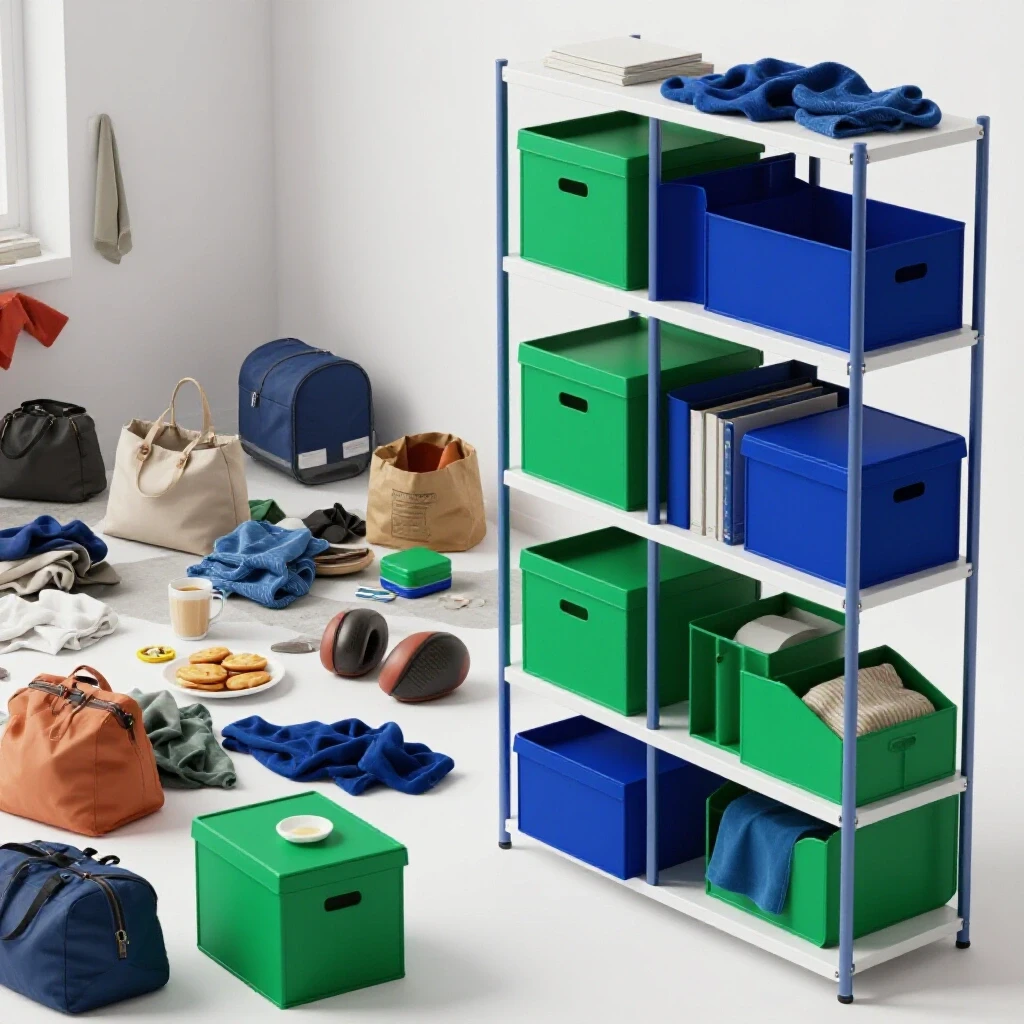
For many families, the area under the sink becomes a “black hole” for half-used bottles and expired products. I noticed that my own family was struggling with “retrieval friction.” This is the resistance we feel when an item is hard to get to, leading us to leave it on the counter rather than putting it away. By applying spatial management principles, we transformed our cluttered cabinet into a high-functioning zone that actually supports our busy lifestyle.

Analyzing the Spatial Logistics of High-Traffic Storage Areas
Spatial logistics involves managing the movement and placement of items within a limited area. In a bathroom, this means balancing high-frequency items with restricted square footage to prevent daily bottlenecks.
When we look at a cluttered cabinet, we are seeing a failure of “inflow and outflow” control. In my professional experience, a space fails when we add more items than the “spatial capacity” allows. Environmental psychology research shows that visual clutter increases cortisol levels, the body’s primary stress hormone. For a parent rushing to get kids ready, a messy vanity isn’t just an eyesore; it is a source of mental fatigue that starts the day on the wrong foot.
We began our project by measuring the actual volume of the cabinet. Most people buy bins first, but we started by measuring the height, width, and depth of the space. We found that we were only using about 40% of the available vertical space. This “vertical air” is a wasted resource in logistics. By reclaiming that space, we could reduce the footprint of our storage and clear the surfaces.
Why Traditional Bathroom Storage Systems Fail Families
Systems fail when “retrieval friction”—the effort to get or put away an item—exceeds the user’s available energy. Complex bins with tight lids often lead to surface pile-ups because they require too many steps to use.
In our home, I tracked how many steps it took to put away a hair dryer. In our old system, it was four steps: open the door, move a basket, lift a lid, and tuck the cord. In logistics, every extra step is a point of failure. We found that if a task takes more than three seconds, the likelihood of a family member completing it drops significantly. This is why those beautiful, stacked acrylic boxes often fail in real-world settings; they look great but are too difficult to maintain during a Tuesday morning rush.
Understanding the Storage Friction Index
To help my family understand why certain bins weren’t working, I developed a simple Friction Index. We rank storage solutions based on how many “touches” are required to use them.
| Container Type | Number of Touches | Friction Level | Sustainability for Kids |
|---|---|---|---|
| Open Front Bin | 1 | Low | High |
| Pull-out Drawer | 2 | Medium-Low | High |
| Lidded Box | 3 | Medium | Medium |
| Stacked Lidded Boxes | 5+ | High | Very Low |
Implementing a High-Efficiency Sorting Framework
A sorting framework is a logical method for categorizing items based on their utility rather than just their size. This reduces decision fatigue during the organization process by providing clear rules for where things belong.
We used a “Logistics Audit” to clear the space. I pulled everything out and placed it on a neutral surface. We then sorted items into three categories: Active, Seasonal, and Dead Stock. “Active” items are used daily. “Seasonal” items, like sunblock or extra travel kits, are used occasionally. “Dead Stock” is anything expired or no longer used. Interestingly, we found that 30% of our vanity volume was taken up by products we hadn’t touched in over a year.
The Decluttering Sorting Log
During our sprint, we tracked our progress to see where the time was being spent. This helped us stay focused and avoid the “distraction trap” where you start cleaning a different room mid-project.
- Total Items Found: 142
- Items Relocated (Dead Stock): 48
- Items Retained (Active/Seasonal): 94
- Sorting Time: 45 minutes
- Decision Speed: Approx. 19 seconds per item
Mapping Your Vanity for Maximum Functional Flow
Zoning maps designate specific areas for items based on how often they are used. “A-Zone” items are used daily and kept in the most accessible spots, while “C-Zone” items are stored further back.
In our redesign, we mapped the “Prime Real Estate”—the area between the waist and eye level. For the under-sink area, this meant the very front of the cabinet. We placed our “A-Zone” items (toothpaste, daily skincare, hairbrushes) in pull-out drawers that mimic industrial pick-slots. This ensures that the items we need most are accessible with a single motion.
Custom Zoning Map for a Standard Vanity
- The Hot Zone (Top Drawer/Front Shelf): Daily essentials like toothbrushes and deodorant.
- The Support Zone (Middle/Back): Backstock of soap, extra toothpaste, and hair styling tools.
- The Deep Storage (Bottom/Back): First aid supplies and items used once a month.
Selecting Low-Maintenance Containers to Reduce Daily Friction
Effective containers prioritize visibility and accessibility over aesthetics. Clear, lidless bins or drawers allow for “one-handed retrieval,” which is essential for busy morning routines and maintaining order.
We opted for modular, stackable drawers rather than deep, dark bins. In logistics, “visual density” is key. If you can’t see the bottom of a bin, you will buy duplicates of what is hidden there. Clear drawers allowed us to see our inventory levels at a glance. We also used “heavy-duty” configurations for heavier items like hair dryers to ensure the drawers wouldn’t warp or stick over time.
Low-Maintenance Storage Gear Checklist
- Clear Acrylic Drawers: Allows for instant inventory checks without opening anything.
- Over-the-Door Organizers: Utilizes “dead space” for tall bottles or styling tools.
- Expandable Under-Sink Shelves: Fits around plumbing pipes to maximize vertical space.
- Silicone Mats: Prevents items from sliding and makes cleaning spills much faster.
Building Sustainable Habit Loops for Shared Family Spaces
Habit loops are the cues and rewards that drive behavior. A sustainable system relies on making the “right” action the easiest one to take, ensuring the family can maintain the space without constant reminders.
I applied the “2-Minute Rule” from productivity studies. If an item takes less than two minutes to put away, it must be done immediately. To make this work, the storage system had to be simple enough for my seven-year-old to navigate. We used simple labels—not just for the kids, but for the adults too. Labels serve as a “visual cue” that reinforces where an item lives, reducing the cognitive load of deciding where to put something back.
Daily Maintenance Timelines by Family Size
Maintaining the vanity shouldn’t be a weekend chore. It should be a series of micro-habits.
- 1-2 People: 30 seconds of “surface clearing” per morning.
- 3-4 People: 60 seconds of “bin alignment” per evening.
- 5+ People: 2 minutes of “zone checking” to ensure items haven’t migrated.
Why High-Friction Bins Lead to Rapid Clutter Reversion
When a system is too complex, we experience “system fatigue.” This is why many beautifully organized spaces revert to chaos within days. If you have to move three things to get to one, you won’t do it when you’re tired.
In our “before” state, we used deep baskets. To get a band-aid, you had to pull out the basket, dig through layers of items, and then shove it back in. This created “visual processing overload.” Our brains see the mess and choose to ignore it because the “cost” of fixing it feels too high. By switching to shallow, categorized drawers, we lowered the “cost” of staying organized.
Measuring Long-Term Success with Realistic Metrics
Success is measured by “system durability”—how long the space stays functional before needing a major overhaul. We don’t aim for perfection; we aim for a system that can be reset in under two minutes.
Six months after our initial reorganization, our vanity still functions well. We track our “Surface Clear Rate”—the percentage of time the countertop is free of clutter. Before the change, it was clear about 20% of the time. Now, it stays clear about 85% of the time. The 15% of the time it is messy doesn’t bother us because we know it only takes 60 seconds to restore the system.
Key Performance Indicators (KPIs) for Home Storage
- Retrieval Time: Should be under 5 seconds for “A-Zone” items.
- Reset Time: The entire vanity should be restorable in under 2 minutes.
- Duplicate Rate: How often you buy something you already own (should be near zero).
- Space Utilization: Aim for 80% capacity to allow for “wiggle room” and easy reaching.
Practical Steps to Begin Your Own Transformation
Starting can feel overwhelming, but the logistics approach breaks it down into manageable tasks. You don’t need a full weekend; you just need a plan.
- The Empty-Out: Remove everything. A clean slate is necessary to see the spatial capacity.
- The Expiry Check: Toss anything past its prime. This is the easiest way to reduce volume.
- The Measurement: Measure your cabinet before buying a single bin.
- The Zone Map: Decide what stays in the front and what goes in the back.
- The Labeling: Use a simple label maker to mark the “home” for each category.
By focusing on these logistical principles, we moved away from the frustration of a “quick fix” that didn’t last. We created a space that works for our family, rather than a space that we have to work for. The mental clarity that comes from a functional morning routine is worth every minute spent planning the flow.
Frequently Asked Questions
How do I stop my bathroom vanity from getting messy again after a few days?
The key is reducing “retrieval friction.” Most systems fail because they require too many steps to put items away. Switch to open-top bins or pull-out drawers that allow for one-handed access. If it takes more than three seconds to put an item back, you are likely to leave it on the counter.
What are the best containers for a family bathroom?
Clear, stackable acrylic drawers are highly effective because they maximize vertical space and provide “visual density,” allowing you to see exactly what you have. Avoid deep, dark baskets where items get buried at the bottom.
How do I manage shared storage with kids and a spouse?
Use “zoning.” Assign specific drawers or bins to each family member. Labeling these zones provides a clear visual cue. In our home, we found that “person-specific” zones work better than “item-specific” zones for daily essentials like toothbrushes and hairbrushes.
Why does my vanity feel cluttered even when everything is “put away”?
This is often due to “visual processing overload.” If you have many small items visible on the counter or in open jars, your brain perceives it as clutter. Move as much as possible inside the cabinet using drawers, leaving only 1-3 high-use items on the surface.
How often should I “reset” my bathroom organization?
A functional system should only require a 60-second daily reset. If you find yourself needing a “deep clean” every weekend, your system is likely too complex. Re-evaluate your bins and see where you can remove lids or simplify categories.
What should I do with the “dead space” around the plumbing pipes?
Use expandable under-sink organizers designed to fit around pipes. Alternatively, use small, independent stacking drawers on either side of the plumbing. This allows you to use the full height of the cabinet without interfering with the pipes.
How do I decide what to throw away?
Use the “One-Year Rule.” If you haven’t used a product in twelve months, it is “dead stock” and should be removed. Also, check for changes in color or smell, which indicate a product has expired. Reducing volume is the first step in successful spatial management.
Is it worth labeling everything in the bathroom?
Yes, but keep it simple. Labeling isn’t just for finding things; it’s a “behavioral anchor” that tells your brain exactly where an item belongs. This reduces the “decision fatigue” of cleaning up at the end of a long day.
(This article was written by one of our staff writers, Christopher Bennett. Visit our Meet the Team page to learn more about the author and their expertise.)