How to Repair a Damaged Trim Corner for an Invisible Finish (Guide)

Maintaining the small details of your home is more than just a weekend chore. It is a strategic investment in your property’s value and your own daily comfort. When guests walk into a room, their eyes naturally follow the lines of the architecture. If those lines are broken by chips or gouges in the molding, the entire space can feel worn down. Taking the time to restore these small architectural elements prevents minor issues from becoming costly replacement projects later.
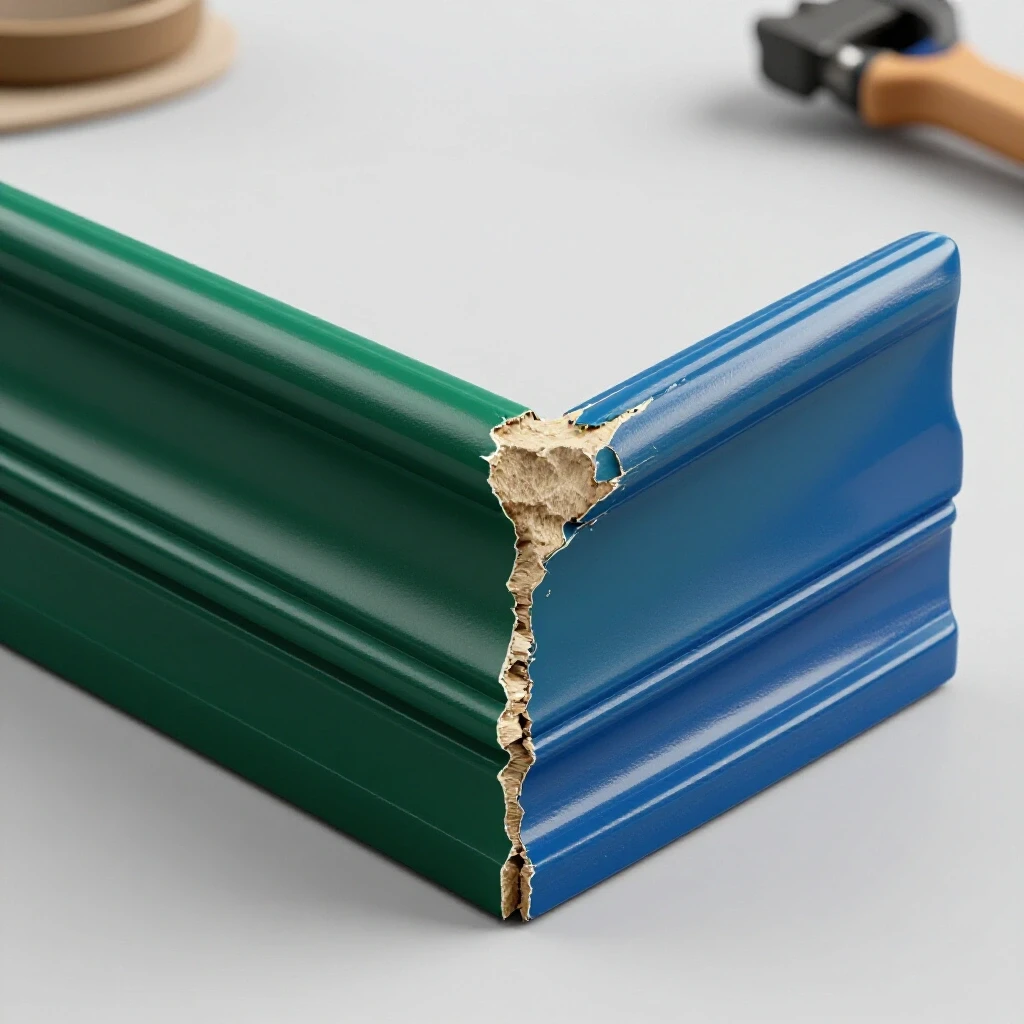
In my 12 years managing facilities and working on my own homes, I have learned that the “invisible” fix is the hallmark of a skilled DIYer. I remember moving a heavy oak dresser into my second home a few years ago. I took a corner too sharp and took a significant chunk out of the baseboard miter. Instead of tearing out the whole piece of trim—which would have involved matching old paint and potentially damaging the drywall—I used a methodical approach to fill and shape the wood. This process saved me about four hours of labor and the cost of new materials.
Building code compliance is rarely mentioned for cosmetic fixes, but it matters for safety. For example, the International Residential Code (IRC) focuses on structural integrity, but using non-toxic, low-VOC (Volatile Organic Compound) materials in your living space is a best practice I always follow. Below, I will share the exact steps and timelines you need to handle these scuffs and dents with professional-grade results.
Assessing the Damage and Planning Your Weekend Timeline
Before you pick up a tool, you must understand the scope of the work to avoid mid-project frustration. Not all chips in your woodwork are the same, and the time required for a fix depends heavily on the depth of the damage and the type of finish you are matching.
I categorize these tasks by the “depth of the defect.” A shallow scratch might only need a bit of paint, while a missing chunk at a mitered joint requires rebuilding the corner’s geometry. In my experience, the most common mistake is rushing the drying time. If you apply paint over filler that is still “off-gassing” or shrinking, the patch will eventually crack or bulge.
| Project Phase | Active Labor Time | Waiting/Cure Time | Total Weekend Impact |
|---|---|---|---|
| Preparation & Cleaning | 15 Minutes | 10 Minutes | Minimal |
| Filling & Shaping | 30 Minutes | 2 to 4 Hours | Moderate |
| Precision Sanding | 20 Minutes | N/A | Minimal |
| Finishing (Paint/Stain) | 20 Minutes | 4 to 24 Hours | High (drying time) |
Project Skill and Difficulty Rating * Difficulty: 2/5 (Requires patience and a steady hand). * Physical Effort: 1/5 (Low impact, mostly detail work). * Cost Savings: High (Avoids the $150-$300 minimum charge for a finish carpenter).
Essential Supplies for Seamless Woodwork Restoration
Having the right tools on hand prevents the “mid-project hardware store run” that kills your momentum. For mending interior molding, you do not need expensive power tools; you need high-quality hand tools and the right consumables.
In my facility maintenance kits, I always keep a variety of fillers. Some are water-based and easy to clean, while others are two-part resins for high-traffic areas. For most home projects, a high-shrink-resistant wood filler is your best bet. It mimics the density of the surrounding wood and takes paint or stain much better than general-purpose spackle.
- Flexible Putty Knife: A 1-inch or 2-inch stainless steel blade is ideal for pushing material into tight corners.
- Sanding Blocks: Use a firm block rather than just your fingers. This ensures you keep the corner’s edge sharp rather than rounding it off.
- Sandpaper Assortment: You will need 120-grit for shaping and 220-grit for final smoothing.
- Utility Knife: Useful for trimming away loose wood fibers or dried “slop” before you start.
- Tack Cloth: A sticky cheesecloth used to remove every speck of dust before painting.
- Painter’s Tape: To protect the floor and the adjacent wall from filler and paint.
- Small Artist Brush: For “feathering” the paint so the repair blends into the existing finish.
Safety Protocols and Workspace Preparation
Safety in DIY projects is about more than just avoiding injury; it is about protecting your home’s environment. Even small sanding tasks produce fine dust that can irritate your lungs or settle into your HVAC system.
Whenever I work on trim near the floor, I make sure to clear the area of any trip hazards. If you are working in an older home (built before 1978), be aware of lead-based paint. Sanding lead paint is a major health risk. In those cases, I use “wet sanding” techniques or a HEPA-filtered vacuum attachment. For modern homes, a standard N95 mask and safety glasses are sufficient.
- Dust Control: Lay down a drop cloth or heavy paper. Dust from wood filler is very fine and can be difficult to vacuum out of carpets.
- Ventilation: If you are using solvent-based fillers or stains, open a window.
- Ergonomics: Use a knee pad or a low rolling stool. Working on baseboards for an hour can put significant strain on your lower back and knees.
Step 1: Substrate Preparation and Cleaning
The foundation of an invisible repair is a clean surface. If there is wax, furniture polish, or loose wood fibers in the gouge, the filler will not bond properly. This is the stage where most tutorials fail by telling you to just “fill the hole.”
I start by using a sharp utility knife to remove any “mushroomed” wood. When a corner is hit, the wood fibers often compress and bulge outward. If you don’t cut these back to be flush with or slightly below the surface, your repair will always have a bump. After trimming, I wipe the area with a damp cloth or a bit of denatured alcohol to remove oils.
- Technical Tip: Dry-fit your putty knife against the corner. If the blade doesn’t sit flat against the undamaged parts of the wood, you still have high spots that need trimming or light sanding.
Step 2: Applying Filler and Rebuilding the Edge
This is the core of the restoration. The goal is to overfill the area slightly. Wood filler almost always shrinks as the moisture or solvent evaporates. If you fill it perfectly flush while wet, you will be left with a divot once it dries.
I like to use a “two-pass” method for deep gouges. For the first pass, I fill the bulk of the hole and let it set for 30 minutes. For the second pass, I focus on the geometry of the corner. Use the putty knife like a trowel, pulling it across one face of the trim and then the other to create a sharp 90-degree angle.
- Avoid Overworking: The more you move the filler around, the more air bubbles you introduce. Get it in place, shape it roughly, and leave it alone.
- Layering: If the damage is deeper than 1/4 inch, apply the filler in layers. This prevents the center from staying soft while the outside hardens.
Step 3: Precision Sanding for Sharp Lines
Once the filler is completely hard—usually after two hours, depending on humidity—it is time to sand. This is where the repair becomes “invisible.” Using a sanding block is non-negotiable here. If you use your thumb, you will naturally sand more in the center of the patch, creating a “dish” or a hollow spot.
I start with 120-grit paper to knock down the high spots. I sand in the direction of the wood grain whenever possible. Once the shape is restored, I switch to 220-grit. I run my fingers over the repair with my eyes closed. If I can feel a transition between the wood and the filler, I keep sanding. Your touch is more sensitive than your sight for finding imperfections.
| Sanding Phase | Grit Level | Goal |
|---|---|---|
| Rough Shaping | 100 – 120 | Remove excess filler and match the trim profile. |
| Smoothing | 180 – 220 | Remove scratches from the 120-grit. |
| Polishing | 320+ | Only for high-gloss finishes or stained wood. |
Step 4: Blending the Finish to Match Existing Decor
The final step is the most rewarding but requires the most patience. If your trim is painted, you need to match the color and the “sheen” (glossiness). Even if you have the original paint can, the paint on the wall has likely faded or changed color slightly over time.
I suggest “feathering” the paint. Instead of just painting the patch, start in the center and lightly brush outward into the undamaged area. This creates a gradual transition that the human eye cannot easily detect. If the trim is stained, I use a combination of stain markers and a clear topcoat.
- Priming: Always prime the filler first. Wood filler is very porous. If you put paint directly on it, the filler will soak up the oils, leaving the patch looking dull compared to the rest of the trim.
- Sheen Matching: If your trim is semi-gloss and your patch looks too shiny, a very light buffing with 0000 steel wool can dull the finish to match.
Troubleshooting Common Restoration Failures
Even with a careful approach, things can go wrong. I have seen many DIYers get frustrated when their repair “ghosts” or shows through the paint after a few weeks. This usually happens because of “flash drying” or improper substrate prep.
If your filler falls out, it was likely applied to a dirty or oily surface. If the repair looks “fuzzy” after sanding, you might be using a low-quality filler that is tearing rather than cutting. In that case, I recommend a light coat of primer followed by a very fine sanding with 320-grit.
- Shrinkage Cracks: If the filler cracks as it dries, you likely applied it too thick in one pass. Dig out the loose bits and re-apply in thinner layers.
- Color Mismatch: If the paint is too dark, try thinning your next coat slightly. If it’s too light, you may need to paint the entire short section of trim from corner to corner to hide the transition.
Maintenance and Long-Term Care
Once your repair is complete, it should be as durable as the original wood. However, corners are high-impact zones. In my facilities management role, I often suggest adding a clear “corner guard” in high-traffic commercial hallways, but for a home, that’s usually not aesthetically pleasing.
Instead, keep a small “touch-up kit” in a cool, dry place. This should include a small jar of the matching paint and a few high-quality brushes. Every six months, walk your home and look for fresh scuffs. Catching them early prevents the wood fibers from splintering further, making future repairs much easier.
- Cleaning: Wait at least 30 days before using any household cleaners on the repaired area. The paint needs this time to “cure” and reach its full hardness.
- Humidity: Remember that wood expands and contracts. If you notice a tiny hairline crack at the edge of your repair during winter, it may disappear in the summer when the humidity rises.
When to Consider Full Replacement
While most corner damage is fixable, there are times when the effort outweighs the result. If the wood is split more than six inches down the length of the board, or if the “miter” (the 45-degree angle where two boards meet) has a gap wider than 1/8 inch due to house settling, a repair might not hold.
In my experience, if more than 30% of the corner’s profile is missing, rebuilding it with filler becomes a sculpting project rather than a simple repair. At that point, buying a new 8-foot stick of molding is often the more efficient use of your weekend.
FAQs About Mending Woodwork Corners
How long should I wait before sanding the filler? Most water-based wood fillers are dry to the touch in 30 minutes, but for a corner repair, I recommend waiting at least 2 hours. If the filler is still gummy, it will clog your sandpaper and pull away from the wood, ruining the shape you’ve created.
Can I use joint compound (drywall mud) instead of wood filler? I strongly advise against this. Joint compound is much softer than wood and lacks the adhesive properties needed for a high-traffic corner. It will likely crack or crumble the next time a vacuum cleaner or shoe bumps into it.
Why does my repair look like a different color even though I used the same paint? Paint changes color as it ages due to UV exposure and oxidation. Also, the texture of the filler might be different from the wood. Using a primer before painting helps ensure the paint “lays down” the same way on both surfaces, minimizing the color difference.
What is the best way to recreate a complex trim profile? For “fancy” molding with many curves, use a “contour gauge” or create a negative template out of a piece of stiff plastic or cardboard. You can use this template to “swipe” the wet filler into the correct shape, much like a potter uses a rib tool.
Is it necessary to use a primer on small repairs? Yes. Filler is more absorbent than finished wood. Without primer, the repair will “suck” the moisture out of the paint, leading to a dull spot known as “flashing.” A quick spray or brush-on primer seals the filler so the topcoat looks uniform.
What if the corner is on a stained piece of wood? Stained wood is trickier. You should use a “stainable” wood filler, but be aware they never take stain exactly like the surrounding wood. I often use “burn-in” sticks or specialized furniture touch-up markers to draw the grain lines back onto the patch for a truly hidden look.
How do I prevent the filler from sticking to my putty knife? Keep your knife clean. I keep a rag dampened with water (for water-based fillers) or mineral spirits (for solvent-based) nearby. Wiping the blade between every few strokes prevents “drag” and keeps the surface of the filler smooth.
Can I fix a corner that has been painted many times? Yes, but you have to account for the thickness of the paint layers. You may need to sand back the surrounding paint to “feather” the repair so it doesn’t look like a hump on top of the old paint.
Is there a specific temperature for doing these repairs? Ideally, you want to work between 60°F and 80°F. If it is too cold, the filler will take forever to dry. If it is too hot or the sun is shining directly on the trim, the filler may dry too fast and crack.
What grit sandpaper should I end with? For most interior trim, 220-grit is the “sweet spot.” It is smooth enough that you won’t see scratch marks through the paint, but “toothy” enough to give the paint something to grip onto.
(This article was written by one of our staff writers, Robert Callahan. Visit our Meet the Team page to learn more about the author and their expertise.)