How to Replace a Light Switch in a 1950s House (Step-by-Step Guide)

Many homeowners believe that a light switch is a universal component and that swapping one out is a simple ten-minute task. While this might be true in a modern house built last year, the reality of working with mid-century electrical systems is far more complex. The age of the home introduces variables like deteriorating insulation and outdated grounding methods that require a much higher level of caution.
Understanding Mid-Century Electrical Infrastructure
Electrical systems from the 1950s represent a transitional period in residential construction where safety standards were evolving quickly. These systems often feature cloth-jacketed wiring and small metal junction boxes that do not accommodate modern, bulky switches easily. Understanding these physical constraints is the first step toward a safe and successful weekend DIY project.
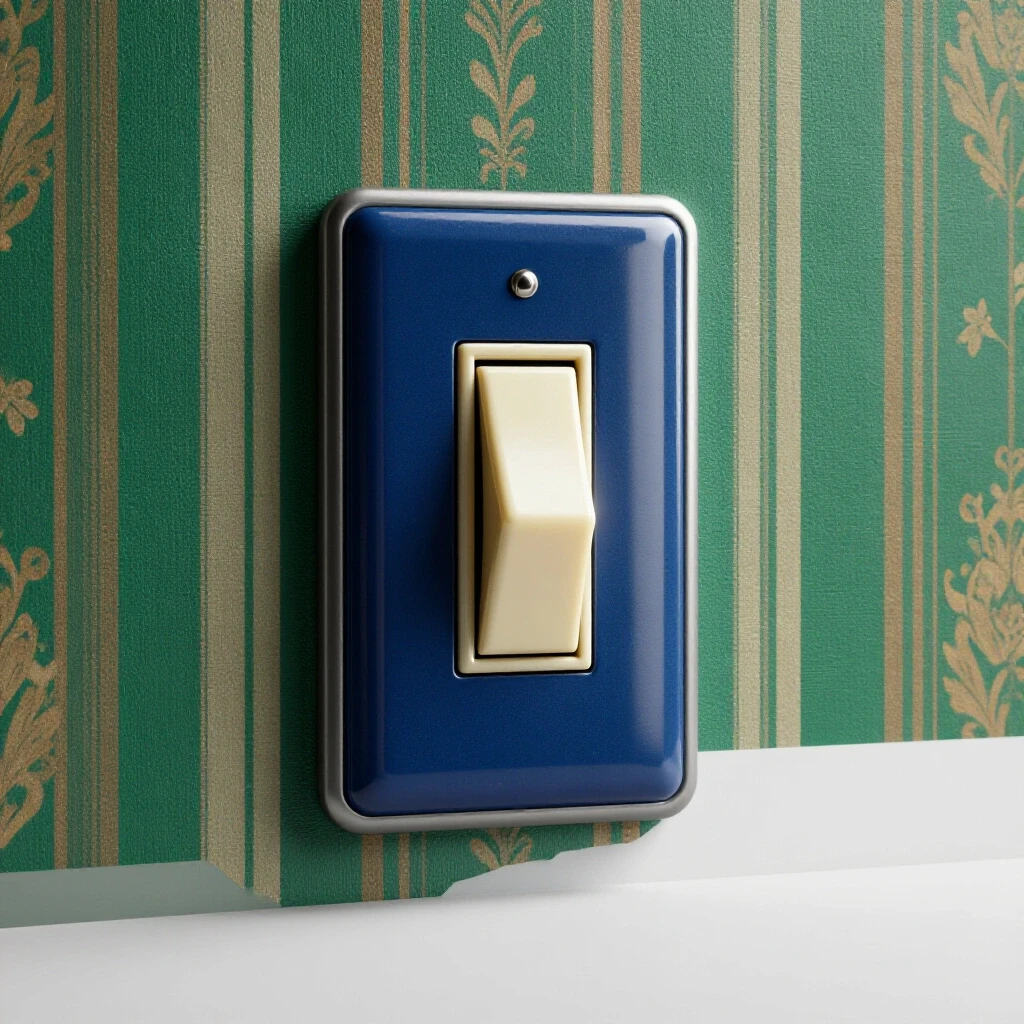
In my twelve years as a facilities manager, I have seen how time affects building materials. In my first 1950s-era home, I went to change a simple toggle switch and found that the wire insulation crumbled the moment I moved it. This is a common characteristic of the rubber and cloth used during that decade. Unlike modern thermoplastic (THHN) wire, this older material becomes brittle with age and heat. If you are not careful, you can end up with bare copper touching a metal box, which creates a significant fire hazard.
The Evolution of Residential Wiring Standards
The National Electrical Code (NEC) has updated its requirements dozens of times since the 1950s to improve occupant safety. During that era, many homes were wired with two-wire systems that lacked a dedicated equipment grounding conductor. This means the third “ground” prong we see on modern outlets or the ground screw on switches may not have a clear path back to the panel.
Identifying Two-Wire vs. Three-Wire Systems
A two-wire system typically consists of a “hot” wire and a “neutral” wire, often wrapped in a black or silver-colored cloth braid. In many 1950s installations, the metal conduit or the armor of the cable (BX cable) was intended to act as the ground. However, over seventy years, connections can loosen or corrode, breaking that vital safety path and leaving the switch ungrounded.
Essential Safety Equipment and Diagnostic Tools
Before you even consider opening a junction box, you must have the right diagnostic tools to verify what is happening behind the wall. Relying on visual cues alone in an older home is a recipe for a dangerous mistake. You need professional-grade tools that can detect voltage and verify the presence of a functional ground.
When I started my DIY journey, I made the mistake of using a cheap, unbranded voltage tester that gave me a false negative. I nearly received a painful shock because the tool failed to detect a “phantom” voltage. Now, I only use tools from reputable manufacturers that I also trust for my professional facility work. A non-contact voltage tester and a digital multimeter are non-negotiable for these types of upgrades.
Essential vs. Optional Tool Matrix
| Tool Name | Purpose | Necessity |
|---|---|---|
| Non-Contact Voltage Tester | Detects live current without touching wires | Mandatory |
| Digital Multimeter | Measures exact voltage and tests for ground | Mandatory |
| Insulated Screwdrivers | Protects the user from accidental contact | Highly Recommended |
| Needle-Nose Pliers | Shapes wire loops for screw terminals | Mandatory |
| Electrical Tape | Reinforces brittle insulation | Mandatory |
| Headlamp | Provides clear visibility inside dark boxes | Recommended |
The Importance of a Digital Multimeter
A digital multimeter is a device that measures electrical properties such as voltage, current, and resistance. While a non-contact tester tells you if power is present, the multimeter tells you if the circuit is wired correctly. In a 1950s home, this tool is vital for checking if your metal box is actually grounded, which dictates how you must install your new switch.
Assessing the Condition of Vintage Wiring
The most critical phase of any electrical task in an older home is the initial inspection once the cover plate is removed. You are looking for signs of heat damage, moisture intrusion, or physical degradation of the wire jackets. If the wires look like they are “shedding” their cloth covers, you must proceed with extreme care to avoid short circuits.
Interestingly, many 1950s homes used a type of wiring often called “rag wire” because of its woven exterior. Over decades of use, the heat generated by the electricity dries out the internal rubber insulation. As a result, the wire becomes a ticking time bomb if it is bent too sharply during a switch replacement.
Recognizing Signs of Material Failure
Look for black soot marks inside the box, which indicate previous sparking or “arcing.” If the copper itself looks green or corroded, moisture has been getting into the wall, which can lead to high resistance and heat. If you see any of these signs, the project is no longer a simple switch swap and may require a professional assessment of the circuit.
Evaluating Junction Box Volume
Older metal boxes are significantly smaller than the plastic ones used today. A modern “decorator” style switch takes up much more physical space than an original 1950s toggle. If you try to force a large switch into a small box with brittle wires, you risk pinching the insulation and causing a fire behind the wall.
Managing Brittle Cloth Insulation
When you encounter wires that crumble at the touch, you have to stabilize them before making any new connections. This is a common hurdle that adds significant time to what should be a quick upgrade. It requires a steady hand and specific materials to ensure the copper remains safely isolated from the metal box.
Building on this, I always keep a roll of high-quality electrical tape rated for at least 600 volts in my kit. If I see a small crack in the insulation, I carefully wrap it to provide a new protective layer. However, if the insulation is falling off in large chunks, the wire may be too far gone for a simple repair. This is where many DIYers get frustrated and try to “make it work,” which is a dangerous path to take.
Techniques for Stabilizing Wires
- Minimize movement: Gently pull the switch forward just enough to access the screws.
- Use heat-shrink tubing: If you have enough slack, sliding a piece of heat-shrink over the wire provides a more permanent fix than tape.
- Avoid sharp bends: Keep the wire radius as wide as possible when tucking the switch back into the box.
The “One-Inch Rule” for Safety
If you don’t have at least one inch of healthy, flexible insulation extending from the back of the box, you are in a high-risk situation. In facility management, we call this “lack of service loop.” Without enough wire to work with safely, you run the risk of the wire snapping off inside the wall, which is a nightmare to fix without opening the drywall.
The Grounding Challenge in Older Metal Boxes
The biggest safety hurdle in a 1950s home is the lack of a green ground wire. Modern switches have a green screw that must be connected to the home’s grounding system to prevent the metal frame of the switch from becoming live. In an older home, you have to determine if the metal box itself is grounded through the conduit.
As a result of these old standards, many DIYers simply leave the ground screw empty. This is a violation of modern safety practices and can be dangerous if the switch fails internally. You must use your multimeter to test for continuity between the “hot” wire and the metal box to see if the box is actually tied to the ground at the main panel.
DIY vs. Professional Cost & Time Analysis
| Factor | DIY Approach | Professional Electrician |
|---|---|---|
| Active Labor Time | 2–4 hours (including testing) | 30–45 minutes |
| Material Cost | $15 – $40 (Tools + Switch) | $150 – $250 (Service Call + Parts) |
| Risk Level | High (due to wiring age) | Low (Licensed/Insured) |
| Tool Investment | $50+ for quality testers | N/A |
Testing for a Functional Ground
To test for a ground, set your multimeter to AC voltage. Place one probe on the black “hot” wire and the other probe on the metal box or a mounting screw. If the meter reads approximately 120 volts, your box is grounded. If it reads zero, the box is not grounded, and you must follow specific NEC guidelines for installing switches in ungrounded boxes, which often involves using a plastic cover plate and non-conductive screws.
Project Skill and Difficulty Rating Scale
Before you begin, it is helpful to understand where this project sits on the difficulty spectrum. While it seems like a beginner task, the age of the home pushes it into the intermediate category. You are not just following a diagram; you are performing a forensic evaluation of an aging system.
| Skill Level | Description | Estimated Effort |
|---|---|---|
| Level 1: Beginner | Modern home, color-coded wires, ample space. | 15 Minutes |
| Level 2: Intermediate | 1950s home, cloth wires, metal boxes, no ground wire. | 2 Hours |
| Level 3: Advanced | Crumbled insulation, multiple circuits in one box, rusted components. | 4+ Hours |
Why This Isn’t a “Quick” Weekend Project
A busy professional might expect to knock out five switches in an hour on a Saturday morning. In a 1950s home, you should plan for each switch to take at least 45 minutes. This accounts for the time spent carefully cleaning out the box, testing for ground, and meticulously wrapping brittle wires. Rushing through this process is how mistakes happen.
Recognizing Critical Failure Points
There are certain scenarios where a DIY enthusiast must stop and admit the project is beyond their current scope. Knowing when to put the tools away is just as important as knowing how to use them. During my career, I have seen many “simple” repairs turn into costly emergencies because someone ignored a clear warning sign.
For example, if you smell a faint “fishy” or “burnt plastic” odor when you remove the cover plate, that is a sign of active overheating. This is not something that a new switch will fix; it indicates a deeper problem with the circuit or the wire itself. Similarly, if you find that a previous owner has “daisy-chained” multiple rooms onto a single old circuit, you may be looking at a significant fire risk.
When to Call a Licensed Electrician
- The wire insulation falls off entirely when touched.
- There are more than four wires entering a single-gang box.
- The metal box is loose or falling back into the wall.
- The multimeter shows inconsistent voltage readings (e.g., 90V instead of 120V).
- You find “knob and tube” wiring mixed in with the 1950s cable.
The Value of Professional Assessment
While we all want to save money, an electrician brings specialized equipment like an insulation resistance tester (megger). This tool can “stress test” the old cloth wiring to see if it is still safe to use. If you are unsure about the integrity of your home’s electrical system, paying for a one-hour consultation can provide immense peace of mind.
Final Safety Checks and Testing Procedures
Once you have assessed the wiring and decided to proceed, the final steps are all about verification. You never turn the power back on until every connection is double-checked. In the facility world, we use a “lock-out, tag-out” procedure to ensure no one accidentally flips a breaker while we are working. At home, you should at least put a piece of tape over the breaker handle.
After the switch is mounted and the power is restored, use your non-contact voltage tester to ensure the metal cover plate (if you used one) is not “hot.” If the tester glows when touched to the plate, you have a “ground fault,” and the power must be shut off immediately. This means a wire is touching the box or the frame of the switch.
Multi-Step Quality Control Checklist
- Verify the breaker is off using two different diagnostic tools.
- Inspect all wire ends for nicks or breaks in the copper.
- Ensure wire loops are wrapped clockwise around terminal screws.
- Tighten terminal screws to approximately 12 inch-pounds of torque (firm but not stripping).
- Wrap the body of the switch in electrical tape to cover the terminal screws.
- Test the switch function and the cover plate for stray voltage.
Clean-Up and Maintenance
Older homes generate a lot of debris during these projects. Plaster dust from the 1950s often contains heavy grit that can get into the switch mechanism. Use a vacuum with a HEPA filter to clean the box before and after the installation. This prevents dust from causing friction or heat issues inside the switch over time.
Frequently Asked Questions
Is cloth-covered wiring safe if it isn’t crumbling?
Cloth wiring can be safe if the internal rubber insulation remains flexible and the circuit is not overloaded. However, it has reached the end of its intended lifespan. You should treat it with extreme care and avoid moving it more than necessary.
Why does my 1950s switch box only have two wires?
In the 1950s, it was common to only run the “hot” leg of the circuit to the switch. This is called a “switch loop.” The neutral wire stays in the ceiling box with the light fixture. This makes it impossible to install many modern smart switches that require a neutral wire.
Can I use a modern plastic cover plate on a metal box?
Yes, and in an ungrounded 1950s system, a plastic plate is actually safer. It provides a layer of non-conductive material between you and the potentially ungrounded metal box or switch frame.
What should I do if the wires are too short to reach the new switch?
You can add “pigtails,” which are short lengths of new wire connected to the old wires using wire connectors (wire nuts). This gives you more room to work, but you must ensure the wire nuts are tight and the box isn’t too crowded.
How do I know if my metal conduit is a valid ground?
The only way to be sure is to use a multimeter. Test for voltage between the hot wire and the metal box. If you get 120V, the conduit is likely acting as a ground. If you get 0V or a very low number, it is not grounded.
Is it okay to wrap electrical tape around the whole switch?
Yes, wrapping the sides of the switch to cover the terminal screws is a common best practice in metal boxes. It prevents the “hot” screws from accidentally touching the side of the box during installation.
Why are the screws on my old switch so hard to turn?
Over decades, metal can undergo “galvanic corrosion,” essentially rusting the screw into the terminal. Use a properly sized screwdriver and apply firm pressure. If it won’t budge, you may need to carefully cut the wire and strip a new section.
Can I replace a 1950s switch with a dimmer?
Only if the box is large enough. Most dimmers are much deeper than standard switches. In a shallow 1950s metal box, there is often not enough room for the dimmer body and the wire connectors.
What if I find three wires but no ground?
This usually means the switch is part of a “3-way” system, where two switches control one light. These are much more complex to wire in an older home because the wire colors may not follow modern standards.
Are 1950s metal boxes smaller than modern ones?
Typically, yes. They are often “gem boxes” which are narrower and shallower. This is why careful wire management is the most time-consuming part of the job.
Can I use “push-in” connectors on the back of the switch?
Avoid using the “stab-in” or push-in holes on the back of a switch, especially with old wire. These connections are prone to loosening over time. Always use the side screw terminals for a more secure, code-compliant connection.
How much should I expect to spend on tools for this?
A decent non-contact voltage tester costs about $20, and a reliable digital multimeter starts around $40. While it’s an upfront cost, these tools will last for years and are essential for any DIY home improvement involving electricity.
(This article was written by one of our staff writers, Robert Callahan. Visit our Meet the Team page to learn more about the author and their expertise.)