Effective Home Storage Solutions Without a Label Maker (Guide)

Managing a busy household often feels like running a warehouse where the shipments never stop arriving. For over a decade, I have applied my professional background in operations and logistics to my own home. I have learned that the most durable systems are not the ones that look the best on social media. Instead, they are the ones that require the least amount of effort to maintain on a Tuesday night when everyone is exhausted.
Why Traditional Home Organization Systems Often Fail in Busy Households
Most household systems fail because they ignore the reality of human energy levels and the physical physics of a lived-in space. When we design for a “perfect” version of ourselves, we create high-friction environments that collapse the moment life gets busy or stressful.
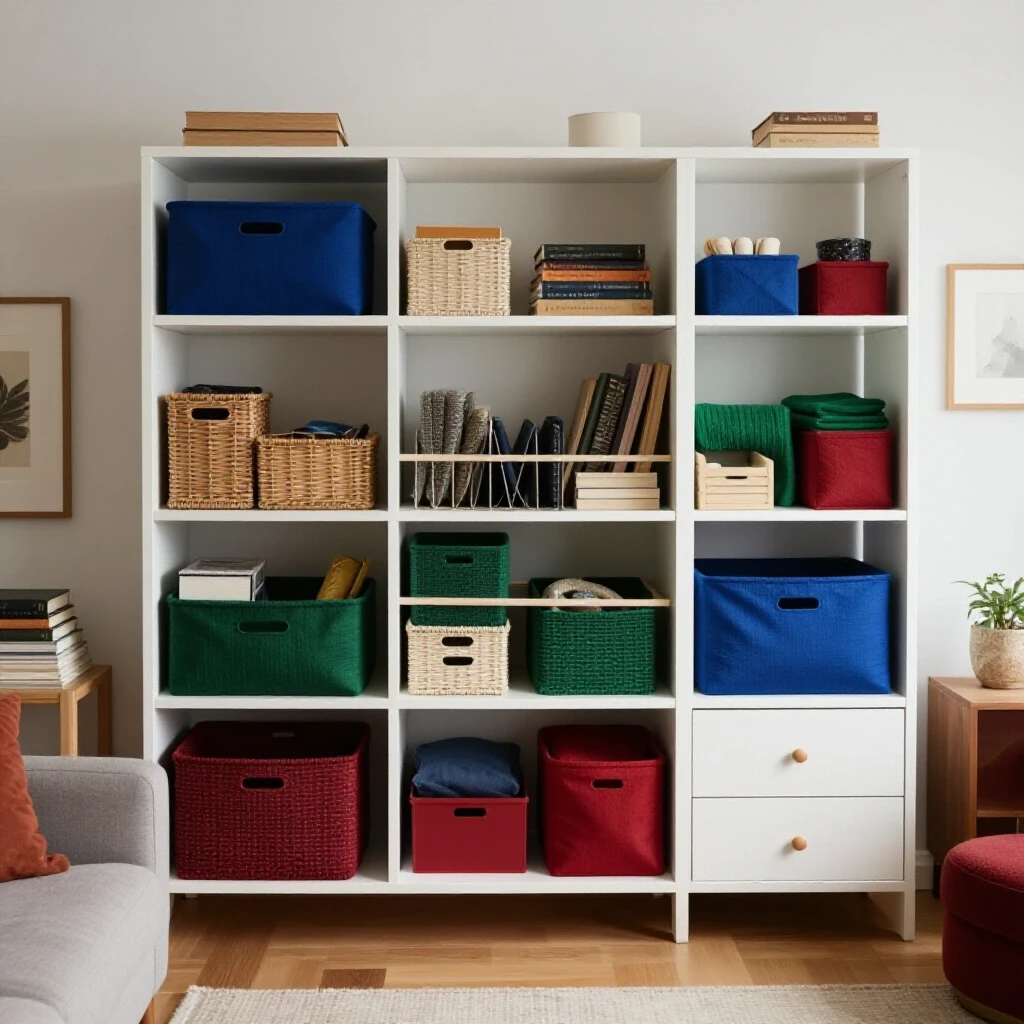
In logistics, we talk about “system friction.” This is the resistance a person feels when trying to complete a task. In a home, if putting away a pair of shoes requires opening a closet, finding a specific bin, and unlatching a lid, the friction is too high. The shoes will likely end up on the floor. Environmental psychology research, such as studies from the University of California, shows that visual clutter increases cortisol levels, especially in women. When our systems are too complex to follow, the resulting mess creates a cycle of mental fatigue and frustration.
The Psychological Cost of Visual Overload
Visual overload occurs when our brains are forced to process too many separate objects at once, leading to a state of cognitive heavy lifting. This mental drain makes it harder to make simple decisions about where things belong or what to clean next.
I remember a time when my wife and I tried to organize our pantry using dozens of matching airtight containers. It looked beautiful for exactly four days. Then, the grocery delivery arrived. We were too tired to decant every bag of flour and box of cereal. Within a week, the “system” was hidden behind a wall of half-open bags. We had prioritized aesthetics over flow. We realized that our brains didn’t need a picture-perfect pantry; they needed a way to find the pasta in under five seconds without moving three other things.
Understanding Retrieval Friction and Spatial Capacity
Retrieval friction is the number of physical steps required to access or store an item, while spatial capacity refers to the hard limit of how much a shelf or room can hold. When these two factors are out of balance, the home quickly reverts to a state of disorder.
In my professional work, we measure “touches.” Every time a worker touches a product, it costs time and money. In your home, every “touch” costs mental energy. If a system requires five touches to put an item away, it will fail. We also must respect the 80% rule: a storage space is functionally full when it reaches 80% capacity. Once you go over that, you lose the “finger room” needed to move items, and the friction skyrockets.
| Storage Type | Retrieval Steps | Friction Level | Sustainability |
|---|---|---|---|
| Open Basket on Floor | 1 Step (Drop) | Very Low | High |
| Open Shelf at Eye Level | 1 Step (Place) | Low | High |
| Lidded Bin on Shelf | 3 Steps (Pull, Open, Place) | Medium | Moderate |
| Stacked Lidded Bins | 5+ Steps (Move top bins, Open, Place) | Very High | Low |
Applying Logistics Principles to Sustainable Decluttering
Sustainable decluttering is the practice of managing the “flow rate” of items in your home to ensure that what comes in does not exceed what goes out. It is less about a one-time cleaning event and more about creating a functional balance in your daily environment.
In a warehouse, we manage “Inflow” and “Outflow.” If a dock receives 100 pallets but only ships 80, the warehouse will eventually become a gridlocked mess. Most homes suffer from a permanent inflow problem. We bring in mail, groceries, toys, and gadgets daily, but we only “outflow” items once or twice a year during a big clean. To keep a home functional, we must lower the barrier for items to leave the house.
The Inflow and Outflow Framework
The Inflow and Outflow framework focuses on the movement of goods through your home rather than the static storage of those goods. By viewing your home as a transit hub rather than a museum, you can prevent the “clutter creep” that happens between organization sessions.
I helped my family implement an “Outflow Station” near the garage. It is just a simple, large cardboard box. Whenever someone finds an item that no longer fits or is no longer used, they drop it in the box. There is no sorting, no second-guessing, and no complex categorization. When the box is full, it goes to the donation center. This reduces the “decision fatigue” often associated with decluttering because the exit path is always open and low-effort.
Using a Decluttering Sorting Log
A sorting log is a simple way to track the volume of items moving through a specific zone to identify where the system is breaking down. It helps you see if a room is cluttered because you have too much stuff or because the “putting away” process is too hard.
- Step 1: Choose one high-traffic area (like the kitchen counter).
- Step 2: For three days, note every item that gets “stuck” there.
- Step 3: Categorize why it got stuck (e.g., “no home,” “too hard to put away,” “trash”).
- Step 4: Adjust the storage for those specific items to lower the friction.
| Item Category | Count Stuck (3 Days) | Primary Reason | Solution |
|---|---|---|---|
| Mail/Paperwork | 15 | No designated spot | Add an open wall pocket |
| Kids’ Shoes | 8 | Closet door is heavy | Use an open floor bin |
| Kitchen Gadgets | 4 | Cabinet is too crowded | Move “rarely used” to Zone C |
Building Functional Home Storage Around Family Behavior
Functional home storage is the art of placing items where they are naturally used, rather than where they “should” go according to a traditional floor plan. It relies on observing how your family actually moves through the house and adapting the environment to match those habits.
I noticed that my children never hung their coats in the hall closet. I could have spent years nagging them, but as a logistics professional, I knew the “process” was the problem. The closet door was a barrier, and the hangers were too high. We replaced the closet rod with low-mounted hooks and took the door off its hinges. The floor stayed clear immediately. We didn’t change the children; we changed the system friction to match their natural behavior.
Creating High-Efficiency Zoning Maps
Zoning is a method of dividing your home into three tiers based on how often items are used: Zone A for daily use, Zone B for weekly use, and Zone C for monthly or seasonal use. This ensures that the most important items are always in the lowest-friction spots.
- Zone A (The Prime Real Estate): Between waist and eye level. These items should be accessible with one hand and zero “digging.”
- Zone B (The Reach Zones): Lower shelves or higher shelves that require a slight stretch. Good for weekly items like specialty cooking tools or extra towels.
- Zone C (Deep Storage): Top of closets, under beds, or in the garage. This is for holiday decor, out-of-season clothes, and long-term archives.
Reducing Household Clutter Through Low-Friction Container Selection
Selecting containers should be based on “sorting speed” and “visibility” rather than how they look in a matching set. The best containers for a busy family are often those that allow you to see the contents at a glance and toss items in without precise stacking.
In my home, we moved away from opaque bins for anything used daily. We use clear plastic tubs for adult items and open-top canvas baskets for kids’ toys. Why? Because research in organizational behavior suggests that “out of sight, out of mind” is a real cognitive hurdle for many people. If we can’t see the items, we forget we have them and buy duplicates, or we get frustrated searching for them. Clear bins provide a “visual inventory” that requires zero mental effort to scan.
Maintaining Order with Realistic Habit Loops
A habit loop is a small, repeatable routine that anchors a maintenance task to an existing part of your day. These loops prevent the “reversion to clutter” by ensuring that small amounts of work are done consistently, rather than letting a mess build up into an overwhelming project.
Logistics hubs don’t wait until the end of the month to sweep the floors; they have “end-of-shift” protocols. My family adopted a “10-minute reset” every evening after dinner. We set a timer, put on some music, and move items back to their designated zones. Because we have low-friction storage—hooks instead of hangers, open bins instead of lidded boxes—we can move a lot of volume in a very short time.
The “One-Hand Rule” for Daily Maintenance
The One-Hand Rule states that any item used daily should be able to be retrieved and put away using only one hand. If you have to move one thing to get to another, or use two hands to struggle with a lid, the system is too complex for a busy household.
- Audit your most used items: Think about your coffee mug, your keys, and your remote.
- Count the hands: Can you put them back without shifting other objects?
- Clear the path: If a stack of mail is blocking the key bowl, move the mail station.
- Simplify the container: If your “daily” vitamins are in a bin with a lid, take the lid off.
Measuring Success: The 5-Minute Sweep
A 5-minute sweep is a metric used to test the health of your home organization systems. If a room cannot be returned to a functional state in five minutes of focused effort, the system is broken or the volume of items is too high for the space.
We use this as a diagnostic tool. If the living room takes 15 minutes to tidy, I don’t blame the family. I look at the logistics. Are there too many toys for the bin? Is the bin too far from where the kids play? We then adjust the zoning or the container size until we hit that 5-minute threshold. This keeps the daily maintenance feeling like a small chore rather than a second job.
| Family Size | Recommended Daily Reset Time | Max Retrieval Steps for Zone A | Target Capacity |
|---|---|---|---|
| 1-2 People | 5 Minutes | 1 Step | 70% |
| 3-4 People | 10-15 Minutes | 1 Step | 80% |
| 5+ People | 20 Minutes | 1 Step | 80% |
Practical Steps for a Low-Maintenance Home
Transitioning to a more functional home doesn’t require a weekend-long overhaul. It happens through small, logical adjustments to how you store and move items. By focusing on reducing friction and respecting spatial limits, you can create a home that supports your life instead of draining your energy.
Start by identifying your “hot spots”—those areas where clutter always seems to land. Don’t try to stop the clutter from landing there. Instead, place a low-friction storage solution exactly where the clutter naturally falls. If mail lands on the kitchen island, put a small basket there. If socks end up by the couch, put a small hamper nearby. You are not failing at being organized; you are simply discovering where your home’s “logical flow” actually is.
- Prioritize accessibility over appearance: A basket of mismatched shoes is better than a pile of shoes on the rug.
- Use the “One-In, One-Out” rule: For every new item that enters a room, one old item must go to the outflow box.
- Group by “Action” not “Category”: Keep everything you need for making school lunches in one spot, rather than having bread in one place and baggies in another.
- Embrace “Good Enough”: A system that is 80% tidy all the time is much better for your mental health than a system that is 100% tidy for one day and a mess for the rest of the month.
Frequently Asked Questions
Why does my house get cluttered again just a few days after I clean it?
Your house likely reverts to clutter because the “cost” of putting things away is too high. This is called high-friction storage. If it takes more than one or two steps to put an item back in its “home,” your brain will choose the path of least resistance, which is leaving it on a flat surface. To fix this, simplify your storage by removing lids, using open baskets, and moving items closer to where they are actually used.
Do I need to buy expensive matching bins to be organized?
No. In fact, many expensive bin systems are designed for aesthetics rather than function. Durable organization is about the “logic” of the placement, not the look of the container. You can use cardboard boxes, old baskets, or clear plastic tubs you already own. The most important factor is that the container fits the space and allows for easy access.
How do I get my kids to follow these systems?
Kids are the ultimate “efficiency experts”—they will always take the easiest route. If you want them to put toys away, use large, open floor bins. Do not ask them to sort by type or color; just ask them to get the toys off the floor and into the bin. By lowering the “sorting friction,” you make it possible for them to succeed without constant supervision.
What is the “80% Rule” and why does it matter?
The 80% Rule states that a shelf or bin should never be more than 80% full. This extra 20% of “white space” allows you to see what you have and move items around without causing a “clutter slide.” When a space is 100% full, the friction becomes so high that you stop putting things away because it’s too much of a struggle to fit them back in.
How can I manage paper clutter without a complex filing system?
Paper clutter is a high-volume inflow problem. Use a “one-touch” rule for mail: as soon as you bring it in, stand over the recycling bin. Toss the junk immediately. For things you need to keep, use an open wall pocket or a single “action tray.” Avoid deep files for daily papers; if you can’t see the paper, you will likely forget to act on it.
Is it better to organize one room at a time or the whole house?
Focus on “zones” rather than rooms. Start with your highest-friction zone—the place that causes you the most stress daily, like the entryway or the kitchen counter. Once that zone has a low-friction system that works, move to the next most used area. This builds momentum and provides immediate relief from mental fatigue.
How do I handle items I’m not sure I want to get rid of?
Use a “quarantine box.” Put those items in a box and date it for six months from now. If you haven’t opened the box or needed anything inside it by that date, you can confidently donate the entire box without looking inside. This bypasses the “decision fatigue” that often stops a decluttering project in its tracks.
What is “Zoning” in a home environment?
Zoning is a logistics concept where you store items based on their frequency of use. Zone A is for daily items (kept at waist-to-eye level), Zone B is for weekly items (on higher or lower shelves), and Zone C is for seasonal items (in the garage or attic). Proper zoning ensures that you aren’t constantly moving “Zone C” items out of the way to get to your “Zone A” essentials.
How do I stay organized when I have a very busy schedule?
The key is to build “habit loops” that take less than five minutes. Instead of a “Saturday Clean,” do a “Tuesday Reset.” Because your storage is low-friction (open bins, hooks, clear tubs), these resets happen very quickly. You aren’t “organizing”—you are simply moving items back to their low-friction homes.
Should I label everything?
Labels are often unnecessary if you use clear bins or open baskets. Labels can actually increase friction because they create a “rigid” system that is hard to change. If you feel you must label, use broad categories like “Cars” or “Office” rather than specific ones. This allows the system to be flexible as your family’s needs change over time.
(This article was written by one of our staff writers, Christopher Bennett. Visit our Meet the Team page to learn more about the author and their expertise.)