How to Declutter Without Buying More Storage Bins (Expert Tips)

The more storage containers we buy to solve a mess, the more clutter we often seem to produce. This paradox sits at the heart of most home organization struggles. When we face a disorganized room, our first instinct is to head to the store for plastic bins, hoping a new set of boxes will finally bring order. However, adding more volume to a system that is already failing rarely fixes the underlying flow. In my eleven years of managing logistics and home operations, I have found that true order comes from reducing the steps in a process, not increasing the number of places to hide things.
The Science of Spatial Logistics and Retrieval Friction
Spatial logistics refers to how we manage the movement and placement of items within a fixed environment. In a home, this means understanding how much effort it takes to put something away versus how often we use it. When a system is too hard to use, it fails.
Retrieval friction is the total number of physical and mental steps required to get an item out or put it back. If you have to move two boxes, unlatch a lid, and reach behind a shelf to find a screwdriver, you are experiencing high friction. High-friction systems are the primary reason homes revert to clutter within days. Most people design for storage density (how much can I fit?) rather than retrieval speed (how fast can I put this away?).
To build a sustainable home organization system, we must prioritize low friction for items used daily. Research in environmental psychology suggests that when the “cost” of tidying is too high, the brain chooses the path of least resistance: leaving the item on the counter. My six-month hiatus from buying new containers taught me that the best bin is often the one you don’t need because the item has a logical, accessible home.
Why High-Friction Systems Lead to Rapid Clutter Reversion
A high-friction system is any storage method that requires more than two steps to use. When we buy complex bins with clips, nested dividers, and tight lids, we are accidentally building a barrier to our own tidiness.
During my 180-day pause on new storage acquisitions, I noticed our mudroom was constantly a disaster. We had large, lidded bins for shoes. To put shoes away, my children had to stop, lift a heavy lid, place the shoes, and close the lid. They simply didn’t do it. The shoes stayed on the floor. By removing the lids and switching to open cubbies, we reduced the friction from four steps to one. The clutter vanished because the system matched the family’s natural speed.
Storage Friction Index by Bin Type
| Container Type | Steps to Use | Friction Level | Best Use Case |
|---|---|---|---|
| Open Basket/Hook | 1 Step | Very Low | Daily items (keys, coats, shoes) |
| Drawer with Dividers | 2 Steps | Low | Frequent items (socks, utensils) |
| Lidded Bin on Shelf | 3-4 Steps | Medium | Weekly items (craft supplies, tools) |
| Stacked Lidded Bins | 5+ Steps | High | Seasonal items (holiday decor) |
The Psychological Load of Visual Processing Overload
Visual processing overload occurs when our brains are forced to scan too many competing shapes, colors, and textures at once. This leads to decision fatigue, which is the exhaustion we feel after making too many choices.
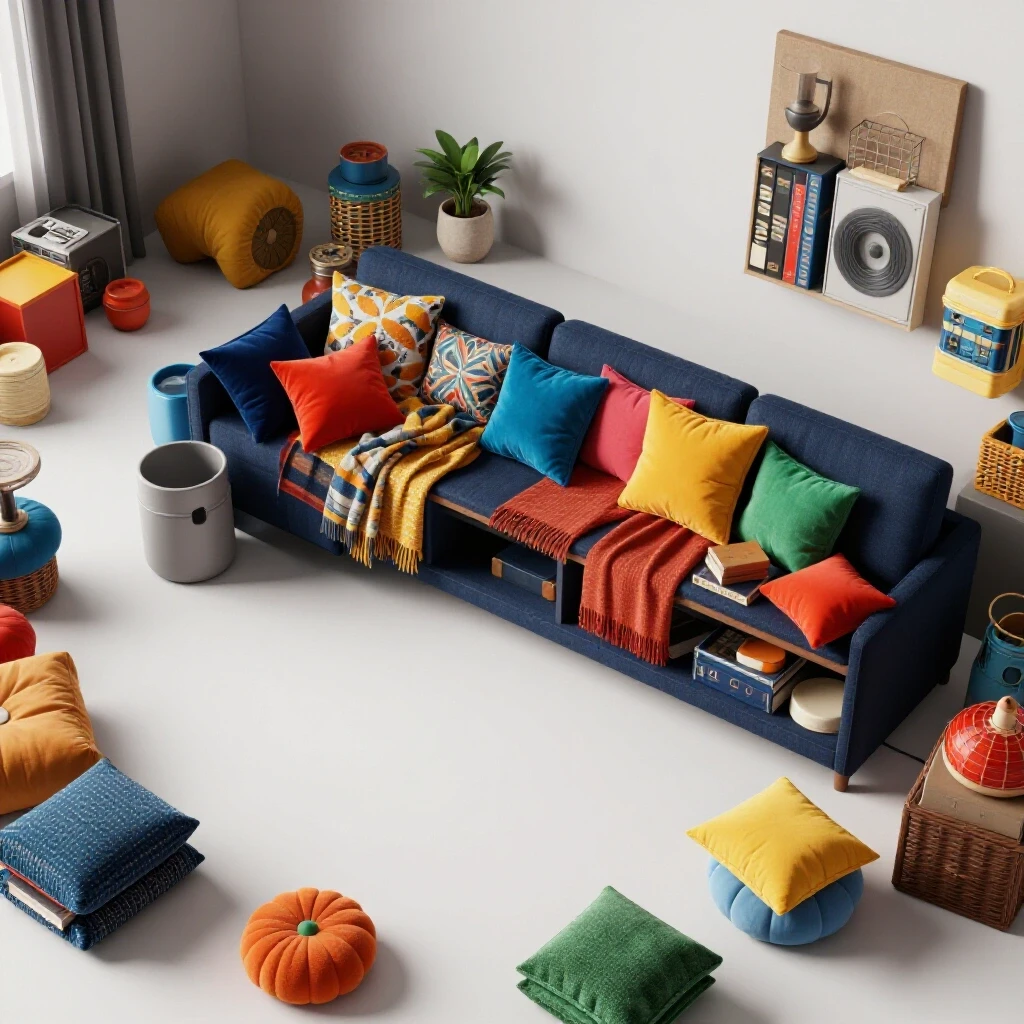
When every surface in a home is covered in small items, our brains are constantly “indexing” that information, even if we aren’t aware of it. This is why a cluttered room feels tiring. Sustainable decluttering is not just about getting rid of things; it is about reducing the “visual noise” that causes mental fatigue. During my half-year experiment, I learned that using existing furniture more effectively—rather than adding more plastic bins—actually lowered the visual noise in our living areas.
- Decision Fatigue: The more items you have to move to find what you need, the faster your mental energy drains.
- Cognitive Load: A disorganized space forces the brain to work harder to focus on simple tasks.
- Sensory Overload: Too many containers can actually look like clutter themselves if they aren’t uniform or integrated into the room’s design.
A Framework for Sustainable Home Organization Systems
To create a system that lasts, you must move from a “storage mindset” to a “logistics mindset.” This means focusing on the flow of items through your home. Every item follows a path: it enters the home, it is used, it is stored, and eventually, it leaves.
Most clutter happens because the “inflow” is faster than the “outflow,” or because the “storage” phase has too much friction. During my six-month container moratorium, I focused on these three pillars of spatial management:
- Spatial Capacity Limits: Every shelf and drawer has a physical limit. Once it is 80% full, the friction to use it increases. Aim for 20% “breathing room” in every storage area.
- Inflow/Outflow Control: Before bringing something new in, identify what is leaving. This prevents the need for more bins.
- Zoning Principles: Group items by where they are used, not just by what they are. A “homework zone” should have pens, paper, and a stapler in one spot, even if those items technically belong in different categories.
Designing High-Efficiency Sorting and Zoning Maps
Zoning is the practice of dividing your home into specific areas based on the frequency of use. In industrial logistics, we call this “ABC analysis.” Items in the “A” zone are used daily and must be the most accessible. “C” zone items are used once a year and can be stored in the attic or back of a closet.
When I stopped buying bins, I was forced to re-zone our kitchen. I realized we were keeping holiday platters (Zone C) in the same easy-to-reach cabinets as our daily coffee mugs (Zone A). This created a bottleneck. By moving the platters to a high shelf, I cleared space for the mugs, reducing the daily “sorting friction” for my morning routine.
Family Zoning Map Example
- Zone A (The Gold Zone): Between waist and eye level. For items used every day. No lids allowed.
- Zone B (The Silver Zone): Below the waist or above eye level. For items used weekly. Simple lids are okay.
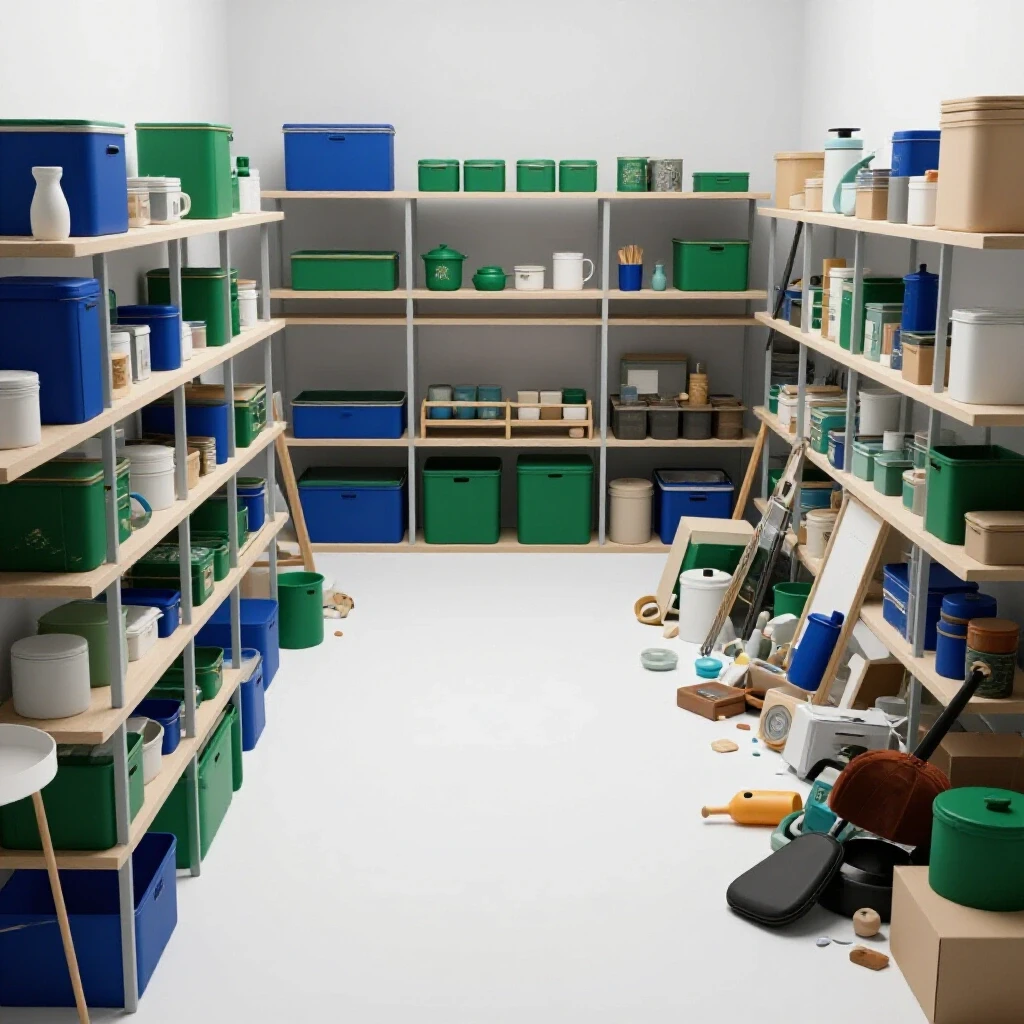
- Zone C (The Bronze Zone): Hard-to-reach areas (attic, basement, top shelves). For seasonal or archival items. Heavy-duty, lidded bins are best here.
Reducing Retrieval Friction for Children and Busy Adults
The “path of least resistance” is a powerful force in a family home. If a system requires a child to perform a complex task to clean up, the child will fail. The same applies to a tired professional after a ten-hour workday.
Reducing household clutter is often as simple as removing a lid or a door. In our home, we removed the closet doors in the playroom. This one change reduced the steps to put away toys and immediately improved the room’s tidiness. We also started using “drop zones”—open baskets near the entry for mail and school papers. These zones capture the “inflow” before it can spread across the kitchen counters.
Actionable Metrics for Low-Friction Storage
- The 2-Second Rule: You should be able to put any Zone A item away in under two seconds.
- The 1-Hand Rule: If you need two hands to open a container and put something inside, it is too high-friction for daily use.
- The Visibility Metric: If you can’t see it, you will likely buy it again. Use clear containers for Zone B, but keep Zone A completely open.
The 180-Day Container Moratorium: A Case Study in Resourcefulness
When I committed to not buying any new storage solutions for six months, I was forced to look at our existing items differently. This period was not about minimalism; it was about maximizing the utility of what we already owned.
I discovered that many of our “clutter problems” were actually “inventory problems.” We had four half-empty boxes of lightbulbs scattered in three rooms. By consolidating them into one existing drawer, I freed up three shelf spots. I also repurposed sturdy cardboard boxes from deliveries to create temporary dividers in deep drawers. This allowed me to test a system before committing to it.
Decluttering Sorting Log: A 6-Month Snapshot
| Month | Focus Area | Strategy Used | Result |
|---|---|---|---|
| 1 | Kitchen Pantry | Consolidation & Decanting | 15% more shelf space |
| 2 | Kids’ Playroom | Lid Removal & Zoning | 40% reduction in floor clutter |
| 3 | Home Office | Paper Inflow Management | 2 hours saved per week on filing |
| 4 | Master Closet | The “One-In, One-Out” Rule | No new storage needed for clothes |
| 5 | Bathroom Vanities | Vertical Space Utilization | Cleared all counter surfaces |
| 6 | Garage/Tools | ABC Zoning | Reduced retrieval time for tools |
Building Systematic Habit Loops for Long-Term Order
A habit loop consists of a cue, a routine, and a reward. In home organization, the cue is often “walking through the door” or “finishing a meal.” The routine is the act of putting items in their zones. The reward is the psychological relief of a clear space.
To maintain a functional home storage system, you need “micro-habits.” These are tiny actions that take less than a minute. For example, my family has a “reset” habit. Every evening before bed, we spend five minutes returning Zone A items to their homes. Because we designed these areas for low friction, this five-minute sweep is enough to prevent the home from reverting to a cluttered state.
- The Entry Reset: Clear the “drop zone” basket every evening.
- The Dishwasher Cycle: Run the dishwasher every night so it can be emptied first thing in the morning, preventing sink clutter.
- The Surface Sweep: Clear all flat surfaces (tables, counters) before leaving a room.
Functional Home Storage: Choosing the Right Gear
While my experiment focused on not buying new items, it taught me exactly what kind of gear actually works when you do decide to upgrade. The most successful storage solutions for families are those that prioritize durability and visibility.
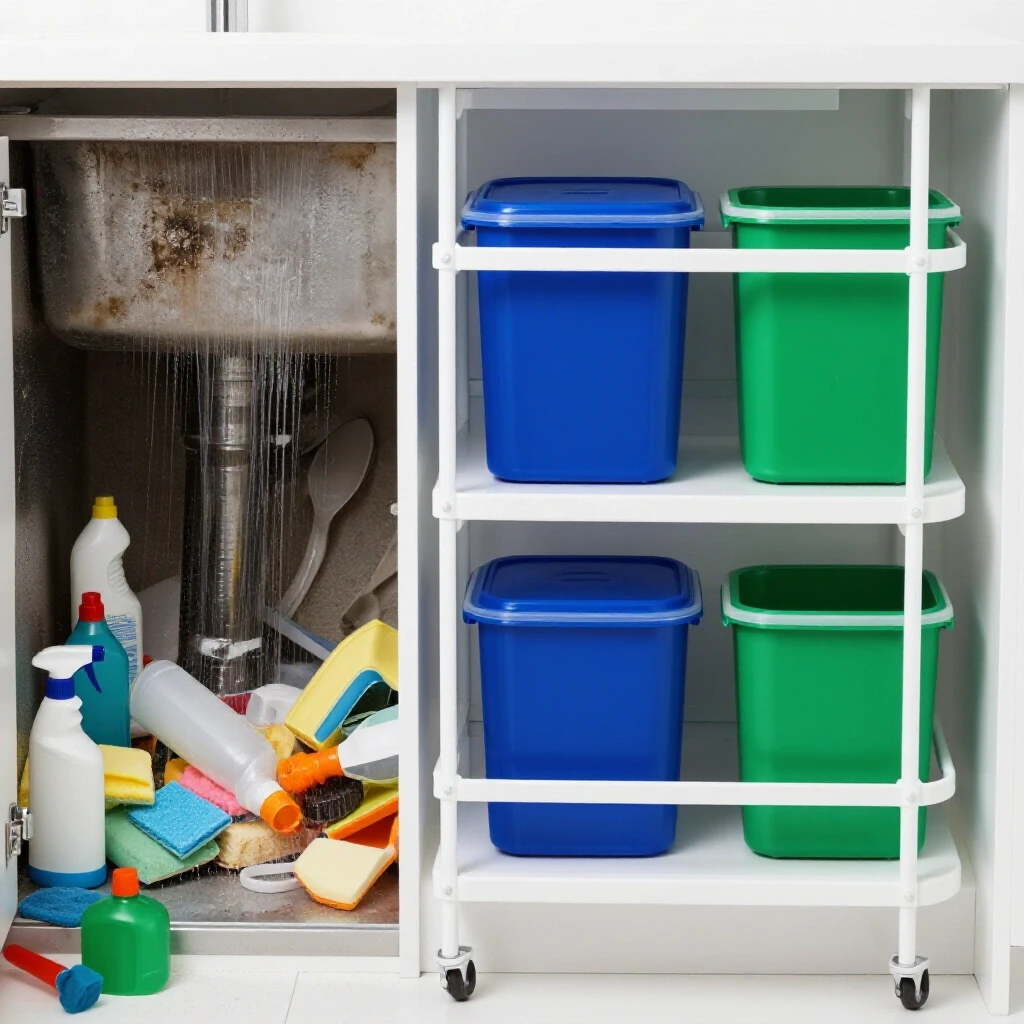
Avoid “micro-organizers”—tiny bins meant for very specific items. These are often too rigid and fail when your needs change. Instead, look for modular units that can be repurposed. Sturdy, stackable bins are great for Zone C, while open-top canvas or wire baskets are superior for Zone A and B.
Daily Maintenance Timelines by Family Size
| Family Size | Daily “Reset” Time | Weekly “Deep Sort” | Monthly Audit |
|---|---|---|---|
| 1-2 People | 5 Minutes | 20 Minutes | 1 Hour |
| 3-4 People | 10 Minutes | 45 Minutes | 2 Hours |
| 5+ People | 20 Minutes | 90 Minutes | 3 Hours |
Practical Next Steps for Your Decluttering Journey
Starting your own pause on buying containers can be eye-opening. It forces you to stop looking for a “magic box” and start looking at your own behaviors and spatial limits.
- Step 1: Conduct a Friction Audit. Walk through your home and identify the “hot spots” where clutter piles up. Count the steps it takes to put those items away.
- Step 2: Remove the Lids. For any daily-use item that is currently in a lidded bin, try removing the lid for one week. Observe if the items are put away more consistently.
- Step 3: Consolidate Like-with-Like. Before you decide you need more space, make sure you don’t have the same items stored in multiple locations.
- Step 4: Map Your Zones. Label your shelves or drawers as Zone A, B, or C. Move items accordingly to ensure the most-used things are the easiest to reach.
- Step 5: Implement a 5-Minute Reset. Engage the whole family in a quick evening sweep to maintain the system you have built.
Frequently Asked Questions
How do I know if I actually need more bins or if my system is just bad? If you have empty space in your current bins but items are still on the floor or counter, your system has too much friction. If every bin is overflowing even after a thorough declutter, you may have a spatial capacity issue.
What is the “one-hand rule” in home organization? The one-hand rule states that for items you use every day, you should be able to put them away using only one hand. This means no lids to unlatch, no boxes to move, and no doors to open if possible.
How can I get my kids to follow a storage system? Reduce the steps. Use open baskets at their height. Use picture labels instead of words. Make the “home” for their toys so obvious that it requires zero thought to put things back.
Why does my house get messy again so quickly after I organize it? This usually happens because the system was designed for how the items look rather than how they are used. If the “cost” of putting things away is higher than the energy you have at the end of the day, the system will fail.
Can I use cardboard boxes instead of buying plastic bins? Yes. In fact, using cardboard boxes for 30 days is a great way to test a new zoning layout before investing in permanent containers. It allows you to adjust the size and placement without any commitment.
What should I do with “sentimental” clutter that doesn’t fit a zone? Sentimental items are almost always Zone C. They should be kept in a single, high-quality, lidded bin in long-term storage. If they are out in your living space, they should be treated as decor, not storage.
How do I manage paper clutter without buying a filing cabinet? Establish a “one-touch” rule for mail. As soon as it enters the house, it is either recycled, paid, or placed in a single “active” folder. Most paper clutter is just delayed decisions.
Is it okay to have a “junk drawer”? Yes, but call it a “utility drawer.” Limit it to one small space and use dividers to keep items from tangling. Every home needs a place for the random items that don’t fit a major category.
How do I handle items that don’t have a clear “home”? If an item doesn’t have a home, it is a “homeless” item and will always contribute to clutter. Assign it a home based on where you first looked for it.
What is the best way to start a “bin ban”? Commit to 30 days first. Every time you feel the urge to buy a container, write down what you wanted to put in it. Then, find a way to store that item using only what you currently have. You will likely find a more efficient solution.
Does labeling really help? Labeling acts as a “map” for the rest of the family. It removes the mental effort of remembering where things go, which significantly reduces the friction of tidying up.
How do I maintain order when I’m too busy to clean? Focus on Zone A. If you can keep the most-used areas clear, the rest of the house can wait. A clear kitchen counter and entry-way provide the most mental relief for the least amount of effort.
(This article was written by one of our staff writers, Christopher Bennett. Visit our Meet the Team page to learn more about the author and their expertise.)