How to Build a Wall Shelf with Bins for Clutter Control (Guide)

Have you ever walked into your garage or mudroom and felt a wave of stress just from looking at the floor? We often treat our floors like a giant horizontal filing cabinet, but the real solution to a disorganized home isn’t more floor space—it is the vertical space we usually ignore. After 12 years of managing commercial facilities and completing dozens of weekend DIY projects, I have learned that the secret to a functional home lies in how we utilize our walls.
In my first home, I tried to organize my workshop using cheap, freestanding plastic units. Within six months, they bowed under the weight of my tools, and the bottom bins became a graveyard for things I never used. I realized that a permanent, wall-anchored system with integrated containers was the only way to keep items visible and accessible. This guide will walk you through creating a sturdy, wall-mounted storage system that uses bins to keep your life in order without the risk of a structural failure or a call to a professional.
Planning Your Vertical Organization System
Before you drive a single screw, you must evaluate the wall where you intend to mount your storage. This phase involves calculating the total weight of the items you plan to store and identifying the internal structure of the wall to ensure it can support the load.
Proper planning prevents the most common DIY failure: a shelf pulling out of the drywall because it wasn’t anchored to the framing. In a facility management context, we call this “load assessment.” You need to know if you are mounting into wood studs, metal studs, or masonry. For most residential weekend DIY projects, you will be dealing with standard 16-inch or 24-inch on-center wood studs.
Identifying Wall Studs and Substrate
A substrate is the underlying surface or material on which a system is installed. In home improvement, this is usually your drywall and the wooden studs behind it. Finding these studs is the most critical step for a safe, long-lasting installation that won’t sag or fall.
- Stud Finder: Use a high-quality electronic stud finder to locate the edges of the wood.
- Marking: Once you find the edges, mark the center of the stud with a pencil.
- Verification: I always use a small finishing nail to tap into the wall where I think the stud is. If I feel resistance, I know I hit wood.
- Spacing: Measure from your first mark to the next. Standard modern homes have studs spaced exactly 16 inches apart.
Selecting the Right Bins for Your Space
The containers you choose will dictate the depth of your shelves. Choosing bins before building ensures that the final unit looks intentional rather than like a series of afterthoughts. This prevents the frustration of having bins that overhang the shelf or leave too much wasted space.
- Uniformity: Buy all your bins at once to ensure they match in size and stack correctly.
- Clear vs. Opaque: Clear bins allow you to see contents at a glance, while opaque bins offer a cleaner visual look for common living areas.
- Lip Design: Ensure the bins have a sturdy rim or lip if you plan to hang them from a rail system rather than just sitting them on a flat surface.
Essential Gear for Wall-Mounted Storage
Having the right tools is the difference between a three-hour project and a whole weekend of frustration. I’ve learned the hard way that using a “close enough” tool often leads to stripped screws or crooked shelves that haunt you every time you walk past them.
This DIY tool list focuses on accuracy and safety. While you might be tempted to use a manual screwdriver, a cordless drill or impact driver is essential for driving long fasteners into wall studs. A level is also non-negotiable; your eyes will deceive you, but a bubble level or laser level will not.
| Tool Category | Essential Item | Purpose in This Project |
|---|---|---|
| Measurement | 25-foot Tape Measure | Measuring wall spans and bin depths. |
| Alignment | 24-inch Bubble Level | Ensuring the shelf is perfectly horizontal. |
| Fastening | Cordless Drill/Driver | Boring pilot holes and driving screws. |
| Safety | ANSI Z87.1 Safety Glasses | Protecting eyes from wood and drywall dust. |
| Marking | Carpenter’s Pencil | Marking stud locations and level lines. |
DIY vs. Professional Cost & Time Analysis
Understanding the ROI of your labor helps justify the investment in quality tools. When you do it yourself, you aren’t just saving money; you are ensuring the job is done to your personal standards of safety and aesthetics.
- Professional Labor: $250 – $500 (depending on the complexity and local rates).
- DIY Material Cost: $75 – $150 (wood, brackets, bins, and fasteners).
- Time Estimate: 4 to 6 hours for a beginner; 2 to 3 hours for an experienced DIYer.
- Tool Investment: $100 if you need to buy a basic drill and level set.
Safety Protocols and Load Compliance
Safety in DIY home improvement isn’t just about wearing goggles; it is about understanding the physics of the objects you are installing. If a shelf is rated for 50 pounds, but you use the wrong screws, that rating becomes meaningless and potentially dangerous.
According to the International Residential Code (IRC), fasteners must penetrate at least 1.5 inches into the structural framing member. This means if you have 0.5-inch drywall, your screw needs to be at least 2 inches long to be safe. I personally prefer 2.5-inch or 3-inch #8 wood screws for most wall-mounted storage projects to ensure a deep, secure bite into the wood.
Understanding Weight Distribution
Weight distribution refers to how the load of your items is spread across the shelf and the brackets. A shelf is only as strong as its weakest point, which is usually the connection between the bracket and the wall stud.
- Static Load: This is the weight of the items just sitting there.
- Dynamic Load: This is the force applied when you pull a heavy bin off the shelf.
- Leverage: The wider the shelf, the more pulling force it exerts on the top screw of the bracket.
- Fastener Strength: Always use screws, never nails, for wall-mounted shelving.
PPE and Workspace Setup
Personal Protective Equipment (PPE) is your first line of defense against common job-site injuries. Even in a simple home project, drywall dust can irritate your lungs, and a stray wood splinter can end your weekend early.
- Eye Protection: Always wear safety glasses when drilling overhead to keep dust out of your eyes.
- Hearing Protection: If you are using a circular saw to cut your shelving boards, use earplugs.
- Dust Mask: A basic N95 mask is helpful when sanding or drilling into older plaster walls.
- Clear Path: Ensure the area below your work zone is clear of furniture and rugs to prevent tripping while holding heavy boards.
Step-by-Step Installation Phase
Now that the planning is done, we move into the execution. This is where your preparation pays off. We will follow a logical sequence: measure, mark, drill, and mount. This method is the standard for safe home repairs and ensures a professional-grade result.
I remember my first “big” shelving project where I didn’t dry-fit the components. I ended up with a shelf that was an inch too long for the corner, and I had to take everything down and start over. Dry-fitting is the process of holding everything in place without fasteners to see how it fits. It is a mandatory step for any high-quality weekend DIY project.
Measuring and Marking the Layout
Start by marking your desired height. For most people, eye level (about 60 inches) is a good starting point for the top shelf. Use your level to draw a light pencil line across the wall where the top of the shelf or the mounting rail will sit.
- Leveling: Place your level on the line. If the bubble is centered, your shelf won’t cause items to roll or look crooked.
- Stud Alignment: Transfer your stud marks to this level line.
- Bin Spacing: Hold one of your bins against the wall to ensure there is enough clearance between the shelf and the ceiling or any nearby trim.
Securing Brackets and Cleats
A cleat is a strip of wood or metal fastened to the wall to provide a ledge for the shelf to rest on. Brackets provide the vertical support. For a system using bins, you want brackets that are rated for at least 25% more weight than you expect to store.
- Pilot Holes: Drill a hole slightly smaller than your screw diameter into the stud. This prevents the wood stud from splitting.
- First Bracket: Drive the top screw into the first bracket, but do not tighten it all the way.
- Level Check: Swing the bracket until it is plumb (perfectly vertical) and mark the bottom hole.
- Repeat: Install the remaining brackets on the other studs along your level line.
Integrating the Bins
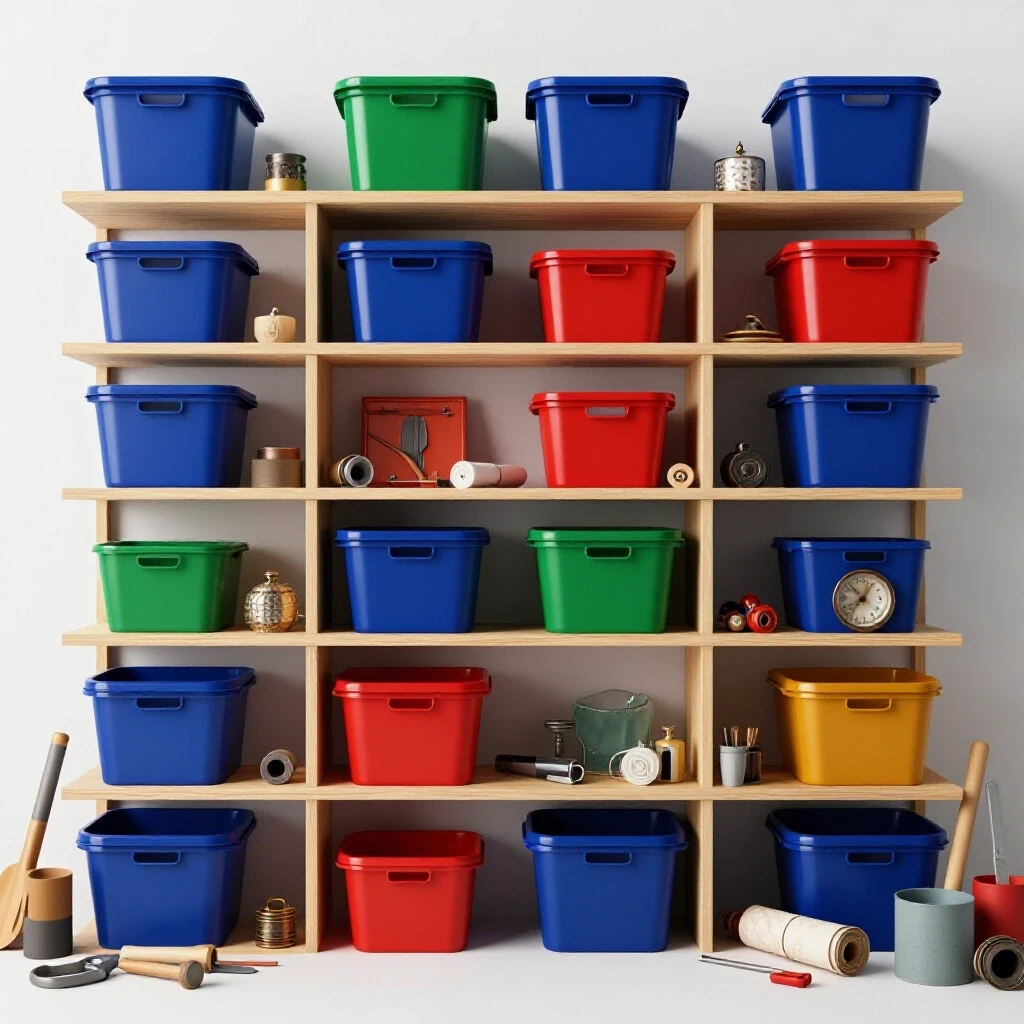
Once your shelves are secured to the brackets, it is time to place the containers. If you are using a rail-and-bin system, ensure the rails are perfectly parallel. If the rails are even a fraction of an inch off, the bins will either be too tight to slide or too loose and fall.
- Spacing: Leave at least two inches of “finger room” above each bin so you can easily reach in or pull the bin out.
- Labeling: Use a label maker or masking tape to identify the contents. This is a facility management trick that keeps systems organized long after the project is over.
- Weight Loading: Place heavier items in the bins located directly over the brackets to minimize shelf deflection (bending).
Troubleshooting Common Mounting Hurdles
Even with the best planning, you might run into issues like uneven walls or hitting a metal plate behind the drywall. These plates are there to protect electrical wires or plumbing pipes, and you should never drill through them.
If your drill stops suddenly and feels like it hit something hard, stop immediately. Move your bracket an inch to the left or right. It is better to have a slightly off-center bracket than a punctured water line. This is a key part of building code compliant DIY: respecting the hidden systems in your home.
Handling Stripped Screws and “Spinners”
A “spinner” happens when a screw is over-tightened and strips the wood fibers in the stud, leaving the screw spinning without gripping. This compromises the safety of your shelf and requires a quick fix.
- The Matchstick Trick: Remove the screw, shove a few wooden toothpicks or matchsticks into the hole, and break them off flush.
- Re-driving: Drive the screw back into the hole. The extra wood provides the “bite” the screw needs.
- Upsizing: If that fails, move to a slightly thicker screw (e.g., move from a #8 to a #10).
Correcting an Out-of-Level Shelf
Walls are rarely perfectly flat or square. If your shelf looks tilted despite your level saying it’s straight, you may need to “shim” the brackets. A shim is a thin, tapered piece of material used to fill small gaps.
- Cardboard Shims: For very minor adjustments, a small piece of folded cereal box cardboard behind the bottom of a bracket can tilt a shelf upward.
- Wood Shims: For larger gaps, use professional cedar shims.
- Verification: Always re-check with your level after adding a shim and tightening the screws.
Final Finishing and Maintenance
The project isn’t finished until the tools are put away and the system is tested. In my professional experience, the “handover” phase is where you verify that the installation meets the original goals of the project.
Check every screw one last time. Give the shelf a firm tug (within reason) to ensure there is no movement at the wall. If the shelf rattles or pulls away even slightly, you need to add another fastener or check your stud alignment. This final quality check is what separates a “handyman special” from a professional-grade home upgrade.
Tool Maintenance and Storage
Once the bins are filled and the floor is clear, take five minutes to care for your tools. This ensures they are ready for your next weekend DIY project and protects your investment.
- Wipe Down: Remove drywall dust from your drill and level with a dry cloth.
- Battery Care: Remove the battery from your drill and place it on the charger if it is low.
- Bit Check: Inspect your drill bits for dullness or damage; replace them now so you aren’t stuck mid-project next time.
- Organization: Put your tools back in their designated spots—perhaps in one of the new bins you just installed!
Long-Term Care of Your Storage System
Over time, the weight of the bins and changes in humidity can cause wood to settle. Every six months, I do a quick “facility walk-through” of my own home. I check the brackets to ensure the screws are still tight and look for any signs of bowing in the shelving material.
If you notice a shelf is starting to sag in the middle, you may need to add a center bracket. Most 3/4-inch plywood or solid wood shelves can span 32 inches (two studs) without sagging, but if you are storing heavy items like gallon-sized paint cans, you should limit the span to 16 inches between supports.
Conclusion
Stepping back to see a clean, organized wall where a pile of clutter once sat is incredibly satisfying. By following these step-by-step home upgrades, you have not only saved money but also increased the functional value of your home. You’ve successfully navigated the challenges of stud-finding, load-bearing calculations, and precision leveling.
The next step is to apply these skills to other areas. Perhaps your pantry needs a similar system, or your laundry room could benefit from vertical bin storage. The confidence you gain from completing a safe, code-compliant project is the best tool in your kit. Keep your workspace clean, prioritize your safety, and always trust your level over your eyes.
Frequently Asked Questions
How much weight can a standard wall-mounted bin shelf hold?
If anchored into wood studs with 2.5-inch #8 screws, a standard bracket can typically hold 50 to 75 pounds. For a shelf spanning two studs with two brackets, you can safely store about 100 to 150 pounds of total weight, including the bins and the shelf itself. Always check the manufacturer’s rating on the specific brackets you purchase.
Can I install these shelves into drywall without studs?
While drywall anchors exist, I strongly advise against using them for bin-based storage systems. Bins encourage you to add more items over time, and the dynamic load of pulling bins in and out can cause anchors to loosen and eventually pull through the drywall. Always find the studs for anything holding more than 10-15 pounds.
What is the best material for the shelving boards?
For utility areas like garages or basements, 3/4-inch ACX plywood or pre-finished white melamine is excellent. Melamine is easy to wipe clean if something spills in a bin. For living areas, solid pine or oak boards offer a more polished look but may require staining or sealing to prevent warping.
Do I need a permit for this type of home upgrade?
Generally, no. Most local building codes do not require a permit for non-structural, wall-mounted shelving. However, always ensure you aren’t blocking access to electrical panels, water shut-off valves, or HVAC returns, as this could violate fire or safety codes.
How do I prevent the bins from sliding off the shelf?
If you are concerned about bins sliding, you can install a small wooden “lip” or trim piece (called a nosing) to the front edge of the shelf. Alternatively, using non-slip shelf liners inside the bins or on the shelf surface provides enough friction to keep them in place during normal use.
What should I do if my studs are 24 inches apart instead of 16?
In some newer homes or non-load-bearing walls, studs are spaced 24 inches apart. In this case, you must use thicker shelving material (at least 3/4-inch or 1-inch) to prevent sagging between the supports. You might also consider adding a horizontal “cleat” or “stringer” (a 1×4 board screwed into three studs) and then mounting your brackets to that board.
Why is a pilot hole necessary?
A pilot hole removes a small amount of wood to make room for the shank of the screw. Without it, the screw acts like a wedge, forcing the wood fibers apart. This often causes the wood stud to split, which significantly reduces the screw’s holding power and can weaken the wall’s internal structure.
How do I measure the “finger room” correctly?
Place your bin on the shelf and reach your hand in to grab an imaginary item at the bottom. If your knuckles hit the shelf above, it’s too tight. A good rule of thumb is to leave a 2-inch to 3-inch gap between the top of the bin and the bottom of the shelf above it for comfortable access.
(This article was written by one of our staff writers, Robert Callahan. Visit our Meet the Team page to learn more about the author and their expertise.)