Why Some Home Decor Trends Disappoint in Real Life (Expert Tips)

Talking about tradition usually brings to mind heavy oak tables and floral sofas that lasted forty years. In my fifteen years as a retail merchandising manager, I have seen a massive shift away from those sturdy roots. Today, we often choose furniture based on how a single photo looks on a smartphone screen. This shift toward visual-first decorating has created a gap between what looks stunning in a curated gallery and what actually supports a family on a rainy Tuesday.
I have spent over a decade tracking how home products perform after the “honeymoon phase” ends. What I have found is that many popular digital design trends prioritize a specific, clean look that ignores the physics of daily life. When we ignore how a room functions, we end up with spaces that feel like a stage set rather than a home. My goal is to help you navigate these choices by looking at the data behind durability and the psychology of comfort.
The Environmental Psychology of Visual-First Room Layouts
Environmental psychology is the study of how our surroundings affect our stress levels and behavior. In home design, a layout that looks “clean” or “minimalist” online can often feel cold or restrictive in person. If a room does not allow for natural movement or “behavioral mapping,” it fails as a living space.
When I evaluated floor plans for retail displays, we focused on “dwell time.” In a home, dwell time is where you actually relax. Many modern layouts featured on social media prioritize symmetry over the way humans actually sit and talk. Research in environmental psychology suggests that “sociopetal” spaces—layouts where furniture faces inward—encourage social interaction. Conversely, the “gallery style” often seen online, where furniture is pushed against walls to show off a rug, can actually make a family feel more isolated.
Why High-Traffic Pathways Fail and How to Calculate True Clearance
Clearance paths are the “invisible hallways” between your furniture that allow you to move through a room without bumping into corners. While a tight layout might look cozy in a photo, it becomes a source of daily frustration when two people cannot pass each other.
To maintain long-term livability, you must measure your “spatial budget.” A standard walking pathway should be at least 36 inches wide. In high-traffic areas, such as the path between the kitchen and the living room, increasing this to 42 or 48 inches prevents the feeling of being cramped. When I look at trendy room reveals, I often see coffee tables placed only 12 inches from a sofa. For real-world comfort, that gap should be 14 to 18 inches to allow for legroom while keeping the table within reach.
Material Selection: The Gap Between Aesthetic Appeal and Tactile Durability
Durable home decor is not just about how hard a material is, but how it responds to “cycles of use.” In the industry, we use the Wyzenbeek method to test fabric durability. This test involves a machine rubbing a piece of cotton duck or wire screen back and forth over the fabric until it breaks.
Many fabrics that are currently popular for their soft, “cloud-like” texture have very low rub counts. For example, a trendy boucle or a light linen might only be rated for 9,000 to 15,000 double rubs. This is fine for a decorative pillow, but for a family sofa, it is a recipe for disaster. I have seen countless homeowners regret buying a high-end, low-durability fabric because it began to pill or sag within six months.
Fabric Durability Benchmarks for Family Life
| Fabric Type | Wyzenbeek Double Rubs | Best Use Case | Long-Term Reality |
|---|---|---|---|
| Light-Duty Linen | 9,000 – 15,000 | Formal rooms, low use | Pills and wrinkles quickly |
| Standard Cotton Mix | 15,000 – 30,000 | General residential | Moderate wear after 3 years |
| Performance Polyester | 30,000 – 50,000 | Family rooms, pets | Highly stain-resistant and tough |
| Heavy-Duty Velvet | 50,000+ | High-traffic seating | Very durable but attracts pet hair |
When making decorating decisions, always ask for the “spec sheet.” If a salesperson cannot tell you the double-rub count, the fabric is likely not meant for heavy daily use. For a household with kids or pets, I recommend a minimum of 30,000 double rubs.
The Illusion of Open Storage and the Necessity of Hidden Utility
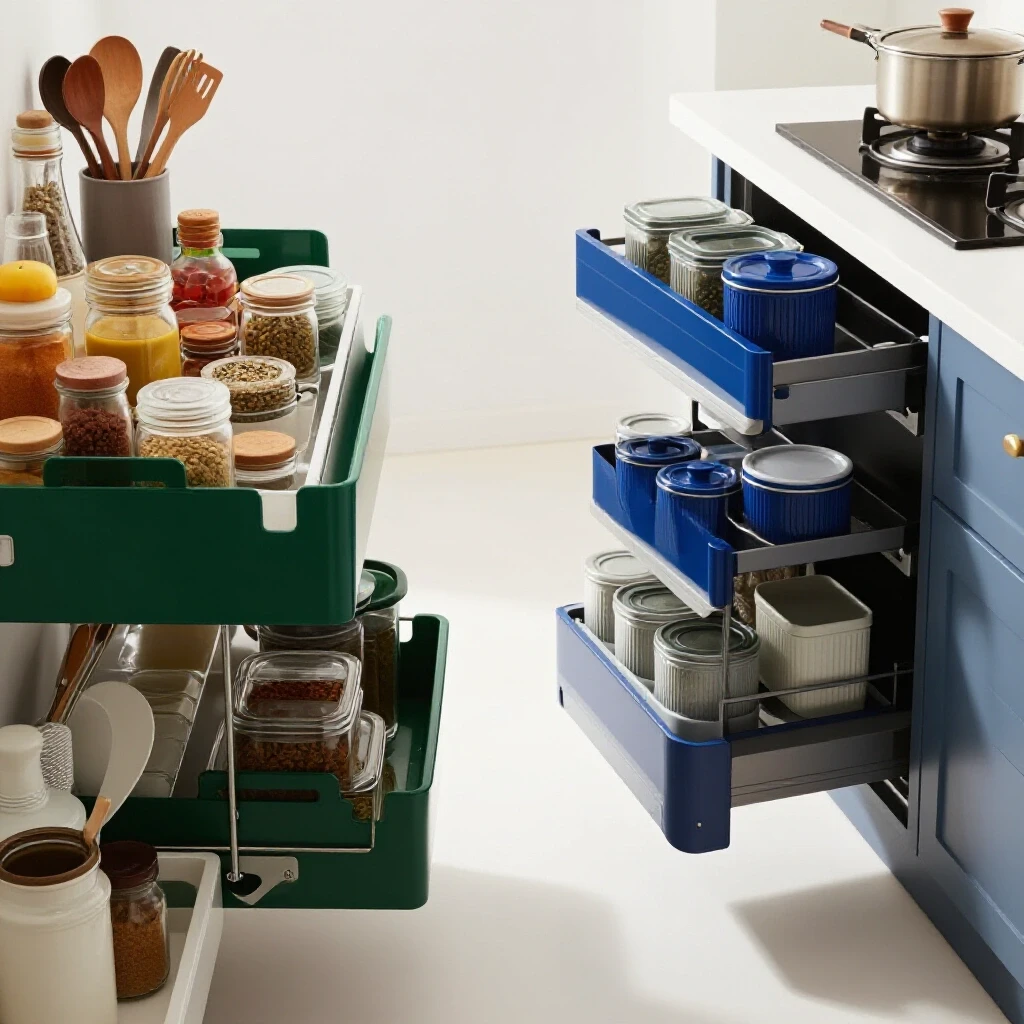
Integrated storage is often presented online as “open shelving” styled with perfectly spaced ceramics and books. While this looks beautiful in a static image, it ignores the reality of “visual noise.” Visual noise is the stress caused by seeing too many small, unorganized items at once.
In my experience, open storage is a full-time job. It requires constant dusting and “curating.” For most families, a 70/30 rule works best for long-term livability: 70% hidden storage (cabinets, drawers, bins) and 30% open display. This allows you to hide the plastic toys and remote controls while still showing off your favorite items.
Storage-to-Room-Ratio Benchmarks
To keep a room from feeling cluttered, you need a specific amount of storage based on the room’s square footage.
- Living Rooms: 10% of the wall space should be dedicated to storage.
- Entryways: 20% of the area should include “drop zone” storage for shoes and bags.
- Kitchens: 40% of the total square footage (including vertical space) should be functional storage.
Light Reflectance Values and the “Digital Color” Trap
Paint colors often look different on a screen because screens emit light, whereas paint reflects it. This is why a “perfect” neutral you saw on a blog might look muddy or yellow in your actual living room. To avoid this, you must understand Light Reflectance Value (LRV).
LRV is a scale from 0 (absolute black) to 100 (perfect white). It tells you how much light a color reflects. Most “airy” rooms you see online use colors with an LRV of 70 or higher. However, if your room doesn’t have large, south-facing windows, that same paint will look flat and gray. I always suggest testing a large swatch (at least 2 feet by 2 feet) on every wall of a room and observing it at 8:00 AM, 2:00 PM, and 8:00 PM.
Understanding Lighting Scale and Placement
A common mistake in functional room layouts is using a single overhead light source. This creates harsh shadows and makes a room feel smaller. Instead, use “layered lighting.”
- Ambient: The general overhead light (use a dimmer!).
- Task: Reading lamps or under-cabinet lights.
- Accent: Sconces or small “shelf lights” to create depth.
In my retail years, we used a furniture-to-lumen ratio. For a standard 12×12 living room, you should aim for a total of about 3,000 to 4,000 lumens spread across at least four different light sources.
Case Study: The Velvet Sofa Experiment
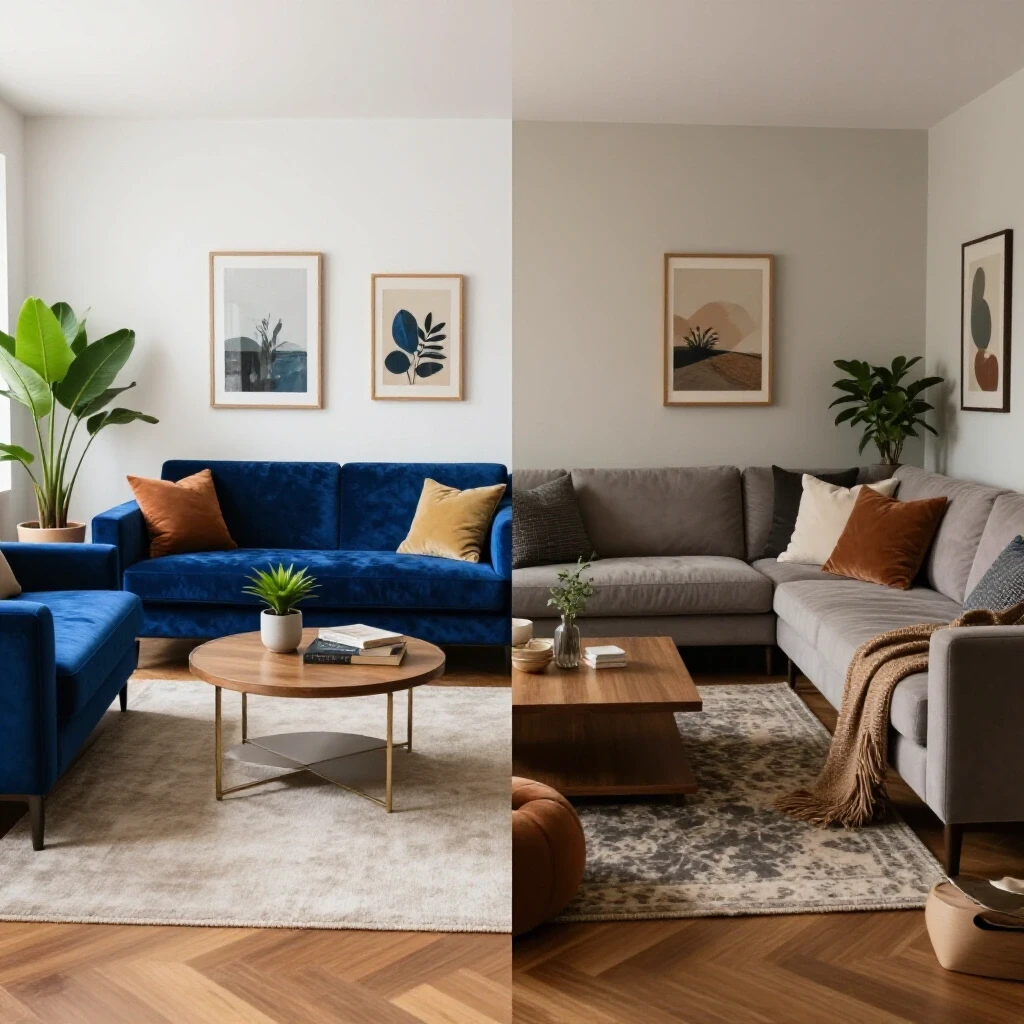
A few years ago, I worked with a family who fell in love with a deep navy velvet sectional they saw in a high-end catalog. It looked regal and sophisticated. On day one, it was the centerpiece of their home. By day one hundred, the reality of their golden retriever and two toddlers had set in.
Velvet is incredibly durable (often 50,000+ rubs), but it is a “magnet” for fibers. Because the family chose a dark color, every speck of dust and pet hair was visible under their bright LED recessed lights. We eventually solved the problem by adding “tactile layers”—textured wool throws that caught the hair before it hit the velvet and switching their light bulbs to a warmer 2700K color temperature, which softened the visual contrast of the debris. This taught them that a trend isn’t “bad,” but it requires a maintenance plan that fits your lifestyle.
Actionable Design Planner: The “One Thousand Day” Audit
Before you buy a new piece of furniture or commit to a layout, ask yourself these four questions to ensure multi-year livability:
- The Cleaning Test: How do I clean this? If it requires a specialized tool or professional service every time there is a spill, it may not be practical.
- The Pathway Test: Will I have to turn sideways to walk past this piece? (If yes, it is too big).
- The Tactile Test: How does this feel after sitting on it for two hours, not just two minutes?
- The Lighting Test: Does this material look good in “low light” or only when the sun is hitting it?
Room-by-Room Assessment Guide
- Living Room: Ensure the distance from the sofa to the TV is 1.5 to 2.5 times the diagonal screen size. This prevents eye strain and maintains a balanced visual weight.
- Dining Room: Allow for 24 inches of width per person at the table and 36 inches of clearance behind each chair to allow people to get up comfortably.
- Bedroom: Keep at least 30 inches on either side of the bed for ease of making the bed and nightstand access.
Practical Tools for Smart Decorating
When I am planning a space, I don’t rely on “vibes.” I use specific tools to ensure the measurements work.
- Painter’s Tape: Tape out the footprint of a new sofa or rug on your floor. Leave it there for two days. If you find yourself tripping over the tape, the furniture is too large.
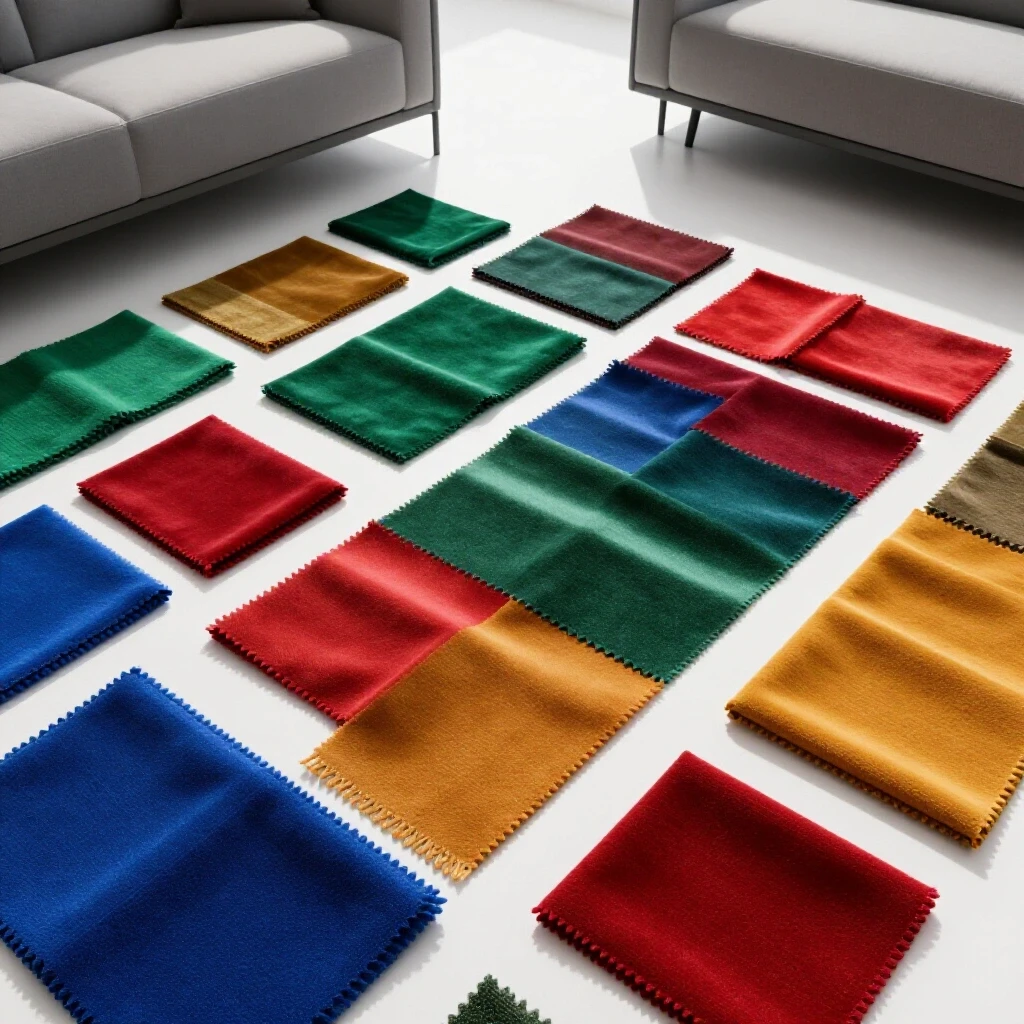
- Fabric Swatch “Torture Test”: Get a sample of your chosen fabric. Pour coffee on it. Rub it with a key. If it doesn’t survive the afternoon, it won’t survive your home.
- Digital Floor Plan Apps: Use free tools like Roomstyler or MagicPlan to see the “birds-eye view” of your clearance paths.
- LRV Cards: Most paint stores have the LRV printed on the back of the color chip. Look for it!
Common Decorating Mistakes to Avoid
The most frequent error I see is “buying for the photo.” This happens when someone chooses a rug that is too small because it has a pretty pattern, or a chair that is beautiful but has a back so low it provides no support.
Another mistake is ignoring “visual weight.” A room with all “leggy” furniture (pieces on thin metal legs) can feel ungrounded and jittery. Conversely, a room with all “blocky” furniture (pieces that go all the way to the floor) can feel heavy and dark. Aim for a balance. If your sofa is a heavy, upholstered piece that hits the floor, choose a coffee table with legs to let some light pass underneath.
Conclusion: Balancing Today’s Style with Tomorrow’s Needs
Making decorating decisions that last requires a shift in mindset. We must move from “What looks good?” to “How does this serve us?” By focusing on clearance paths, fabric rub counts, and the 70/30 storage rule, you can create a home that is both beautiful and resilient.
The most successful rooms are not the ones that look like a magazine cover on day one. They are the ones that still feel comfortable, clean, and functional on day one thousand. Start small—tape out your next purchase, check the LRV of your next paint choice, and always prioritize the way you move through your space over the way it looks in a square frame.
FAQ: Navigating Practical Home Design
How can I tell if a sofa is actually durable if I’m shopping online? Look for three specific things in the description: the rub count (aim for 30,000+), the frame material (kiln-dried hardwood is the standard for longevity), and the cushion fill (high-density foam wrapped in down or fiber holds its shape longest). Avoid “mDF” or “particle board” frames for pieces you sit on daily.
Is open shelving always a bad idea for a kitchen? Not at all, but it is a “high-maintenance” choice. If you cook frequently, grease and dust will settle on everything. It works best for items you use every single day—like coffee mugs or dinner plates—because they are washed often enough that dust doesn’t have time to build up.
What is the best paint finish for a high-traffic hallway? Avoid “Flat” or “Matte” in hallways as they show every scuff and are hard to wipe down. An “Eggshell” or “Satin” finish provides a slight sheen that is much more durable and can be cleaned with a damp cloth without removing the paint.
How do I know if my rug is the right size for my living room? A common trend is buying a rug that is too small (like a 5×7). For a cohesive look, the rug should be large enough that at least the front two legs of all major seating pieces rest on it. This “anchors” the room and prevents the furniture from looking like it is floating.
Why does my room feel “off” even though I followed a design I saw online? It is likely a scale or lighting issue. Online photos often use wide-angle lenses that distort space. If your furniture is too small for your high ceilings, or if you only have one light source, the room will feel unbalanced. Try adding a taller element (like a bookshelf or a tree) and layering your lighting.
Are performance fabrics worth the extra cost? In my opinion, yes. Performance fabrics (like Sunbrella or Crypton) are treated at the fiber level to resist stains and odors. While they cost more upfront, they can easily add 5 to 10 years to the life of your furniture, especially in homes with children or pets.
What is the “36-inch rule” in interior design? This refers to the minimum clearance needed for a major walkway. Whether it is the space between your kitchen island and the counter, or the path from the door to the sofa, 36 inches is the threshold for a person to walk comfortably without feeling squeezed.
How can I make a small room feel larger without using all white paint? Focus on “low-profile” furniture and “verticality.” Use furniture with legs to show more of the floor, which tricks the eye into seeing more space. Also, hang your curtains high and wide—well above the window frame—to draw the eye upward and make the ceilings feel taller.
How do I balance trendy items with timeless pieces? Use the “80/20” rule. Invest 80% of your budget in “foundational” pieces that are neutral and high-quality (sofas, dining tables, beds). Use the remaining 20% for “trendy” accents like pillows, small lamps, or art. This way, when a trend fades, you can update the room without a full renovation.
What should I look for in a “kid-friendly” coffee table? Avoid sharp corners and glass tops. Round or oval tables made of wood or upholstered ottomans are much safer. If you choose an ottoman, ensure the fabric has a high rub count and consider a “tray” on top for a stable surface to hold drinks.
(This article was written by one of our staff writers, James Whitaker. Visit our Meet the Team page to learn more about the author and their expertise.)